AI Product Photography vs Traditional Photography: The Honest Comparison
If you are deciding between AI product photography vs traditional photography for your next catalog update, the answer depends entirely on the volume of SKUs you need to launch. Traditional photography wins when you need a high-concept hero image for a massive brand campaign. AI product photography wins when you need sixty campaign-ready lifestyle variations by tomorrow afternoon.
Definition
AI product photography is the process of using trained machine learning models to generate realistic backgrounds, lighting, and shadows around an existing product image. It replaces the physical logistics of a traditional studio shoot by computationally rendering the environmental context instead of capturing it with a camera.
Choosing between AI and traditional photography is rarely a debate about visual quality. It is almost entirely a debate about workflow speed and margin.
Founders often view product imagery as a fixed bottleneck in their supply chain. They assume the only way to get better photos is to spend more money and wait more weeks. That math made sense five years ago. It completely falls apart today. The logistics of a physical studio shoot drain resources that should go directly into customer acquisition.
Why traditional vs AI product photos is the wrong debate
The hidden logistics of the studio shoot
When you hire a professional photographer, you are paying for their eye. You are also paying for the stylist, the prop buyer, the studio rental, the lighting assistant, and the catering. Most ecommerce brands fail to track the internal hours lost to pre-production meetings and shot list approvals.
Think about the timeline of your last physical product shoot. Day one involves building a mood board. Day five is spent arguing over location permits or studio availability. Day fourteen is the actual shoot, which inevitably runs four hours over schedule because the lighting rig failed or the stylist brought the wrong props. Day twenty-one is when you finally receive the retouched files.
The true cost of a traditional shoot is buried deep in your operational overhead. We break down the actual cost per SKU of traditional photography, and the math usually lands between $80 and $200 per final image. That is a massive tax on your product launch. It forces you to limit the number of lifestyle shots you can afford per product. You end up launching with two good photos and three mediocre flat lays.
When AI product photography beats traditional photography
Speed to market changes your launch strategy
Using AI product photos means your production timeline drops from three weeks to three hours. You upload a flat lay or a basic white-background shot of your product. You select a visual mode like Minimalist, Loud Luxury, or Magazine in CherryShot AI. The platform generates campaign-ready photos in minutes.
This speed fundamentally alters how an ecommerce brand tests new products. You no longer have to wait for a massive seasonal shoot to validate a new colorway. You do not have to book a location just to see if your audience responds better to your skincare line in a bathroom setting or on a sunny beach towel. You generate both variations, run a split test on your ads, and let the data decide.
If you want to dive deeper into the exact mechanics of this process, our guide on how AI product photography works in 2026 explains exactly how the models preserve product details while swapping environments. The technology has evolved past simple background removal. It maps shadows, understands lighting direction, and builds reflections that match the new environment seamlessly.
What products still need traditional photography?
Acknowledging the limits of AI photography quality
AI general-purpose tools often fail at exact texture replication on complex fabrics. If you are selling a highly structured wool coat with a very specific, unique knit pattern, a general AI tool might smooth out the texture unrecognizably.
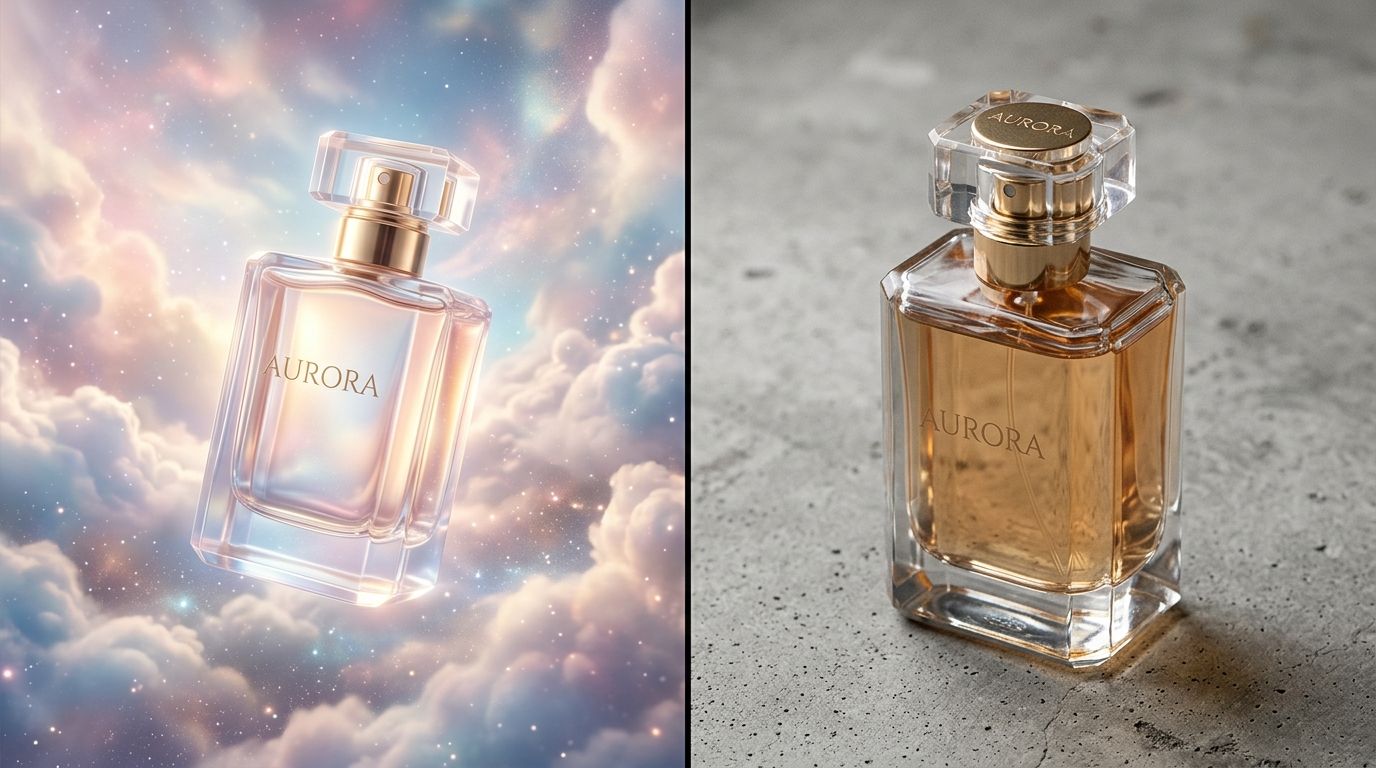
(Worth noting: if you are shooting a highly reflective chrome fixture or a multi-layered transparent glass bottle, AI will struggle to map the environment accurately through the material. Book the studio for that.)
A professional photographer is better than AI for ecommerce when you are establishing a completely new visual language for a rebrand. You need a human art director to make those highly subjective, emotional choices. You need physical experimentation on set to discover a lighting style that nobody has seen before. AI is incredible at replicating and scaling an aesthetic. It is not designed to invent a brand identity from thin air.
Once that initial look is locked in by your art director, you transition the workflow. You use CherryShot AI's Upload Ref mode to feed that custom hero shot back into the system. The tool then scales that exact custom aesthetic across the rest of your five hundred catalog SKUs.
| Feature | Traditional Studio Shoot | AI Generation |
|---|---|---|
| Average Turnaround | 2 to 4 weeks | Under 10 minutes |
| Cost Per Image | $80 to $200+ | Under $5 |
| Location Variety | Limited to booked sets | Unlimited environments |
| Best Use Case | Hero campaigns, complex materials | Catalog volume, rapid testing |
AI photography vs professional photographer: The hybrid model
Balancing hero campaigns with catalog scale
The smartest ecommerce brands are not firing their photographers entirely. They are reallocating that budget intelligently. They spend heavily on three days of incredible hero photography to anchor their website homepage and major retail displays. Then they use AI to handle the endless stream of daily social media assets, minor color variations, and rapid seasonal refreshes.
If you are comparing the cost of AI vs a studio shoot, the savings from automating the catalog volume easily fund a much better hero campaign. You stop paying a premium day rate for a photographer to shoot fifty identical flat lays. You let the machine handle the repetitive volume, and you let the humans handle the creative strategy.
This is the reality of modern product photography. It is not a zero-sum game between humans and software. It is a strategic division of labor.
Key Takeaways
- Traditional photography remains necessary for complex translucent materials and high-concept hero branding campaigns.
- AI product photography reduces asset turnaround time from several weeks to a few hours for standard catalog launches.
- The actual cost of a studio shoot includes logistics, styling, and team coordination, which heavily inflates the per-image price.
- Brands achieve the highest ROI by combining professional hero shoots with AI-generated lifestyle volume for their catalog.
Frequently Asked Questions
Is AI product photography as good as traditional?
Yes, AI handles standard lifestyle and catalog imagery with quality that matches standard studio output perfectly. Traditional photography remains superior only when you need abstract, highly conceptual hero campaigns that require physical set building and complex human art direction. You can rely on automated generation for your high-volume daily content needs while reserving your expensive physical studio bookings for major seasonal brand launches.
When does AI product photography beat traditional photography?
Automated product generation wins when speed, scale, and cost dictate the primary requirements for your brand. The technology excels at creating dozens of diverse environmental contexts for a single product in just minutes without sacrificing visual fidelity. You completely bypass the massive logistical headaches of renting multiple shooting locations, hiring specialized styling talent, and managing expensive catering for a physical production day.
What products still need traditional photography?
Products featuring extreme transparency, sheer fabrics, multi-layered reflections, and entirely custom physical styling requirements still require traditional studio setups. Algorithmic models need a clear solid surface to map lighting accurately across a given object to ensure realistic shadows. You must book a human photographer if your catalog includes translucent glass perfume bottles or highly reflective chrome fixtures that demand perfect environmental mapping on the first attempt.
Is a professional photographer better than AI for ecommerce?
A human photographer excels at establishing your initial visual identity and executing massive seasonal billboard campaigns. Automated systems excel at taking that established creative direction and scaling it across hundreds of catalog items without repeating the expensive studio process. Hire an agency to design your high-level look, then feed those reference assets into a generation tool to produce your daily social media posts.
How does AI product photography quality compare to studio photography?
Algorithmic output consistently matches physical studio quality regarding lighting, depth of field, and overall background realism. The generated shadows fall naturally across the frame, while the environmental reflections accurately correspond to the exact product placement. The real difference lies entirely in creative spontaneity, as experienced human art directors execute unexpected conceptual pivots much better during a live, highly produced commercial photo shoot.
Stop paying premium studio rates for standard catalog images that a machine can generate before your photographer even finishes setting up the lighting rig. CherryShot AI gives you campaign-ready photos in minutes, letting you reserve your production budget for the big ideas that actually require a human touch.
Calculate your actual cost per SKU
Review your last studio invoice and divide the total production cost by the number of final usable images. If that number is over $20, you are bleeding margin. Run a batch of your flat lays through CherryShot AI to see the alternative.
Try CherryShot AI