Ecommerce Brand Credibility Through Product Photography: How AI Images Are Changing the Quality Standard
Most founders believe brand credibility is built through clever copywriting, mission statements, and custom packaging. In reality, trust is established in milliseconds. When a new customer lands on your product page, they do not read your about page first. They look at your photos. If the lighting is flat, the shadows are muddy, or the staging looks like it was shot on a phone in a spare bedroom, the customer assumes your manufacturing quality is equally amateur. They bounce immediately.
Definition
Product photography credibility refers to the trust a consumer places in an ecommerce brand based purely on the technical and aesthetic quality of its visual assets. It relies on consistent lighting, sharp resolution, and professional staging to signal that the underlying manufacturing and business operations are equally legitimate.
Ecommerce brand credibility photography has always been a game of resources. The brands that could afford a top tier agency shoot inherently looked more trustworthy than the brands bootstrapping their visual assets. This created a massive moat for legacy retailers. But that dynamic is completely fracturing. AI generated product images have dismantled the financial barrier to premium aesthetics. A brand launching from a kitchen table today can deploy visuals that match the production value of a heritage luxury house.
The visual baseline for what consumers consider acceptable has shifted dramatically. A plain product on a stark white background is no longer enough to build brand equity. Customers expect contextual lifestyle imagery, sophisticated art direction, and flawless lighting. Failing to meet this new visual credibility threshold costs you sales every single day.
The visual credibility threshold in 2026
I have spent eight years running ecommerce brands and negotiating with freelance photographers. I have personally sat through studio shoots that ran four hours over schedule. I have argued with art directors about whether a specific lighting angle on a moisturizer bottle was close enough to the original brief. The entire process was built on friction. You paid exorbitant amounts of money just to reach the baseline level of credibility required to convince a stranger to hand over their credit card details.
The actual cost of looking small
When your product photography lacks polish, you trigger an immediate subconscious warning in the mind of the buyer. They ask themselves if this is a legitimate business or a temporary dropshipping storefront. This lack of trust manifests in your metrics. Your bounce rate spikes. Your conversion rate flatlines. Your return on ad spend drops because people click the ad but abandon the cart when the landing page looks unverified.
Building trust with product images is not about vanity. It is a strictly financial imperative. Every pixel of your product photography is silently communicating the value of your brand. If you are selling a premium supplement for fifty dollars, but your imagery looks like it cost five dollars to produce, the cognitive dissonance kills the transaction. The customer refuses to believe a high end product can come from a company that neglects its own visual presentation.
When consumers actually trust a brand
Trust is built through consistency. If your Instagram feed features brilliant editorial shots, but your product page relies on poorly lit, inconsistent catalog images, the illusion breaks. Brand credibility requires a cohesive visual language across every single touchpoint. The lighting must feel related. The styling must feel intentional. This level of consistency was historically the hardest thing to maintain because booking the same photographer and the same studio setup for every single product launch was an impossible logistical burden.
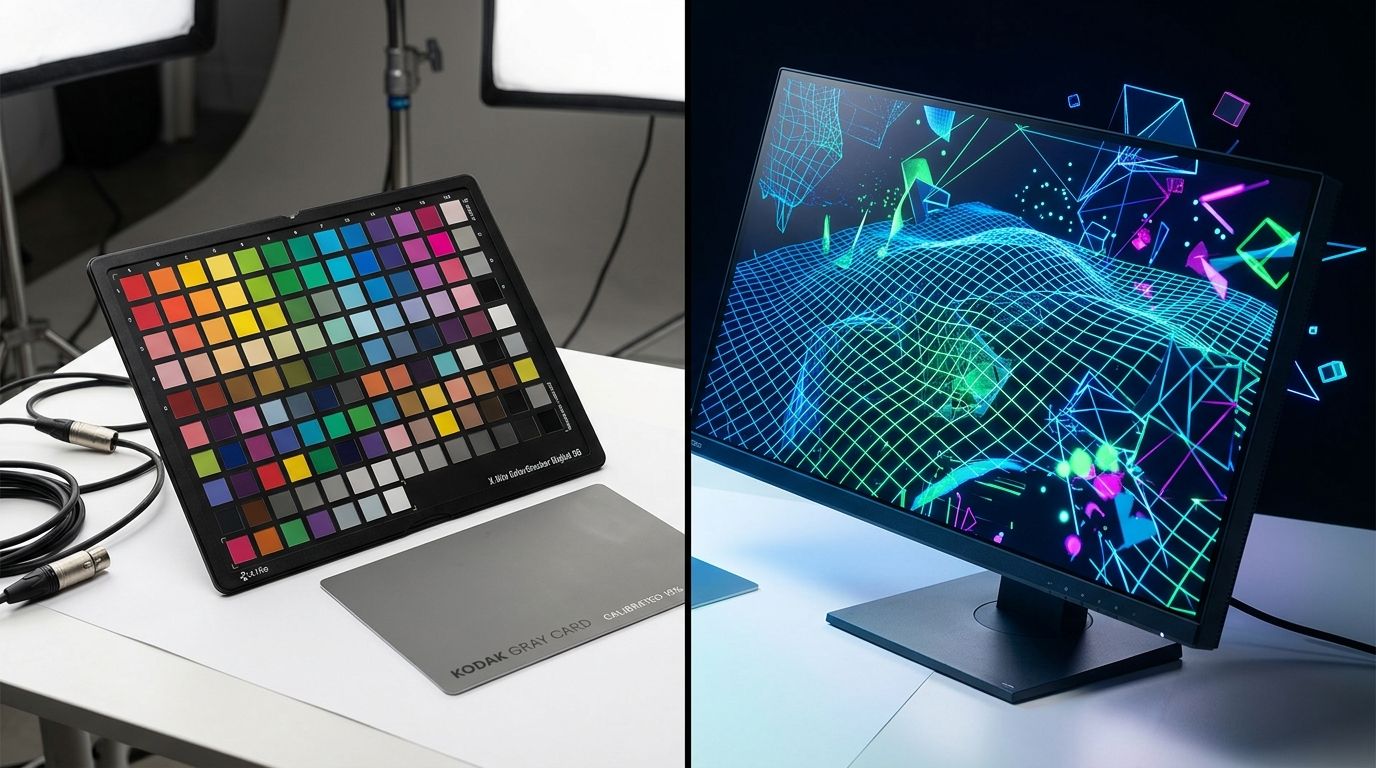
AI product photography renders complex lighting and material textures that signal luxury without the cost of a physical set build.
How AI product photography levels the playing field
Any brand still running a full studio shoot for standard catalog images in 2026 is paying for logistics, not quality. The invoice is not just the photographer. It is studio rental, the stylist half day rate, the art director back and forth, and the three weeks between the initial brief and final delivery. Most founders I have talked to cannot name the actual per image cost of their last shoot. When they calculate it, the number is usually somewhere between $80 and $200 per finished image.
AI product photography changes that math completely. Upload a product image, pick a visual mode, and CherryShot AI generates campaign-ready photos in minutes. The per image cost drops to under $5. The turnaround goes from weeks to an afternoon.
(Worth noting: this is less about replacing photographers entirely and more about eliminating the scheduling dependency that adds three weeks to every product launch. A good photographer still makes sense for hero imagery. For catalog volume, the math simply does not work anymore.)
Closing the gap with larger competitors
You no longer need a massive marketing budget to look like a category leader. By utilizing AI platforms, emerging DTC brands can surround their products with premium lifestyle context. You can place your new fragrance line on a marble vanity in Paris. You can drop your hiking boots onto a photorealistic mountain ridge at golden hour.
Evaluating AI vs studio photography costs reveals a massive operational advantage. When your visual asset creation takes minutes instead of weeks, your marketing team can test a wider variety of aesthetic angles. You can launch tailored ad creatives for different demographics without booking separate shoot days. This agility is how smaller brands are currently stealing market share from legacy incumbents.
Understanding the limitations of artificial intelligence
AI product photography is not flawless. If you sell intricate cut glass chandeliers or highly reflective mirrored furniture, general AI models will struggle to map the refractions perfectly without manual cleanup. The technology is phenomenal, but highly complex transparencies still require oversight. However, for apparel, cosmetics, packaged goods, and standard homewares, the output matches or exceeds what a mid tier agency delivers.
Redefining what makes a product photo successful
We have entered an era where visual execution is commoditized. Because anyone can generate a beautiful image, the standard for what constitutes a "good" image has risen. You can no longer rely on the mere fact that your photo is in focus. It must evoke a specific mood. It must align perfectly with the target audience aspirations.
Creating product photos that convert now requires strategic curation rather than logistical heavy lifting. With a tool like CherryShot AI, you have the freedom to experiment. If the Loud Luxury visual mode does not resonate with your audience, you can instantly pivot to the Minimalist mode without burning your quarterly budget. You become an art director of your own brand equity, rather than a project manager chasing freelancers for wetransfer links.
| Production Factor | Traditional Studio Shoot | AI Product Photography |
|---|---|---|
| Cost per image | $80 to $200+ | Under $5 |
| Turnaround time | 2 to 4 weeks | Under 10 minutes |
| Visual flexibility | Locked to the physical set | Unlimited environments |
| Brand consistency | Varies by photographer | Strictly maintained by AI models |
The brands getting the most out of this market shift are not the ones with the biggest budgets. They are the ones launching the most SKUs per quarter. When you can generate imagery for a new colorway in twenty minutes instead of booking another shoot day, the bottleneck shifts from production to ideas. Your brand credibility no longer relies on your bank account. It relies entirely on your taste.
Key Takeaways
- Consumers use image quality as an immediate subconscious proxy for product manufacturing quality.
- AI product photography completely eliminates the financial moat previously held by massive legacy retailers.
- Brand credibility requires absolute visual consistency across your entire product catalog.
- The real advantage of AI is decoupling your launch schedule from freelance photographer availability.
Frequently Asked Questions
How does product photography affect ecommerce brand credibility?
Product photography serves as a direct proxy for actual manufacturing quality in the mind of a digital consumer. Since buyers cannot physically hold your item, they rely entirely on visual presentation to evaluate its material worth. Displaying sharp focus, professional lighting, and realistic shadows proves your brand has the financial stability and discipline to maintain high standards across all operations.
Can AI replace professional product photography for brand credibility?
Artificial intelligence replaces traditional photography for standard ecommerce requirements by producing images indistinguishable from actual studio shoots. Buyers only evaluate the final visual result, meaning photorealistic lighting and accurate textures build identical trust regardless of how the file was generated. Generating high-volume catalog assets or lifestyle variations with software eliminates weeks of scheduling delays while maintaining the exact aesthetic standards required by modern retail consumers.
What photography quality do I need for a credible ecommerce brand?
Credible ecommerce brands require imagery that removes all visual hesitation by mirroring the aesthetic standards of premium retail environments. Your catalog must feature sharp focus on material details, consistent color grading across every SKU, and believable shadows that ground the item in reality. Integrating contextual lifestyle shots that show the item in a realistic aspirational setting establishes the professional baseline modern buyers demand before completing a checkout.
How do DTC brands compete visually with larger companies?
Direct-to-consumer brands compete visually by adopting artificial intelligence platforms that decouple aesthetic quality from massive production budgets. Instead of spending thousands on daily studio rentals, smaller operators generate premium lifestyle assets using basic reference files. Producing a high volume of tailored, high-resolution visual content at a fraction of the cost allows emerging operators to mimic the visual authority of legacy competitors with massive marketing departments.
What is the visual quality threshold for brand credibility in ecommerce?
The visual quality threshold is the exact point where technical imperfections stop distracting buyers from the physical item you are selling. Customers who notice messy staging backgrounds, incorrect yellow lighting temperatures, or grainy image resolution immediately classify the seller as an amateur operation. Maintaining absolute visual consistency with rich lifestyle context and professional-grade lighting proves the business is legitimate and prevents immediate cart abandonment.
You cannot afford to look like an amateur when the tools to look like a category leader are readily available. Bring your brand visual standards into the modern era without draining your operational budget. By utilizing CherryShot AI, you ensure every single product you launch carries the inherent credibility of a massive enterprise campaign. Give your customers a reason to trust you the moment they see your products.
Audit your product page visuals before launching your next ad campaign
Review your top three selling items on a mobile screen to see if the lighting and shadows look consistent. If the visuals feel disjointed or amateur, you are actively wasting your ad spend on traffic that will not convert. Generate cohesive, studio-grade replacements in minutes with CherryShot AI to protect your profit margins.
Try CherryShot AI