Creative Product Photography: Going Beyond the White Background to Win Attention
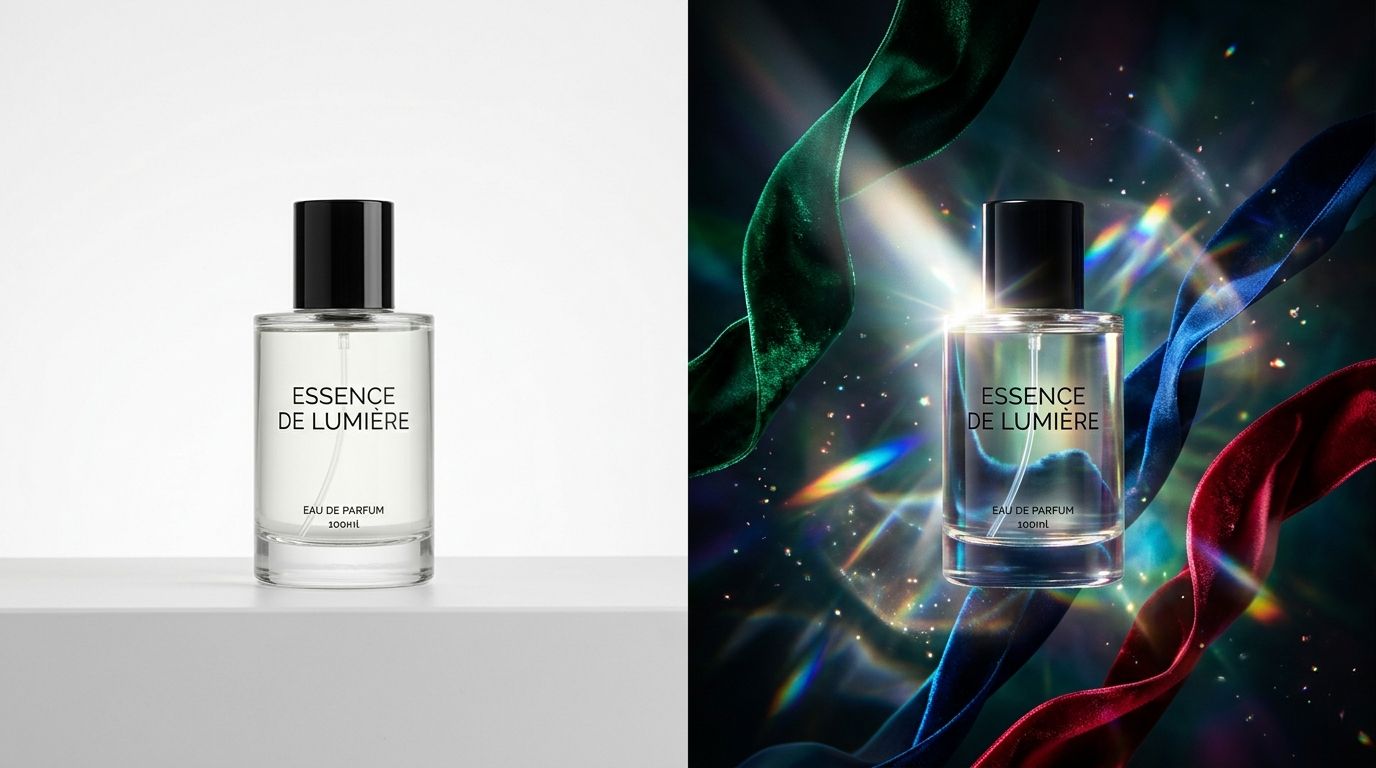
Stop treating your product photography like a visual inventory list. If a potential customer is rapidly scrolling through their social feed, a standard white background product shot is functionally invisible. Creative product photography forces the scroll to stop. It leverages light, context, and unusual environments to make your item feel like a piece of a larger story rather than an isolated object waiting in a warehouse.
Definition
Creative product photography refers to the practice of staging items within stylized or contextual environments designed to evoke an emotional response rather than just technical clarity. It uses specific lighting, props, and setting choices to differentiate a brand from its competitors on visual platforms.
White background photography is a necessary commodity. Creative product photography is a brand moat.
(Worth noting: you still need standard white background shots for Amazon compliance, Google Shopping feeds, and basic utility. Do not throw them out entirely.)
The trade-off has always been the cost of execution. Developing highly artistic product photography concepts takes serious time. Translating those concepts into reality usually requires expensive physical sets, custom lighting rigs, and styling teams that devour your marketing budget before you even run a single ad. Many founders simply default back to basic shots because they cannot justify a $6,000 day rate for five creative images.
10 Creative Product Photography Concepts to Steal
Any brand still running a massive physical studio shoot for creative variations in 2026 is paying for logistics rather than quality. With AI product photography, the entire scaling mechanism changes. You upload a basic product image, pick a visual mode, and CherryShot AI generates campaign-ready photos in minutes. The per-image cost drops from $150 to pennies.
Here are ten unique product photography concepts you can apply to your catalog today, along with the easiest path to execute them at scale.
| Style Approach | Primary Benefit | Ideal Platform |
|---|---|---|
| Minimalist Monochrome | Focus on silhouette | Brand Website |
| Loud Luxury Flash | VIP social status | Instagram/TikTok |
| Environmental Context | Real-world utility | Google/Pinterest |
1. Monochromatic Color Blocking
Color blocking product photography relies on immersing your product in a world made entirely of its own dominant color. If you sell a matte yellow skincare tube, you place it on a yellow acrylic block against a yellow seamless paper backdrop. This technique eliminates visual noise. The customer is forced to focus entirely on the silhouette and texture of your packaging.
When you are choosing impactful backgrounds, monochrome setups signal modern luxury. It takes extreme precision to light a physical monochromatic set without losing the product edges. Inside CherryShot AI, you simply select the Minimalist mode and let the engine construct the perfect tonal match.
2. Hard Light and Dramatic Shadows
For the last decade, ecommerce was dominated by softbox lighting. Everything was perfectly illuminated, perfectly soft, and perfectly boring. Dramatic product lighting is the antidote. By using a single, hard light source, you cast deep, sharp shadows across the set. This emulates brutal mid-day sunlight slicing through a window blind.
Hard light gives your product a gritty, tactile reality. It works exceptionally well for sunglasses, sharp-edged electronics, and architectural cosmetics. To get this look without buying specialized strobe modifiers, run your flat assets through the Magazine mode.
3. The "Accidental" Paparazzi Flash
This is an offshoot of dramatic lighting but carries a completely different cultural weight. The paparazzi aesthetic uses a direct, on-camera flash against a slightly darker background. It creates a harsh white halo around the product and a pitch-black drop shadow directly behind it.
It feels like a celebrity was caught leaving a club holding your product. Streetwear brands, edgy cosmetic lines, and modern beverage companies thrive on this style. Use the Loud Luxury mode to bathe your product in that exclusive VIP glow.
4. Raw Environmental Context
A studio set can only do so much heavy lifting. Environmental product photography takes the item and shoves it into the real world. A rugged hiking boot resting on wet slate. A high-end serum balancing on the edge of a marble sink with water droplets splattered across the glass.
This approach is crucial for mastering lifestyle photography because it answers the customer's subconscious question of how the product fits into their life. Choose the Lifestyle mode to generate these hyper-realistic, grounded environments without needing to hike up a mountain with a camera crew.
5. The Messy Human Element
Perfectly styled lifestyle shots look like stock photos. Authentic storytelling product photos look slightly ruined. A coffee cup with a lipstick stain on the rim next to your planner. A half-unpacked shipping box. Crumpled linen sheets beneath your sleepwear line.
Customers trust images that feel like they were taken by another consumer. It borrows the visual language of user-generated content but maintains professional resolution. The Influencer mode is designed specifically to generate this curated messiness.
6. Surreal Proportions and Scaling
If you want to instantly disrupt a viewer's expectations, mess with physics. Place a tiny bottle of hot sauce next to a jalapeño the size of a minivan. Stand your jewelry up against a mountain range where the rings are larger than the peaks.
Playing with scale requires effective use of props, but in a digital environment, your prop budget is unlimited. Surreal scaling is highly memorable because the brain takes an extra second to process the visual anomaly. The Avant Garde mode handles these dreamlike proportions perfectly.
7. Deconstructed Ingredients
If your product relies on natural materials, show the math. Deconstructed concept product photography surrounds the finished bottle with the raw elements that went into it. A vanilla-scented candle sitting in a field of raw vanilla beans and crushed honeycomb. A leather wallet resting on untreated animal hide.
This strategy visually proves the quality of your inputs before the customer reads a single bullet point. Use the Create Custom mode to prompt exactly which raw ingredients should frame your product.
8. High-Society Editorial
Sometimes you need to treat a $25 item like it costs $500. High-fashion editorial context relies on expensive-looking materials. Plinths made of solid travertine, crushed silk fabrics, and classical Roman architectural elements in the background.
You are selling aspiration. The product photography inspiration here comes straight from glossy magazines. Sourcing real marble blocks for a local studio shoot will destroy your shipping and rental budget. Select the Luxury mode to automatically place your SKUs into premium, high-society contexts.
9. Micro-Textures and Macro Focus
Get uncomfortably close. Instead of showing the entire product, crop in so tight that the texture of the fabric or the grain of the wood becomes the entire landscape of the image. The product photography inspiration here is sensory. You want the customer to feel the ridges of the material through their screen.
This is especially vital for apparel and luxury goods where material quality dictates the price tag. Upload your tightest reference shots into the Upload Ref mode to generate compelling macro environments that match your specific textures.
10. Defying Gravity
Nothing says "creative product photos" quite like a heavy object hovering in mid-air. Splashing liquids, floating ingredients, and suspended products create immense dynamic energy. In a traditional studio, this requires nylon strings, dropping products into fish tanks, and hours of tedious Photoshop work to paint out the rigging.
When you pay a studio for a splashing water shot, you are literally paying for the cleanup. Bypass the mop entirely. Use the Avant Garde mode to generate dynamic, frozen-in-time movement that stops the scroll.
The End of the Studio Bottleneck
Creative product photography used to be a luxury reserved for massive retail brands with six-figure marketing budgets. Now, it is a baseline requirement to compete in the feed.
The brands launching the most compelling visuals are not outspending you. They are out-producing you. When you can generate ten different artistic product photography concepts for a single new SKU before lunch, your bottleneck shifts from logistics to pure imagination. Upload your product, choose your aesthetic, and let CherryShot AI handle the heavy lifting.
Scale your creative product photography for your next ad campaign
You have the concepts, now you need the output. Audit your current product page images and identify which SKUs need a high-impact creative refresh for your upcoming social ads. Apply these creative modes to your catalog today to increase your click-through rates.
Try CherryShot AIFrequently Asked Questions
What makes a product photo creative?
Creative product imagery places an item in a specific context to tell a story or trigger an emotion. It moves away from clinical catalog lighting by introducing elements like harsh shadows, intentional props, or dramatic environments. These visual choices catch a potential customer's attention as they scroll through their feed. Thoughtful staging converts a standard object into a compelling narrative piece that stops the viewer in their tracks.
How do I make my product photos more interesting?
Adjust your lighting source to create contrast. Ditch flat softboxes for hard, direct light to cast bold shadows that define product shapes. Incorporate authentic human elements like a rumpled bed sheet or a coffee cup left on a table to build a sense of reality. You should also experiment with unconventional angles, such as shooting straight up from the floor to change the perspective of the item.
What creative backgrounds work for product photography?
Textured surfaces like wet stone, rough concrete, and crushed velvet provide immediate visual depth. Monochromatic paper backdrops that match your product color create a clean, minimalist look that emphasizes the item silhouette. Authentic lifestyle settings like messy bathroom counters or natural outdoor environments provide a level of credibility that sterile studio setups often lack. Select backgrounds that ground your product in a tangible, real-world experience.
Can AI generate creative product photography scenarios?
Modern AI tools now go far beyond simple background removal. You can upload a standard product image and select specialized visual modes to place your item into highly styled, artistic environments. These platforms recreate complex lighting and professional set design without the need for expensive physical studio rentals. Choosing the right mode allows for rapid creation of campaign-ready visuals that feel authentic and high-end.
What product photography trends are working in 2026?
Current shoppers prefer raw, unpolished aesthetics over perfect studio sets. Trends like paparazzi-style flash, user-generated content vibes, and surreal macro photography drive significantly higher engagement than traditional, sterile presentations. Brands that prioritize authentic storytelling through their imagery consistently outperform those using dated catalog techniques. Focusing on these unrefined visual languages helps build a stronger, more relatable connection with your target audience.