Ecommerce Conversion Funnel Leak: Why Paid Traffic Drops Off
You run a paid social campaign. The click-through rate looks fantastic. The cost per click is down. Traffic is flooding your Shopify store. But your return on ad spend is bleeding out. Most founders immediately blame the ad targeting or the checkout process. The reality is that the biggest ecommerce conversion funnel leak for paid traffic happens exactly where the click lands. Visitors drop off on the product page because the visual promise of the ad does not match the reality of the store.
Definition
An ecommerce conversion funnel leak occurs when potential customers abandon their purchase journey at a specific stage, resulting in lost revenue. For paid traffic, this drop-off most frequently happens on the product detail page when the on-site experience fails to match the expectations set by the ad creative.
I spent years running paid traffic for direct-to-consumer brands, and the pattern was always the same. We would launch a fresh creative asset, watch the top-of-funnel metrics improve, and then stare at a flat revenue graph. We blamed the algorithms. We blamed the weekend. The truth was that we were paying to send highly stimulated, impulse-driven shoppers onto a sterile product page that killed their excitement instantly.
If you are trying to fix a leaky funnel by tweaking your checkout buttons or adding trust badges, you are operating on the wrong end of the patient. The problem is almost certainly happening the moment the page loads.
Where does paid traffic actually drop off?
We need to define what paid traffic is before we can analyze why it fails to convert. Organic search traffic consists of people looking for a specific solution. They have intent. Paid social traffic consists of people who were looking at photos of their friends and were temporarily distracted by your product. They have zero inherent loyalty to your brand and very little patience.
The myth of checkout abandonment
Cart and checkout abandonment are massive issues for the industry as a whole. Software companies have built entire business models around recovering abandoned carts with email flows and SMS reminders. Because these tools exist, founders spend a disproportionate amount of time looking at checkout metrics.
But when you look at a cohort of paid traffic, the vast majority of those users never even make it to the cart. If a thousand people click your ad, maybe forty of them will add an item to their cart. Thirty of those might initiate checkout. Twenty might buy. While losing ten people at checkout hurts, you lost nine hundred and sixty people on the product page. That is your ecommerce conversion funnel leak.
Why the product page takes the hit
The product page drop off happens because it is the first moment the user has to do actual work. Clicking an ad is effortless. Scrolling a landing page requires active evaluation. The user has to look at the photos, read the price, check the shipping terms, and decide if the product is worth parting with real money.
This evaluation phase is brutal. If the page loads slowly, they leave. If the price feels disconnected from the perceived value of the product, they leave. If visitors are clicking but immediately leaving, Clicks But No Sales? Your Product Images Might Be to Blame covers why high click-through rates often hide terrible on-site engagement. The visual presentation of your product is the only thing validating the price tag.
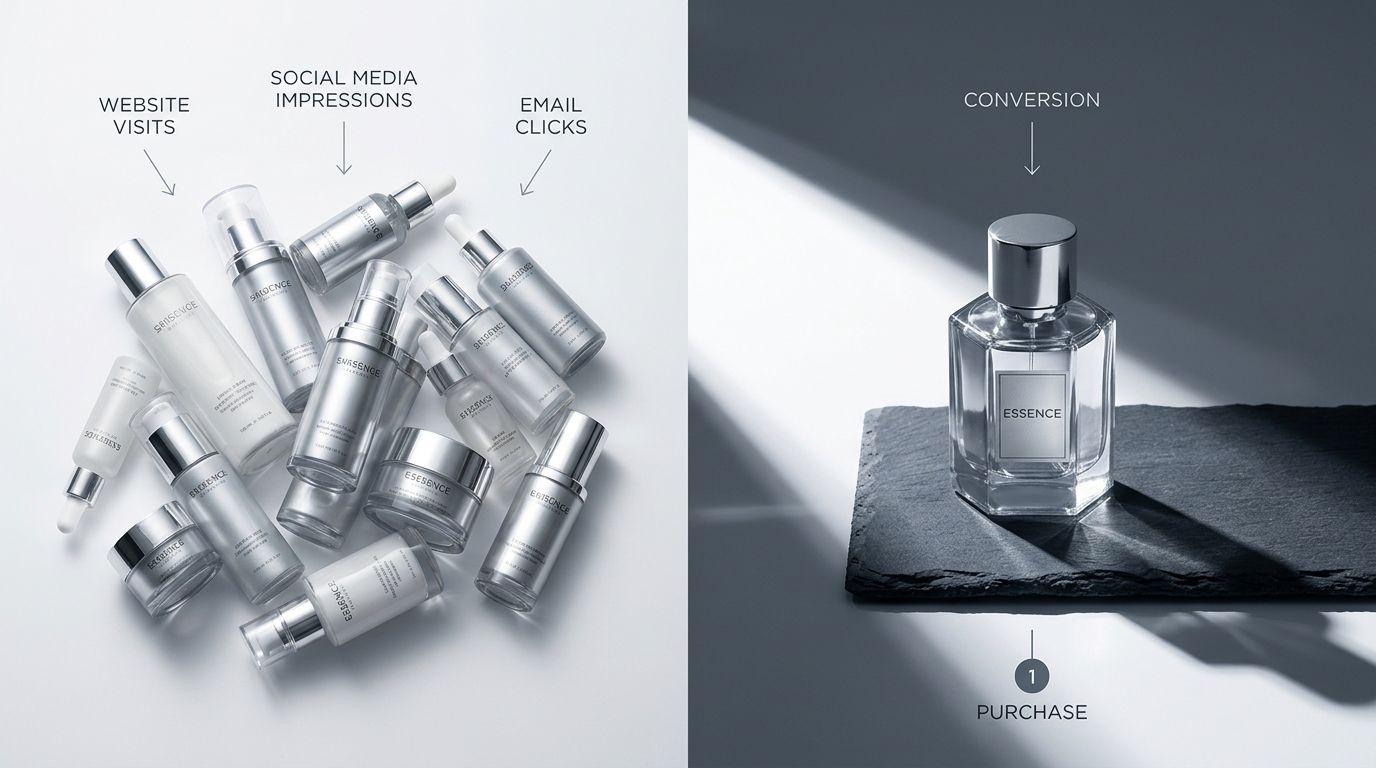
A typical ecommerce funnel analysis shows the steepest drop-off occurring before the add-to-cart action.
Diagnosing an ecommerce conversion funnel leak
You cannot fix a leak if you do not know exactly where the water is escaping. Most ecommerce platforms provide a basic funnel view, but they blend organic, direct, and paid traffic together. This creates a blended average that hides the specific behavior of your paid buyers.
Reading the signals in Google Analytics
To find the leak, you need to isolate your paid traffic in Google Analytics. Create a segment specifically for users arriving via Meta ads, TikTok ads, or Google Ads. Look at the specific behavior flow for these users.
You are looking for three specific metrics. First, look at the bounce rate for your landing pages. If paid traffic is bouncing at a rate higher than 70%, your ad creative is making a promise your product page is not keeping. Second, look at the add-to-cart rate. This is the ultimate health metric of a product page. Third, look at time on page. A very short time on page means immediate rejection. A long time on page with no add-to-cart action means the user was interested but got confused or encountered friction.
Using session recordings effectively
Quantitative data tells you where the leak is. Qualitative data tells you why it is happening. Tools that record user sessions are essential for diagnosing product page drop-offs.
(Worth noting: using session recordings is invaluable, though you have to accept that you will waste hours watching people leave their tabs open and go make a sandwich.)
When you watch recordings of paid traffic, pay attention to how they interact with your image gallery. Do they swipe through every photo? Do they zoom in? Do they immediately scroll past the images to read reviews? Most paid users will spend 80% of their time on the page looking at the image carousel. If they swipe through two photos and then leave, your visuals have failed the inspection.
The visual gap between the ad and the product page
Let us talk about the most common reason paid traffic bounces. I call it visual whiplash. Your media buyer creates an incredible, dynamic ad. It uses bold colors, fast cuts, and lifestyle imagery. It sells a feeling. The user clicks the ad because they want that feeling.
They land on your product page and are greeted by a tiny, poorly lit photo of your product sitting on a stark white background. The feeling is gone. The context is gone. The item suddenly looks like a cheap commodity.
Selling a lifestyle versus showing a catalog
Catalog photography has a place. You need clear, unobstructed views of your product for people who are already convinced they want to buy. But paid traffic is not convinced yet. When a highly stylized ad drops a visitor onto a sterile product page, the disconnect kills the sale. The Visual Gap Between Ads and Product Pages explains how this single alignment error wastes thousands of dollars in ad spend every month.
You have to maintain the visual momentum. If the ad was moody and dark, the product page needs moody and dark hero images. If the ad featured the product in a luxury setting, the product page needs to reinforce that luxury positioning.
| Image Strategy | Standard Catalog Photo | Campaign-Aligned Lifestyle Image |
|---|---|---|
| Primary Function | Clear product documentation | Visual persuasion and momentum |
| Best Use Case | Bottom-of-funnel validation | Top-of-funnel paid traffic landing pages |
| Production Time | Weeks per traditional studio shoot | Minutes using AI generation |
Bridging the gap without reshooting everything
The traditional solution to this problem was to schedule another photo shoot. If your new ad angle worked, you would brief a photographer, rent a location, and try to get matching product page assets three weeks later. By the time you got the photos back, ad fatigue had already set in and you were testing a different angle.
You cannot run an agile paid media strategy if your product photography takes weeks to produce. This is where AI product photography completely changes the operational workflow. With CherryShot AI, you can bridge the visual gap in minutes. If your winning ad features a minimalist aesthetic, you upload your standard product photo, select the Minimalist mode, and generate campaign-matching assets instantly. The cost per image drops from eighty dollars to a few dollars. The bottleneck is completely removed.
Analyzing the paid traffic conversion funnel
When you align your page visuals with your ad creative, you are directly impacting your return on ad spend. A conversion rate jump from 1.5% to 2% might not sound like much in a boardroom, but it represents a massive increase in actual revenue when you are pouring thousands of dollars into paid channels.
Traffic quality versus page quality
A common trap founders fall into is endlessly tweaking their ad targeting while ignoring the landing environment. You can acquire the highest quality traffic in the world, but if the product page looks cheap, the traffic will not convert. Conversely, small adjustments can salvage a bleeding campaign. Product Page Fixes to Increase Conversion Rate breaks down the exact layout changes that keep paid traffic moving toward the cart.
We often assume that users read our compelling product descriptions or care about our carefully crafted brand story. The reality is that paid traffic decides whether to trust your brand based almost entirely on the quality of your images and the clarity of your offer.
The ROAS impact of a leaky funnel
Let us look at the math of a funnel leak. If you are paying one dollar per click and sending one thousand visitors to your site, you have spent one thousand dollars. If your product page converts at 1%, you get ten sales. If your average order value is fifty dollars, your revenue is five hundred dollars. You are losing money.
If you plug the leak on the product page by upgrading your imagery and reducing friction, and that conversion rate rises to 3%, those same one thousand clicks now yield thirty sales. Your revenue is fifteen hundred dollars. The ads did not change. The targeting did not change. The product page simply stopped rejecting the traffic.
Frequently Asked Questions
Where does most paid traffic drop off in the ecommerce conversion funnel?
Most paid traffic drops off on the product detail page right before adding an item to the cart. This happens because paid visitors arrive with lower intent than organic searchers and make split-second evaluations about whether the landing environment matches the ad creative. If your product images or pricing structure introduce even minor friction, these users bounce immediately instead of proceeding.
How do I find a conversion funnel leak in my ecommerce store?
Segment your Google Analytics data specifically for paid traffic to identify the exact step where users exit. Comparing the drop-off rates between page views, add-to-cart actions, and checkout initiation reveals where the most significant friction occurs. Pair this quantitative funnel data with session recordings to watch how visitors interact with your image gallery and pricing before they abandon the page.
Why do paid traffic visitors drop off on the product page more than at checkout?
Paid traffic drops off on the product page because these visitors have zero brand loyalty and require immediate visual persuasion. While checkout abandonment stems from logistical issues like unexpected shipping costs, product page abandonment occurs when the site fails to validate the impulse interest generated by the ad. Replacing sterile catalog shots with high-context images directly fixes the leading cause of this lost momentum.
What visual changes fix a paid traffic product page drop-off?
Aligning your product page visuals directly with the ad creative that drove the click prevents immediate drop-offs. Maintaining visual momentum requires replacing standard white-background catalog shots with high-context lifestyle imagery that matches the exact angle and aesthetic from your campaign. Adding variant-specific photos ensures that when a user selects a different color, they see a full set of accurate images rather than a generic placeholder.
Key Takeaways
- The majority of paid traffic drops off on the product page before ever adding an item to the cart.
- Funnel leaks are most easily identified by isolating paid traffic in analytics and tracking the add-to-cart rate.
- A visual gap between highly stylized ads and boring product pages destroys visitor momentum and trust.
- Aligning product page imagery with your ad creative is the fastest way to improve return on ad spend.
Stop pouring ad budget into a bucket with a hole in the bottom. Your media buyers are doing their job by getting the click. Your product page needs to step up and close the sale. If your visual assets are the bottleneck holding your conversion rate down, it is time to change how you source your imagery. Head over to CherryShot AI to generate campaign-ready photos in minutes and plug the leak in your funnel.
Audit your product page visuals against your active ads
Open your highest-converting ad campaign in one tab and your product landing page in another. If the lighting, mood, and context do not match perfectly, you are actively losing sales. Generate campaign-matching product photos instantly to close the visual gap.
Try CherryShot AI