Food Product Photography for Ecommerce: How to Photograph Packaged Food That Drives Sales
Food product photography for ecommerce usually splits into two completely different jobs. You are either styling fresh dishes with tweezers, or you are fighting harsh reflections on glossy snack bags. If you sell packaged goods online, your priority is the latter. Success comes down to managing glare, accurately representing the label, and building enough visual context so the shopper can imagine the product in their own pantry.
Definition
Packaged food photography is the technical discipline of capturing clear, accurate images of grocery items in their retail packaging. It focuses on controlling reflections on materials like plastic, glass, and foil while maintaining brand identity and label legibility.
Traditional studios charge a massive premium for grocery product photography because lighting shiny objects takes hours. Founders often sit through full-day shoots just to walk away with a handful of usable angles for a new flavor launch. The alternative is bringing the process in-house and relying on modern software to handle the heavy lifting of scene generation.
The Physics of Packaged Food Photography
When you point a light at a cotton t-shirt, the fabric absorbs and diffuses the illumination. When you point that same light at a mylar bag of coffee beans, the light bounces directly back into the lens. The result is a glaring white hotspot right over your carefully designed logo.
This is the core challenge of grocery product photography. Most consumer packaged goods are wrapped in highly reflective materials. You have glass jars filled with pasta sauce, glossy cardboard cereal boxes, and metallic foil wrappers. Each of these surfaces requires a distinct lighting strategy.
Controlling the Light
Photographers solve the reflection problem by making the light source as large and soft as possible. They do not point bare strobes at the product. Instead, they use massive softboxes, diffusion paper, and polarizing filters. They essentially build a tent of soft white light around the jar or bag.
Setting up this environment takes significant time. If you bump a light stand by an inch, the reflection moves across the glass jar and ruins the shot. You are paying the photographer for their patience and precision, not just their camera gear. If you are trying to shoot your own catalog, getting the lighting right is the first hurdle. Learning the correct lighting setup for ecommerce is mandatory if you want your packaging to look premium rather than cheap.
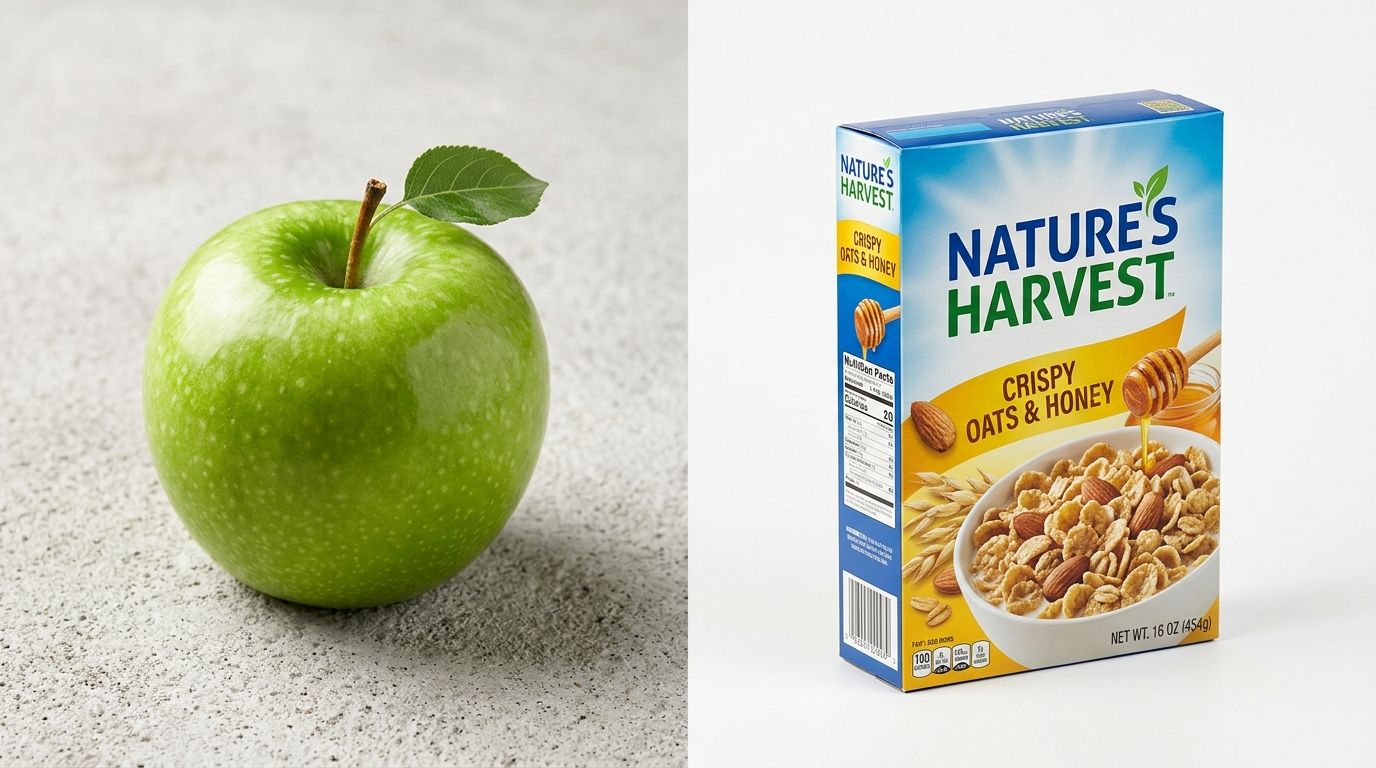
Shooting packaged food requires managing reflections on shiny wrappers while keeping the brand logo perfectly legible.
Packaged vs. Fresh Food Photography
Many founders hire a food photographer expecting beautiful results for their packaged goods, only to be disappointed. They do not realize that food photography is divided into two distinct disciplines.
Fresh food photography is about moisture and timing. A perfectly roasted chicken only looks perfect for about ten minutes under studio lights before the skin wrinkles. A scoop of ice cream will melt. To shoot fresh food, you need a dedicated food stylist who uses tweezers to place sesame seeds on a bun and sprays glycerin on vegetables to fake fresh dew.
Packaged food photography requires none of that. The product looks exactly the same at hour one as it does at hour six. The skillset required is purely technical. You need someone who understands geometry, scale, and reflection.
| Feature | Packaged Food | Fresh Food |
|---|---|---|
| Primary Challenge | Reflection management | Product wilting or melting |
| Required Tools | Polarizers and large diffusers | Tweezers and glycerin |
| Core Skill | Geometry and lighting | Styling and timing |
The Multi-Pack Problem
Grocery ecommerce relies heavily on bundles and variety packs to increase average order value. Photographing these creates a new set of problems. Stacking three different flavored boxes perfectly requires careful alignment.
Often, the best way to show a variety pack is from directly above. Getting the camera perfectly parallel to the floor without casting shadows on the products below is difficult. A solid flat lay photography guide will help you align multi-packs so the customer can read every flavor label at a glance.
Building Context for Grocery Ecommerce
A pristine image of a jar on a pure white background is necessary. Amazon, Shopify, and Google Merchant Center all prefer or require this format for the main product thumbnail. However, a white background does absolutely nothing to make the shopper hungry.
To drive conversions, you must introduce context. A jar of salsa looks sterile on a white background. Place that same jar next to a bowl of fresh tortilla chips on a rustic wooden table, and suddenly it looks like a Friday night. Choosing product backgrounds strategically dictates how the customer perceives your brand quality.
Appetite Appeal Without the Kitchen
Building physical sets to create this context is expensive. Renting a beautiful kitchen studio costs thousands of dollars a day. Sourcing cutting boards, fresh ingredients, and elegant flatware adds up rapidly.
The traditional solution has been composite editing. A retoucher cuts the product out of a studio shot and pastes it onto a stock photo of a kitchen. The results are usually terrible. The shadows never match. The lighting direction is wrong. The scale feels off. If you want to maintain brand integrity, you have to find a better way to generate lifestyle imagery.
AI Food Product Photography
Any brand still running a full studio shoot for standard catalog images in 2026 is paying for logistics, not quality. The invoice is not just the photographer. It is the prop stylist, the studio rental, and the weeks of back-and-forth edits.
AI product photography completely rewrites the budget for packaged goods. You upload a basic, well-lit photo of your product. You select a visual mode. CherryShot AI then generates campaign-ready photos in minutes. The AI understands the geometry of your packaging and generates appropriate shadows, reflections, and environmental lighting that perfectly match the new background.
Worth noting, AI is exceptional at placing a sealed package in a beautiful scene, but if you need to show the exact microscopic crumb structure of a freshly baked cookie, you still want a traditional macro lens. A good photographer makes sense for those highly textural hero shots.
Scaling Your SKU Count
The brands getting the most out of this technology are the ones launching multiple flavors or seasonal variations. When you can generate imagery for a holiday-themed box in twenty minutes instead of booking another shoot day, you can iterate much faster. You can drop your product into the Lifestyle or Influencer modes to get immediate assets for Instagram and TikTok.
A physical shoot might cost $100 per finished image when you factor in all expenses. With CherryShot AI, pricing starts at $10 for 50 images. The per-image cost drops to pennies. The turnaround time drops from weeks to an afternoon. This is how modern grocery ecommerce operators manage their margins while maintaining premium visual standards.
Optimize your grocery product pages today
Audit your existing product pages to identify which items lack lifestyle context. You can replace flat white-background images with high-conversion lifestyle scenes by processing your current product catalog through CherryShot AI.
Try CherryShot AIFrequently Asked Questions
How do I photograph packaged food for ecommerce?
Prioritize label legibility and accurate color representation for every shot you produce. Large, heavily diffused light sources minimize harsh reflections on plastic or glass packaging surfaces effectively. Place white bounce cards strategically to fill in shadows and maintain consistent brightness across the entire product frame during your studio session.
Can AI photograph food products?
AI product photography tools place packaged food items into realistic lifestyle scenes with high precision. Upload a basic photo of your sealed bag, jar, or box to generate a complete environment around the item. This approach works for grocery ecommerce because it removes the need to rent kitchen studios or hire prop stylists for every individual SKU.
What is the difference between packaged food and fresh food photography?
Fresh food photography emphasizes texture, moisture, and immediate appetite appeal in every single frame. This process requires food stylists, precise timing, and artificial additions like glycerin drops to fake condensation. Packaged food photography remains an exercise in geometry and reflection management to ensure shiny mylar bags or glass jars look dimensional without washing out the brand logo with excessive lighting glare.
What makes food product photography look appetizing?
Context and lighting drive appetite appeal for any packaged food item online. Plain white backgrounds rarely make a shopper crave a snack or desire a specific brand. Use warm, directional lighting that mimics natural morning or late afternoon sun to enhance realism. Include relevant props, such as a bowl of fresh ingredients beside a packaged sauce, to help the shopper visualize the final meal.
How do grocery brands photograph products for ecommerce?
Modern grocery brands capture their products against a neutral background during one highly controlled session. They then use AI image generators or composite editing to place that core image into dozens of seasonal or lifestyle contexts. This hybrid approach keeps their per-image cost low while ensuring they maintain enough visual variety for social media, email campaigns, and product pages.
Photographing packaged food requires a specific technical approach to manage reflections and maintain label clarity. While traditional studio setups solve the glare problem, they add massive scheduling delays and costs to every product launch. By capturing a clean base image and using AI to generate the surrounding lifestyle context, grocery brands can dramatically increase their visual output without destroying their marketing budget.
Stop waiting three weeks for a freelance photographer to deliver basic catalog shots. Upload your packaging to CherryShot AI and generate the lifestyle context your product pages need to convert.