Ghost Mannequin Photography for Fashion Ecommerce: The Technique, the Cost, and the AI Alternative
Ghost mannequin photography is the standard technique for showing the three-dimensional fit of clothing without the visual distraction of a model. You shoot a garment on a modular mannequin, shoot the inside collar separately, and pay a retoucher to stitch them together. It is an incredibly effective way to display product shape. It is also a slow, expensive logistics trap that eats into your margins and delays product launches by weeks.
Definition
Ghost mannequin photography is a commercial product imaging technique that composites two photographs to create the illusion of an invisible body wearing a garment. The process requires shooting the exterior of the clothing on a modular mannequin, then manually splicing it with a separate interior collar shot in post-production to show hollow three-dimensional volume.
Any apparel brand still running a full studio shoot for standard catalog hollow man photography in 2026 is paying for manual labor, not competitive advantage. The invoice is padded with studio rental time, styling prep, and manual Photoshop clipping paths. Software has already solved this workflow. You no longer need physical modular mannequins to render three-dimensional garment volume.
(I still tell fashion founders to hire a fantastic human photographer for their seasonal hero banners and highly styled editorial shots. But for the massive volume of basic product detail pages, the math on manual clipping paths simply does not work anymore.)
How the ghost mannequin effect actually works
Creating a ghost mannequin effect in ecommerce is an exercise in strict, repetitive consistency. It is not creative photography. It is manufacturing. The goal is to produce an invisible mannequin photography asset that looks exactly like the one shot six months ago, with the same lighting ratio, the same focal length, and the same hollow neck structure.
The physical studio setup
The process starts with specialized equipment. Standard retail mannequins do not work. Studios use expensive modular mannequins featuring removable neck, chest, and arm pieces. The stylist dresses the mannequin in the garment, carefully pinning the fabric in the back to create a tailored, symmetrical silhouette. They remove the neck piece of the mannequin so the camera can see the interior back collar of the shirt or jacket.
The photographer captures the front exterior of the garment. Then they completely undress the mannequin, turn the garment inside out, and shoot the back interior collar under the exact same lighting conditions. Every single SKU in your collection requires this double-shot process. A simple ten-piece capsule collection requires twenty precise, identically lit photographs just to gather the raw materials for post-production.
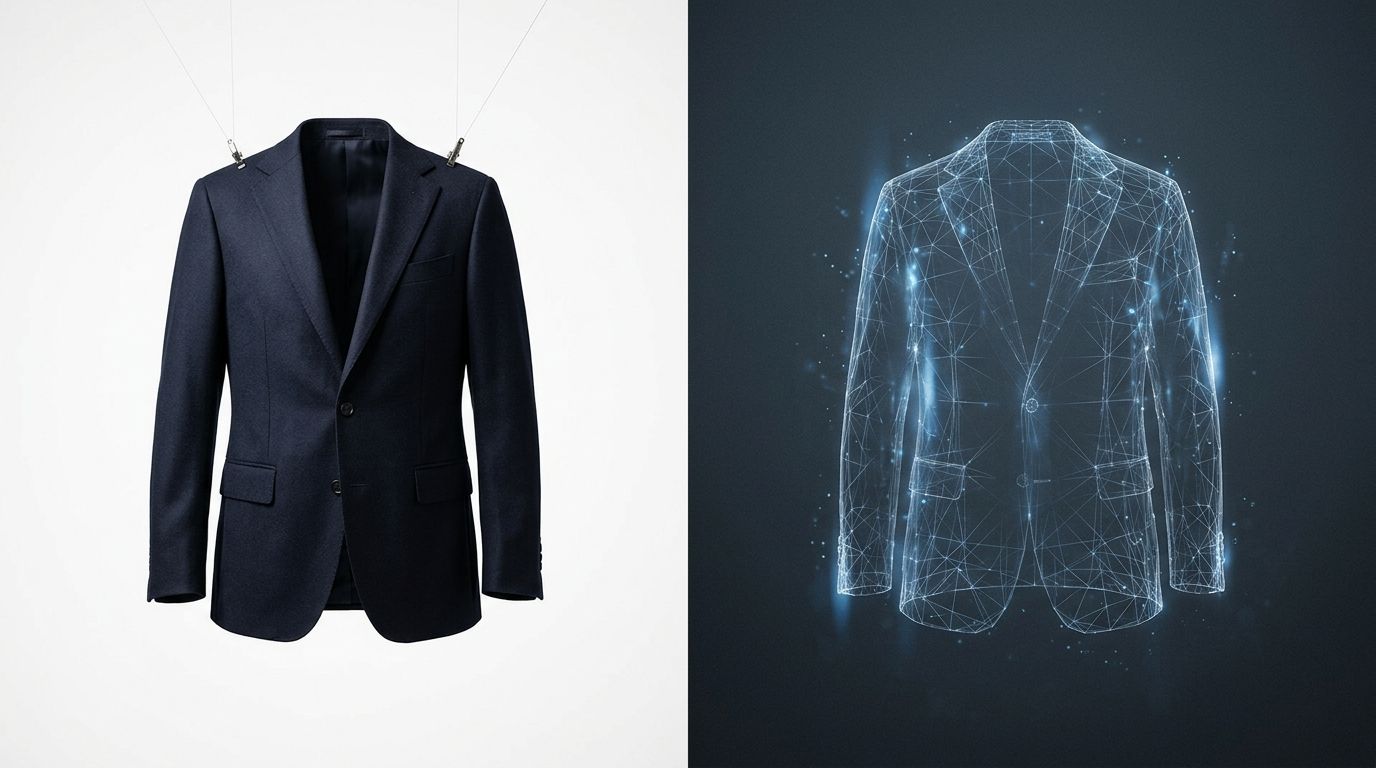
The traditional method requires shooting the exterior, shooting the interior lining, and manually merging them in Photoshop.
The Photoshop tax
The camera does not create the ghost mannequin effect. A retoucher does. After the shoot ends, the files are typically sent off to an agency where a human being opens Photoshop, selects the Pen Tool, and begins tracing the exact outline of your garment pixel by pixel.
They isolate the front of the garment and delete the background. They do the same for the interior collar shot. They layer the interior behind the exterior front. They use the Warp Tool to bend the collar so it matches the natural curve of the neck hole. Finally, they paint in artificial drop shadows inside the collar to give the illusion of depth. If the retoucher rushes the shadows, the garment looks flat and fake.
The real cost of hollow man photography clothing shoots
When founders calculate their apparel product photography budget, they usually just look at the photographer's day rate. That number is a lie. The true cost includes the retoucher, the stylist, the shipping logistics, and the massive delay in your go-to-market timeline.
Hard costs per SKU
High-volume commercial studios typically charge between $25 and $60 per garment for the basic ghost mannequin technique shoot. This covers the photographer, the lighting, and the physical studio space. It rarely covers the post-production.
Retouching the neck joint and clipping the paths costs an additional $3 to $15 per image depending on the complexity of the garment. A structured blazer requires much more Photoshop time than a basic cotton t-shirt. By the time the final files hit your Dropbox, your fully loaded cost is often hovering around $80 per finished SKU. Our breakdown of the real cost of product photography per SKU shows exactly how these line items compound as your catalog grows.
The hidden penalty of time
Cost is painful, but time is fatal in fashion ecommerce. You ship your new inventory to the studio. You wait for your scheduled shoot date. The studio shoots the collection and sends the raw files to their retouching team. The retouchers take a week to clip the paths and build the composites. You review the files, spot an error in a neck shadow, and wait another three days for revisions.
A standard product launch loses three to four weeks sitting in this pipeline. You are paying warehousing fees on inventory you cannot legally sell yet because you do not have the pictures to put on your website.
Can AI replace ghost mannequin photography?
Yes. The exact technical challenge that makes traditional ghost mannequin photography so expensive (rendering three-dimensional volume without a body) is a problem AI solves instantly.
Instead of booking a studio and a modular mannequin, brands upload a standard flat lay or a simple hanger shot of the garment into CherryShot AI. You select the visual output mode. The software understands the structural shape of a jacket, the drape of a skirt, or the tailoring of a collared shirt. It renders the volume natively, outputs a clean hollow neck, and delivers the asset in minutes.
Changing the production math
The math shifts entirely. The per-image cost drops from $80 down to under $5. The three-week studio delay collapses into an afternoon. When you need to release a new seasonal colorway, you do not have to wait until you have enough SKUs to justify booking a full studio day. You process the single new item and push it live instantly. Implementing AI fashion photography for clothing brands is less about replacing human artists and more about unblocking your inventory pipeline.
There is one genuine limitation. AI models still struggle with highly complex sheer layering, such as a transparent tulle dress worn over intricate lace undergarments, or very specific, culturally significant styling knots. For those specific edge cases, a human stylist adjusting fabric millimeter by millimeter on set remains the safest option. But for the remaining 95% of your catalog, the AI output matches the studio quality.
| Method | Average Cost Per SKU | Turnaround Time | Dependency |
|---|---|---|---|
| Traditional Studio Shoot | $40 to $80+ | 2 to 4 weeks | Shipping, booking, weather |
| Offshore Retouching Only | $5 to $15 | 3 to 7 days | Must provide perfect raw photos |
| CherryShot AI | Under $5 | Minutes | A basic flat lay or hanger photo |
Frequently Asked Questions
What is ghost mannequin photography?
Ghost mannequin photography is a commercial technique that creates the illusion of an invisible body wearing a specific garment. Studios achieve this by photographing the clothing on a modular mannequin, then capturing a separate image of the interior collar. You must hire a retoucher to manually merge these two files in post-production to build the final hollow, three-dimensional shape.
How much does ghost mannequin photography cost?
The fully loaded cost of ghost mannequin photography ranges from $40 to $80 per finished SKU. This total accounts for standard commercial studio fees of $25 to $60 per garment, plus manual retouching costs for complex clipping paths and neck joints. You must also budget for hidden expenses like inbound shipping logistics, stylist day rates, and rush processing during peak seasonal product launches.
How do I create a ghost mannequin effect in Photoshop?
Creating the ghost mannequin effect in Photoshop requires manual compositing of exterior and interior photographs. Retouchers use the Pen Tool to isolate the front of the garment, then layer the interior back shot underneath to fill the empty neck space. You must manually align the necklines, apply the Warp Tool to match the collar curvature, and paint artificial drop shadows to simulate realistic interior depth.
Can AI replace ghost mannequin photography?
Modern AI tools replace traditional ghost mannequin photography by generating three-dimensional volume without physical mannequins or manual retouching. The software analyzes a basic flat lay or hanger photograph to process the structural drape and tailoring of the garment. You convert these standard images into clean hollow catalog assets instantly, and can even generate images that show clothing on models without a photoshoot entirely.
What products work best with ghost mannequin photography?
Ghost mannequin photography works best for highly structured garments that require clear demonstration of fit and tailoring. Heavy winter jackets, blazers, and stiff collared shirts benefit from this hollow presentation to show volume and precise fabric drape. You should avoid this technique for sheer fabrics or strappy summer dresses, as those specific items require complex human curves and gravity to display accurately.
Key Takeaways
- Traditional hollow man setups require two separate physical photos merged manually by a retoucher.
- The actual cost of standard mannequin shoots usually lands between $40 and $80 per SKU.
- Studio scheduling and manual Photoshop work add an average of three weeks to product launch timelines.
- CherryShot AI replaces the entire process by generating three-dimensional volume directly from flat lays in minutes.
You do not have to accept a three-week delay just to get clean catalog images. When you remove the physical studio constraint, your product releases dictate your schedule, not your photographer's availability. Head over to CherryShot AI to start processing your next collection today.
Audit your studio bottlenecks before your next seasonal drop
Review your last commercial photography invoice to isolate the specific line items for post-production clipping paths and neck joints. If manual retouching is inflating your per-SKU budget and delaying inventory releases, test an automated workflow on your next batch of flat lays.
Try CherryShot AI