Should I Hire a Product Photographer or Use AI Photography? The Honest Decision Framework for 2026
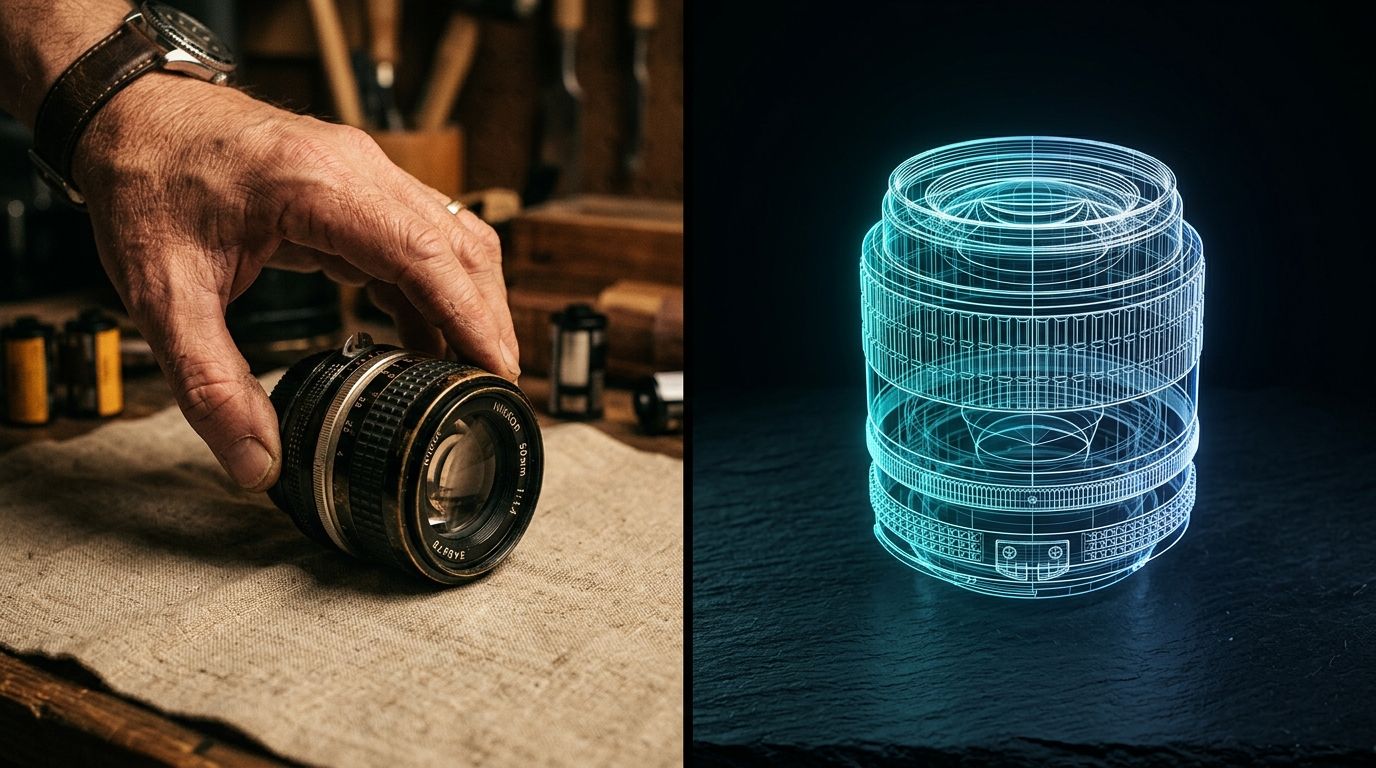
The math on visual production has changed. You are no longer just choosing between aesthetics, you are choosing your operating speed.
Should you hire a product photographer or use AI photography? The answer depends entirely on the volume of your catalog and the primary purpose of the image. For highly stylized flagship brand campaigns, hire a professional human photographer. For high-volume catalog shots, rapid colorway updates, and daily social media assets, use AI product photography. Running every single routine product through a physical studio is a waste of time and margin.
Definition
Product photography refers to the process of capturing high-quality images of merchandise for commercial display. It serves to inform customers about product appearance, scale, and details. This production method involves either physical studio setups or artificial intelligence generation to create visual assets for sales channels.
Founders constantly lie to themselves about how much their visual assets actually cost. They look at a freelancer quote for two thousand dollars and assume that is the total price tag. They ignore the logistics. They forget the cost of shipping physical samples across the country. They block out the memory of sitting around a rented studio for four hours waiting for a stylist to get a single fold of fabric to look acceptable on camera.
Worth noting, this framework assumes you are comparing professional AI tools to competent professional photographers. If your actual alternative is shooting products on an iPhone in your dimly lit garage, AI photography will win on quality every single time.
But the rise of generated imagery has confused many e-commerce operators. They see the hype and assume they need to fire their entire creative team. That is dangerous. AI product photography struggles with extremely complex physical reflections like clear glass bottles layered over mirrored surfaces. A skilled human handles complex physical lighting setups better than an algorithm does.
The truth about traditional studio shoots
I have personally sat through studio shoots that ran four hours over schedule because a single prop was casting a weird shadow. I have paid invoices that arrived two weeks after the campaign was supposed to launch because the retouching notes required six rounds of revisions.
Traditional photography is a physical process in a digital business. That is its fundamental flaw.
Logistics cost more than the lens
When you hire a photographer, you are essentially building a temporary company just to get a JPEG. You have to source talent, rent space, coordinate schedules, arrange physical transport of goods, and manage human moods. The actual time spent pressing the shutter button is perhaps ten percent of the entire operation.
The worst part is the bottleneck. If a shipment of samples is delayed at customs, your entire shoot day is ruined. If the weather is bad on a lifestyle location shoot, you lose the deposit. Your entire launch schedule is held hostage by physical constraints.
The reality of AI product photography in 2026
Technology has eliminated the logistics. You do not need to ship a sample to a studio. You just need one basic photo of the product.
Upload your product image to CherryShot AI, select a visual mode like Lifestyle or Minimalist, and you generate campaign-ready photos in minutes. The background, the lighting, the shadows, and the context are all built digitally around your actual product.
If you want to understand the exact mechanics of this process, knowing how AI product photography works is crucial before you trust your entire catalog to a new system. It is not slapping a sticker on a stock photo. It is rendering entirely new light interactions around your specific item.
Speed and scale change the game
The biggest advantage of AI is not just the price. It is the operational velocity. When you launch a new seasonal colorway, you no longer have to wait three weeks for a slot in your photographer's calendar. You generate the assets on a Tuesday morning and push the new product live on Tuesday afternoon. The bottleneck shifts from production capacity to your own ideas.
The Honest Decision Framework
You do not have to choose one method forever. The most profitable e-commerce brands in 2026 run a hybrid model. They allocate their budget where it creates the most leverage. Here is exactly how to divide your visual strategy.
When you must hire a human
Hire a photographer when the image needs to carry massive brand weight. If you are launching a completely new brand identity and need a visual anchor that has never been seen in your industry before, pay a professional. Human creative directors are excellent at breaking rules intentionally.
You also need humans for highly technical physical interactions. If you sell specialized outdoor gear and need to show exactly how a proprietary fabric stretches when a climber reaches for a hold, you need a physical shoot. Knowing exactly what to look for when hiring a photographer will save you from overpaying someone who lacks the technical skills for these specific, demanding shots.
When you should use AI
Use AI photography for volume. If you sell a skincare line and need thirty different aesthetic lifestyle shots of a moisturizer jar for your social media calendar, paying a photographer is financial self-sabotage.
Use CherryShot AI for catalog variations. When your factory sends you the same sneaker in four new colors, you do not need to reshoot the lifestyle campaign. You just need to generate new assets based on the new colors. Use the Classic mode for your product pages, and the Loud Luxury mode for your Instagram ads. The flexibility is immediate.
| Production Type | Human Photographer | AI Photography |
|---|---|---|
| Flagship Campaign | High impact, custom lighting | Limited creative range |
| Catalog Scaling | Slow, high cost per SKU | Instant, low cost per SKU |
| Complex Textures | Industry standard performance | Struggles with transparency |
| Seasonal Updates | Requires new shoot schedule | On-demand generation |
The financial math: Per-SKU breakdown
You cannot make this decision based on emotion. You have to look at the numbers. Most founders cannot name the actual per-image cost of their last physical shoot. When they finally do the math, the number is horrifying.
Calculating your true cost
If you spend three thousand dollars on a shoot and get thirty usable photos, you paid one hundred dollars per image. If those images only convert slightly better than a solid white background, your return on investment is negative.
Comparing the actual AI photography cost vs. studio shoot exposes the inefficiency. CherryShot AI pricing starts at just $10 for 50 images. That drops your per-image cost to cents, not dollars. You can afford to test five different visual concepts for a single product and let your ad account dictate the winner. You cannot do that with a physical studio without burning through your entire marketing budget.
Frequently Asked Questions
When should I hire a product photographer instead of using AI?
Hire a professional photographer when you need highly stylized brand hero imagery, complex physical interactions between models and objects, or campaigns requiring specific human talent. Human creative directors build a unique visual language from the ground up for your flagship brand launches. Algorithms occasionally struggle with items featuring complex physical properties, such as transparent glass nested over mirrored metal, making human expertise necessary for those high-end technical shots.
Is AI product photography good enough to replace a human photographer?
Yes, AI produces high-quality results for most standard catalog and e-commerce lifestyle imagery. Modern consumers cannot distinguish between generated backgrounds and physical studio setups in daily shopping contexts. This technology does not serve as a total replacement for human photographers in every scenario. Instead, it eliminates the repetitive, high-volume production tasks that drain your margins, allowing you to reserve human talent for quarterly brand-defining creative work.
How much money do I save using AI instead of hiring a photographer?
Brands typically reduce visual production expenses by eighty to ninety percent. Traditional studio shoots require significant investment in daily rates, studio rentals, stylists, and post-production retouching to reach a finished image. AI platforms drop that cost to a negligible figure per asset. Faster production cycles also prevent the massive revenue losses caused by waiting weeks for logistical planning, shipping, and physical studio availability to resolve.
What products need a real photographer vs AI?
Items with intricate moving parts, reflective transparent materials, or requirements for specific human fit modeling perform better with a physical photographer. High-end mechanical watches, jewelry with layered gemstones, and technical apparel requiring precise fabric drape demonstration benefit from a real shoot. Standard consumer packaged goods, cosmetics, footwear, and furniture are ideal candidates for digital generation because they lack the extreme physical logic constraints that require specialized human handling.
How do I decide between a photographer and AI photography?
Evaluate the primary purpose of your imagery and the total volume of products you must feature. Use a photographer when shooting a flagship product for major billboard or high-impact campaigns. Choose AI for daily social media ads and product pages where you need to scale content across dozens of SKUs or colorways. Prioritize speed to market and unit economics over the traditional romanticized view of physical studio production.
Audit your product images before your next campaign
Review your current catalog to identify which SKUs require high-end custom staging and which can be standardized for scale. By shifting high-volume assets to a digital workflow, you can free up budget and time for your high-impact flagship visuals.
Try CherryShot AI