Home Goods Product Photography: Showing Scale & Context
Home goods product photography is fundamentally an exercise in spatial reasoning. If a customer cannot figure out how big your table lamp is, they will not buy it. If they assume your decorative bowl is the size of a dinner plate and it arrives the size of a teacup, they will return it immediately. The core of selling home decor and furniture online is removing spatial doubt from the mind of the buyer.
Definition
Home goods product photography is the practice of capturing images of furniture and decor items to help customers understand their physical size, material texture, and aesthetic application. This process balances technical product shots with lifestyle imagery to bridge the gap between digital representation and physical reality.
You cannot achieve this with isolated catalog shots alone. Any furniture brand shooting exclusively on seamless white backgrounds in 2026 is leaving a massive portion of their margin on the return logistics table. White backgrounds remove all points of reference. When there is no point of reference, the customer invents one. They usually guess wrong.
Shooting home goods requires a relentless focus on scale, room context, and material quality. If you fail at any of those three, you are just running an expensive warehouse that occasionally loans out inventory for two weeks before the customer sends it back.
The brutal math of home decor returns
Poor imagery is rarely framed as a logistics cost, but that is exactly what it is. In fashion apparel, a return means processing a small polymailer. In home goods, a return means coordinating freight, handling massive cardboard boxes that customers have inevitably destroyed during unboxing, and eating fifty dollars or more in return shipping costs. One returned armchair destroys the profit margin on the next three you sell.
Customers rarely return a side table because they suddenly decided they do not like side tables. They return it because the wood tone is much warmer than it looked on their phone. They return it because the surface area is too small for their favorite lamp. They return it because the images did not prepare them for reality.
Your product listing must be treated as a preemptive defense against returns. Every image has a job. The hero image grabs attention. The lifestyle image provides scale. The macro shot proves quality. You cannot skip steps here. You need to know exactly how many images to show scale and detail before you publish the listing.
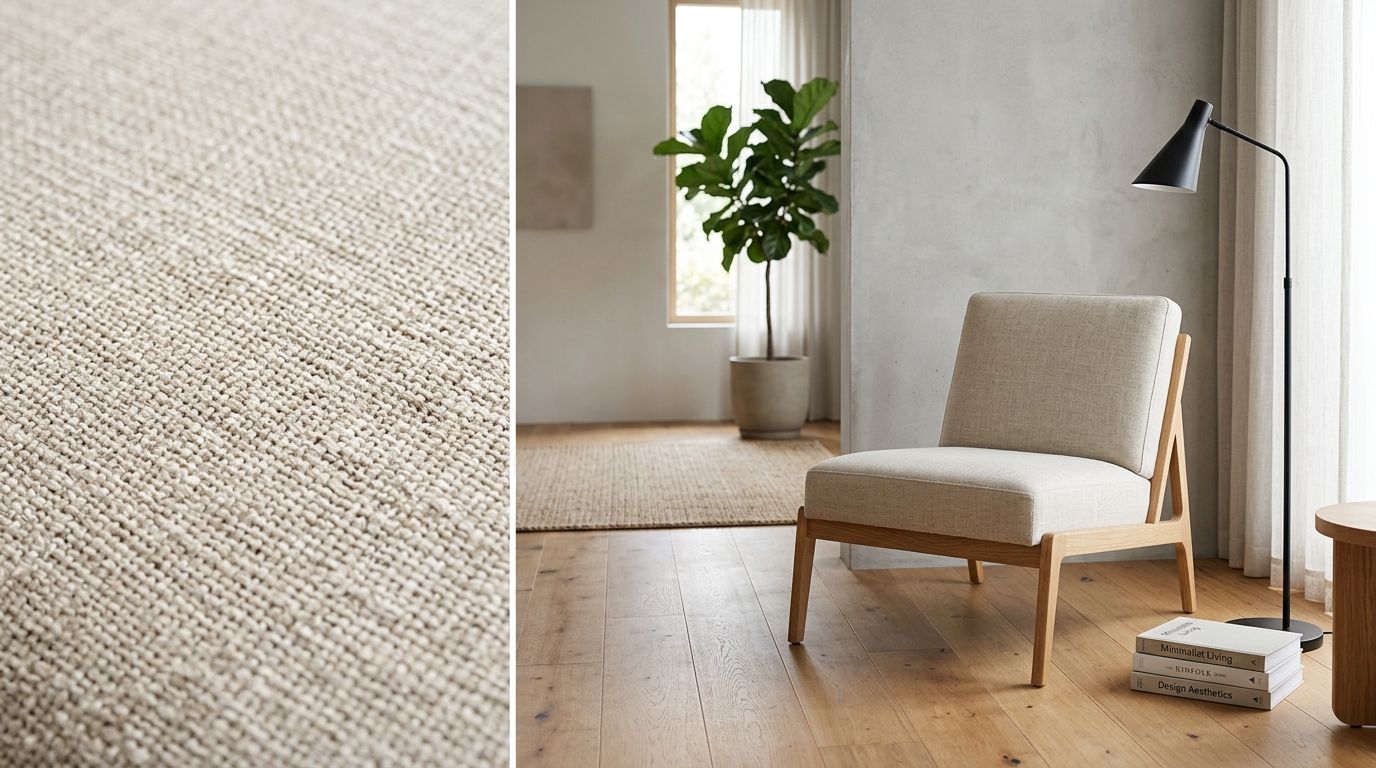
Placing a product within a styled environment gives the buyer immediate visual cues about height, width, and aesthetic fit.
How to solve the scale problem immediately
Scale is the hardest thing to communicate through a screen. A camera lens can completely distort reality depending on the focal length used. A wide-angle lens pushed up close to a small vase will make it look imposing. A telephoto lens shooting a large credenza from across the room will compress the image and make the piece look strangely flat.
The magic of standard references
The only foolproof way to establish scale is through comparison. You must place your item next to something the human brain already knows how to measure. This is why using props for scale and context is the single most effective lever you have in home goods photography.
If you sell a ceramic mug, place a standard spoon next to it. If you sell a throw blanket, drape it over the arm of a standard sofa. The human eye knows exactly how large a standard hardcover book is. When you place that book next to a sculptural table lamp, the brain instantly calculates the dimensions of the lamp without ever looking at the measurements in your description tab.
You do not need an entire built-out living room to show scale. A single corner of a table with a recognized object provides the exact same spatial context for a fraction of the effort and cost.
Comparing photography strategies
| Strategy | Pros | Cons |
|---|---|---|
| Physical Studio Set | Full creative control | Expensive, slow, logistics heavy |
| Isolated Catalog | Clean, focuses on details | Hard for buyers to judge scale |
| AI Room Staging | Fast, cost effective | Requires high-quality source file |
Creating room context without studio buildouts
I once watched a brand spend thousands of dollars on a two-day studio rental just to shoot three new sofas. We spent the first hour of the day simply unboxing the first sectional. We spent another hour building a fake wall, painting it a trendy sage green, and hanging a framed print to make it look like a real home. By the time the lighting was dialed in, half the day was gone.
This traditional approach to furniture photography is absurdly inefficient. Building physical sets for every product launch limits how fast you can grow your catalog. The logistics are a nightmare. You pay for truck rentals, you pay for a crew to lift heavy items, and you pay an art director to source the perfect rug to go under your table.
The shift to AI environments
This is exactly where CherryShot AI changes the entire production schedule for home brands. The math simply makes more sense now. Instead of building a room, you capture your furniture piece on a standard sweep in your warehouse. You upload that image, select the Lifestyle or Minimalist mode, and generate campaign-ready photos of that sofa sitting in a sunlit modern apartment.
The turnaround drops from three weeks to ten minutes. The per-image cost drops to almost nothing. Most importantly, you are still giving the customer the exact room context they need to feel confident in their purchase. The shadow falls correctly on the floor. The ambient light wraps around the cushions. The scale makes sense.
There are limits. AI can generate stunning lifestyle contexts for a chair or a side table in minutes, but if your product features a highly specific, proprietary fabric weave that defines its luxury price tag, you still need a traditional macro camera lens to capture that exact physical thread up close. You use AI to handle the expensive environmental context, and you use your camera to handle the extreme close-up details.
Lighting home goods for texture and quality
If your lighting is wrong, your expensive materials will look cheap. Flat, front-facing strobe lighting is the enemy of high-end home decor. It blasts away all the subtle shadows that give objects their shape and texture.
Why shadows matter in home decor
Texture is everything in home goods. A boucle chair has value because of its nubby, irregular surface. A velvet cushion has value because of the way light plays across the nap of the fabric. A matte ceramic bowl feels expensive precisely because it does not reflect light like cheap plastic.
To capture these textures, you need directional lighting. The light needs to rake across the surface of the object from an angle, creating tiny highlights and shadows in the fabric or material. If you blast the object with light from the exact same direction as the camera, you fill in all those shadows. The boucle suddenly looks like flat fleece. The ceramic looks like plastic.
Mastering this requires understanding exactly which effective lifestyle photography angles complement your material. You want strong side light or window light that gives volume to the item. The buyer needs to look at the screen and feel like they know exactly what the item feels like to the touch.
Review your product photography strategy
Audit your current product pages to ensure every item has at least one lifestyle image that provides a scale reference. If you are struggling with production costs for environmental shots, use AI to generate missing context without the need for a physical set. You can upload your raw images today to see how they look in a professional environment.
Try CherryShot AIFrequently Asked Questions
How do I photograph home goods for ecommerce?
Combine isolated white-background shots for crisp detail with grounded room-context shots that prove scale. Capture the full item from multiple angles, a tight macro crop of the material texture, and at least one lifestyle image showing the product next to recognizable objects. Providing these specific views helps a buyer understand the actual footprint and material quality before they finalize their purchase decision, which minimizes common questions about size and look.
What is the best way to show scale in home goods photography?
Place the item next to an object with a universally understood size to establish immediate visual reference. A table lamp positioned beside a standard hardcover book communicates height without the need for written dimensions. A sofa photographed with a coffee table and standard throw pillows allows the brain to calculate seat depth instantly. Consistent use of familiar props provides the context buyers need to verify that a piece fits their space.
How do furniture brands photograph their products?
Modern furniture brands have largely abandoned building expensive physical room sets in favor of digital alternatives. They capture raw furniture images on clean sweep backgrounds and then generate photorealistic living rooms or bedrooms using AI software. This shift removes the logistical burden of renting studio space and moving heavy inventory. Production cycles move faster when teams do not have to coordinate complex physical setups for every single new product launch.
How do I reduce returns with better home goods photography?
Highlight the specific visual details that frequently cause customer confusion during the shopping process. If shoppers often mistake rug thickness, shoot a profile angle with a coin next to the weave to demonstrate depth. When buyers worry about vase height, show it holding a standard stem of eucalyptus to provide an anchor. Addressing these common visual assumptions through clear, descriptive photography lowers the likelihood of disappointment and costly post-purchase returns.
Can AI create room-context shots for home goods?
Yes, AI tools allow you to upload a simple image of a decor item to generate professional lifestyle environments. These tools place your product into styled living rooms, kitchen counters, or shelves with accurate lighting and shadows. This workflow creates the exact spatial context required for an informed buyer decision without the typical expense of a location house. Teams now produce high-quality imagery at a fraction of the traditional production time.
Key Takeaways
- Furniture and decor returns are primarily driven by customers misjudging scale and color from poor online imagery.
- Always include at least one recognizable prop next to your product to give the brain an immediate sizing anchor.
- Directional lighting is mandatory for home goods because it highlights the physical texture that defines the value of the material.
- Building physical room sets is no longer a requirement now that AI can generate photorealistic environments around a basic product image.
The brands winning in the home goods space are no longer the ones spending the most on massive location shoots. They are the ones producing the most helpful visual context at the fastest speed. When you eliminate the bottleneck of physical sets by using tools like CherryShot AI, your creative energy can finally shift away from renting moving trucks and toward launching new products.