Knolling Photography: The Product Arrangement Technique That Drives Engagement
Knolling photography is the process of arranging related objects at exactly 90-degree angles and shooting them from directly above. It turns a chaotic pile of parts into a highly structured, visually satisfying grid. For ecommerce brands selling kits, bundles, or multi-component products, an organized flat lay is the most effective way to communicate absolute value without forcing the customer to read a bulleted list.
Definition
Knolling is a visual organization technique where objects are arranged in parallel or at right angles on a flat surface. It is used in product photography to showcase the individual components of a bundle in an orderly, grid-like fashion.
Most brands treat product arrangement photography as an artistic afterthought reserved for Instagram. That is a massive missed opportunity. When a consumer lands on a product page for a 12-piece grooming kit or a complex camera rig, a standard front-facing shot looks cluttered. A well-executed overhead flat lay arrangement breaks down complexity, highlights individual quality, and proves to the buyer exactly what they are getting for their money.
The problem is the production. Ask any photographer about executing a manual knolling shot and watch their posture change. Setting up perfect parallel lines on a physical table is incredibly tedious. You nudge a razor two millimeters. You bump the table. The tweezers roll out of alignment. You start over. But when executed correctly, this specific knolling technique for ecommerce is a conversion lever that pays for itself.
Why knolling photography converts for ecommerce bundles
Consumers do not read product descriptions until they have already decided they want the product based on the imagery. If you are selling a bundle, the first image they see needs to communicate the entirety of your offer instantly. Humans are biologically wired to appreciate order and symmetry. When we see a chaotic pile of objects, our brains register stress. When we see those exact same objects laid out in a perfectly spaced grid, we register premium quality and intentionality.
The psychology of the organized flat lay
| Feature | Chaotic Layout | Knolling Layout |
|---|---|---|
| Visual Appeal | Low | High |
| Buyer Trust | Variable | Strong |
| Clarity of Components | Obscured | Detailed |
There is a specific cognitive relief that happens when a customer views a perpendicular product arrangement. It eliminates ambiguity. If you sell a cocktail mixing set, a stylized lifestyle shot of someone pouring a drink is great for mood. But it does not tell the buyer if the set includes a muddler, two strainers, or a jigger. A knolling shot acts as a visual inventory list. The spacing between each item forces the eye to evaluate every piece individually, elevating the perceived value of the entire kit.
This organized structure is exactly what makes these visuals so potent in paid acquisition. Advertisers constantly test different creative formats, and structured layouts consistently outperform chaotic lifestyle imagery when the goal is a direct purchase. Getting the foundation right by reading a flat lay product photography guide ensures your lighting and angles are technically sound before you attempt the rigorous alignment knolling requires.
Which products actually need perpendicular product arrangement?
Not every SKU belongs in a knolling shot. (Worth noting: knolling is rarely the right choice for single, standalone items where demonstrating depth and texture from multiple angles matters most). This technique exists specifically to show relationships between multiple objects.
Component display photography for DTC brands
DTC lifestyle brands and electronics accessories companies are uniquely positioned to win with this format. Think about mechanical keyboard sellers. A keyboard is just a rectangle until you break it down into switches, keycaps, cables, and tools. Arranging those components in a strict grid transforms a piece of plastic into a piece of precision engineering.
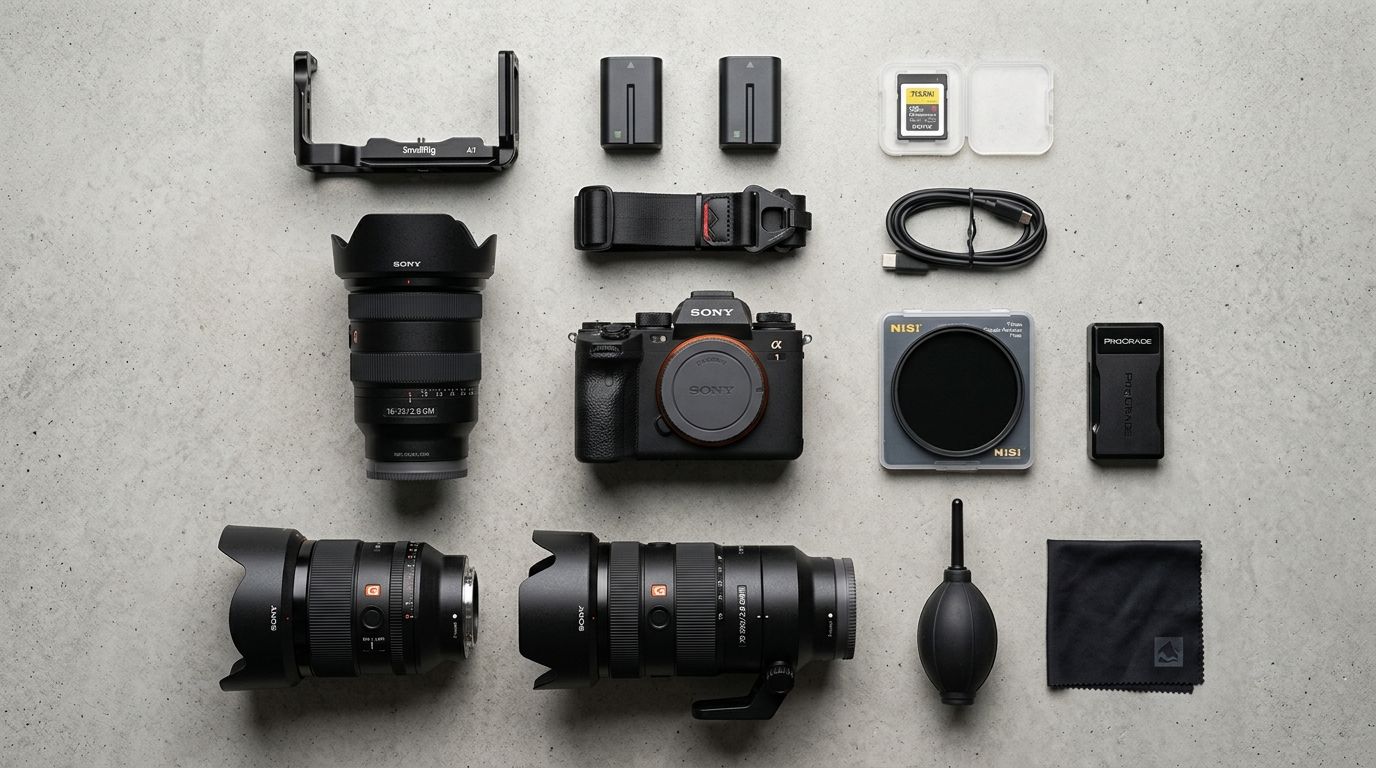
Tool brands, skincare regimens, and subscription box companies rely heavily on product kit photography. When a customer receives a subscription box, the unboxing experience is part of the product. An organized flat lay simulates that unboxing experience digitally. It shows the sheer volume of goods included in the monthly price, making the subscription fee feel entirely justified.
The manual reality of shooting knolling product photography
Understanding why this style works is easy. Producing it in a physical studio is a nightmare. I have sat on set while an art director and a photographer spent an entire morning trying to shoot one skincare bundle. The process requires a level of mechanical precision that human hands simply struggle to maintain.
The hidden costs of perfect alignment
First, you need a heavy C-stand to suspend the camera directly overhead. If the camera is tilted even one degree, the parallel lines will warp, and the grid will look amateurish. Then you need a perfectly level surface. Finally, you have the arrangement process itself. The physical reality of shooting a perfect knolling arrangement is brutal. You will spend an hour moving a single wire or tube of lotion three millimeters to the left just to realize the lighting has shifted and cast an ugly shadow over the core product.
You cannot use sticky tack to hold rounded objects in place without ruining the pristine background. You cannot bump the table. You are paying a full day rate for a studio and a crew to generate perhaps three final usable images. The cost per photo skyrockets when precision is the main requirement. Utilizing the right product photography props can help ground the composition, but adding more items to the table only compounds the alignment problem.
Scaling your knolling technique for ecommerce with AI
This is where the traditional studio model breaks down for modern ecommerce volumes. If you are launching new kits every quarter, or testing different bundle combinations to see what converts, you cannot wait three weeks and pay thousands of dollars for every iteration. The math simply fails.
Moving from physical tweezers to digital generation
AI product photography completely eliminates the physical friction of component display photography. Instead of spending hours nudging items on a table with a ruler, you can use CherryShot AI to handle the arrangement. You simply upload your isolated product images, select your visual mode, and the platform generates perfectly aligned, campaign-ready photos in minutes.
The system understands lighting, perspective, and shadow generation. It places your items in a precise grid without requiring a C-stand or a spirit level. If you decide you want to swap one component of the bundle for another, you do not have to reset a physical table. You generate a new image. The per-image cost drops from $150 down to a few dollars, and your timeline shrinks from weeks to an afternoon. Brands that leverage this workflow can quickly test multiple visual layouts to find exactly which scroll-stopping product images perform best in their ad accounts.
Knolling photography is no longer restricted to art blogs and high-budget brand campaigns. It is a fundamental conversion tool for any brand selling complex products or bundles. By moving the production process from a physical studio to an AI generation tool, you reclaim your margin and your launch calendar. You get the visual order your customers crave, without the logistical chaos your team dreads.
Audit your product bundles before your next campaign
Check if your current product images clearly show every item included in your bundles. If your layout is cluttered or confusing, consider testing a knolling-style arrangement to see if conversion rates improve for your high-value kits.
Try CherryShot AIFrequently Asked Questions
What is knolling photography?
Knolling photography involves arranging related objects at exactly 90-degree angles on a flat surface to capture them from directly above. This technique transforms a random assortment of items into a highly organized and visually appealing grid layout. Retailers use this method to present product kits or multi-part sets clearly so that potential buyers can evaluate every component without needing to read through a long or complicated list of included features.
Which products work best with knolling photography?
Subscription boxes, tool kits, and electronics bundles are ideal candidates for this specific photography style. These items naturally consist of multiple distinct pieces that require clear visual separation to showcase their full value to the consumer. Cosmetics sets or craft supply kits also benefit from this organization because it highlights the variety and depth of the collection in a single, clean image that helps drive faster customer purchasing decisions.
How do I arrange items for a knolling photo?
Define a central grid and place your largest or most important anchor item in the middle or along a primary axis. Group all remaining items by their size, shape, and category before aligning them. Every object must sit perfectly parallel or perpendicular to your main piece to maintain the grid integrity. Keep the negative space between each item consistent throughout the entire frame to prevent the final photograph from feeling visually cluttered.
What props can I include in a knolling shot?
Select props that are functional and directly related to your product ecosystem to avoid confusing the buyer. If you are shooting a skincare kit, include relevant raw botanical ingredients or essential tools like spatulas. These items must follow the same strict parallel alignment rules as your core products. Adding extraneous props that do not serve a purpose will only distract the viewer and weaken the professional, organized aesthetic of your final composition.
Can AI generate knolling product arrangements?
AI photography tools generate perpendicular product arrangements without requiring you to manually align items on a physical studio surface. You simply upload your base product images and select your preferred visual mode to let the software handle the grid creation. This process saves significant time and budget that would otherwise be spent on studio equipment and tedious manual adjustments to achieve the perfectly symmetrical look that defines high-quality knolling photography for ecommerce.
Key Takeaways
- Knolling photography organizes complex product kits into perfectly parallel grids to instantly communicate value.
- This top-down structure reduces visual clutter and outperforms chaotic lifestyle images in direct conversion campaigns.
- Manual studio execution is incredibly expensive due to the extreme precision required for physical alignment.
- AI generation allows brands to scale overhead flat lay arrangements for new bundles in minutes instead of weeks.
Stop paying a day rate to watch someone nudge a product three millimeters to the left. If you need campaign-ready knolling imagery for your next bundle launch, head over to CherryShot AI to generate perfect arrangements today.