Is My Product Photography Good Enough to Run Paid Ads? The Checklist
You are about to hand Meta and Google a few thousand dollars to show your product to strangers. Is your product photography good enough for paid ads? If you have to ask the question, the answer is usually no. Paid traffic acts as a multiplier. If your baseline conversion rate is poor because your images look like an afterthought, pouring money into advertising will just help you burn budget faster.
Definition
Ad-ready product photography refers to visual assets optimized for specific digital advertising platforms, balancing high-quality product display with the engagement requirements of social media feeds or search results. These images must adhere to platform-specific aspect ratios, lighting standards, and focal point requirements to maximize click-through rates.
Your product images dictate your return on ad spend. Most ecommerce founders obsess over audience targeting, bid caps, and copy length while entirely ignoring the one element users actually look at. Your media buyer cannot fix bad creative. An out-of-focus catalog shot on a muddy gray background will fail on Instagram regardless of how perfectly you segmented your lookalike audience.
Quality photography lowers your cost per click and boosts your conversion rate. It really is that simple.
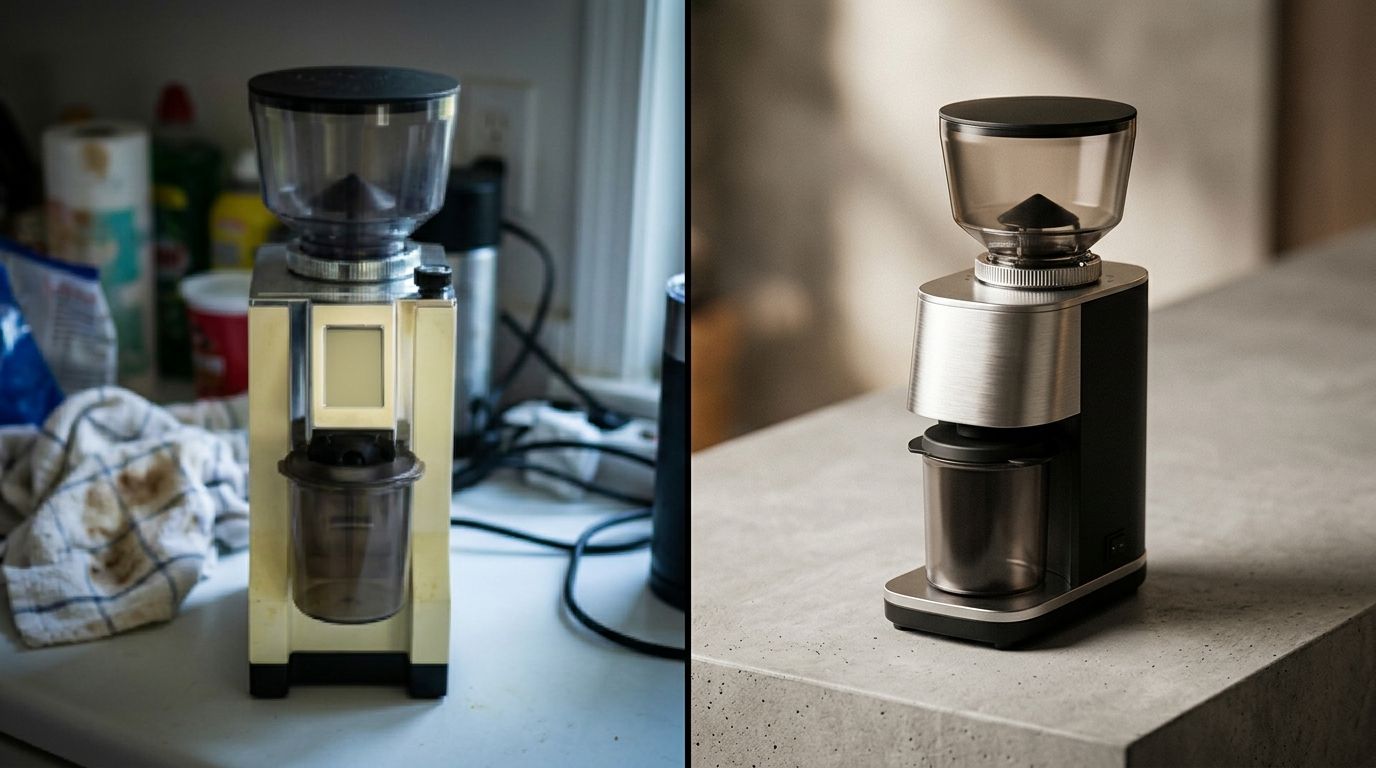
Why bad product photos inflate your acquisition costs
Advertising platforms only care about one thing. They want to keep users on their apps. When your ad appears in a feed, the platform monitors how people react. If your product photo is boring, poorly lit, or confusing, users scroll right past it.
| Feature | Social Ads (Meta) | Search Ads (Google) |
|---|---|---|
| Primary Goal | Interrupt user scrolling | Inform user intent |
| Background | Lifestyle/Contextual | Pure White |
| Focus | Engagement/Emotion | Clarity/Utility |
The penalty for low click-through rates
Meta and Google actively penalize boring creative. When thousands of people scroll past your ad without clicking, the algorithm assumes your ad is irrelevant. To compensate for the wasted feed space, the platform starts charging you more for every thousand impressions. Your CPM spikes, your cost per click skyrockets, and your margin evaporates before the customer ever reaches your landing page.
You cannot hack your way out of a low click-through rate with clever copy. The image does the heavy lifting. The user sees the photo first, reads the headline second, and maybe checks the caption third. If the visual fails to secure that initial attention, the rest of the ad does not matter.
The trap of empty clicks
Sometimes bad photography achieves the opposite problem. A misleading or heavily filtered photo might generate curiosity clicks. The user arrives at your product page, sees the reality of the item in your standard catalog shots, and immediately bounces. The disconnect destroys trust. If you are tired of paying for traffic that never converts, exploring the hidden costs of poor photography across your entire operation is a sobering exercise.
Some raw, user-generated content taken on an iPhone can perform incredibly well for social ads, but that is a deliberate stylistic choice rather than a lack of professional effort. For your primary product catalog and retargeting ads, amateur lighting signals a lack of competence. Trust is the currency of conversion.
The Meta Ads Product Photography Checklist
Meta operates on disruption. People open Instagram to look at their friends, not to buy your blender. Your product photography must interrupt their natural behavior.
Are you stopping the scroll?
A plain white background photo works beautifully on a product page. In an Instagram feed, it looks like a cheap catalog insertion. Meta demands context. You need lifestyle imagery that shows the product in use, styled attractively, and lit professionally. The image must belong in the feed while remaining visually distinct enough to force a pause.
Building profitable campaigns requires consistently creating scroll-stopping ads that break user patterns without looking spammy. If your product is a luxury handbag, the photo needs to radiate luxury. If it is a rugged hiking boot, the environment needs to look authentic to the outdoors.
Does the crop fit the placement?
Formatting errors will ruin a great photo. Feed ads perform best as squares or 4:5 vertical rectangles. Story and Reel ads demand a 9:16 vertical orientation. If you try to force a horizontal landscape photo into an Instagram Story, Meta will shrink your image and surround it with an ugly, blurred background. It looks lazy.
Your product must remain the absolute focal point regardless of the crop. If formatting an image for a Story cuts off the top of your product, the image is useless for that placement. You need distinct assets tailored to where they will appear.
The Google Ads Product Photography Checklist
Google Shopping is the exact opposite of Meta. The user is actively searching for the product. They do not need to be interrupted. They need to be informed.
White backgrounds still rule the algorithm
Google Shopping demands absolute clarity. You cannot hide behind moody shadows or distracting props. The algorithm heavily favors crisp products on a pure white background. The product must occupy at least 75 percent of the image frame. If you upload a cluttered lifestyle shot to Google Shopping, your product will often be disapproved or severely penalized in the auction rankings.
Mobile legibility and scale
Most Google Shopping clicks happen on mobile screens. The image thumbnail is incredibly small. If you sell a delicate piece of jewelry and frame it from five feet away, it becomes an invisible speck on a phone screen. Your ad photography for Google must prioritize scale. The customer needs to instantly recognize the product shape, color, and texture from a thumbnail size.
When someone searches for a specific blue ceramic mug, they will instantly scan the Shopping carousel. The mug that is cropped tightly, lit evenly, and pops off the white background will win the click every single time.
Solving the creative bottleneck before you launch
Auditing your photography against these platform requirements usually leads to a painful realization. You do not have enough images to run a proper ad campaign. You need feed variations, story variations, and clean catalog shots. Getting them used to be a nightmare.
The traditional studio bottleneck
When you realize your product photography is lacking, the default move is calling a local studio. They quote you a day rate, a stylist fee, and a retouching package. The invoice hits $4,000. The delivery timeline is three weeks out. You are stuck waiting nearly a month just to begin testing your ads.
While traditional lifestyle photoshoots offer complete control over every physical prop and shadow, they also require weeks of planning and thousands of dollars before you can test a single visual concept. For a brand launching multiple SKUs a month, that math simply does not work.
The AI product photography alternative
You no longer have to delay your ad launch to wait for a photographer. CherryShot AI changes the economics of creative testing. Instead of organizing a physical shoot, you take a basic, well-lit photo of your product with your phone. You upload it to CherryShot AI.
From there, you select a visual mode. If you need clean Google Shopping assets, you select Minimalist. If you need Meta feed stoppers, you choose Lifestyle or Loud Luxury. You get campaign-ready photos back in minutes. The per-image cost drops to under $5. You can generate fifteen variations for Meta ad testing in an afternoon, entirely removing the production bottleneck from your launch schedule.
Your media buyer needs fresh creative to find winning ads. By generating your ad photography instantly, you give your campaigns the fuel they need to scale without destroying your cash flow.
Audit your product images before your next campaign
Review your top three selling products against this checklist today. If your current assets are failing to meet the platform requirements for Meta or Google, generate professional variations to test performance differences. High-performing creative is the most effective way to improve your overall advertising ROI.
Try CherryShot AIFrequently Asked Questions
What product photography quality do I need for paid ads?
High-resolution images that clearly communicate the value of your product in under two seconds are mandatory. Blurry, poorly lit, or cluttered photos fail to convert visitors into customers. Google Ads requires crisp shots on pure white backgrounds, while Meta Ads demand engaging lifestyle imagery that fits the social feed while maintaining a sharp focus on the product.
How do I know if my product photos are good enough for Meta Ads?
Analyze your existing click-through rates on organic social posts to gauge performance. If your audience ignores your photos for free, paying to show them to strangers will not improve engagement. Effective Meta ad photos must arrest the user's scrolling habit immediately. Use correct aspect ratios for feeds or stories and ensure the lighting highlights the product details.
Does product photography quality affect paid ad performance?
Photography quality directly impacts both your cost per click and final conversion rate. Ad platforms reward engaging creative by lowering your distribution costs. Boring or amateur photos earn low engagement, which signals to the algorithm that your ad is irrelevant. Consequently, the platform increases the price required to reach your target audience.
What image formats does Meta require for product ads?
Meta requires specific aspect ratios tailored to the placement of your advertisement. Feed ads perform best as 1:1 squares or 4:5 vertical rectangles. Story and Reel placements demand 9:16 full-screen vertical formatting. Using a single horizontal image across all placements forces the platform to crop your content awkwardly or add borders that diminish the professional appearance of your brand.
Can AI photography produce images that work for paid ads?
AI photography tools produce images indistinguishable from traditional studio work. CherryShot AI allows brands to generate dozens of environmental and lifestyle variations from a single flat lay source image. This capability enables high-volume creative testing for paid ads without the significant time and financial investment required for traditional professional photoshoots.
Key Takeaways
- Bad photography inflates your customer acquisition cost by lowering your click-through rate.
- Meta requires engaging, platform-native lifestyle images that stop the scroll without looking cheap.
- Google Shopping demands tightly cropped, highly legible products on pure white backgrounds.
- AI tools eliminate the studio scheduling bottleneck to get your ads live in an afternoon.
Great paid ad performance starts long before you open the Ads Manager. It starts with the visual standard you set for your brand. Take control of your creative production, stop relying on outdated studio schedules, and give your ad budget the high-converting imagery it deserves.
Ready to upgrade your ad creative instantly? Try CherryShot AI and generate campaign-ready photos in minutes.