Product Photography Equipment in 2026: What You Actually Need vs What AI Has Made Irrelevant
Founders used to spend thousands on product photography equipment before making their first sale. They bought full-frame cameras, continuous LED panels, macro lenses, and massive backdrop systems. Today, buying that level of equipment for standard catalog shots is a massive waste of capital. In 2026, the only physical gear you actually need is a modern smartphone and a clean window for natural light. You capture a flat base image, upload it to an AI generation tool, and get campaign shots in minutes.
Definition
Product photography equipment refers to the physical hardware, such as cameras, lighting rigs, and backdrops, historically required to capture commercial catalog images. In a modern workflow, this physical gear is largely replaced by artificial intelligence software that digitally constructs realistic lighting and environments around a basic smartphone reference photo.
The math has completely changed. You are no longer building a studio. You are feeding an algorithm.
(There is a caveat here. If you are shooting highly reflective jewelry or luxury watches where microscopic detail is the entire selling point, hiring a specialist with a dedicated macro lens still makes sense.)
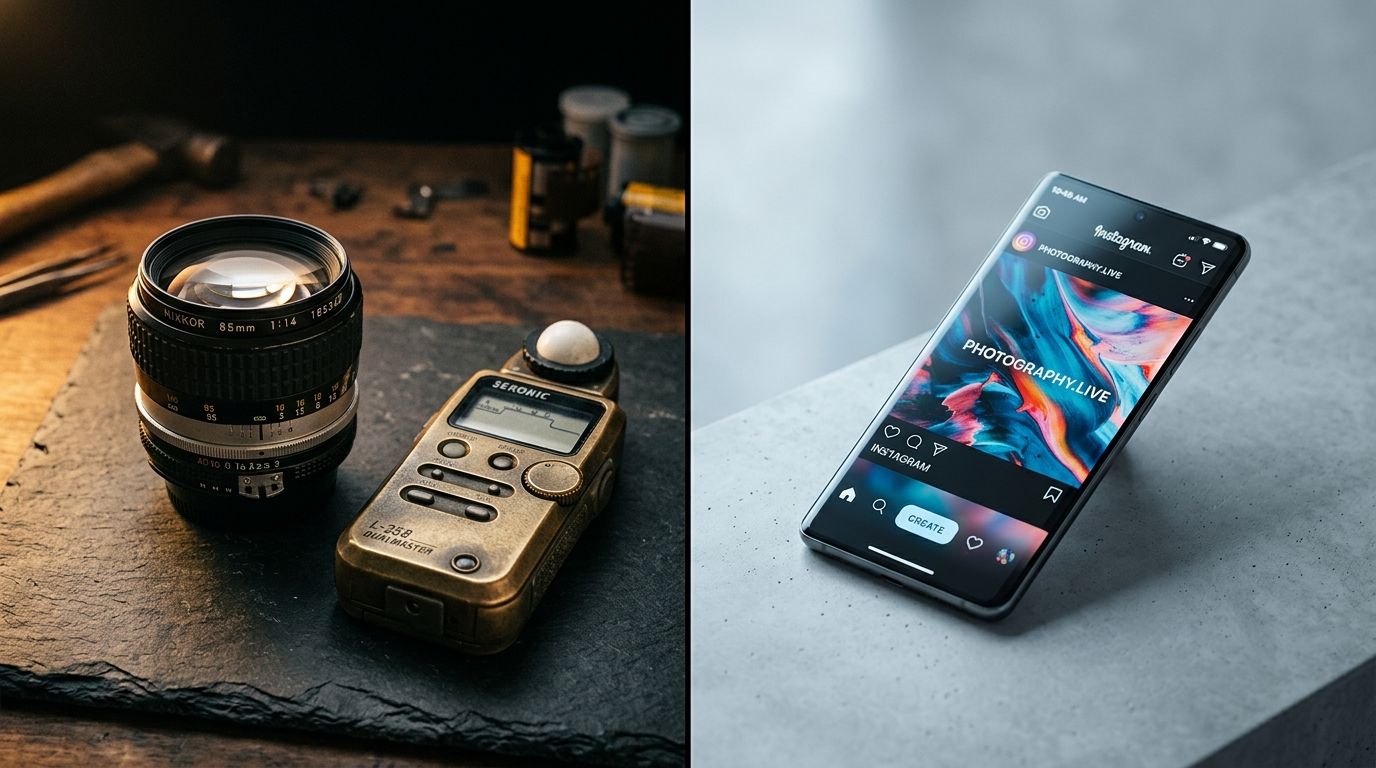
What equipment do you actually need for product photography in 2026?
The shift in product photography gear is about moving from capture to generation. You are not trying to capture the perfect final image in-camera. You are capturing a clean reference image. This fundamentally changes the equipment you need on your desk.
The minimal hardware baseline
You need a modern smartphone. That is all. An iPhone 15 or a recent Samsung Galaxy has a sensor more than capable of capturing the geometry, color, and texture of your physical product. You do not need a massive camera body if your end goal is feeding a flat image into an AI pipeline. The phone gives the artificial intelligence enough pixel density to understand the product boundaries and material properties.
You also need a basic tripod. A twenty dollar phone mount attached to a desktop tripod is plenty. It prevents motion blur and keeps the framing consistent if you are shooting multiple SKUs in the same afternoon. When you start photographing products with a phone, stability is the only metric that truly matters. Software fixes color balance, but software cannot invent physical details blurred by shaky hands.
The lighting reality
Instead of buying softboxes and strobes, find a large window that gets indirect sunlight. Natural light provides a soft, even wrap around your product. If you are shooting late at night, a single ring light or a desk lamp diffused through a piece of white printer paper is enough to capture the base shape. You are just giving the AI a blueprint to work from.
The traditional product photography gear list you can stop buying
If you walk into a traditional photo studio, you will see a massive pile of depreciating assets. Most of that equipment is designed to solve problems that software now solves instantly.
High-end cameras and expensive glass
A camera for product photography used to mean a three thousand dollar body paired with a fifteen hundred dollar lens. You needed optical perfection because the shot coming out of the camera was ninety percent of the final result. Now, you do not need a massive sensor because you are no longer relying on a physical lens to generate the background blur, the depth of field, or the ambient atmosphere. The software handles all of those environmental variables.
Complex lighting grids and strobes
Mastering a three point lighting setup takes years of practice. You arrange a key light, a fill light, and a backlight. You have to balance the brightness ratios perfectly to avoid harsh shadows while still showcasing the texture of your material. You deal with radio triggers that refuse to sync, modeling lamps that burn out unexpectedly, and heavy light stands that clutter your floor space.
Today, product photography lighting equipment is largely irrelevant for standard catalog work. Modern AI models understand exactly how light interacts with three dimensional objects. When you select a visual mode in CherryShot AI, the system automatically generates realistic shadows, caustics, and reflections that match the new environment. You do not need to learn the difference between a parabolic umbrella and a beauty dish.
Lightboxes and elaborate backdrops
The traditional lightbox setup was designed to isolate the product on a pure white background. It required constant cleaning because every speck of dust showed up in the final frame. You also had to manage massive rolls of seamless paper for lifestyle scenes. When a model stepped on the paper, you had to cut it and unroll a fresh section.
Now, background removal is fully automated. You can shoot a coffee bag on your kitchen counter, and the software cleanly extracts the edges. You can immediately place that extracted product into a Loud Luxury or Minimalist setting without ever unrolling a sheet of paper. Your studio footprint shrinks from a rented warehouse room down to a corner of your desk.
| Requirement | Traditional Studio Setup | AI-Enabled Setup |
|---|---|---|
| Camera Body | Full-frame mirrorless or DSLR | Modern smartphone |
| Lighting Gear | Multiple strobes, softboxes, triggers | Natural window light or desk lamp |
| Environment | Seamless paper, acrylic risers, lightboxes | Any clean, flat surface |
| Capital Cost | Typically exceeds $3,000 | Under $50 for a basic tripod |
| Space Needed | Dedicated room or rented studio | Desktop or kitchen counter |
How AI vs traditional equipment changes your launch timeline
The biggest hidden cost of physical equipment is the time it takes to set it all up. Building a DIY product photography setup takes hours of tweaking. You adjust a light stand, take a test shot, look at the screen, adjust the light stand again, and repeat the process until the shadows fall perfectly.
Breaking the scheduling bottleneck
When you rely on heavy equipment, you are forced to batch your shoots. You wait until you have twenty new products ready before you justify dragging the lights out of the closet. This means finished products sit in a warehouse, unlisted, waiting for their turn in front of the lens. By eliminating the hardware dependency, you eliminate the waiting period. You can launch a single new product colorway the exact day the sample arrives.
Shifting from capture to iteration
Using CherryShot AI means your workflow fundamentally shifts. You take a quick base photo. You upload it. You spend your energy trying out different creative directions instead of fighting with a C-stand. You can generate a Classic white background for your Amazon listing, an Influencer shot for Instagram, and a high end Magazine editorial shot for your homepage banner in under five minutes.
Frequently Asked Questions
What equipment do I need for product photography?
You need a modern smartphone, a basic desktop tripod, and a clean window providing indirect natural light. This minimal hardware combination captures the physical geometry and material textures required to feed a digital generation pipeline. A twenty-dollar phone mount creates enough stability to eliminate motion blur and ensure your product labels remain perfectly sharp across every catalog shot.
What is the best camera for product photography?
A recent iPhone or high-end Android device provides the optimal sensor performance for modern ecommerce catalog generation. Built-in computational photography systems automatically correct color balance and resolve enough edge detail to isolate your item from its background. Upgrading to a three-thousand-dollar mirrorless camera body only makes financial sense if your brand exclusively sells highly reflective macro products like faceted diamond rings.
How much does product photography equipment cost?
A traditional studio kit requires between two thousand and ten thousand dollars in upfront capital. Transitioning to a software generation workflow flips this massive hardware expense into a highly predictable, fractional monthly operational cost. Instead of purchasing strobe lights and physical seamless backdrops, merchants spend twenty dollars on a desktop tripod and run their entire visual operation directly through their phone.
Do I need a DSLR for product photography?
You do not need a DSLR camera to capture professional ecommerce imagery. While massive optical sensors were once required to create a shallow depth of field, cloud-based algorithms now handle complex background blurring and ambient atmosphere computationally. Shooting flat reference photos on a modern mobile device delivers enough pixel density to satisfy any platform requirement, especially since most customers view your catalog on a six-inch screen.
Has AI made product photography equipment less important?
Algorithmic generation has made heavy lighting grids, physical backdrops, and complex physical studio spaces entirely obsolete for standard catalog workflows. The operational burden has permanently moved from purchasing expensive depreciating hardware assets to managing scalable software inputs. By capturing a flat reference photo on a kitchen counter and generating the environment digitally, brands eliminate the monthly overhead of renting dedicated commercial studio space.
Key Takeaways
- Traditional gear investments are no longer required for standard catalog imagery.
- A modern smartphone and a stable tripod are the only physical tools you truly need.
- AI tools replace the need for complex lighting grids and physical backdrops.
- Moving from physical capture to digital generation drastically accelerates your product launch timeline.
Building a traditional photography set is an exercise in buying depreciating assets. The smartest brands are stripping their physical setups down to the absolute minimum and letting software do the heavy lifting. Upload a basic reference shot to CherryShot AI and start generating your next campaign today.
Test an algorithmic workflow with your phone
Pull out your smartphone and capture a flat, well-lit reference photo of your top-selling product against a neutral surface. Upload that raw image to see how easily software can generate the complex lighting and environments you previously built by hand.
Try CherryShot AI