Shoe Photography for Ecommerce: Essential Angles & Context
Selling shoes online means selling a shape, a material, and an anticipated fit. If you photograph footwear from a single flat angle, you are actively inviting returns. Customers cannot hold the shoe. They cannot bend the sole to check flexibility. They rely entirely on your shoe photography ecommerce gallery to gauge toe box width, arch support, and heel height.
Definition
Shoe photography for ecommerce is the methodical capture of footwear from specific angles to demonstrate scale, fit, and material quality. It provides the exact visual data a customer needs to anticipate how a shoe will perform and feel on their foot.
A bare minimum approach to footwear photography is a margin killer. Brands that try to save money by reducing their shot list end up paying for it tenfold in reverse logistics. The customer who thought the sneaker had a low profile but receives a chunky silhouette will pack it right back up into the box.
Traditional on-foot shoe photography with a live model tells the best sizing story. The genuine trade-off is the brutal cost and logistics of matching model shoe sizes, booking talent, and styling full outfits just to sell one pair of sneakers. (Worth noting: standard white-background studio shots still have a place on marketplace platforms like Amazon. For your own storefront, they look like you are hiding the shoe's real character.)
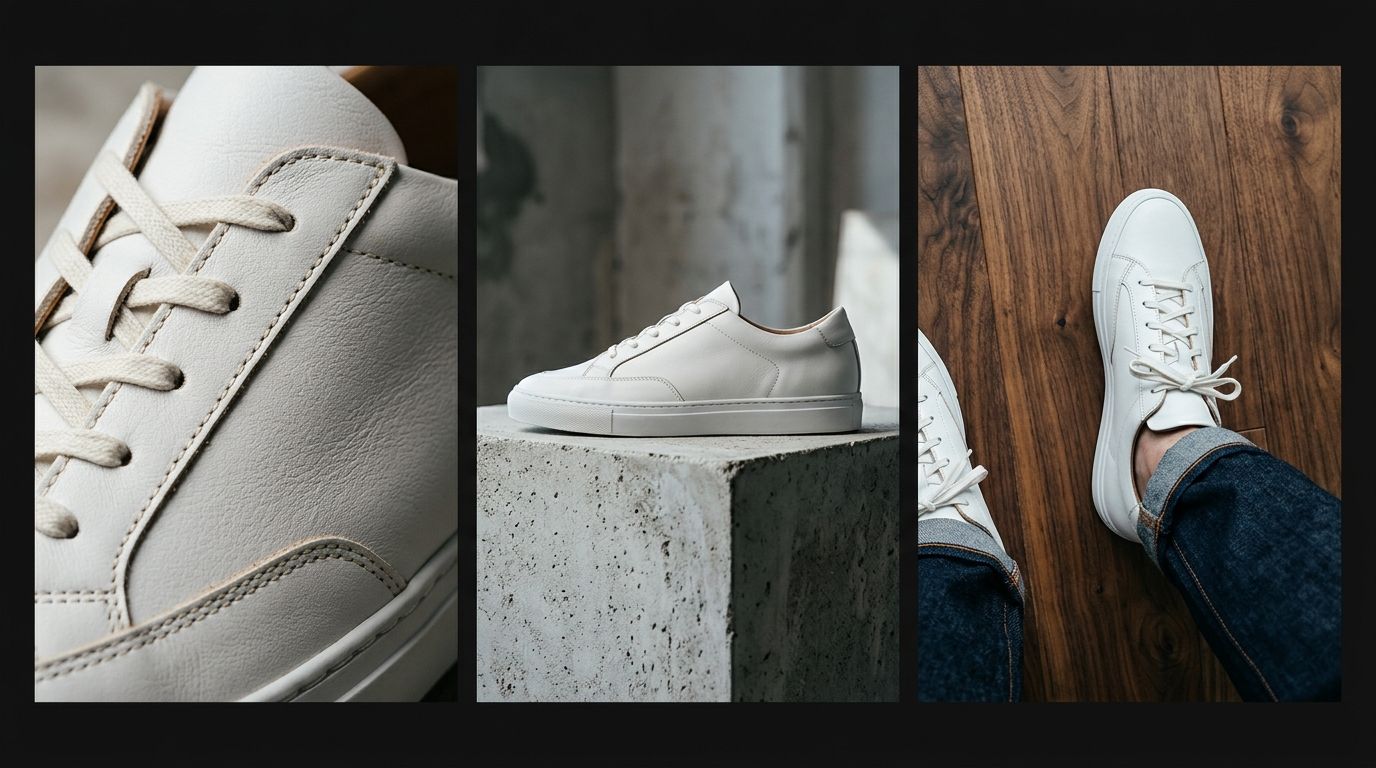
A proper footwear gallery provides enough visual data for the customer to anticipate the exact fit before unboxing.
Why shoe photography ecommerce requires a specific shot list
A t-shirt can survive an average product photo. A shoe cannot. Footwear is structural. It has volume, distinct textures, and specific functional requirements based on the wearer's arch and instep. If your product photography does not capture these structural realities, your listing will fail to convert the highest intent buyers.
The cost of missing angles
When you omit an angle, the buyer fills in the blank with an assumption. If you do not show the sole of a running shoe, they assume the tread is inadequate. If you do not show a top-down view of a dress shoe, they assume the toe box will pinch. Every missing angle is a point of friction that slows down checkout.
Figuring out the optimal number of product images for footwear is not a guessing game. It is a systematic process of answering every visual question a customer might have. A proper shot list acts as visual customer support. It answers questions about heel drop, material breathability, and ankle collar padding without requiring a single word of copy.
How to photograph shoes for an online store: The required angles
Shoe product photo angles must be deliberate. You are not just pointing a camera at a sneaker and pressing a button. You are engineering a sequence of images that builds trust.
The three-quarter shoe angle
This is your hero shot. It is the image that belongs on the category page and the first slide of your product carousel. The three-quarter shoe angle positions the footwear slightly turned toward the camera. This specific rotation reveals the toe box shape, the side profile silhouette, and the lacing system all in a single frame.
It converts better than a flat profile because it mimics how a wearer looks down at their own feet. It provides immediate three-dimensional context. If you only have the budget to perfect one angle, make it this one.
The profile shot
The pure side profile is where silhouette lives. Customers look at the profile shot to understand the heel height, the arch curve, and the midsole thickness. Sneakerheads look here to judge the stance of the shoe. A bad profile shot makes a sleek shoe look clunky. You must shoot this at dead-center elevation. If the camera is tilted even slightly up or down, the geometry of the shoe will distort.
The top-down and shoe sole photography
The top-down view answers the width question. Buyers with wide feet or bunions will scrutinize this image to see if the midfoot tapers too aggressively. It is purely functional, but entirely necessary.
Shoe sole photography is equally critical. If you are selling a hiking boot, a running shoe, or a winter boot, the outsole is a major selling point. The customer needs to see the lug depth and the grip pattern. Even for luxury dress shoes, showing a pristine leather sole communicates craftsmanship and justifies a premium price tag.
The heel and detail shots
The heel shot shows the back of the shoe. This reveals the heel counter structure, any pull tabs, and how the collar hugs the achilles. Detail shots are where you prove your material quality. You need macro shots of the stitching, the texture of the suede, or the grain of the leather.
Styling and sneaker lifestyle photography
White background images explain the shoe. Lifestyle images sell the shoe. Context changes how a customer perceives value. A sneaker sitting on seamless white paper is a commodity. That same sneaker photographed on wet asphalt under neon city lights is an identity.
On-foot shoe photography vs. standalone
Showing the shoe on a human foot is non-negotiable for apparel brands that want to scale. On-foot shoe photography provides scale. It shows where the collar sits against the ankle bone. It demonstrates how the tongue rests against the instep when the shoe is actually laced and tied.
| Shot Type | Primary Purpose | Best Used For |
|---|---|---|
| Standalone Studio | Technical accuracy and detail isolation | Marketplaces and secondary carousels |
| On-Foot Studio | Scale, ankle fit, and styling context | Product detail pages and fit guides |
| Lifestyle Editorial | Brand identity and emotional resonance | Social media, hero banners, and ads |
When executing lifestyle shoots, using props for context shots requires restraint. A tennis shoe belongs near a court surface or performance gear. A luxury loafer belongs near polished hardwood or tailored trousers. The props should never overshadow the footwear. They should only exist to anchor the shoe in a believable reality.
Solving the production bottleneck
The logistical nightmare of footwear photography is the volume. If you release a new sneaker in four colorways, you suddenly need twenty-eight distinct images just to populate the basic product pages. Booking a studio, hiring a stylist, and managing the post-production for that volume is incredibly slow.
Any brand still running a full studio shoot for standard catalog images is paying for logistics instead of quality. The invoice covers studio rental, the art director's back-and-forth, and the three weeks of waiting. The per-image cost easily clears $100 when you factor in the hidden operational drag.
This is exactly why adopting AI in product photography changes the math completely. You can take a basic flat image of your new colorway, upload it to CherryShot AI, and generate realistic on-foot contexts or high-end studio lighting in minutes. The bottleneck shifts from production scheduling to simply deciding which campaign direction you want to launch first. CherryShot AI allows you to select visual modes like Influencer or Minimalist, turning a single raw photo into a complete, compelling product gallery without ever booking a location.
Frequently Asked Questions
How many angles do I need for shoe photography?
You need five to seven distinct angles per footwear SKU to build a complete product gallery. A proper set documents the three-quarter view, a side profile, a top-down shot, a heel shot, and a sole view to prevent customer assumptions. Skipping any of these mandatory perspectives directly increases return rates because buyers cannot accurately judge the toe box shape or anticipated fit before checkout.
Should I show shoes on-foot for ecommerce?
Showing shoes on a human foot is a mandatory requirement for high-converting ecommerce apparel listings. This physical presentation provides immediate visual context for the overall product scale and the exact ankle collar placement. Customers rely heavily on this styling reference to accurately understand how the tongue rests against the instep when the sneaker is fully laced and worn during daily use.
What is the best angle for shoe photography?
The three-quarter rotation is consistently the highest converting hero angle across every footwear category. Positioning the shoe slightly turned toward the camera lens reveals the toe box width, the side profile silhouette, and the entire lacing system in one single frame. This specific viewpoint perfectly mimics how a wearer looks down at their own feet while evaluating a potential purchase in a retail environment.
How do I photograph shoe materials like leather or suede?
Capturing premium leather requires heavily controlled specular highlights to reveal the glossy finish without blinding the camera lens during a shoot. Suede demands highly directional raking light cast across the surface to properly emphasize the soft nap and natural texture. Applying standard flat illumination will completely ruin these complex materials by making rich suede look like cheap felt and full-grain leather look like synthetic plastic.
Can AI create shoe product photography?
Artificial intelligence platforms can generate complete lifestyle footwear galleries from a single flat studio image. Advanced generation systems analyze the base photo to automatically apply appropriate directional lighting, contact shadows, and realistic background environments tailored to the specific product. Ecommerce brands use this software to quickly test different seasonal campaign aesthetics without paying for expensive location rentals, professional styling talent, or extended post-production delays.
Key Takeaways
- A standard footwear listing requires at least five distinct angles to answer customer fit questions.
- The three-quarter angle is the single most important hero image for converting initial clicks.
- Shoe sole photography proves functional grip and justifies premium pricing on luxury goods.
- AI tools eliminate the massive logistical bottlenecks of staging on-foot lifestyle shoots for high SKU counts.
Getting your footwear gallery right is the fastest way to drop your return rate and build customer trust. When you are ready to scale your catalog imagery without the painful studio delays, try CherryShot AI to generate campaign-ready photos in minutes.
Generate on-foot contexts without a studio
Take your flat product shots and instantly place them into realistic lifestyle environments. You can test new colorways in different urban or studio settings to see what converts best. CherryShot AI handles the lighting and shadows automatically.
Try CherryShot AI