Visual Promise and Delivery Gap: Why Your Ad Promises More Than Your Product Page Delivers
You launch a beautifully styled Instagram campaign. The lighting is perfect. The lifestyle aesthetic is dialed in. A buyer clicks the ad, expecting a premium experience. They land on your product page and see a poorly lit item sitting alone on a stark white background. They bounce in under three seconds. This is the visual promise gap ad product page ecommerce brands suffer from every single day.
Definition
A visual promise gap is the disconnect between the high-quality imagery used in advertising and the lower-quality imagery found on the resulting product page. This mismatch causes shoppers to lose trust in the brand's value, resulting in immediate bounces despite strong initial ad performance.
The problem is not your pricing. The problem is not your checkout flow. The problem is a jarring visual disconnect that destroys customer trust the moment they hit your landing page.
Most founders will spend fifty thousand dollars on a hero campaign to drive traffic but completely neglect the visual expectation ecommerce conversion relies on. They treat the product page as an afterthought. You cannot expect a customer to pay premium prices when your final touchpoint looks like a discount warehouse catalog.
The Cost of Breaking the Visual Promise
When you run paid media, you are selling a feeling before you sell a product. The creative does the heavy lifting. The user decides they want the version of themselves they see in your ad. Your entire goal on the destination page is to confirm they made the right choice.
When they arrive and the brand visual consistency ad to page is completely broken, you trigger buyer remorse before they even add to cart. We see this constantly with mid-market apparel and home goods brands. They hire incredible agencies for top-of-funnel work. They create creating scroll-stopping social ad images that generate massive click-through rates. The Meta dashboard looks phenomenal.
Then you look at Shopify. Traffic is up, but revenue is flat.
Every time a user clicks a premium lifestyle ad and lands on a cheap catalog shot, your customer acquisition cost goes up. You are paying for the privilege of disappointing potential buyers. The mismatch between ad creative vs product page quality is a silent margin killer. It creates a massive visual expectation gap that no amount of persuasive copywriting can fix.
Where Traditional Production Fails
I have run enough ecommerce brands to know exactly why this happens. It is always a budget and logistics issue.
You have a finite amount of money for photography. You allocate the majority of it to the hero shots because those images have to compete in the bloodbath of social media feeds. The photographer spends two hours perfecting the lighting for one hero image.
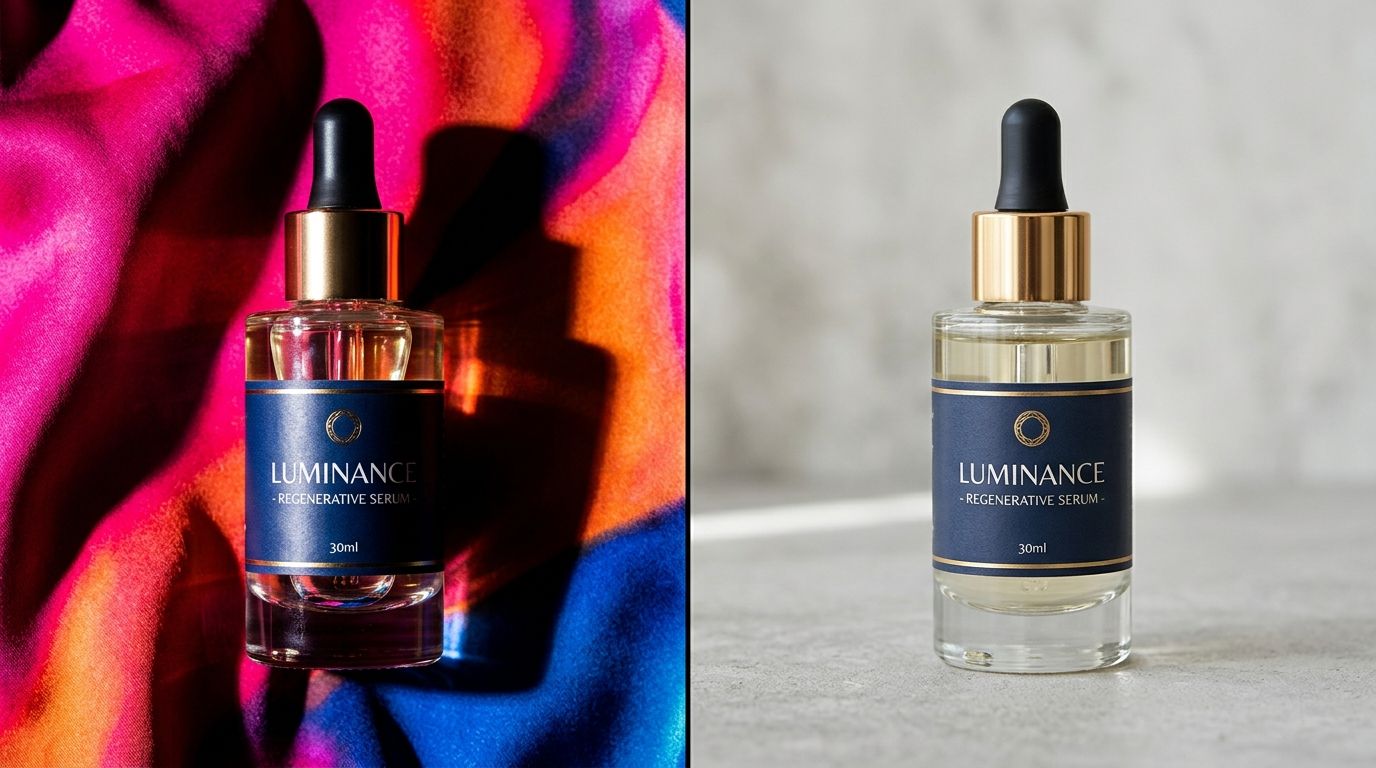
Then comes the catalog portion of the day. You have sixty SKUs to get through in three hours. The art director stops caring about mood and starts caring about speed. The lighting gets flattened out to be safe. The styling disappears. You just need to get the items shot so you can launch the collection.
(This is a reality of physical production. You cannot spend a full day styling a single catalog shot when you have fifty more waiting on the rack. The math does not work for traditional studios.)
| Funnel Stage | Typical Visual Quality | Impact on Customer |
|---|---|---|
| Social Media Ad | Premium, dynamic lighting | Clicks through with high intent |
| Traditional Product Page | Flat, sterile white background | Loses trust and bounces quickly |
| AI-Enhanced Product Page | Matches ad campaign aesthetic | Maintains trust and completes purchase |
The result is a website full of sterile, uninspiring product page visual quality that completely contradicts the brand identity established in your marketing. If you are struggling with making an e-commerce brand look premium, your first step should not be a massive rebranding exercise. Your first step should be fixing your lighting consistency.
Fixing the Disconnect with AI
Closing the visual promise gap used to require booking a second full day of studio time specifically for elevated catalog shots. You had to pay the photographer, the lighting tech, the stylist, and the retoucher all over again. Most brands simply accepted the conversion loss because the logistics of a reshoot were too painful.
That is no longer true. You do not need to choose between budget and visual consistency anymore.
If you want to understand how AI product photography functions, the core benefit is eliminating this exact bottleneck. You take the flat, boring catalog image you already have. You upload it to CherryShot AI. You select a visual mode that matches the vibe of your successful ad campaign.
If your ad featured soft morning shadows and raw textures, you select the Lifestyle mode. If your ad leaned into high contrast flash and modern aesthetics, you select the Magazine mode. In minutes, CherryShot AI generates product images that look like they were shot on the exact same set as your hero campaign. The transition from ad click to product page becomes seamless.
The Trade-off Worth Acknowledging
Is AI going to replace the highly complex, multi-model hero shoot where you need specific talent interacting with your product in a highly choreographed narrative? No. A great creative director and a talented photographer are still vital for your flagship brand moments.
But using that expensive human crew to shoot hundreds of standard product page variations is an absurd waste of resources.
Your product page does not need an elaborate narrative. It needs high fidelity, consistent lighting, and visual alignment with your ads. When you use CherryShot AI to elevate your catalog photography, the per-image cost drops to under five dollars. You can literally afford to generate a custom product page image for every specific ad creative you run.
How to Audit Your Own Visual Funnel
Do not assume your funnel is visually consistent just because the same logo appears on both pages. You need to view the customer journey exactly as the buyer experiences it.
Open your highest spending Meta or TikTok ad on your phone. Look at the color palette. Look at the intensity of the shadows. Look at the perceived value of the item. Now click the link.
Does the destination page feel like a continuation of that exact story? Or does it feel like you just walked out of a luxury boutique and into a fluorescent lit grocery store? If the lighting shifts from moody and dramatic to flat and sterile, you have a visual promise gap.
Every element on your product page must reinforce the decision to click. The background texture, the shadow direction, the color grading. If your ad promises Loud Luxury, your product page cannot deliver bare minimum compliance. The brands that win do not just optimize their checkout buttons. They optimize the visual continuity of the entire buying experience.
Frequently Asked Questions
What is a visual promise gap in ecommerce?
A visual promise gap occurs when the high-quality aesthetic presented in a marketing ad does not match the visual experience on the actual product page. This severe disconnect triggers immediate buyer remorse because the customer feels misled about the brand's true value. Compare your top-performing ad creative directly against its landing page on a mobile device to spot lighting and styling inconsistencies.
How do ad creative quality and product page quality affect conversion together?
Ad creative quality dictates your click-through rate while product page visual quality directly controls your final conversion rate. Treating these two components as completely isolated projects creates a broken funnel where expensive traffic bounces before adding items to the cart. Match the lighting ratios, shadow intensity, and background styling of your landing pages to your hero campaigns to preserve initial buyer intent.
Why is visual consistency between ads and product pages important for ROAS?
Visual consistency directly improves your Return on Ad Spend by preventing drop-off at the most expensive point in your traffic funnel. A jarring visual shift from an expensive ad to a cheap product page destroys trust and ensures that your thirty dollar acquisition click is completely wasted. Audit your catalog photos against your top of funnel creatives to find and eliminate these specific conversion blocks.
How do I identify a visual promise gap in my paid traffic funnel?
You identify a visual promise gap by finding a high click-through rate on specific ad creatives paired with a high bounce rate for the exact destination URL. This specific metric combination proves users loved the initial pitch but felt disappointed the moment they saw the actual product presentation. Open the ad and the landing page side by side on a mobile screen to physically compare the lighting and styling differences.
Key Takeaways
- The visual promise gap occurs when premium ads drive traffic to low quality product pages.
- This mismatch destroys customer trust immediately and drives up your customer acquisition cost.
- Traditional studio constraints often force brands to compromise on catalog image quality.
- AI generation allows you to match the visual vibe of your hero campaigns instantly without booking a reshoot.
Stop paying for clicks just to disappoint the customer at the finish line. The technology exists to make your product pages look as expensive as your marketing campaigns without the studio overhead. Create your campaign imagery, match your ad aesthetics, and close your visual promise gap today at CherryShot AI.
Audit your product page lighting right now
Pull up your highest-performing social ad on your phone, then click through to the landing page. If the lighting and background suddenly shift from premium to cheap, you are actively losing sales. Run your flat catalog images through CherryShot AI to instantly match your hero campaign aesthetics.
Try CherryShot AI