Brand Photography vs Product Photography: The Difference and Why Growing Ecommerce Brands Need Both
Brand photography sells the feeling. Product photography sells the item. If you are an ecommerce founder preparing to brief a studio for your first major shoot, mixing up these two deliverables is a fast way to blow ten thousand dollars and still have nothing usable for your product pages. You need both to scale an online store today. But treating them as the same discipline will wreck your margins and frustrate your creative team.
Definition
Brand photography captures the lifestyle and emotional narrative of a company to build identity. Product photography records the physical details, scale, and material quality of specific catalog items for direct sales.
Most early-stage brands try to cram everything into one production day. They want editorial banner images that belong in a magazine, but they also want thirty different SKUs shot perfectly clean on a white background. The result is always a compromise. You end up with dark, moody product pages that hide the details and boring lifestyle shots that fail to stop the scroll on social media.
Understanding the exact distinction between the two is the only way to build an ecommerce brand visual strategy that actually works. Let us break down what each style demands, what they cost, and how to sequence your investment to protect your cash flow.
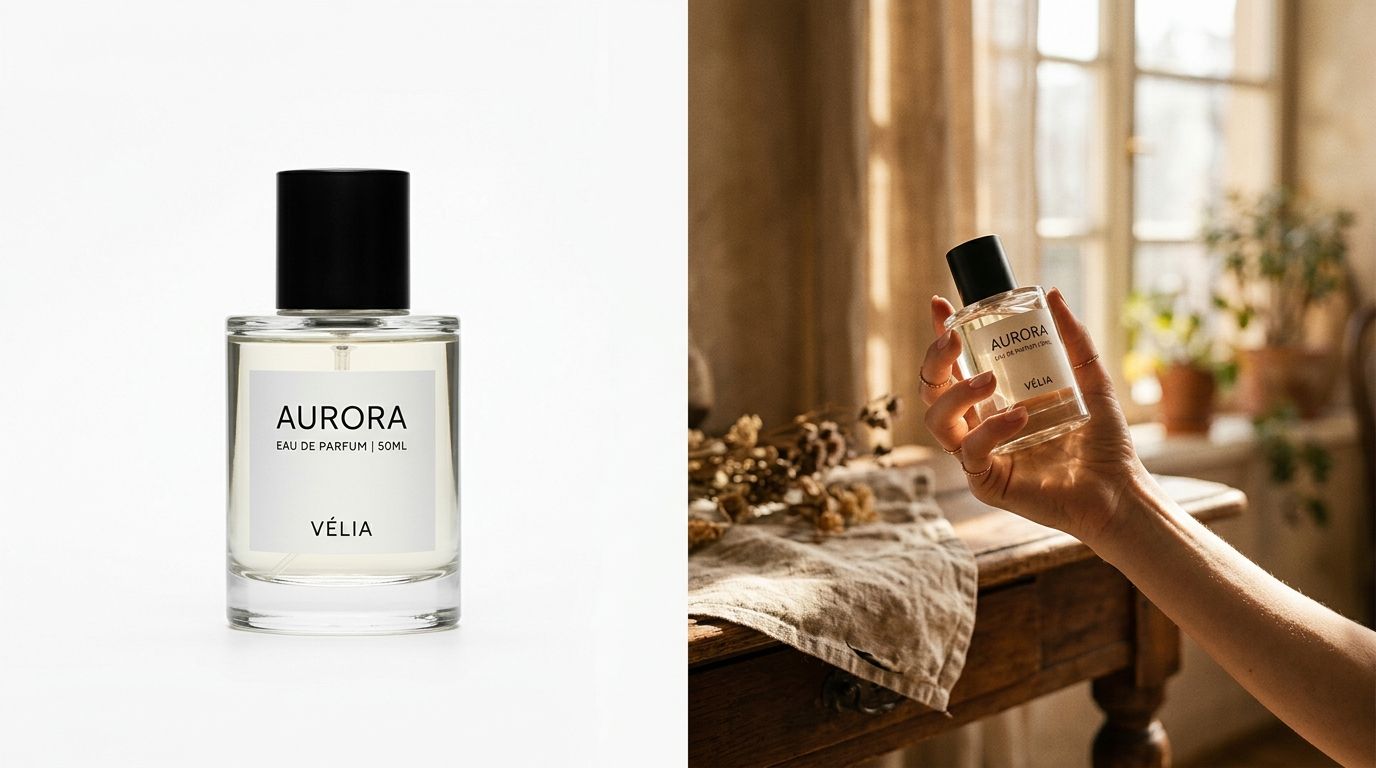
A classic brand photo sells the mood and target demographic. A product photo shows the fabric texture and hardware details.
What is brand photography?
Brand photography is your visual identity in action. This is the storytelling layer of your marketing stack. When a potential customer lands on your homepage, sees an Instagram ad, or opens a promotional email, the brand photography tells them who this product is for.
This style relies heavily on context. A brand shoot involves models, specific locations, props, and art direction. The lighting is often dramatic or highly stylized to evoke a specific emotion. The goal is not to show the stitching on your leather bag perfectly clearly. The goal is to show an effortlessly cool person carrying that bag through a sunlit European street, making the customer want to embody that same energy.
These are your hero shots. They live at the very top of your marketing funnel. Because they require so much coordination, brand shoots are inherently expensive. You are paying for location permits, wardrobe stylists, hair and makeup artists, and a photographer who specializes in capturing movement and human emotion. A strong brand image establishes trust and elevates your perceived value immediately.
However, the trade-off is clear. A pure brand photo will often result in a high return rate if you use it as the main product image. Dramatic lighting obscures true colorways. Lifestyle settings distract from the actual item. You simply cannot optimize for emotional resonance and clinical clarity in a single frame.
The elements of a brand photography brief
When you brief a team for brand identity photography, you speak in terms of mood and demographics. You provide a moodboard filled with lighting references, competitor campaigns, and cultural touchpoints. You dictate the vibe. The shot list is usually looser, allowing the photographer to chase interesting light or spontaneous moments on set.
What is product photography?
Product photography does the heavy lifting of the actual conversion. Once the brand photography has lured the customer to your website, the product photography takes over to close the sale. This discipline is about clinical accuracy, scale, and detail.
The standard product shot features the item isolated on a crisp white or neutral background. The lighting is perfectly balanced to reveal the true color of the product without harsh shadows. Every angle matters. The customer needs to see the front, the back, a 45-degree angle, and macro shots of interesting details like zippers, ingredient labels, or textures.
Poorly executed product shots are the leading cause of abandoned carts. We break down exactly what elements drive purchases in our complete guide to what makes an ecommerce product photo convert. If the buyer has to squint to understand what the item is made of, they will bounce.
Because product photography requires immense precision, it is shot in a controlled studio environment. The camera is locked on a tripod. The lighting is dialed in and rarely changes. The focus is entirely on consistency. If you have fifty items in a collection, they all need to look like they belong in the exact same catalog.
The elements of a product photography brief
A product photography brief is highly technical. You do not talk about feelings or vibes. You provide a rigid shot list. You define the exact camera angles required for every single SKU. You specify the hex code for the background color. You detail exactly how the files should be named upon delivery so your website manager can upload them seamlessly. It is an exercise in logistics, not emotion.
The danger of mixing the two
The most expensive mistake growing brands make is trying to save money by executing both styles simultaneously with the same team. You hire a fantastic editorial photographer who creates beautiful brand campaigns. You then hand them a list of seventy products that need isolated white background shots by the end of the day.
That photographer will prioritize the creative brand shots because that is what goes in their portfolio. By 4:00 PM, the team is rushing. The product shots are rushed through a makeshift lightbox. The lighting is inconsistent. The colors are slightly off. You end up launching a website where the homepage looks like a luxury fashion house, but the actual product pages look like a cheap marketplace listing.
When your ads promise a premium lifestyle but your store looks like a clinical catalog with no cohesion, you lose the buyer's trust instantly. Fixing the visual gap between ads and product pages is the fastest way to stop leaking clicks.
Worth noting, some ultra-luxury brands deliberately break this rule by using editorial shots as their primary product images. They absorb the massive return rate because their margins allow it and their target buyer expects an editorial experience. For 99 percent of brands, this is a terrible idea.
Comparing the requirements head to head
| Requirement | Brand Shoot | Product Shoot |
|---|---|---|
| Primary Goal | Emotional narrative | Clinical detail |
| Lighting | Dramatic & moody | Flat & accurate |
| Environment | Real-world location | Controlled studio |
| Team | Stylists & models | Technical operators |
Which should you invest in first?
If you have a limited budget, sequence your investment carefully. You must get your product photography perfect first. You cannot sell the lifestyle if the customer cannot see what they are buying. Drive all your initial budget into creating a flawless, high-converting product page baseline.
Once your catalog looks incredibly professional, you can then invest in brand storytelling photography to drive top-of-funnel awareness. Starting from zero requires a deliberate plan. If you are building a new store entirely, our framework for creating a visual brand identity maps out the exact steps to take before hiring your first creative professional.
How AI is changing the production model
The traditional model required you to hire separate teams or book multiple studio days to get both assets. That logic is breaking down completely for modern ecommerce operations. Production budgets are shifting because the technology has finally caught up to the demands of daily output.
Paying a premium day rate for an amazing art director and photographer still makes perfect sense for your hero brand imagery. They will capture the authentic human movement, the specific location energy, and the subtle mood that algorithms struggle to replicate perfectly. You want human eyes on those emotional assets.
But paying that same expensive team to shoot fifty variations of a new product on a seamless white backdrop is a massive waste of capital. For standard catalog volume, the math simply does not work anymore. Upload a basic product image, pick a visual mode, and CherryShot AI generates those campaign-ready product photos in minutes. The per-image cost drops to under five dollars. The turnaround goes from three weeks to a Tuesday afternoon.
The smartest brands are now splitting their visual strategy. They reserve their hard-won marketing dollars for spectacular brand photography campaigns that build immense desire. They then use AI tools to generate the hundreds of crisp, perfectly lit product and lifestyle variations needed to fill out the actual store catalog. This hybrid approach gives you the emotional resonance of a premium brand shoot and the high conversion rate of clinical product photography, all without destroying your profit margins.
Audit your product page images before your next campaign
Review your top three converting product pages to ensure the image clarity matches your high-spend ads. Use CherryShot AI to quickly refresh any catalog images that lack the detail required to drive confident buyer decisions.
Try CherryShot AIFrequently Asked Questions
What is the difference between brand photography and product photography?
Brand photography focuses on selling a lifestyle, mood, and identity to create an emotional connection with the customer. Product photography is highly focused on the physical item, showcasing its details, scale, and utility to give the buyer confidence to complete the purchase. These two disciplines serve distinct roles in your marketing funnel by balancing aesthetic appeal with necessary technical clarity for shoppers.
Do I need both brand photography and product photography?
Growing ecommerce brands eventually need both types of imagery to sustain long-term success. Brand photography drives traffic from social media and establishes trust on your landing pages. Product photography acts as the primary tool on your product page to answer specific questions about the item and convert that incoming traffic into revenue. You need both to create a complete path for the customer.
Which should I invest in first: brand or product photography?
Invest in professional product photography before spending your budget on lifestyle campaigns. If you drive massive traffic through brand awareness but your product pages feature blurry or poorly lit images, customers will not buy. Establishing a clean, professional baseline for your entire product catalog ensures that you are prepared to handle the conversion demands of your traffic before you scale.
Can AI create brand photography?
AI tools are rapidly improving at generating lifestyle contexts and model-based imagery. General-purpose AI image tools can create broad lifestyle scenes, but for highly specific, art-directed brand campaigns featuring complex human interactions, traditional photography remains the standard. Use this technology to handle high-volume product photography tasks instead of trying to generate artistic, complex brand storyboards.
How does brand photography affect ecommerce revenue?
Brand photography impacts revenue indirectly by increasing click-through rates on advertisements, lowering customer acquisition costs, and building long-term brand loyalty. It creates the initial desire that brings a shopper into your sales funnel. This visual storytelling layer differentiates your store from competitors by establishing an emotional narrative that potential customers want to join.