How to Increase Ecommerce Sales: The Role Your Product Images Are Playing
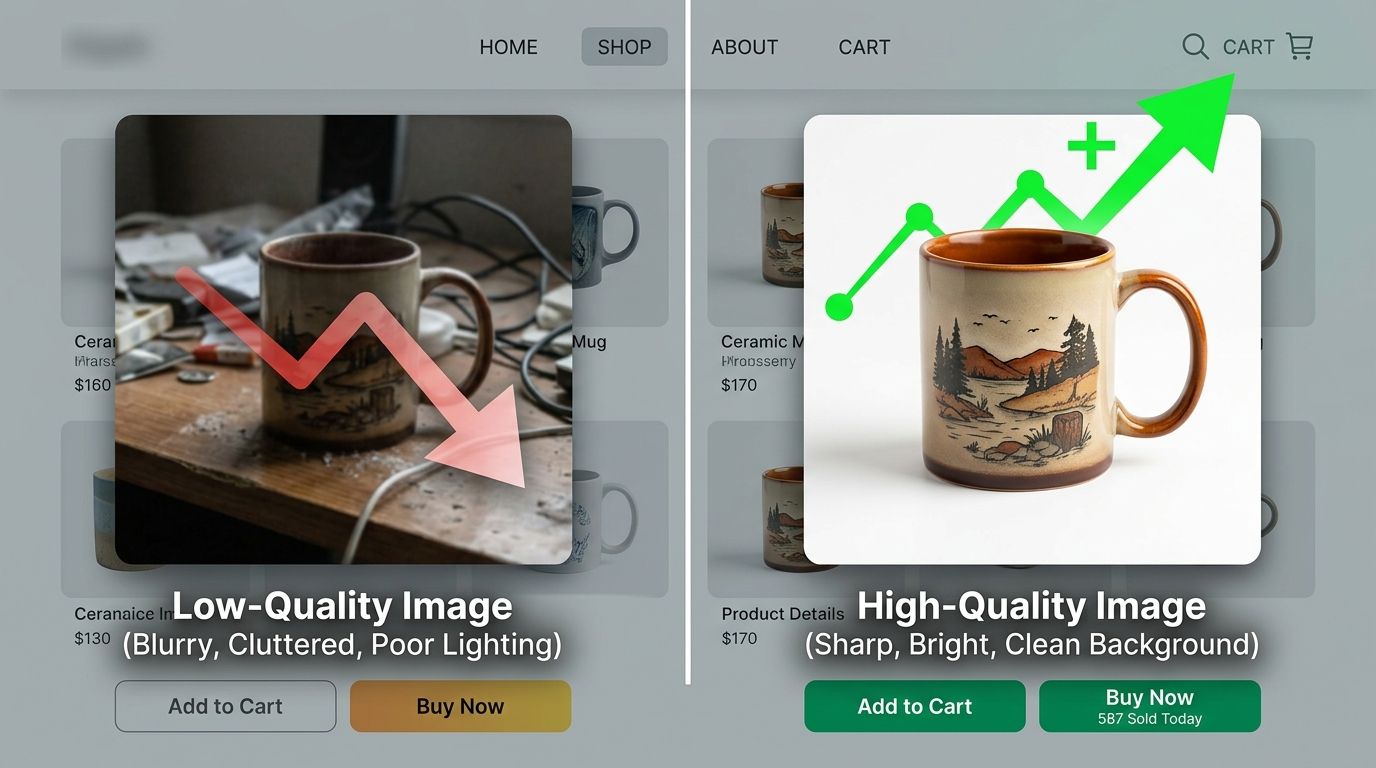
If you want to know how to increase ecommerce sales, stop looking at your paid ad dashboard and start looking at your product pages. Most brands bleed revenue because their visual assets fail to communicate value to the customer. When a shopper lands on your site, they decide within three seconds if your product is worth their money, and they use your photography to make that call.
Definition
Ecommerce product imagery represents the total visual collection of a product listing, including studio shots, lifestyle photography, and detail views. These assets serve as the primary proxy for the physical product experience, directly informing a buyer's decision to trust your brand and complete a purchase.
Why Your Visuals Are The Real Conversion Killer
You might have the best copy in the world, but if your images look like they were taken in a basement, your conversion rate will suffer. Most founders ignore this, choosing to focus on SEO or expensive influencer campaigns while leaving their core conversion funnel full of holes. Why product images lose conversions is a question that often has a simple, uncomfortable answer: your images do not look as professional as your competitors.
The Trust Gap
Customers cannot touch the product. They cannot gauge the weight or the texture. They are looking for visual cues that confirm the item is high quality. When those cues are missing, they bounce. A high-quality image acts as a psychological safety net. It tells the shopper that the brand is established and the product is reliable.
Comparing Production Methods For Better Visuals
| Method | Cost Per Image | Turnaround |
|---|---|---|
| Traditional Studio | $80 - $200 | 2 - 4 Weeks |
| Freelance Shooter | $50 - $150 | 1 - 2 Weeks |
| CherryShot AI | Under $5 | Minutes |
Choosing The Right Strategy
The math behind traditional photography is broken for most modern brands. If you are launching new SKUs every month, waiting weeks for a studio to clear their schedule is a strategy for failure. You need speed. You need variety. Most importantly, you need to understand product images and low add-to-cart rates to ensure you aren't just putting out more content, but better content.
Speed is not a luxury. It is a competitive advantage in a crowded market.
A secondary benefit of using AI-powered tools like CherryShot AI is the ability to maintain brand consistency without the logistical nightmare of re-booking a studio. You can generate a set of campaign shots for a new colorway in an afternoon. This keeps your site fresh and gives your customers the visual variety they expect from a premium brand.
Executing A Visual Audit
The Mobile First Checklist
Most of your traffic is on a phone. Does your product look crisp on a four-inch screen? If a user has to pinch-to-zoom to see the details, you have already lost them. High-performing stores make the product pop from the background. They use varied angles to explain the utility of the product quickly.
If you have not done so, you should what makes product photos convert a core part of your recurring operations meetings.
Frequently Asked Questions
What is the fastest way to increase ecommerce sales?
The fastest way to drive growth is often optimizing your existing traffic rather than chasing new visitors. By improving the visual clarity and professional quality of your product listings, you reduce friction for buyers during their decision phase. Small changes to how a product is displayed can lead to immediate upticks in your checkout rates.
How much do product images affect ecommerce conversion rate?
Product images are the primary driver of digital purchase intent for online shoppers. Studies have shown that professional imagery can influence conversion rates by significant margins because it provides the visual trust necessary to overcome buying hesitation. When a customer cannot touch an item, your photos serve as their surrogate for physical inspection.
What product page changes have the highest impact on sales?
The most impactful changes involve clarifying exactly what the customer receives through high quality visual content. Replacing low resolution or generic catalog images with lifestyle imagery provides necessary context for scale and utility. This simple pivot often fixes high bounce rates on mobile product pages where users judge value within seconds.
How many product images should a high-converting listing have?
A high converting listing should feature between five and eight distinct images to provide a complete view of the product. These should include standard studio angles, close up detail shots of textures, and lifestyle imagery showing the item in use. Providing this variety allows potential customers to answer their own questions without needing to search for additional information.
Key Takeaways
- Professional imagery is the primary signal of trust for online shoppers.
- Stop waiting weeks for studio results when speed is a competitive necessity.
- Mobile conversion relies on high-impact visual clarity on small screens.
- Use 5 to 8 images per product to answer buyer questions without extra copy.
Refresh your product catalog to improve your conversion rate
You do not need a massive budget to get professional product photography. Start by swapping your weakest listings with new, high-quality images and measure the difference in add-to-cart rates after one week.
Try CherryShot AIFixing your imagery is the most direct path to sustainable sales growth. Explore CherryShot AI today to see how quickly your catalog can transform.