Complete the Look Ecommerce: How to Use Outfit and Set Photography to Drive Multiple-Item Purchases
Complete the look ecommerce photography drives higher average order values because it removes the cognitive load of styling from the customer. Shoppers do not want to guess if a structured linen shirt works with those specific wide-leg wool trousers. When you show the full outfit in a single styled image, you sell a cohesive aesthetic rather than an isolated product. It proves the pieces belong together.
Definition
Complete the look ecommerce photography is a visual merchandising strategy that displays a product styled alongside complementary items in a single image. It aims to increase average order values by showing customers exactly how individual pieces form a cohesive outfit or room setting.
Standalone product photos against a stark white background are rapidly becoming a commodity play. If you want to push your metrics up and justify premium pricing, you have to sell the whole room or the whole outfit. A single pair of jeans looks like every other pair of jeans until you style it with a vintage leather jacket and the right boots. That context is what makes the customer click the checkout button.
The glaring trade-off with traditional styled shoots is the logistical nightmare of coordinating multiple samples that almost always arrive from the factory at different times. By the time you have the full look ready to shoot, your launch window is half closed.
(Worth noting: styled set photography requires an actual point of view. You cannot just throw three random bestsellers into a frame and expect them to cross-sell automatically. The styling has to make sense for the target customer and their real daily habits.)
The Mechanics of Complete the Look Ecommerce Photography
I remember trying to piece together a seasonal lookbook in 2018. We had the shoes, we had the pants, but the feature jacket sample was stuck in customs. We ended up shooting the pants with a stylist's personal jacket just to get the images live on the site. Over the next month, customers emailed us constantly asking to buy the jacket we did not even sell. That was the moment I realized the true power of fashion cross-sell techniques. People do not buy products. They buy better versions of themselves.
When you implement a complete the look strategy, you are doing the hardest part of shopping for your customer. You are giving them permission to buy the whole package without second-guessing their own taste.
Shifting from items to aesthetics
Selling an aesthetic requires a different approach to your product detail pages. A great lifestyle image is useless if the user experience creates friction. If a customer sees a styled shoot and wants the whole outfit, they should not have to hunt through your navigation menu to find the other pieces.
The most effective complete the look product page places the hero lifestyle image prominently. Directly adjacent to it, beneath the primary purchase button, you place a curated carousel of the exact complementary items shown in the photo. Every piece shown in the image must be available to buy within one click. If your margins are suffering, learning to increase average order value with product photos is the fastest lever you can pull.
Overcoming the Logistical Nightmare of Set Photography
Getting three different items onto the same model at the same time sounds simple until you actually try to run an apparel brand. Supply chains are messy. Shipments get delayed. Sizes are inconsistent across early samples.
Traditional studio photography forces you into a corner. You either wait for all the samples to arrive and miss your scheduled launch window, or you shoot the items separately and miss out on the cross-sell opportunity completely. Neither option is good for your bottom line.
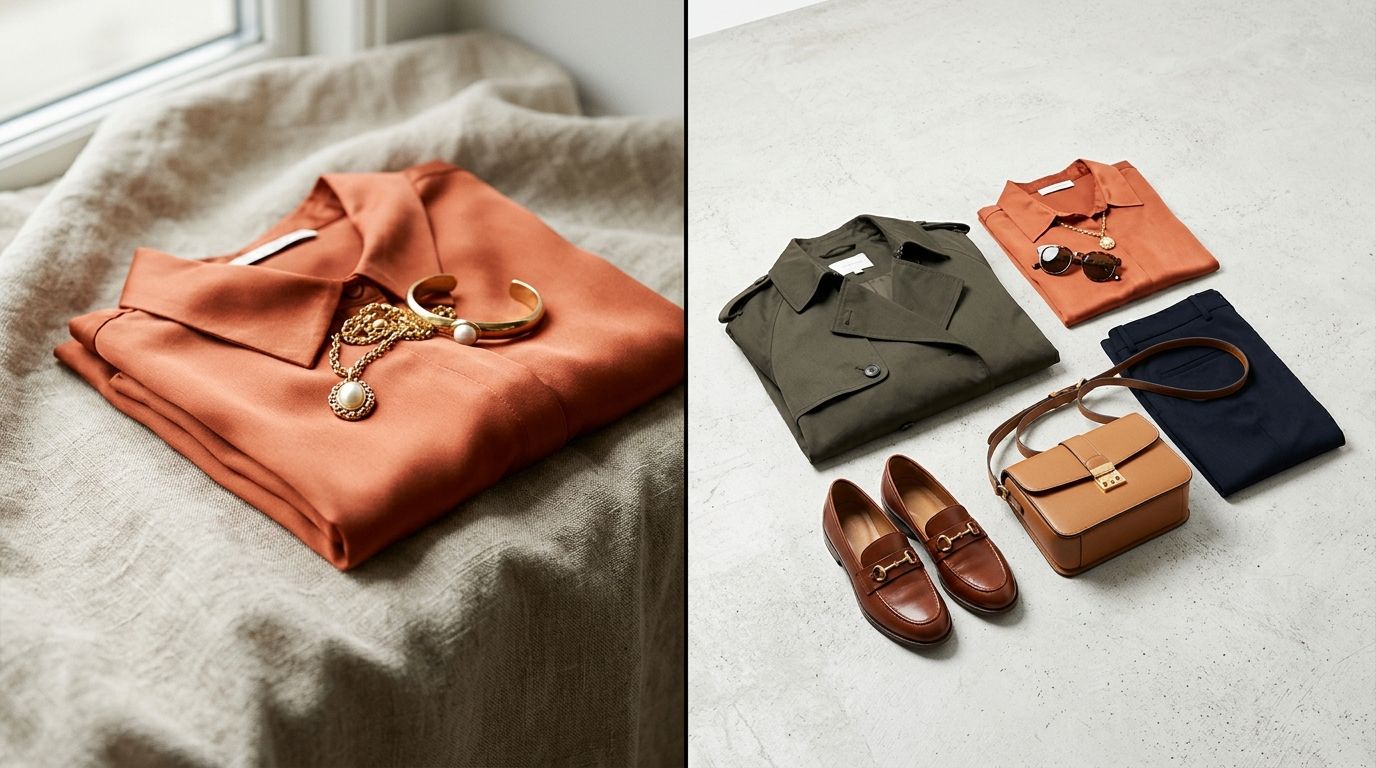
Contextual styling proves to the customer that individual pieces form a cohesive outfit.
How AI accelerates outfit photography
This is exactly why smart brands are shifting their visual production workflows. Instead of spending a week trying to get the lighting right and coordinating models, you can show clothing on model without photoshoot logistics dragging you down. If you have the flat lay images of the shirt and the pants, you do not need to wait for an in-person fitting.
This is where CherryShot AI becomes a revenue multiplier for ecommerce operators. You upload the individual product images directly into the platform. You select a visual mode like Lifestyle or Influencer. CherryShot AI then generates campaign-ready photos showing the items in a styled environment in minutes.
If you have a specific brand aesthetic, you can use the Upload Ref mode to ensure the new images match your existing catalog perfectly. The per-image cost drops to under $5, and the turnaround goes from three weeks to a single afternoon. You can test different outfit combinations to see which styling drives a higher outfit photography ecommerce AOV.
| Production Method | Logistics Required | Launch Window Impact |
|---|---|---|
| Traditional Studio Shoots | Requires all physical samples present simultaneously | Often delayed due to supply chain inconsistencies |
| AI-Generated Styling | Only requires isolated flat lay images of individual items | Enables immediate campaign launches within hours |
Executing Styled Product Photography for Multiple Items
This strategy extends far beyond apparel. Home goods, skincare, and electronics all benefit massively from set photography ecommerce.
If you sell a ceramic coffee mug, showing it alone against a seamless backdrop is fine for basic catalog browsing. But showing it on a textured wood table next to a French press, a folded linen napkin, and a bag of artisan coffee beans sells a morning ritual. That lifestyle photography sets the mood. Customers who came for the mug end up adding the matching plates and bowls to their cart because the image convinced them the entire set belongs in their home.
Pinning down your visual aesthetic
For founders struggling with their brand's visual identity, making an e-commerce brand look more premium is often just a matter of improving the contextual styling of your product pages. Flat lay sets work well for accessories or small electronics, allowing you to control the exact placement of every element.
Whether you use flat lays or full model looks, the connection between set photography and items per order is undeniable. Visual proof of compatibility eliminates the hesitation of buying multiple items. When the customer sees the final result, they stop worrying about making a styling mistake and start focusing on checkout.
Key Takeaways
- Styled set photography removes the customer's fear of making a bad styling choice.
- Complete the look layouts must link all visible products directly to a frictionless cart addition.
- Supply chain delays often ruin the logistics of traditional multiple-item studio shoots.
- AI tools now allow brands to generate cohesive lifestyle sets without waiting for physical inventory to arrive at the same time.
Frequently Asked Questions
How does 'complete the look' increase ecommerce AOV?
Complete the look photography increases average order value by directly eliminating styling friction for shoppers. When customers see a structured shirt paired beautifully with specific trousers, they gain the confidence to buy the entire collection rather than a single piece. Placing these styled items in an accessible carousel below the hero image instantly converts that visual inspiration into multiple-item sales transactions.
What type of photography supports 'complete the look' best?
Lifestyle photography sets and full-body model shots are the most effective visual formats for this merchandising strategy. These specific styles provide the environmental context and physical proportions necessary to convince a prospective buyer that the featured items belong together. Arranging a simple ceramic mug on a textured wooden table alongside a French press and fresh coffee beans establishes a morning ritual that drives additional cart additions.
How do you photograph a styled set for ecommerce?
Photographing a styled set requires operators to establish a very clear visual hierarchy. You must position one specific hero item to anchor the overall composition while the complementary accessories neatly frame the focal point. Lighting setups must remain consistent across all physical materials, ensuring the background enhances the mood without pulling attention away from the core products you want the customer to buy.
What is the connection between set photography and items per order?
Set photography directly increases items per order by visually proving product compatibility. A shopper might arrive on your page searching for a coffee table, but a well-executed set photo showing that exact table styled with a specific rug introduces an immediate cross-sell opportunity. This concrete visual proof eliminates purchase hesitation and convinces the customer that buying the complete package is a safe choice.
Relying entirely on isolated product images leaves too much revenue on the table. You are forcing the customer to do the hard work of visualization.
By upgrading your complete the look ecommerce photography, you guide the customer toward a larger basket size effortlessly. If you want to start building these styled sets today without dealing with studio scheduling, upload your product shots to CherryShot AI and generate your first campaign instantly.
Generate styled sets from your isolated product images
Stop waiting for delayed samples to arrive before launching your next campaign. You can upload flat lay shots into CherryShot AI right now and build cohesive, multiple-item lifestyle sets that drive higher items per order.
Try CherryShot AI