Complete the Look for Ecommerce
Complete the look ecommerce is not a software feature. It is a visual merchandising strategy that proves to the customer that your products belong together. If you are selling a linen shirt but photographing it on a clear ghost mannequin, you are asking the shopper to do the heavy lifting of imagining the rest of the outfit. Customers do not want to imagine. They want to be told exactly what looks good.
Definition
Complete the look is an ecommerce merchandising strategy that groups complementary products together in a single styled image. It allows shoppers to visualize an entire outfit or room setup rather than viewing items in isolation. This approach actively encourages customers to purchase multiple matching pieces at once.
Any brand relying solely on standard white background product shots is leaving a massive amount of multi-item purchase intent on the table. When a customer lands on your product page, they are usually trying to solve a specific problem. They need a jacket for a wedding, or they need a rug for a new apartment. If you only show them the single item they searched for, you are settling for the absolute minimum transaction value.
To be entirely honest, styled photography requires a highly specific brand identity to work. If your aesthetic is not dialed in, styling multiple pieces together will just look messy and confuse the shopper. But when you get the visual styling right, you transform a transactional purchase into an aspirational one. You stop selling a twenty dollar shirt and start selling a two hundred dollar vibe.
(Worth noting: this is less about replacing your creative director entirely and more about eliminating the production bottleneck that adds three weeks to every seasonal launch. A brilliant stylist still makes sense for your massive hero campaigns. For daily catalog volume, the traditional production math simply does not work anymore.)
The psychology of visual outfit conversion
Nobody buys clothing in a vacuum. They buy clothing to wear in specific social situations. The same principle applies to home decor. A customer does not buy a coffee table just to own a piece of wood. They buy it to anchor a living room.
Why shoppers need styling context
Cognitive load is the enemy of conversion. When a shopper sees an isolated product on a plain background, their brain immediately starts working. They have to mentally scan their own closet to see if they own anything that matches. They have to guess how the fabric drapes in reality. They have to wonder if the color will clash with their favorite sneakers.
Outfit styling ecommerce removes that cognitive load entirely. By presenting the item as part of a curated look, you give the customer permission to stop thinking and start buying. You are answering their unspoken questions before they even formulate them. Yes, this shirt works with dark denim. Yes, those boots look great with this hemline. The visual proof is right there on the screen.
The difference between selling an item and selling a look
When you sell a single item, you are competing on price and basic utility. The customer can easily open another tab and find a similar black sweater for ten dollars less. However, when you sell a complete look, you are competing on curation. You are providing a service. The shopper is far less likely to comparison shop because they have fallen in love with the specific combination you put together.
| Merchandising Approach | Customer Experience | Business Impact |
|---|---|---|
| Isolated Product Photography | Forces the shopper to mentally imagine outfit combinations. | Competes entirely on baseline price and basic utility. |
| Complete Look Photography | Provides immediate visual proof of how items wear together. | Drives multi-item purchases and higher average order value. |
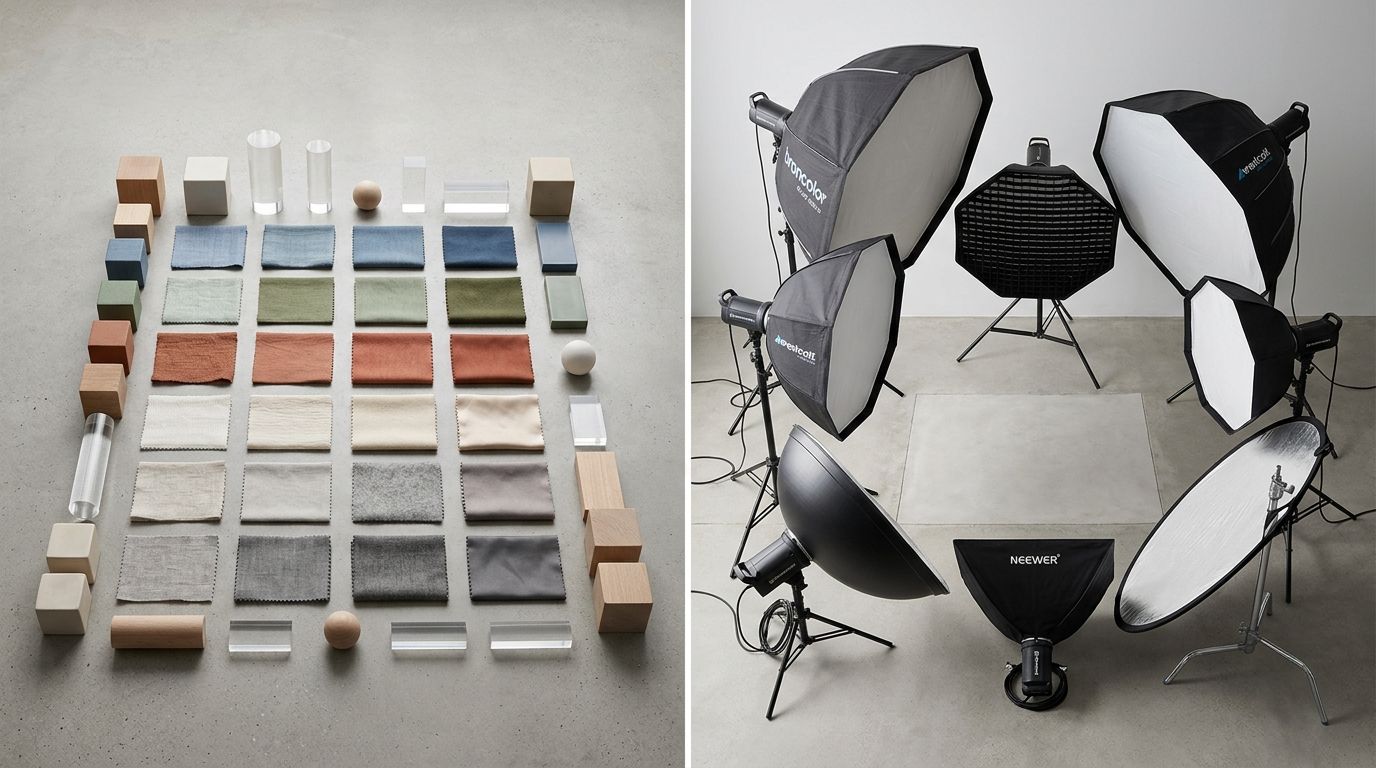
Effective look photography forces the shopper to reconsider their entire cart.
The friction in traditional set photography ecommerce
If complete the look fashion ecommerce is so profitable, why does every brand not do it for every single SKU? Because traditional photoshoots are a logistical nightmare. I have personally sat through studio shoots that ran four hours over schedule just trying to get the lighting right on a group of nested tables. I have paid invoices that arrived two weeks after the campaign was supposed to launch. I have argued with photographers about whether a pant cuff was rolled neatly enough to publish.
The logistics of styling multiple SKUs
The true cost of a traditional studio shoot is never just the photographer's day rate. The invoice includes the studio rental, the lighting assistant, the stylist who demands half a day just to prep the garments, and the art director managing the floor. Most founders I have talked to cannot name the actual per-image cost of their last styled shoot. When they finally calculate it, the number is usually somewhere between $80 and $200 per finished image.
Worse than the cost is the coordination. To photograph an outfit, you need every piece of that outfit to physically exist in the same room at the same time. If the factory delays the shipment of the trousers, you cannot photograph the jacket. Your entire launch calendar is held hostage by your slowest moving piece of inventory.
This is why many brands are realizing they need to show clothing on a model without waiting for physical inventory to align perfectly in a rented studio space.
How slow production cycles kill seasonal trends
Fashion and home trends move incredibly fast. By the time you coordinate the inventory, book the creative team, shoot the looks, wait three weeks for retouching, and upload the assets to Shopify, the weather might have changed. You are forced to discount items that would have sold at full price if you could have gotten the styling online a month earlier.
How to execute complete the look fashion ecommerce effectively
You cannot scale your visual merchandising if you are trapped in the traditional studio model. The brands winning right now are not the ones with massive creative budgets. They are the brands launching the most styled SKUs per quarter. They are the ones testing different outfit combinations every single week.
Escaping the studio scheduling trap
AI product photography changes the production math completely. You no longer need to wait for a physical model or a massive studio day to build out your catalog. Upload a product image, pick a visual mode, and CherryShot AI generates campaign-ready photos in minutes. You can take a basic flat lay of a sweater and immediately generate an asset of a model wearing that sweater on a city street.
The per-image cost drops to under $5. The turnaround goes from weeks to an afternoon. When you can generate imagery for a new styling combination in twenty minutes instead of booking another shoot day, the bottleneck shifts from production to actual merchandising ideas. You can finally afford to test which trousers sell the most shirts.
This agility allows you to implement highly contextual lifestyle product photography across your entire site rather than saving it just for the homepage banner.
Start with your highest margin hero pieces
Do not try to build a complete look for your low margin accessories right away. Start with your hero products. If you sell luxury outerwear, that coat is your anchor. Build three different outfits around that one coat. Show it styled for a casual weekend, a formal dinner, and a rainy commute. The goal is to prove the versatility of the expensive item while casually upselling the cheaper shirts and scarves underneath it.
Driving AOV with complete look shopping
Once you have the imagery, you have to build the user experience to support it. A great photograph will not increase your revenue if the customer cannot figure out how to buy the items shown in the picture.
The mechanics of the multi-item purchase
Friction kills conversion. If a customer sees a great outfit in your product carousel, they should not have to leave that page, open your site search, and manually hunt down the matching pants. Every extra click you demand from a shopper guarantees a certain percentage of them will abandon the session entirely.
This is exactly why optimizing your visual layout is the easiest way to increase average order value without spending an extra dollar on marketing acquisition. You are simply capitalizing on the traffic you already paid to acquire.
How to show complete look styling on the product page
Your hero image at the top of the page should always feature the product in its fully styled context. Immediately below the main image gallery, or directly below the primary add to cart button, you need a dedicated section labeled clearly. This module must contain individual product cards for every single item featured in the photograph.
Each card needs a clear thumbnail, price, and variant selector. Most importantly, you need a single button that allows the user to add the entire outfit to their cart with one click. When you make it easier to buy four items than it is to browse for one, your cart sizes will reflect that convenience.
Key Takeaways
- Single product photography forces the shopper to imagine the context, which creates friction and hurts conversion.
- Outfit styling dramatically increases average order value by monetizing inspiration at the moment of intent.
- Traditional set photography is too slow and expensive to scale across an entire seasonal ecommerce catalog.
- AI tools eliminate studio bottlenecks by generating styled lifestyle assets from basic product images in minutes.
Frequently Asked Questions
What is complete the look in ecommerce?
Complete the look is a visual merchandising tactic styling multiple complementary products together in a single photograph. Showing the customer exactly how an item fits into an outfit eliminates the mental friction of outfit planning. You should present these curated outfits directly on the main product page with a single button to add all featured items to the cart simultaneously.
How do I add complete the look to my product pages?
Feature the fully styled image prominently in your primary product carousel to immediately establish context. Creating a dedicated section below the fold breaks down the individual items shown in the photograph for easy browsing. Each item must display its own thumbnail, precise pricing, size selector, and a dedicated add to cart button to prevent shoppers from hunting through your site.
Does outfit photography increase average order value?
Outfit photography directly increases average order value by exposing customers to complementary items they never actively searched for. Monetizing shopper inspiration at the exact moment of intent creates a highly profitable and natural cross-selling opportunity. A customer arriving for basic denim is highly likely to purchase the styled jacket when the visual presentation proves the combination works perfectly together.
Which categories work best with complete the look photography?
Apparel represents the most obvious category because clothing inherently requires styling to demonstrate fit and aesthetic. Home decor and furniture brands also see massive returns when photographing items within a fully furnished room rather than an empty studio. Presenting a sofa alongside a matching rug, curated coffee table, and textured throw pillows dramatically increases the likelihood of a multi-item transaction.
How do I plan a complete the look photoshoot?
Executing styled photography requires coordinating physical inventory across multiple product lines simultaneously to ensure everything arrives on set. Building a clear mood board and hiring an experienced stylist helps pair your items naturally without looking forced. Modern brands bypass this massive logistical headache by generating styled lifestyle images directly from existing flat lay photography using artificial intelligence software.
Stop paying thousands of dollars to figure out if two garments look good together. Let the software handle the heavy lifting while you focus on building a brand that people actually want to wear.
Scale your styled photography without booking a studio
Stop waiting for inventory to arrive and start testing new outfit combinations today. Generate high-converting lifestyle imagery from your basic product shots in minutes.
Try CherryShot AI