Ecommerce Return Rate: What the Benchmark Is, Why Returns Are Actually a Product Page Problem, and How to Fix It
The average ecommerce return rate currently sits around 17 percent. If you sell apparel or footwear, that number regularly pushes past 30 percent. When founders see this margin erosion, they instinctively treat it as a reverse logistics problem. They spend weeks negotiating slightly better shipping rates with carriers. They purchase expensive routing software. That approach completely misses the point. A return happens the moment a customer opens a box and realizes the item does not match what they saw on their screen. It is not a shipping problem. It is a visual problem born directly on your product page.
Definition
The ecommerce return rate is the percentage of total online orders that customers send back to the retailer for a refund or exchange. It directly measures the gap between what a product page promises and what the physical item actually delivers upon unboxing.
We need to reframe how we look at an online shopping return rate. Every time an item comes back to your warehouse, you are paying for the outbound shipping, the return label, the box, the warehouse labor to inspect the item, and the depreciation of the inventory while it was out of circulation. For a product with a fifty percent gross margin, a single return can easily wipe out the profit from three successful sales. This is a brutal mathematical reality that logistics optimization alone can never outrun.
You cannot fix this by making returns slightly cheaper to process. You fix this by stopping the return from happening before the checkout button is ever clicked. You have to eliminate the gap between what you promised and what you delivered.
The expectation versus reality gap
Think about the last time you bought something online that disappointed you. The failure usually happens in one of three areas. The scale was wrong, the texture felt cheap, or the color was entirely different in your living room than it was on the website. These are expectation versus reality returns. They are entirely preventable.
Consider a brand selling a velvet armchair. The traditional studio shoot uses massive light banks to eliminate all shadows. The photographer edits the images to make the fabric look perfectly vibrant. On the product page, the chair looks stunning. A customer buys it based on that exact visual promise. When the chair arrives and sits in their dimly lit apartment, the fabric looks dark and heavy. The customer immediately requests a refund.
The logistics team logs this as "customer changed mind" or "item color does not match description." The founder gets frustrated at the customer base. But the customer did nothing wrong. The brand lied to them. The brand showed them a version of the product that only exists under twenty thousand dollars worth of studio lighting. If you want to optimize product page images to genuinely increase revenue, you have to prioritize accuracy over an idealized aesthetic.
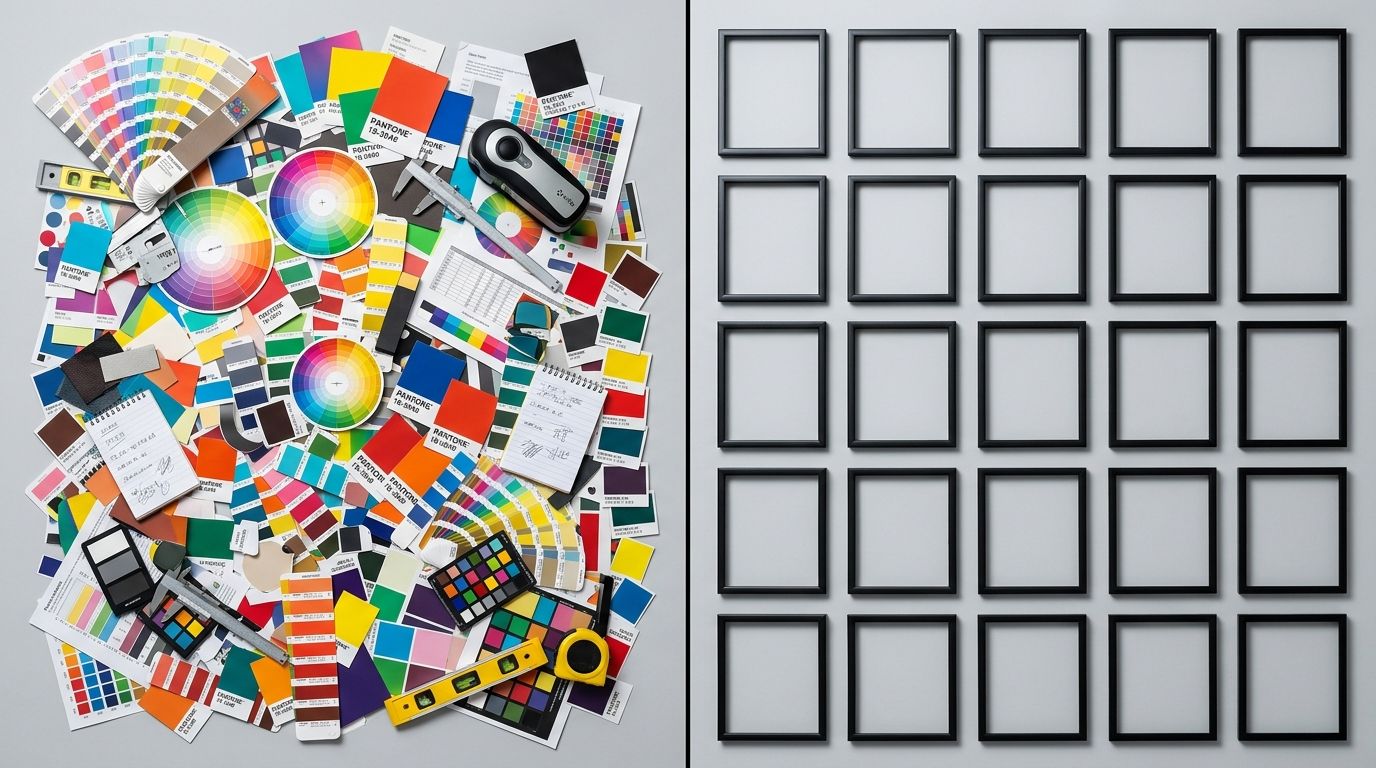
When a customer cannot accurately judge scale and texture from a single studio photo, they are forced to guess. Guessing leads directly to returns.
The hidden cost of traditional photography
Providing a completely accurate visual representation of a product is incredibly expensive if you rely entirely on physical studio shoots. To show that velvet chair in natural morning light, dim evening light, and harsh overhead light requires massive budget and time. Most brands simply cannot afford it. They settle for three perfectly lit photos on a white background and hope the customer can figure out the rest.
| Photography Method | Production Reality | Impact on Buyer Expectation |
|---|---|---|
| Single Studio Shoot | Highly expensive to produce in multiple lighting conditions | Forces the customer to guess texture and physical scale |
| Basic AI Image Generators | Frequently hallucinates or alters the physical product structure | Creates a severe expectation gap that directly drives returns |
| Contextual AI Photography | Generates unlimited realistic environments from one original asset | Closes the visual gap by preserving absolute product integrity |
This lack of context is exactly where the visual gap costing sales begins to manifest. A customer clicks an ad that promises a certain lifestyle. They land on a product page that feels stark, empty, and devoid of context. They either abandon the cart entirely, or worse, they buy the item with a false assumption of how it will look in their real life.
Why your logistics team cannot fix a product page problem
If your return rate is climbing, throwing software at the warehouse is the equivalent of buying a larger bucket for a leaking roof. The water is still coming in. The core issue is that your ecommerce return statistics are being driven by a lack of visual information.
(Worth noting: some categories will always suffer from bracketing behavior. Customers buy three sizes of a dress knowing they will return two regardless of how good the photos are. You cannot fix that specific behavior with a better image. You can only ensure they do not return all three dresses because the fabric looked fundamentally different in person.)
When you rely on two or three basic images to sell a physical item, you force the buyer to make assumptions. If they assume the leather is soft but it arrives stiff, that is a product photography return. You failed to communicate the material properties accurately. No amount of automated return routing will get that customer to trust your brand again.
Shifting the blame to the customer
It is incredibly common for brands to blame the consumer for high return rates. They institute strict return policies. They charge restocking fees. They deduct shipping costs from the refund. All these tactics do is punish the buyer for a failure in your own merchandising. If your product images fail to set the correct expectation, penalizing the customer for returning the item will just guarantee they never shop with you again.
How to reduce ecommerce returns before the checkout button
The solution is radical transparency delivered through visual volume. You need to show the product from every angle. You need to show it in realistic environments. You need to show how the light hits the material differently in the morning versus the evening. Historically, this was impossible for a brand launching fifty new SKUs a quarter. The math on the studio days simply did not work.
AI product photography changes that math completely. With CherryShot AI, you no longer have to guess which lighting scenario will sell the product best. You upload a single clean image of your product. You select the Lifestyle mode to place it in a sunlit living room. You select the Minimalist mode to strip away distractions and highlight the silhouette. You select the Influencer mode to show it in a casual, highly relatable setting.
Closing the visual gap with volume
You generate campaign-ready photos in minutes. The per-image cost drops from a hundred dollars to under five dollars. You can populate your product page with fifteen different contextual images instead of three studio shots. The buyer no longer has to guess what the fabric looks like in the shade. They can see it.
General-purpose AI image tools often fail here because they hallucinate details and change the structure of the product itself. If your AI tool slightly alters the shape of a collar, you have just created a massive new reason for a return. CherryShot AI is built specifically to preserve the absolute integrity of the uploaded product while transforming the environment around it. The product remains exactly what it is in reality. The context simply expands.
When you provide this level of detail, buyer confidence skyrockets. If your current product images are losing conversions because they lack depth, adding contextual AI imagery fixes the friction immediately. The customer knows exactly what is going into the box, which means they know exactly what is coming out of it.
The limits of better imagery
Let us be completely clear about the reality of retail. Upgrading your visual assets will not fix a terrible size chart. If your medium fits like an extra small, customers will send it back. If the zipper breaks on the third pull, they will demand a refund. Product photography returns are entirely preventable through better visual context, but structural product flaws are a manufacturing issue. Great photos of a badly manufactured product will just result in faster disappointment.
However, if your product is solid and your sizing is accurate, your return rate should plummet the moment you improve your visual accuracy. Stop trying to out-optimize your shipping carriers. Fix the expectation gap on your product page. Give the customer the visual truth. You will save your margin, you will save your logistics team hours of wasted labor, and you will build a customer base that trusts what you sell.
Frequently Asked Questions
What is the average ecommerce return rate?
The average ecommerce return rate consistently sits between 15 and 20 percent across all general merchandise categories. Apparel and footwear routinely double this metric, frequently pushing past a 30 percent baseline due to sizing nuances and visual misrepresentation. Tracking these specific metrics reveals that brands offering highly accurate, multi-angle product visuals directly reduce buyer confusion and consistently secure refund rates much closer to the 15 percent floor.
What is the most common reason for ecommerce returns?
The primary driver of ecommerce returns is a direct mismatch between digital customer expectation and physical reality. Buyers initiate refunds when an item arrives looking fundamentally different in scale, texture, or lighting compared to the original product page listing. Auditing your top returned SKUs will almost always highlight a specific visual discrepancy where your photography failed to capture the true material properties.
How do product images affect return rates?
Product images define the exact baseline expectation for the online buyer before they complete a transaction. Relying on heavily edited studio assets or artificial lighting creates an unrealistic standard that guarantees immediate frustration during the physical unboxing experience. Implementing accurate, contextually rich photography across your catalog actively resets this visual expectation and mathematically decreases the volume of visually driven refund requests by eliminating material guesswork.
How do I reduce my ecommerce return rate?
You decrease your refund frequency by methodically closing the visual information gap present on your product pages. Providing multiple images that show the item in varied natural lighting scenarios strips away the ambiguity that forces shoppers to guess. Adding dedicated macro shots of material textures and incorporating clear spatial reference elements will immediately prevent the scale and color misunderstandings that drive reverse logistics.
What is the cost of ecommerce returns?
The true financial burden of reverse logistics includes outbound freight, reverse shipping labels, warehouse inspection labor, and unavoidable inventory depreciation. Processing a single returned item frequently consumes the entire profit margin generated by two or three otherwise successful sales. Calculating this exact margin erosion per SKU will force your merchandising team to prioritize visual accuracy over simple aesthetic appeal during the next campaign launch.
Key Takeaways
- The average online return rate sits around 17 percent, heavily eroding profit margins.
- Most returns are caused by an expectation gap created by misleading or insufficient product photography.
- Optimizing logistics treats the symptom while fixing the visual accuracy treats the root cause.
- Providing multiple contexts through AI image generation drastically reduces visual disappointment.
Stopping a return starts long before the package ever leaves your facility. By upgrading your product page with vast, contextual, and deeply accurate visuals, you protect your margin at the source. If you are tired of losing profit to visual misunderstandings, start generating better context with CherryShot AI today.
Audit your product page visuals before your next launch
Review the three SKUs in your catalog with the highest return rates and identify where the expectation gap exists. You can rapidly generate new contextual environments for those exact products without booking another expensive studio day.
Try CherryShot AI