Fashion Ecommerce Return Rate: Why Clothing Brands Return More and What Photography Can Actually Fix
Most fashion ecommerce brand managers look at their monthly analytics and feel sick. You sell twenty thousand dollars of inventory over the weekend. By the end of the month, eight thousand dollars of it is coming back. Your fashion ecommerce return rate is hovering between 25% and 40%. You are out of ideas. You cannot change the garments. The production run is already sitting in your warehouse. You need a fix that does not require reopening supply chain negotiations.
Definition
The fashion ecommerce return rate measures the percentage of clothing orders sent back by customers, heavily driven by the visual gap between online product photography and the physical garment. High return rates remain an expensive standard in apparel because shoppers cannot touch fabrics or verify fit before purchasing.
Founders usually blame the product or the customer. But most of the time, the product is fine. The actual problem is a visual gap. What the customer saw online is simply not what they unboxed. The fabric looked stiffer online. The fit looked looser. They bought an idea created by your photography, and you shipped them a reality that did not match.
(Worth noting: some returns are entirely structural. Bracket buying is a real consumer behavior. No product photo in the world will stop a shopper who deliberately orders three sizes of the same dress with the explicit intention of returning two.)
Let me be clear about a genuine limitation here. Better photography will not fix a truly defective garment. If your sizing chart is fundamentally broken and your mediums fit like extra smalls, new images are just putting expensive wallpaper over a cracked foundation. But if the product is solid, photography is your highest leverage lever to fix your apparel return rate online.
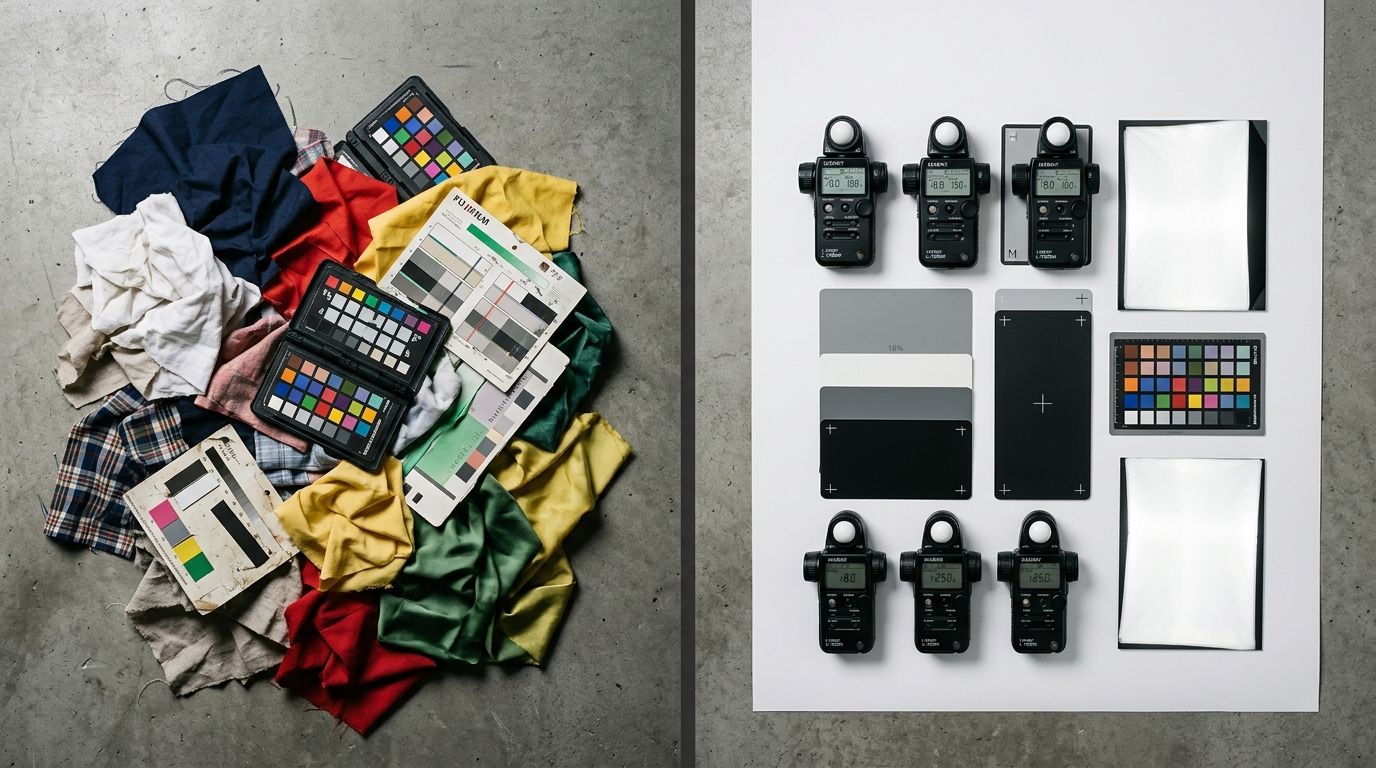
The Anatomy of an Ecommerce Clothing Return
When you sell a ceramic coffee mug, the customer knows exactly what ceramic feels like. When you sell a sweater online, the customer is guessing. The ecommerce clothing returns problem is fundamentally a sensory deprivation problem. The buyer cannot touch the fabric. They cannot feel the weight of the weave. They cannot walk to a mirror to see where the hem hits their ankle.
The expectation of fabric texture
Customers touch clothing with their eyes. When they look at a product photo, their brain immediately simulates how that fabric will feel. If your traditional studio photography blasts the garment with flat strobes, you destroy the micro-shadows that communicate texture.
A heavy wool knit suddenly looks like a cheap cotton blend. A stiff structured denim looks like stretchy jegging material. The customer clicks the buy button expecting a rigid drape. Two days later, they unbox the package, feel a soft drape, and immediately print a return label.
The drape illusion
We see this constantly with brands trying to save money on freelance shoots. They pin the garment tightly to the back of a mannequin. They clamp the waist so it looks perfectly tailored. This is a massive mistake for your fashion returns statistics. The customer thinks the garment is naturally tailored to their body. When they put it on at home without the help of a stylist's binder clips, it hangs completely differently.
This exact disconnect is what we call the visual gap in fashion brands. You sold them a shape that does not actually exist.
How Photography Inflates Your Refund Metrics
Every return costs you money three times. You pay the outbound shipping. You pay the return shipping. You pay the warehouse labor to inspect and restock the item. If you have a 30% return rate, you have to sell $142 worth of inventory just to keep $100 in your bank account. The math is brutal.
The flat lay problem
Flat lays are great for social media aesthetics. They are terrible for setting fit expectations. A flat lay strips the garment of all human context. A cropped jacket looks like a normal jacket when there is no torso to anchor it. A maxi dress looks like a midi dress if there are no ankles to provide a visual stopping point.
When you rely exclusively on flat lays, you force the customer to guess the proportions. Guessing leads to bracket buying. Bracket buying guarantees returns.
Lighting that lies
Color inaccuracy is the second most common reason for apparel returns. "Item not as described" usually means "the color looked different on my phone." In a traditional studio, bouncing powerful lights off white seamless paper washes out subtle hues. A rich navy blue photograph can easily look black. An olive green can look muddy brown. The customer opens the box, sees the true color under natural light, and sends it right back.
Photography Fixes That Move the Needle
You have to stop photographing clothing as if it is a sculptural object sitting in a museum. Clothing is meant to be worn. How it moves is just as important as how it looks standing still.
Contextualizing fit across different contexts
The traditional advice is to shoot every garment in multiple settings. On a model, in a lifestyle setting, and on a clean background. In a traditional studio setup, this destroys your margin. Booking a location, hiring talent, paying their day rates, and shooting every colorway of every SKU takes weeks.
This is where AI product photography changes the math completely. With tools like CherryShot AI, you can take a base product image and generate campaign-ready photos in minutes. You select the Lifestyle mode or the Influencer mode, and the system places your garment in a realistic context. You answer the subconscious questions the buyer has about scale and fit without renting a studio. Pricing starts at $10 for 50 images. The per-image cost drops to pennies compared to a live shoot.
Capturing texture and weight
If your current photos make velvet look like flat cotton, you are actively driving up your return rate. You need directional light. You need to show the grain of the fabric.
This does not require a highly paid photographer tweaking a single light for two hours. It requires a visual process that understands depth. When you use CherryShot AI, the engine builds the lighting based on the visual mode you select. Choosing the Magazine mode gives you that high-contrast, editorial depth that communicates material quality instantly. The customer knows exactly what they are buying.
The Traditional Studio Bottleneck vs The AI Solution
Any brand still running a full studio shoot to capture six different angles of a basic t-shirt in 2026 is paying for logistics, not quality. The invoice is not just the photographer. It is the studio rental, the stylist's half-day, the caterer, and the three weeks between the creative brief and delivery.
Most founders I have talked to cannot name the actual per-image cost of their last shoot. When they sit down and calculate it, the number is usually somewhere between $80 and $200 per finished image.
Shifting to agile imagery
When you can generate imagery for a new colorway in twenty minutes instead of booking another shoot day, you stop treating photography as a scarce resource. You start treating it as a conversion tool.
If you notice a spike in returns because customers say a coat looks too bulky, you do not have to wait for the next seasonal shoot. You use the Upload Ref mode, generate a new image showing the coat styled open over a light sweater, and update the product page immediately. If you want to dive deeper into this specific tactic, learning to fix high return rates with photography is the next logical step. You fix the visual gap in real time.
| Method | Context & Fit Accuracy | Time to Update Page | Cost Impact |
|---|---|---|---|
| Traditional Studio Shoot | High, but limited to the specific model booked that day. | 3 to 5 weeks from booking to final edits. | $80 to $200+ per finished image. |
| Flat Lay Only | Terrible. Removes all scale and proportion context. | 1 week. | Low upfront, but drives massive return costs. |
| CherryShot AI Generation | Excellent. Generate lifestyle, influencer, and editorial modes instantly. | Minutes. | Under $5 per image. |
Frequently Asked Questions
What is the average return rate for fashion ecommerce?
The average return rate for fashion ecommerce strictly falls between 20% and 30% across the industry. High-fit categories like rigid denim and tailored formalwear frequently push toward the upper end of that range because customers cannot verify the drape before purchasing. Founders must calibrate their pricing models to absorb this baseline return volume instead of chasing an impossible 10% benchmark.
Why does clothing have the highest return rate in ecommerce?
Clothing drives the highest ecommerce return volume because fit and fabric feel rely entirely on tactile variables that screens cannot replicate. While consumer electronics have objective specifications, garments involve subjective expectations regarding how a specific weave drapes across a unique body shape. Bridge this visual gap by providing detailed texture close-ups and varied on-model angles to align customer expectations with reality.
How does product photography affect fashion return rates?
Product photography directly dictates the physical expectations your customer forms before they ever click the buy button. Misleading studio lighting that flattens textures or relies on clips to create an artificial silhouette guarantees an immediate return upon unboxing. Use directional lighting to capture fabric grain and display the natural drape on real human proportions to stop selling visual lies.
What photography changes reduce fashion returns?
Displaying your garments on a recognizable human body provides the crucial spatial context completely missing from flat lays and ghost mannequins. Buyers require a distinct frame of reference for scale to properly judge where hemlines fall and how specific fabrics gather. Incorporate tight macro shots captured with angled lighting to clarify material weight and eliminate refunds caused by fabric misinterpretation.
Is a 30% return rate normal for fashion ecommerce?
A 30% return rate represents a standard baseline for fashion ecommerce brands selling tailored or highly structured garments. You should view this metric as an expensive reality of online apparel sales rather than a catastrophic failure of your product quality. Focus your energy on pushing that number closer to 20% by overhauling your sizing guides and deploying accurate on-model photography.
Key Takeaways
- Apparel return rates hover around 25% to 30% because customers must guess the fit and fabric feel.
- Pinning garments tightly in studio shoots creates a false expectation of tailoring that leads to immediate unboxing returns.
- Flat photography destroys texture shadows, making premium fabrics look cheap and misleading buyers on material weight.
- Replacing slow studio shoots with AI generation allows brands to test different context images and fix visual gaps the same day.
You cannot eliminate ecommerce returns entirely. Bracket buyers will always exist. But you can absolutely eliminate the returns caused by bad visual communication. When your photography tells the truth about scale, texture, and drape, the customer knows exactly what is showing up at their door.
If you are tired of losing margin to easily preventable visual gaps, upload your product catalog to CherryShot AI. Generate the context your buyers need, update your product pages today, and watch your return rate drop.
Generate on-model contexts for your bestsellers
Stop relying entirely on flat lays and ghost mannequins to sell high-margin garments. Run your existing product photos through CherryShot AI to instantly generate lifestyle and influencer imagery that sets accurate fit expectations.
Try CherryShot AI