Facebook Ads High CTR Low Conversion: Why Your Clicks Don't Sell
You have a Facebook ads high CTR low conversion problem because your landing page is breaking the visual promise your ad made. High click-through rates prove your audience wants what you are selling. Low conversion rates prove they do not trust the way you are selling it once they arrive. The disconnect usually happens in the first three seconds on your product page.
Definition
A high click-through rate with low conversion indicates that paid social ads successfully capture user attention, but the destination landing page fails to secure the sale. This discrepancy points to a severe visual or messaging disconnect between the ad creative and the product page experience. Resolving this gap requires matching the website aesthetic directly to the winning ad variation.
Most media buyers blame the algorithm or the targeting when conversion drops. They are wrong. If the click happens, the targeting worked. The problem is a visual gap. You cannot run a vibrant, lifestyle-driven Meta ad and drop the user onto a sterile, badly lit product page and expect them to pull out their credit card.
I have sat in countless marketing meetings where brand owners stare at a dashboard showing a three percent outbound click-through rate while Shopify shows zero sales. The immediate reaction is usually to pause the campaign and build new ad creatives. This is a massive mistake. The ad is doing its job. It is getting the right people to leave Facebook or Instagram. The failure happens the moment the page loads.
(Worth noting: sometimes a high CTR is actually a clickbait problem. If your ad promises an impossible ninety percent discount or obscures what the product actually is, you will get cheap curiosity clicks that bounce immediately. But if your creative is honest and accurate, the issue is page alignment.)
Fixing this means creating specific landing page variants and new visual assets for every major ad angle you run. That demands time and creative budget you might not have planned for this quarter. That is the trade-off of running highly segmented media buying. You either spend the money to align the page, or you burn the money on wasted clicks.
The psychology of the ad to page gap
Why do Meta ads get high clicks but low conversions?
When a user scrolls through their feed, their guard is down. They are looking for entertainment. When your ad stops their scroll, it does so by tapping into an emotion or presenting an aspirational identity. They click because they want to feel the way the ad makes them feel. They are carrying that exact emotional momentum into the browser.
If the page they land on feels completely different from the ad, that momentum stops dead. This is the ad creative mismatch in action. The brain experiences cognitive dissonance. The user thought they were entering a premium, moody, luxury environment because your ad used dark colors and elegant typography. Then your Shopify page loads with a glaring white background, generic bold text, and a low-resolution product image that looks like it was taken in a warehouse.
Trust evaporates instantly. The user hits the back button before they even read the price. You just paid a dollar for a click that had absolutely zero chance of turning into a purchase.
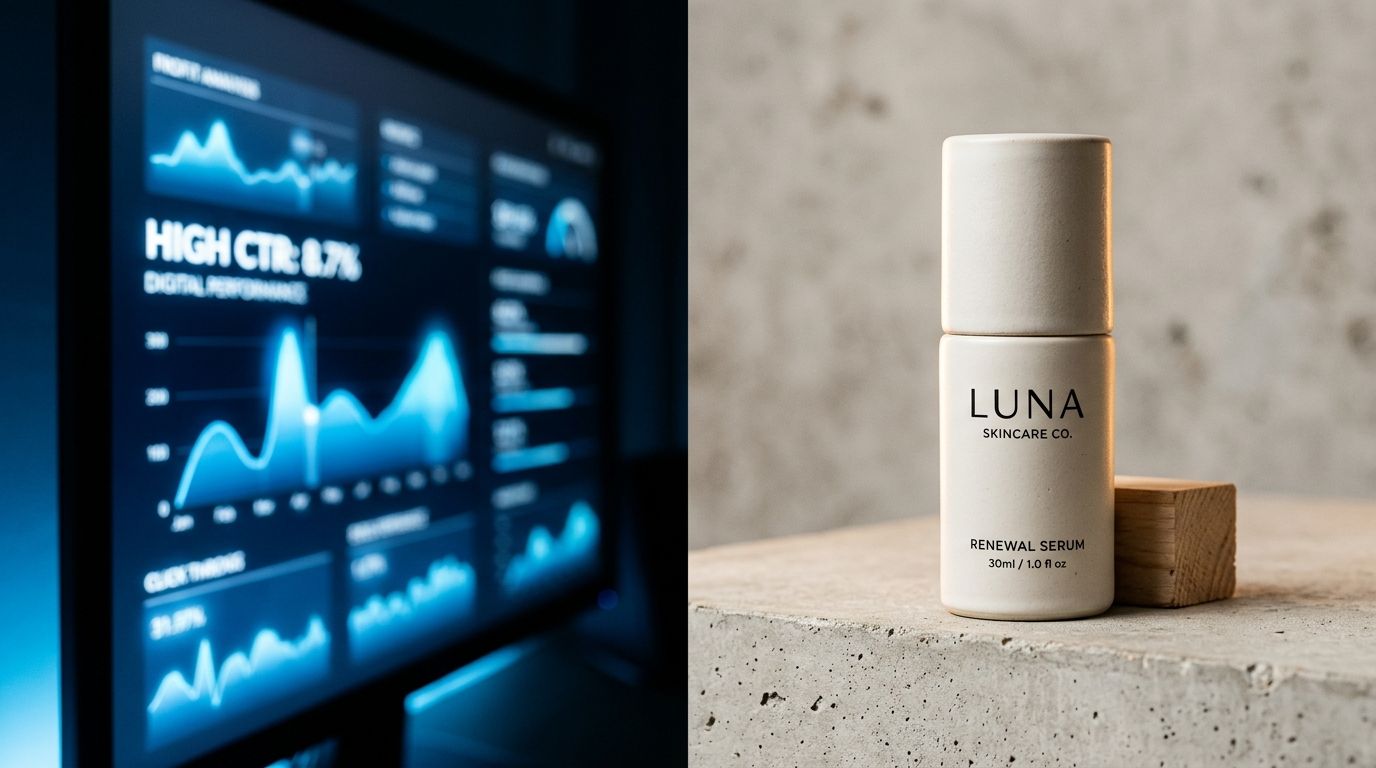
A visual disconnect between a high-performing Meta ad and a sterile product page is the leading cause of wasted ad spend.
Where the visual promise breaks
How does landing page alignment impact ROAS?
Return on ad spend is a fragile metric. It requires everything from the first impression to the checkout confirmation to work flawlessly. The biggest failure point is the product page visual promise. This promise is composed of lighting, background, context, and aesthetic quality.
Imagine running a video ad featuring an influencer hiking in the mountains wearing your jacket. The ad is dynamic, sunlit, and rugged. The user clicks. They land on a product page where the main hero image is a flat lay of the jacket on a gray floor. The visual gap between ads and your product page creates immediate friction. The user was sold an adventure. They were handed a catalog.
This is where brands lose massive amounts of money. They spend their entire budget producing incredible top-of-funnel creative, but they refuse to invest in the destination. The landing page imagery must validate the ad creative. If the ad is loud and colorful, the product page needs loud and colorful hero images. If the ad focuses on a hyper-specific detail, that detail better be the first thing the user sees when the page loads.
Diagnosing the paid traffic drop-off
Is it the product photography ad or the page layout?
You need to look at your analytics to find exactly where the bleed is happening. Open your Shopify or Google Analytics dashboard and look at the average time on page for the specific UTM parameters attached to your high CTR ads.
If the traffic is bouncing in under three seconds, you have a catastrophic visual mismatch. The user saw the page load, felt it was wrong, and left immediately. This requires a complete overhaul of the first viewport. You need better lifestyle imagery above the fold that directly mirrors the ad.
If the traffic is staying on the page for thirty seconds but still not adding to cart, the problem is deeper. They accepted the initial visual promise, but the details failed them. Usually, this means your secondary product photos are lacking. They zoomed in to see the texture of the material and saw a blurry, pixelated mess. Understanding what makes product photos convert means recognizing that every single image in your carousel needs to justify the price tag.
| Traffic Behavior | Primary Diagnosis | Required Action |
|---|---|---|
| Bounce under 3 seconds | Severe visual mismatch | Overhaul primary hero image |
| Bounce after 30 seconds | Weak product details | Upgrade secondary carousel photos |
| High add-to-cart, low purchase | Checkout friction | Audit mobile payment flow |
Fixing the conversion rate paid traffic gap
How do I fix a Facebook ads CTR to conversion gap?
The solution is aggressive alignment. You have to map the entire customer journey and remove every instance of visual shock. Start by auditing your best-performing ads. Take a screenshot of the final frame of the video or the static image that is driving the most clicks.
Now, put that screenshot next to your product page on a mobile screen. Do they look like they belong to the same brand? Do they look like they belong to the same campaign? If they do not, you have found your leak.
Update your main product page image to closely resemble the ad. If the ad relies heavily on user-generated content, put a strong piece of UGC in the second slot of your image carousel. If you need to quickly align your catalog imagery with a new campaign aesthetic, you can drop your standard white-background photos into CherryShot AI, select a visual mode that matches your ad vibe, and generate new campaign-ready hero images in minutes without booking a studio.
Next, look at the copy. If your ad hook is about durability, the word "durability" needs to be in the first headline on the landing page. Do not make the user scroll to find the thing you promised them in the ad.
What are realistic ecommerce conversion rate benchmarks?
You also need to temper your expectations. Paid social traffic is inherently lower intent than search traffic. A user searching Google for "buy red running shoes size 10" is ready to purchase right now. A user clicking a Meta ad while waiting for their coffee to brew is just browsing.
Because of this difference in intent, paid social traffic will always convert at a lower rate. If you are comparing your Meta ads conversion rate to your organic or email traffic, you will always be disappointed. Check industry averages to understand what normal looks like. Comparing your store to ecommerce conversion rate benchmarks for your specific category will tell you if your gap is actually a crisis or just standard top-of-funnel behavior.
A high CTR and a low conversion rate is frustrating, but it is actually a good problem to have. It means your product has market fit and your creative team knows how to capture attention. The hard part is already done. Now you just have to respect the click enough to build a landing page that earns the sale.
Frequently Asked Questions
Why do my Facebook ads have good CTR but low conversion?
Your ads receive a high click-through rate because the creative effectively builds desire, but sales drop because the landing page visual experience fails to validate that initial expectation. This ad-to-page gap happens when users click a vibrant, lifestyle-focused promotion and land on a sterile, poorly lit product page. Audit your highest-click campaigns and update the main Shopify hero image to strictly mirror the final frame of the winning video ad.
What causes high CTR but low conversion on Facebook ads?
The primary cause is a severe mismatch between the aesthetic promise of the ad and the reality of the first viewport on the destination URL. Users assume they clicked the wrong link when the specific use cases, angles, or styling featured in the creative disappear entirely from the product page. Review your top-performing image ads and ensure the headline text and primary product photo on the landing page replicate the exact visual hook that drove the click.
How do I fix a Facebook ads CTR to conversion gap?
You close this gap by directly aligning your product page visual assets and messaging with your winning ad variations. Maintaining the emotional momentum generated by the click requires the landing page to look and feel like a logical continuation of the original social media post. Change the first image in your product carousel to match the highest-converting video thumbnail and rewrite the above-the-fold headline to echo the exact phrasing of your ad copy.
Is the product page or the ad responsible for low Facebook ads conversion?
The product page is entirely responsible for the final purchase decision assuming the ad drives qualified traffic that stays on the site for more than ten seconds. An immediate bounce indicates the ad relied on misleading clickbait, but a high click-through rate with browsing behavior proves the creative successfully generated real purchase intent. Focus your optimization efforts on upgrading your secondary product photos to clearly demonstrate material quality and scale rather than endlessly testing new top-of-funnel ad variations.
Key Takeaways
- A high CTR proves your targeting and ad creative are working properly.
- Low conversion on high-click ads is usually caused by a visual mismatch between the ad and the landing page.
- To fix the gap, your product page hero images must mirror the aesthetic and lighting of your winning ads.
- Analytics showing a bounce rate under three seconds confirms your page is breaking the visual promise.
Stop rewriting ad copy when your landing page is the culprit. Align your visual assets from the first impression to the checkout button, and watch those clicks finally turn into revenue.
Audit your product page images before your next campaign
Stop burning ad budget on landing pages that break the visual promise you make on social media. Take a screenshot of your best-performing ad and compare it side-by-side with your Shopify hero image right now. If the aesthetics clash, use CherryShot AI to instantly generate campaign-matched product photos without booking a studio.
Try CherryShot AI