Ecommerce Conversion Rate Benchmarks 2026: What Is Actually Good for Your Category
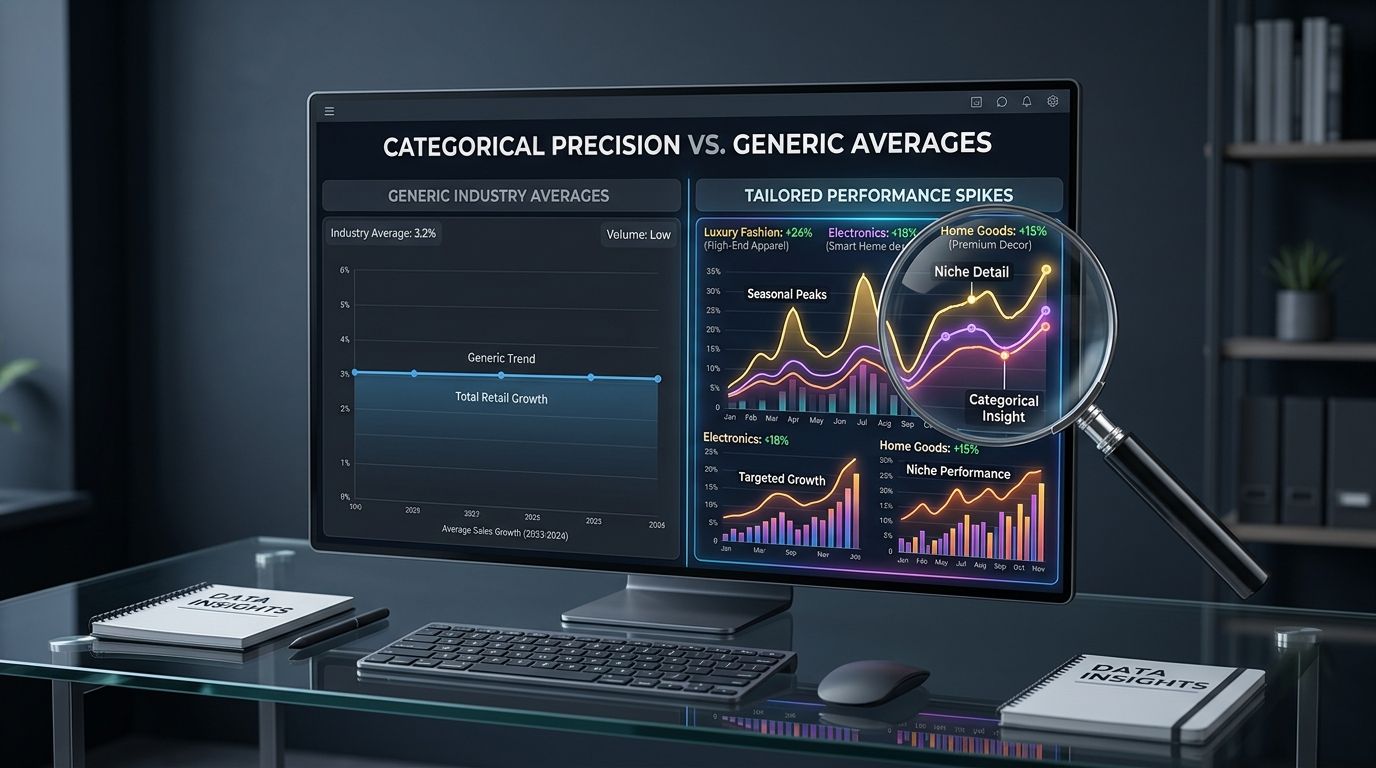
Chasing an arbitrary industry average is the fastest way to lose perspective on your actual growth. While most ecommerce brands obsess over hitting a universal three percent target, the reality of 2026 is that conversion rates are deeply fragmented by category. If you sell high-end jewelry, comparing your metrics to a grocery brand is a mistake that obscures your real performance. Your focus should be on how your specific vertical behaves compared to your closest competitors (while acknowledging that internal year-over-year growth remains the most reliable indicator of your store health).
Definition
Ecommerce conversion rate is the percentage of unique visitors who complete a purchase on your store during a specific timeframe. It serves as a direct measure of how effectively your site design, product presentation, and pricing strategy persuade a browser to become a buyer.
Why Category Matters More Than General Averages
Global ecommerce conversion rates vary from 0.94 percent for luxury and jewelry to 6.22 percent for food and beverage depending on product category, according to Shopify data for 2026. This massive delta exists because the intent behind a purchase changes based on necessity versus luxury.
When a shopper is buying coffee beans, the decision is often habitual and functional. When they are buying a diamond necklace, the friction is significantly higher because the cost of error is elevated. If your metrics are lagging, the culprit is often a misalignment between your site experience and the expectations inherent to your specific market segment.
Benchmarking against your peers
To properly increase conversion rate, you must first establish a baseline for your specific segment. If you are in apparel, your benchmark looks entirely different than it does for electronics. Look for data sets that isolate your primary category.
| Category | Avg Conversion | Primary Barrier |
|---|---|---|
| Food & Beverage | 6.22% | Accessibility |
| Apparel & Fashion | 1.50% - 2.10% | Fit Uncertainty |
| Electronics | 1.10% - 1.40% | Feature Research |
| Luxury & Jewelry | 0.94% | Trust & Price |
Identifying the Hidden Bottlenecks
You might have plenty of traffic, but you are still experiencing clicks but no sales. This usually happens when the promise made in your advertising does not match the reality shown on your product page.
Visuals are the bridge between intent and checkout. If your images feel amateur or inconsistent, the trust factor evaporates before the customer even reads the price. Consistency in lighting, angle, and framing builds subconscious authority.
Refining your product visuals
Shoppers evaluate quality through visual cues. When your brand relies on low-quality studio photos or mismatched aesthetic styles, you introduce friction. Using tools like CherryShot AI allows you to maintain a consistent brand look across all SKUs without waiting for a studio photographer to clear their calendar. High-quality product photos that convert create a seamless experience where the shopper feels confident in their purchase.
Frequently Asked Questions
What is the average ecommerce conversion rate in 2026?
The average ecommerce conversion rate in 2026 typically hovers between one and three percent. This range accounts for diverse shopping behaviors across mobile and desktop platforms. Your specific performance depends heavily on your industry vertical and target audience demographics.
How does conversion rate vary by product category?
Conversion rates fluctuate significantly because of purchase frequency and price points. High-ticket items like luxury goods often see lower volume conversion but higher order values compared to impulse buys. Groceries and essential goods consistently sit at the higher end of the spectrum due to repeat purchase behavior.
What conversion rate separates top-performing stores from average ones?
Top-performing stores generally operate at least two times above the industry average for their specific niche. If the baseline is two percent, these leaders are pushing four percent or higher through strict optimization. They focus on reducing friction at every single touchpoint from the landing page to final payment.
Which product categories have the highest and lowest conversion rates?
Food and beverage categories currently lead the market with conversion rates reaching over six percent. Conversely, luxury and jewelry sectors often see rates dipping below one percent. These differences reflect the distinct psychological barriers consumers face when deciding to spend their money.
Key Takeaways
- Compare your metrics only to your direct product category to avoid false conclusions.
- High-intent categories naturally convert higher than luxury or high-consideration items.
- Visual consistency across your store is a primary driver of customer trust.
- Focus on fixing high-friction touchpoints rather than chasing broad market benchmarks.
Audit your product page visuals before your next campaign
Take a hard look at your current hero shots and compare them against your highest-performing competitors. If they lack the polish required to command premium pricing, start generating high-fidelity alternatives with CherryShot AI to see how a consistent aesthetic impacts your conversion.
Try CherryShot AIImproving your conversion rate is rarely about a single massive change. It is about removing the friction points that prevent a curious visitor from becoming a loyal customer.