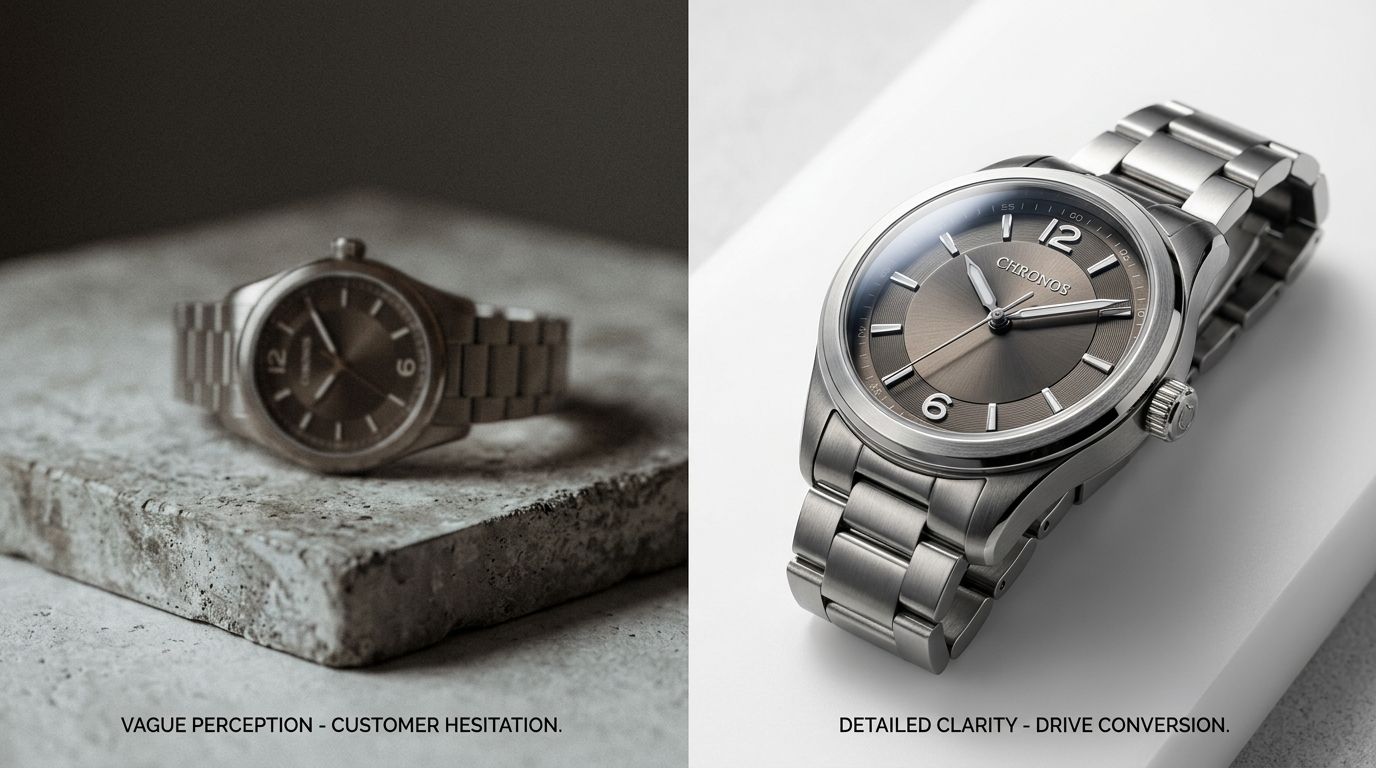
High-quality product images reduce Shopify checkout abandonment by answering unasked buyer questions right before the credit card comes out. You lose sales when shoppers cannot visually verify the scale, texture, or context of an item. Any brand still relying on single flat-lay images for a $150 product is throwing conversion rate out the window. Shoppers abandon carts when visual ambiguity creates risk. Clear, contextual photography eliminates that risk and pushes the buyer over the line.
Shopify checkout abandonment happens when the perceived risk of buying exceeds the desire for the product. E-commerce product photography directly counters this by building visual trust and confirming the item matches expectations. High-resolution contextual images reassure buyers precisely at the point of conversion.
Key Takeaways
- Clear product imagery directly lowers perceived buyer risk at the checkout screen.
- Lifestyle photography provides essential scale and context missing from white-background shots.
- Visual inconsistency across a storefront triggers subconscious buyer hesitation.
- AI photography tools allow brands to generate cohesive, high-converting images without studio delays.
of online shopping carts are abandoned before the purchase is completed across e-commerce platforms. Baymard Institute, 2024
Why Shopify Checkout Abandonment Is a Visual Problem
Founders obsess over page load speeds, shipping thresholds, and one-click payment gateways. These technical optimizations are undeniably important for running a modern e-commerce brand. Yet, they completely ignore the most visceral part of the shopping experience. Buying a physical product through a glass screen is an inherently unnatural act. The customer cannot pick up the item. They cannot feel its weight. They cannot check the stitching or inspect the finish.
Your product photography must simulate this physical interaction perfectly. If your images leave room for doubt, your checkout abandonment rate will remain artificially high. Buyers do not abandon carts because they simply forgot they wanted the item. They abandon carts because a lingering question made them uncomfortable right at the finish line.
The Role of Visual Trust at the Point of Sale
Visual trust is the immediate, subconscious confidence a shopper feels when a product looks legitimate. It is the silent dialogue happening between your brand and the buyer. When a customer moves from the product page to the checkout screen, their mindset shifts radically. They stop evaluating the features and start evaluating the risk.
This is the exact moment where your product page to checkout conversion either succeeds or fails. If your images look like cheap stock photos, the buyer assumes your product is equally cheap. They wonder if the item will actually arrive looking like it does on screen. They wonder if your return policy is going to be a nightmare to navigate. Visual trust neutralizes these fears before they take root.
Optimizing Product Pages to Drive Confident Checkouts
A standard white-background image is mandatory for clear catalog browsing. It is practically required for Google Shopping feeds and Amazon listings. However, a sterile white background removes all spatial context. It forces the buyer to imagine how the product fits into their life, which is a cognitive load most shoppers will not tolerate.
Using Lifestyle Context to Validate the Purchase
You cannot expect your customer to do the heavy lifting of imagination. You have to show them exactly what ownership looks like. Lifestyle modes prove the item functions as advertised in reality. A sleek espresso machine looks fine on a white backdrop. It looks indispensable when photographed on a marble kitchen counter next to a freshly pulled shot and a morning newspaper.
When a shopper sees a jacket worn by a model in motion, they instinctively understand the drape of the fabric. When they see a ceramic vase sitting on a well-lit dining table, they instantly grasp its proportions. This psychological shift is the key to lowering checkout abandonment on Shopify. The buyer stops wondering if the product will look good and starts anticipating its arrival.
The Impact of Lighting on Perceived Value
Lighting dictates how expensive your product feels. Flat, even lighting is safe but entirely uninspiring. Dramatic, directional lighting highlights texture and form. If you are selling premium goods, your lighting must reflect that premium status. Buyers will not pay luxury prices for items photographed under fluorescent warehouse bulbs.
Using the Loud Luxury or Avant Garde visual modes in CherryShot AI allows brands to instantly elevate the perceived value of their catalog. Instead of renting high-end studio space and hiring expensive lighting technicians, you can generate richly lit, atmospheric shots from basic input photos. The higher the perceived value of the item, the less friction the buyer feels when entering their payment details.
The Hidden Cost of Inconsistent Catalog Photography
Brands frequently overlook the aggregate effect of their visual presentation. They focus entirely on individual product pages and ignore how the catalog looks as a whole. A unified aesthetic is a powerful conversion tool while mismatched visuals are a massive liability.
How Mismatched Aesthetics Trigger Buyer Hesitation
Inconsistency is the hallmark of a disorganized business.
If your store features a mix of high-end studio shots, amateur smartphone pictures, and poorly cropped supplier images, the shopper notices immediately. This visual chaos triggers deep buyer hesitation. It makes your brand look like an unreliable operation rather than a cohesive, trustworthy business.
(Worth noting: this is less about creating a perfectly sterile grid and more about proving to the customer that a single, professional entity is actually handling their order fulfillment.)
When a buyer loses confidence in the brand operating the store, they abandon the checkout completely. They will go search for the same product on a massive marketplace where they feel protected by corporate return policies. Consistency proves competence.
Achieving visual parity across hundreds of SKUs traditionally meant re-shooting the entire catalog. That process takes months and destroys marketing budgets. AI tools remove this bottleneck entirely. You can upload an entire product line to CherryShot AI and output every single item in the exact same Minimalist or Magazine style. The result is a flawless catalog that keeps buyers locked into the checkout flow.
Image Types That Reduce Buyer Hesitation Before Checkout
Understanding the psychology of the buyer is only half the battle. You must actually deploy the specific image formats that counter their hesitation. A robust product gallery should contain a deliberate mix of formats, with each serving a distinct psychological purpose.
Detail Shots and Texture Close-ups
E-commerce removes the sense of touch. Your photography must compensate for this missing sensory input. Macro shots are absolutely vital for apparel, jewelry, leather goods, and high-end electronics.
A zoomed-in shot of reinforced stitching on a backpack proves durability. A tight focus on the grain of a leather wallet proves authenticity. A macro image of the brushed metal finish on a watch proves craftsmanship. These detail shots confirm the physical reality of the product. They reassure the buyer that the item is well-made and genuinely worth the asking price.
Scale and Proportion Verification
Misjudged scale is a primary driver of both checkout abandonment and post-purchase returns. A buyer looks at a beautiful lamp on a white background and assumes it is large enough for their living room. Right before checkout, they realize they cannot actually tell how tall it is. Rather than risk buying the wrong size, they abandon the cart.
Every unanswered question is an exit ramp.
You must provide an image that anchors the product to a known variable. Show the lamp next to a standard sofa. Show a handbag held by a person of average height. Show a piece of jewelry worn on a wrist. When buyers clearly understand the size of an item, they buy with confidence.
The average DTC brand shoots new inventory four times a year. If those scheduled shoots fail to capture clear scale verification, the brand bleeds revenue until the next production cycle. You cannot afford to wait months to fix a conversion leak. AI generation allows you to test different context settings on demand. You can upload a reference image to CherryShot AI and instantly place your product next to familiar objects, solving the scale problem before the end of the day.
The Role of User-Generated Style Content
Shoppers crave authenticity. They want to know what the product looks like in the hands of a real customer rather than just under perfect studio lights. Integrating images that mimic user-generated content bridges the gap between polished marketing and real-world utility.
The Influencer mode in CherryShot AI is specifically designed to generate this type of relatable, engaging imagery. It produces photos that look native to social media feeds while maintaining high product clarity. Adding these relatable shots to your product carousel significantly boosts visual trust and drives higher abandoned cart recovery ecommerce metrics.
Frequently Asked Questions
What is the average Shopify checkout abandonment rate?
The average documented online shopping cart abandonment rate hovers just under 70% across all e-commerce platforms.
How do product images affect the likelihood of completing checkout?
High-quality product images directly lower the perceived risk of an online purchase by providing immediate visual proof of value. When photos clearly display texture, scale, and lifestyle context, buyers feel confident they know exactly what they are getting. Blurry or inconsistent imagery forces the buyer to guess the actual quality of the physical item. Uncertainty is the primary driver of cart abandonment, making clear photography your strongest defense against lost sales.
At what point in the checkout does visual trust matter most?
Visual trust peaks in importance the exact moment a buyer transitions from the product page to the cart summary screen. This is the psychological pivot point where browsing becomes spending and buyer scrutiny is at its absolute highest. If the thumbnail image in the Shopify cart drawer looks cheap, heavily doctored, or completely detached from the brand aesthetic, the buyer suddenly questions the entire transaction. They will frequently open a new tab to compare prices or look for third-party reviews, which breaks the checkout flow entirely. Maintaining high-resolution, consistent imagery right through the final payment screen anchors the perceived value of the product exactly when buyer hesitation peaks.
What image types reduce buyer hesitation before checkout?
Detail shots highlighting material texture and lifestyle images showing the product in use are the most effective formats for reducing buyer hesitation. Close-up macro images prove manufacturing quality and craftsmanship to the skeptical shopper. Meanwhile, contextual lifestyle imagery answers practical questions about scale and function without requiring the user to read a lengthy product description.
If you want to see what professional, high-converting imagery looks like for your specific catalog, CherryShot AI starts at $10 for 50 images at cherryshot.ai.