First Time Visitor Conversion Ecommerce: The Visual Fix
First-time visitor conversion in ecommerce is universally brutal. If your analytics show new traffic converting at 0.5 percent while returning customers sit comfortably at 4 percent, the problem is not your product. The problem is visual trust. Returning buyers already know your shipping times and material quality. First-time buyers only know what they see on the screen in front of them. When a new visitor lands on your product page, they are actively looking for a reason to leave. Low-effort product photography gives them that reason within three seconds.
Definition
First-time visitor conversion rate measures the percentage of brand-new users who complete a purchase during their initial session. It serves as a direct indicator of immediate visual trust and top-of-funnel traffic quality.
Fixing this gap does not mean overhauling your entire brand identity. It means proving value before the customer even reads the product description. The fastest way to pull a first-time visitor from an abysmal 0.5 percent to a profitable baseline is upgrading the visual proof.
The Anatomy of a 0.5 Percent Conversion Rate
Most ecommerce founders obsess over traffic. They spend thousands on acquisition, drive high-intent clicks to a product page, and watch those expensive clicks immediately bounce. I spent eight years running ecommerce brands before joining CherryShot AI. I used to stare at analytics dashboards wondering why perfectly good traffic refused to add to cart.
(Worth noting: sometimes a low first-time conversion rate just means your top-of-funnel targeting is entirely too broad. If you blast broad match keywords to a cold audience, your conversion rate will always suffer. But if their time-on-site is decent and they still leave, it is the page, not the traffic.)
The issue is almost always a lack of visual evidence. A first-time visitor has zero brand loyalty. They have never felt your fabric, smelled your candle, or tested your software. They rely entirely on pixels to gauge reality.
If your product page features exactly one flatly lit product photo, you are asking a stranger to take a leap of faith. Most strangers will not take that leap. They will click back to Instagram. When you dig into why clicks refuse to convert into sales, you usually find a massive disconnect between the promise of the brand and the reality of the imagery.
The Cost of Bleeding Expensive Traffic
Let us look at the Customer Acquisition Cost math. If you are paying two dollars per click on Meta, driving traffic to a page that converts at 0.5 percent means you need two hundred clicks to get one single sale. That is a four hundred dollar acquisition cost. Unless you are selling luxury furniture, that math will bankrupt your company.
Founders try to fix this by firing their media buyer. They tweak the ad copy. They test new audiences. But if the traffic is staying on the page for more than ten seconds and still leaving, the media buyer did their job. The page failed to close the deal.
Raising that conversion rate from 0.5 percent to a modest 1.5 percent cuts your acquisition cost by roughly sixty-six percent. Suddenly, that four hundred dollar CAC drops to one hundred and thirty-three dollars. Your campaigns turn profitable overnight. This shift does not happen by changing the color of your checkout button. It happens by changing how the product is perceived.
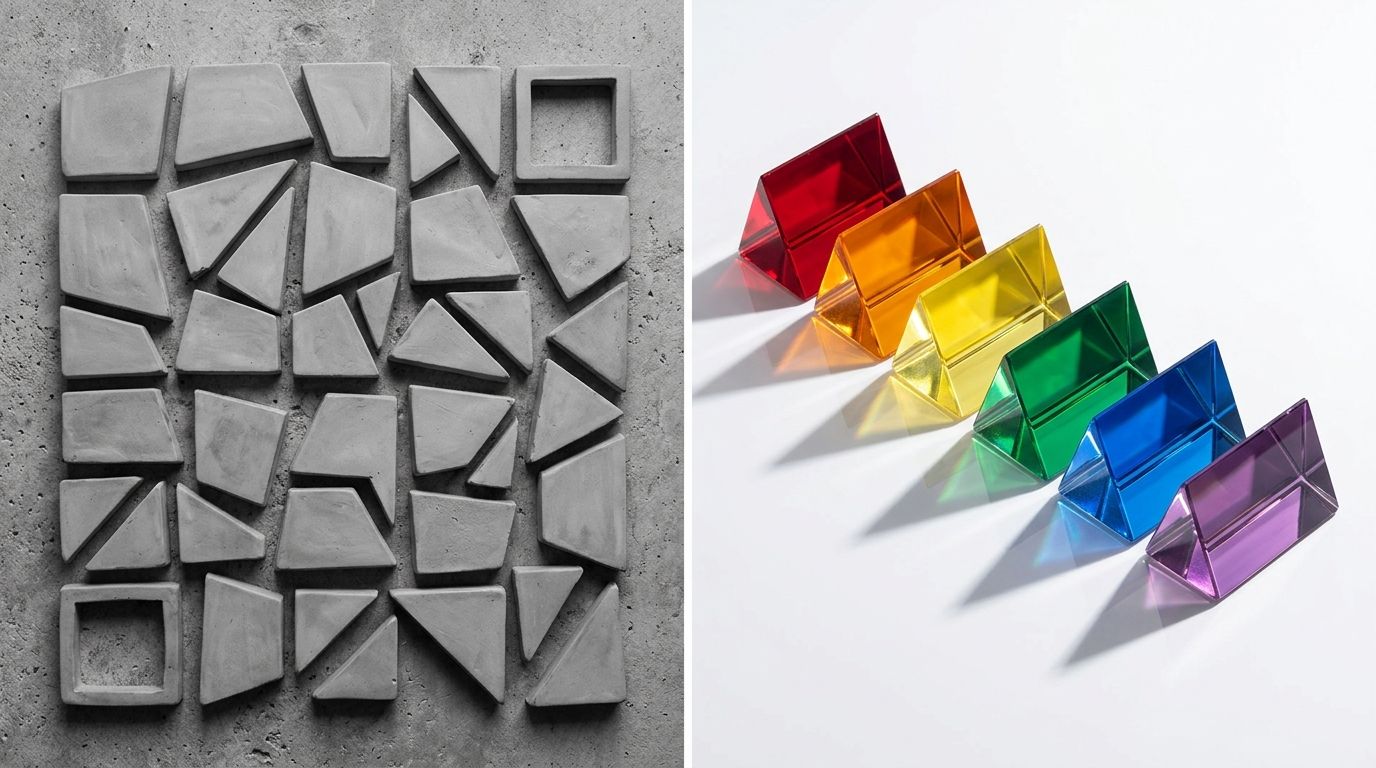
Visual trust is built in milliseconds. If your top-of-funnel ad outshines your product page, the resulting disconnect will kill the sale.
The Ad-to-Product Page Visual Disconnect
The most common conversion killer for new traffic is the visual bait and switch. Your TikTok ad features a stunning, high-contrast lifestyle image. The customer clicks because they want that specific aesthetic. They land on your site, and they are greeted by a grainy, poorly cropped image on a harsh white background.
This breaks trust instantly. You have to bridge the visual gap between ads and product pages to keep momentum alive. If the ad promises a luxury experience, the product page imagery must deliver a luxury experience. When those two visual languages do not match, a first-time visitor assumes your brand is dropshipping cheap goods from overseas.
What First-Time Visitors Actually Need to See
If you are going to overhaul your imagery to convert new visitors, you need to answer every unspoken objection through photography. A single white background shot is no longer enough.
First, they need context. A macro shot of a leather bag is great for showing texture, but it tells the user nothing about how it sits on the shoulder. By showing the product in use, you allow the buyer to visualize owning it.
Second, they need consistent detail. Blur and poor lighting signal low quality. A crisp, high-resolution image signals confidence in your own manufacturing.
Third, they need brand cohesion. If your catalog page looks like a patchwork quilt of different lighting styles, it looks amateur. Consistent lighting across every SKU tells a new visitor that you run a legitimate, organized operation. Smaller merchants who standardize their backgrounds automatically build trust visually and punch above their weight class.
Fixing Visual Trust Without Breaking Margin
We know the problem. Now we have to fix it. Historically, fixing product page imagery meant booking a studio. I have personally sat through studio shoots that ran four hours over schedule. I have paid invoices that arrived two weeks after the campaign was supposed to launch. I have argued with photographers about whether a product angle was close enough to what we actually briefed.
Any brand still running a full studio shoot for standard catalog images in 2026 is paying for logistics, not quality. The invoice is not just the photographer. It is studio rental, the stylist half-day, the art director back-and-forth, and the three weeks between brief and delivery. When founders calculate the true cost, the number is usually somewhere between eighty and two hundred dollars per finished image.
This math makes it impossible to test new visual angles. If you want to see if a lifestyle shot converts first-time visitors better than a minimalist studio shot, you have to risk thousands of dollars to find out. Most brands simply do not run the test. They settle for the 0.5 percent conversion rate because changing the photos is too expensive.
The AI Production Shift
CherryShot AI changes that math completely. Instead of booking a studio, you upload a raw product image. You select a visual mode like Classic, Luxury, or Influencer. The platform generates campaign-ready photos in minutes. Pricing starts at $10 for 50 images, which brings the per-image cost down to pennies.
If you want to test whether the Minimalist mode or the Loud Luxury mode builds more trust with new visitors, you can generate both in twenty minutes. You put them on the page, run an A/B test, and let the traffic tell you what works.
To be clear, there are trade-offs here. AI generation will not replace the creative direction of a flagship brand launch where you need hyper-specific celebrity styling. A good human photographer still makes sense for major hero imagery. But for catalog volume and daily conversion optimization, the old math simply does not work anymore.
| Production Model | Average Cost | Testing Viability |
|---|---|---|
| Traditional Studio Shoot | $80 to $200 per image | Too expensive for regular A/B testing |
| CherryShot AI | Under $5 per image | Endless variations for immediate page testing |
Shifting from Production to Ideas
The brands getting the most out of AI product photography are not the ones with the biggest budgets. They are the ones launching the most SKUs per quarter. When you can generate imagery for a new colorway in twenty minutes instead of booking another shoot day, the bottleneck shifts entirely from production to ideas.
You no longer have to compromise on visual quality just to get a product live. You can launch with imagery that looks like it belongs in a glossy magazine. When a new visitor lands on that page, they do not see a scrappy startup. They see an established, premium brand.
That perception shift is what turns a 0.5 percent conversion rate into a 2 percent conversion rate. It is not magic. It is just giving skeptical people the visual evidence they need to comfortably hand over their credit card.
Frequently Asked Questions
What is a good first-time visitor conversion rate for ecommerce?
A strong first-time visitor conversion rate falls between one and two percent for most standard ecommerce brands. High-ticket merchandise naturally converts colder traffic at a much lower rate, while fast fashion and inexpensive impulse buys often push higher. If your incoming traffic drops below half a percent despite healthy returning customer metrics, your product page is failing to build sufficient visual trust.
Why do new visitors convert at lower rates than returning visitors?
New visitors convert at significantly lower rates because they carry the maximum amount of perceived purchase risk. Returning buyers already trust your shipping speeds, material quality, and checkout security based on their previous positive experiences. First-time buyers actively search for visual red flags, meaning blurry product photos or vague catalog descriptions will immediately kill their intent to complete the checkout process.
How do I improve conversion for first-time visitors?
You improve first-time visitor conversion by systematically reducing the perceived financial risk of buying from an unknown merchant. Replacing low-effort studio backgrounds with cohesive lifestyle imagery proves your brand operates at a high professional standard. Placing clear shipping timelines, transparent return policies, and secure payment badges directly next to your primary add-to-cart button makes the transaction feel completely safe.
Does product photography affect new visitor conversion rates?
Product photography dictates your new visitor conversion rate because the digital image effectively serves as the physical product. Online shoppers cannot feel the fabric weight or test the build quality through a mobile screen, so they must rely entirely on visual evidence. Displaying your inventory in realistic, well-lit lifestyle contexts provides the immediate credibility required to keep a cold prospect engaged on the page.
What trust signals are most important for first-time visitors?
The most vital trust signals for new traffic are visual consistency, prominent social proof, and highly transparent shipping policies. A cohesive product catalog with uniform lighting proves you run an organized, legitimate retail operation rather than a temporary storefront. Pairing these professional product images with clear delivery estimates and verifiable customer reviews effectively removes the primary friction points preventing an initial purchase.
Key Takeaways
- A 0.5 percent conversion rate for new visitors usually indicates a visual trust gap, not a traffic problem.
- Any visual downgrade between your top-of-funnel ads and your product page breaks trust instantly.
- Closing this gap with traditional studio photography is too expensive and slow for modern catalog volume.
- Replacing the studio bottleneck with AI generation lowers acquisition costs by making visual testing viable.
You cannot scale an ecommerce brand if you are constantly bleeding expensive top-of-funnel traffic. By replacing slow, costly studio shoots with CherryShot AI, you can immediately upgrade your catalog imagery and close the trust gap.
Audit your product page imagery against your best ad
Pull up your highest-spending top-of-funnel ad next to the destination product page. If the product photos do not match the visual quality and aesthetic of the ad, you are bleeding conversions.
Try CherryShot AI