Flat Lay Product Photography: The Beginner to Advanced Guide
Flat lay product photography is an overhead shooting style where products are arranged horizontally on a flat surface. The camera points directly down at a 90-degree angle to capture the scene. This top-down product shot eliminates perspective distortion and creates a clean visual map of your items. Flat lay photography for online store catalogs is highly effective because it allows you to display kits, textures, and apparel in a single organized frame without background distractions.
Definition
Flat lay photography is an overhead staging technique where items are arranged on a horizontal surface and photographed from directly above. This 90-degree camera angle eliminates perspective distortion to present a clean, geometric map of the items. It is primarily used in ecommerce to display product kits, raw textures, and clothing in a single structured frame.
This technique looks deceptively simple on social media. You place a bottle of serum on a pastel background, point your camera straight down, and press the shutter. Anyone who has actually attempted this setup knows the reality. You end up balancing on a wobbly stepladder while fighting overhead shadows for three hours. The geometric perfection you see online requires precise lighting, rigid camera mounting, and endless physical micro-adjustments.
Most brands waste thousands of dollars paying photographers to arrange cosmetics on colored paper when AI software can generate better results in minutes. Generating flat lays digitally is faster, though physical styling still holds a slight edge if you need to capture extremely chaotic messy textures like spilled liquids or smeared creams.
(Worth noting: building a physical flat lay set is still an enjoyable creative exercise if you have an afternoon to kill. When you need eighty variations for a new product line by Tuesday, that creative joy evaporates quickly and the math simply does not work anymore.)
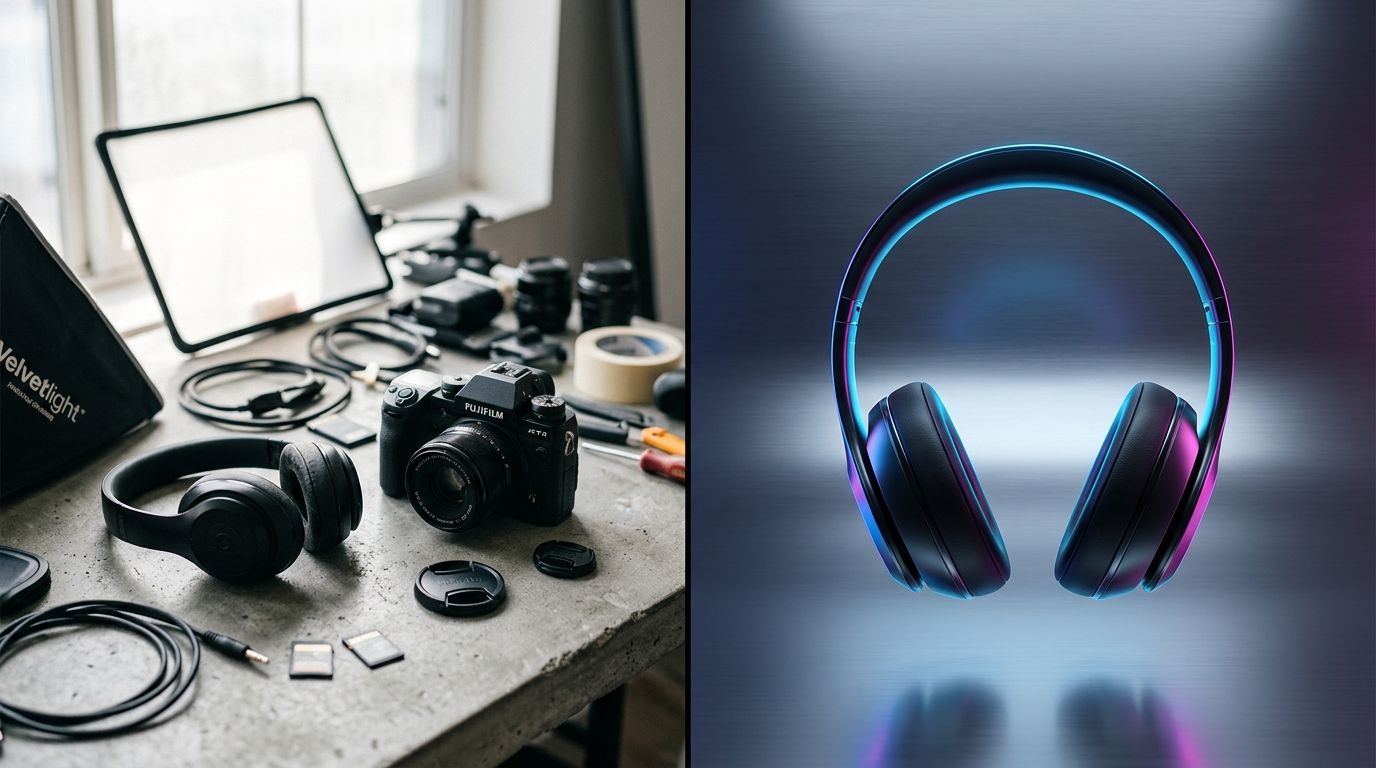
The required equipment for a physical flat lay
You cannot execute a professional overhead product photography shoot by holding your camera in your hands. The moment you lean over the table, your body blocks the ambient light. You cast a shadow directly onto the product. To do this correctly, you must isolate the camera from your body.
Mounting your camera securely
A standard tripod will not work for flat lay styling. If you point a standard tripod head straight down, the tripod legs will appear in your frame. You need a C-stand equipped with a heavy-duty boom arm. This allows you to suspend the camera directly over the center of the table while keeping the base safely out of the shot. Mount a 50mm or 85mm lens on your camera body. Wide-angle lenses bow the edges of your image and make square objects look spherical. You need a longer focal length to keep parallel lines perfectly straight.
Lighting the overhead shot
You cannot rely on overhead room lights or standard office windows. You need essential lighting for product photos positioned precisely to wash out shadows. Place two large softboxes on opposite sides of your shooting table. Angle them at 45 degrees pointing downward toward the product. This cross-lighting technique fills in the dark areas and gives flat objects a subtle sense of depth.
Mastering flat lay composition and styling rules
Throwing items onto a colored backdrop is not styling. The best flat lay product photo tips revolve around intentional placement. The human eye craves order when looking at a two-dimensional plane.
The grid method and negative space
Align your products along an invisible grid. Keep the spacing between items mathematically consistent. If you leave one inch of space between the primary bottle and its packaging box, leave exactly one inch of space between the box and the supporting props. You must also preserve negative space. Leave large empty areas in the frame where your web team can overlay text or promotional banners.
Selecting flat lay props
Instead of piling random aesthetic objects into the frame, focus on using props effectively to establish scale and context. A botanical skincare serum pairs perfectly with a single monstera leaf or a sliced grapefruit. A luxury watch pairs beautifully with a matte black geometric cube. Every prop must serve the main SKU. If a prop shines brighter than the product you are actually trying to sell, you must remove it.
What products belong in a top-down product shot?
Not every item looks good from above. Flat lay photography thrives when the product relies on surface texture, intricate patterns, or group context. Skincare kits, cosmetic palettes, artisan food ingredients, and folded apparel are perfect candidates.
When to avoid the overhead angle
Products that require spatial depth to understand do not work as flat lays. Laying a basic graphic t-shirt flat works perfectly for casual wear catalogs. If you sell structured garments like tailored blazers or winter coats, the overhead angle makes them look flat and lifeless. In those cases, you need to step away from the flat lay table and explore ghost mannequin photography to show the true three-dimensional fit of the garment.
The modern approach: AI flat lay photography
When you understand what makes product photos convert, you realize that visual clarity matters more than traditional studio prestige. Buyers do not care if you spent twelve hours rigging a camera to the ceiling. They just want a clear beautiful image of what they are buying.
This is why modern ecommerce brands are abandoning physical flat lay setups entirely. The logistics of sourcing props, steaming backdrops, and adjusting lights eat up entire work weeks. AI product photography changes the process. Upload a straightforward photo of your product, pick a visual mode like Minimalist or Magazine, and CherryShot AI generates flawless flat lays in minutes.
| Production Factor | Traditional Studio Flat Lay | CherryShot AI Flat Lay |
|---|---|---|
| Cost Per Image | $80 to $200 | Under $5 |
| Turnaround Time | 2 to 3 weeks | Under 10 minutes |
| Equipment Required | C-stands, boom arms, softboxes | A single reference photo |
| Best Use Case | Complex chaotic liquid messes | High volume catalog updates |
The software handles the shadows, the prop placement, and the grid geometry perfectly. You eliminate the physical studio entirely. The per-image cost drops to under five dollars, and the bottleneck shifts from photo production to actual product development.
Frequently Asked Questions
What is flat lay product photography?
Flat lay product photography is an overhead shooting technique where a camera points straight down at items arranged on a horizontal surface. This 90-degree angle completely eliminates perspective distortion to create a clean visual map of the subject. Brands rely on this top-down framing to display complex skincare kits, folded apparel, and cosmetic smear textures in one organized composition.
How do I set up a flat lay photo shoot?
Secure your background material to the floor and mount your camera on a C-stand boom arm pointing exactly 90 degrees downward. Two softbox lights placed on opposing sides of the setup will wash out harsh shadows created by this overhead angle. Tethering the camera directly to a laptop monitor ensures you can verify corner-to-corner focus without blindly guessing.
What products work best for flat lay photography?
Items that rely on surface texture, striking patterns, or group context excel in overhead photography setups. Skincare bundles, artisan food ingredients, and neatly folded apparel sit perfectly flat without losing their visual appeal. Avoid this camera angle for structured items like winter coats or complex electronics that require three-dimensional depth for a customer to fully understand their shape.
What props should I use for flat lay photography?
Choose props that directly communicate the core ingredients, exact use case, or intended aesthetic of the primary item. A hydrating botanical serum pairs logically with a single fresh leaf or smooth river stone. Discard any highly reflective background objects that bounce overhead light straight back into the camera lens and distract shoppers from the product you are selling.
Can AI create flat lay product photos?
Specialized artificial intelligence platforms generate highly accurate top-down environments from a single standard product image. The software mathematically calculates authentic shadows, grid spacing, and complementary prop placement without requiring a physical studio setup. Uploading a clear reference photo allows merchants to output dozens of professional overhead variations for a fraction of the cost of a traditional agency shoot.
Key Takeaways
- Flat lay photography requires specialized overhead mounting equipment to avoid perspective distortion.
- Two opposing softboxes are necessary to eliminate harsh drop shadows on the background material.
- Composition relies on strict grid spacing and intentional negative space for marketing copy.
- AI generation has replaced traditional physical shoots for standard ecommerce flat lay volume.
Executing a perfect top-down product shot used to require thousands of dollars in studio gear and lighting modifiers. Today, the only thing you need is a clear image of your product and the right software. CherryShot AI removes the physical bottlenecks from your creative process so you can launch your next collection on schedule.
Stop wrestling with C-stands and overhead shadows
Generate professional flat lay images directly from your existing straight-on product photos. Test different backgrounds, props, and lighting styles instantly without renting a physical studio.
Try CherryShot AI