How to Show Product Size in Ecommerce Photos
Customers returning products because they misunderstood the size means your photography is failing. Text dimensions do not work. Nobody reads product copy with a tape measure in hand. To show product size in ecommerce photos accurately, you must include a scale reference shot. Place the item next to a universally recognized object, a human hand, or integrate it into a real-world environment. The human brain needs visual context to instantly calculate true volume.
Definition
A scale reference shot is an ecommerce image that places a product next to a universally recognized item or human body part. This visual comparison allows online shoppers to instantly understand the exact dimensions of an object without reading the product description.
Putting measurements in your product description is a legal defense, not a conversion strategy. When a buyer receives a tiny ceramic vase they thought was a floor planter, they do not blame themselves for skipping the bullet points. They blame your brand for misleading them. You lose the sale, you pay for the return shipping, and you take a hit to your customer lifetime value.
(This is where most brands fail during production. They shoot the product on a pristine white background, crop it tightly to fill the frame for listing consistency, and accidentally make a four-inch wallet look like a heavy-duty briefcase.)
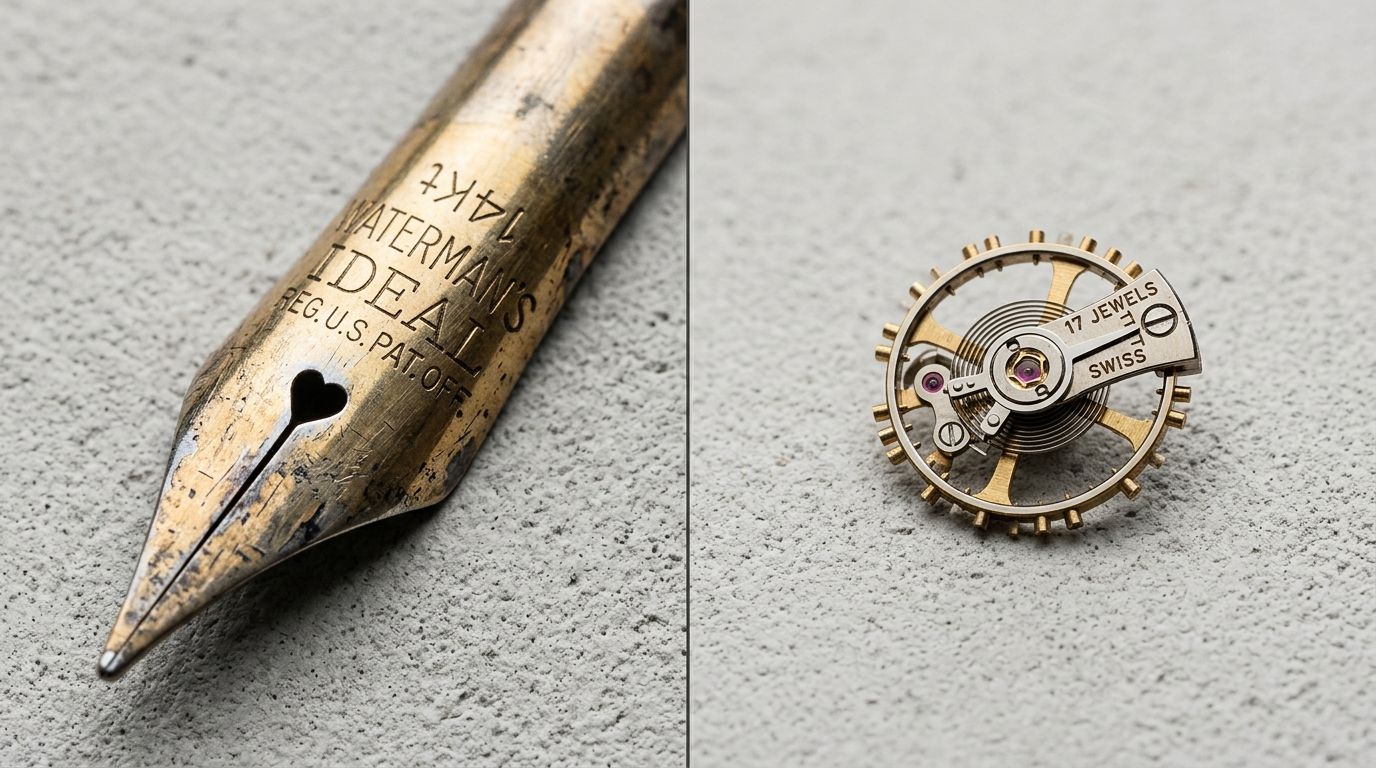
A proper size context product photo immediately anchors the item's dimensions in reality using familiar objects.
Why do text dimensions fail to communicate product size?
The cognitive load of spatial translation
Human beings are terrible at visualizing abstract numbers. If you write that a tote bag is 14 inches wide by 12 inches tall, the customer has to pause their shopping experience. They have to imagine a ruler. They have to map those imaginary inches onto their own body. Most people simply will not do this work. Instead, they look at your main product image and guess.
This guessing game is the root cause of the size confusion epidemic in ecommerce. You have complete control over how your product is perceived visually, yet many brands strip away all environmental clues. A standalone product size ecommerce image on a pure white background removes every anchor the human eye uses to judge distance and scale.
Shoppers need immediate visual shorthand. This is why our breakdown of how poor imagery inflates your return rate focuses so heavily on spatial context. You are not just selling an object. You are selling the space that object will occupy in the customer's life.
| Sizing Method | Cognitive Load | Conversion Impact |
|---|---|---|
| Text Dimensions Only | High (requires mental translation) | Higher risk of size-related returns |
| White Background Isolation | High (removes all visual anchors) | Causes frequent scale misjudgments |
| Hand Scale Shot | Low (instant biological recognition) | Highly effective for small accessories |
| Lifestyle Context | Low (relatable environmental anchors) | Creates immediate confidence in scale |
What is a scale reference shot in ecommerce?
Defining the visual anchor
A scale reference shot product photography setup introduces a known variable into the frame alongside your unknown product. The viewer already knows the approximate size of an iPhone, a standard coffee mug, a house key, or a human hand. When you place your product next to one of these familiar items, you eliminate the need for guessing.
Creating scale reference shots manually on a traditional set does require a larger prop budget and more time per setup. This is a genuine trade-off. You cannot just blast through sixty SKUs on a continuous white sweep when you have to constantly swap out styling elements and adjust lighting for multiple objects. But the slight increase in production complexity pays for itself immediately by preventing refund requests.
How do I show product size accurately in ecommerce photos?
The hand scale shot
The most universal sizing tool is the human hand. If you sell small accessories, cosmetics, or tech gadgets, a hand scale shot is mandatory. Seeing a bottle of serum resting in a palm tells the buyer exactly how many ounces they are paying for.
This is especially vital in jewelry. A standalone photo of a pendant on a white backdrop offers zero clues about its delicacy. Mastering jewelry photography for fine detail requires showing the piece draped on a collarbone or resting against a finger. The skin texture and human anatomy provide the ultimate product scale visual.
The everyday object scale
If your product sits on a desk, photograph it next to a laptop or a standard pen. If you sell kitchenware, photograph your bowl next to an apple. The everyday object scale technique relies on items that have very little size variance globally. Avoid using objects that come in vastly different sizes like a generic plant or an unbranded book.
The model scale product approach
For apparel and large bags, a human body is the only reference that matters. Buyers need to see where a crossbody bag hits on the hip. They need to see if a duffel bag looks overwhelming on an average frame.
This context is non-negotiable for fashion brands. You should be deciding how many product images to include based entirely on how many angles are required to prove the fit. If you leave the scale up to the imagination, the customer will imagine the ideal size for their specific needs, which almost guarantees disappointment upon delivery.
How do I photograph a product to show scale efficiently?
Moving past the sterile studio
You have to stop thinking of product photography as documentation and start thinking of it as environmental storytelling. Setting up a lifestyle product photo session gives you the canvas to insert these visual anchors naturally.
Many founders skip this step because staging a living room or a kitchen set costs thousands of dollars in day rates and location rentals. Traditional logistics punish brands that want to show their products in rich context.
CherryShot AI changes this math completely. Instead of renting a house to photograph a new line of table lamps, you can upload a basic image of your product and select a visual mode like Lifestyle or Influencer. CherryShot AI generates realistic background environments around your item in minutes. You get the coffee table, the surrounding books, and the living room depth. You establish the size context product photo without ever leaving your desk. The per-image cost drops from $150 to under $5.
Avoiding forced perspective
If you are shooting practically, you must be careful with your lenses. Wide-angle lenses distort objects closer to the camera, making them look massive compared to objects just a few inches behind them. Keep your product and your reference object on the exact same focal plane. Use a 50mm or 85mm lens to mimic the natural compression of the human eye. If your reference object looks warped, the buyer will not trust the scale.
Do scale reference shots reduce returns?
The financial impact of visual truth
Yes. Clear scale reference photography stops size-related returns at the source. Every time an order is shipped back to your warehouse, you lose the outbound shipping cost, the return label fee, the packaging materials, and the labor required to restock the item. For many DTC brands, a single returned item wipes out the profit margin from three successful sales.
Upgrading your visual assets is the cheapest return prevention strategy available. You do not need to redesign the product. You do not need to overhaul your sizing chart. You simply need to give the customer's eyes the information their brain is begging for. Using CherryShot AI to bulk-generate lifestyle imagery means you can retrofit your entire catalog with scale context by tomorrow afternoon.
Frequently Asked Questions
How do I show product size accurately in ecommerce photos?
You show product size accurately by placing the item next to a universally recognized object. Integrating a human element, like a hand holding the product or a model wearing the item, provides the clearest spatial context. A standard coffee mug sitting near a laptop keyboard immediately communicates true volume to the buyer without requiring them to read the description.
What is a scale reference shot?
A scale reference shot is a specific product photograph designed to communicate the exact physical dimensions of an item. Photographers include familiar contextual elements in the frame instead of shooting the product isolated on a pure white background. Because the viewer already knows the size of the visual anchor object, their brain automatically calculates the size of your product by direct comparison.
How do I photograph a product to show scale?
You photograph a product to show scale by stepping away from the macro lens and framing the shot wider to include the surrounding environment. Selling a backpack means shooting the item on the back of a model rather than isolated on a studio table. You must intentionally stage the scene so the reference object and the product are on the exact same focal plane to avoid misleading forced perspective distortion.
Do scale reference shots reduce returns?
Scale reference shots directly reduce return rates by eliminating the gap between customer expectation and physical reality. Shoppers initiate a costly reverse logistics process when they receive an item that is significantly smaller or larger than they mentally imagined. Providing clear visual scale upfront prevents buyer remorse entirely, particularly for accessories, furniture, and decorative items where the physical footprint dictates daily usability.
What is the best way to show product dimensions visually?
The best way to show product dimensions visually is through a combination of realistic lifestyle context and direct human interaction. Text overlays with explicit ruler lines function well for highly technical gear, but they look overly clinical for standard retail catalogs. For everyday consumer goods, placing the item on a standard piece of furniture or next to a common household object provides the most intuitive understanding of size.
Key Takeaways
- Text dimensions fail because the human brain struggles to visualize abstract numbers while shopping.
- A hand scale shot is the most effective sizing tool for small accessories, tech gadgets, and cosmetics.
- You must keep your product and your reference object on the same focal plane to avoid misleading visual distortion.
- Providing immediate visual context prevents buyers from imagining the wrong size, directly lowering your return rate.
Stop expecting your customers to do the mental heavy lifting of sizing your products. Give them the visual proof they need instantly. You can start generating realistic scale environments for your entire catalog right now at CherryShot AI.
Audit your product page images before your next campaign
Review your highest-returned products right now to see if they lack critical scale context. Adding a simple environmental reference shot immediately reduces size-related buyer confusion. You can generate these realistic lifestyle settings for your catalog using AI, completely avoiding the logistical headache of a new studio session.
Try CherryShot AI