Subscription Box Photography: Creating Unboxing Anticipation
Subscription box photography fails when it treats the box like a standard retail product. You are not just selling a collection of physical items. You are selling the dopamine hit of opening a monthly gift. To capture that feeling, you need a specific sequence of images showing the closed box, the immediate open reveal, and the organized contents. (Granted, photographing a mystery curation is incredibly difficult when you cannot show the exact items the customer will receive next month.) Doing this well requires careful prop styling and lighting. The trade-off is that perfectly styled unboxing shots can sometimes look too staged, sacrificing the authentic feeling of receiving a real package in the mail.
Definition
Subscription box photography is the specialized process of capturing recurring monthly product deliveries in a way that emphasizes the physical unboxing experience. It requires a strategic mix of exterior packaging shots, internal reveals, and organized flat lays to demonstrate tangible value to potential subscribers.
Key Takeaways
- Sell the unboxing sequence rather than relying on isolated product shots.
- Use a three-shot visual framework to balance mystery with tangible value.
- Prop up items inside the box so they do not get lost in deep cardboard shadows.
- Eliminate the monthly studio bottleneck by generating theme variations with AI.
The Psychology Behind Subscription Box Product Photography
When someone buys a pair of shoes online, they want clear photos showing the tread, the stitching, and the heel profile. When someone buys a subscription box, they are buying a feeling. They want to know what it feels like when that branded box lands on their doorstep.
Selling anticipation over inventory
If your website only shows a sterile white-background shot of five random items, you are failing to communicate your actual product. Your product is the curation. Your product is the packaging. If you photograph the items like a police evidence table, nobody is going to subscribe.
Buyers need to see the crinkle paper. They need to see the welcome card resting perfectly on top. They need to imagine themselves pulling the tape off the cardboard. This is exactly why getting the unboxing photography right is so critical. You have to visually bridge the gap between digital expectation and physical delivery. Nailing the elements of high-converting product photos is what turns a skeptical browser into a recurring subscriber.
The Three-Shot Framework for Subscription Products
You cannot tell the story of a subscription box in one image. I have seen countless brands try to cram the closed box, the open box, and the individual items into a single cluttered graphic. It looks desperate. Instead, you need to walk the customer through the experience sequentially.
Shot One: The Tease
The first image in your sequence should be the closed box. This is your lifestyle anchor. Put the closed box on a nice porch, sitting on a clean kitchen island, or resting on an entryway table. Show the branding clearly. This shot tells the customer exactly what they will see when they walk to their mailbox. It establishes the physical reality of the subscription.
Shot Two: The First Glance
The second shot is the most difficult one to get right. This is the open box reveal. The biggest mistake brands make here is shooting straight down into a dark cardboard hole. If you just open your box and point a camera at it, the items will look small and lost in the shadows.
To fix this, you have to cheat the physics of the box. Use hidden foam blocks, crumpled tissue paper, or cardboard risers under your products. Push every item up so it sits completely flush with the top rim of the box. Arrange the labels so they face the lens. Drape a ribbon over the edge. Add just enough loose crinkle paper to fill the gaps without burying the actual products. The box should look like it is bursting with value.
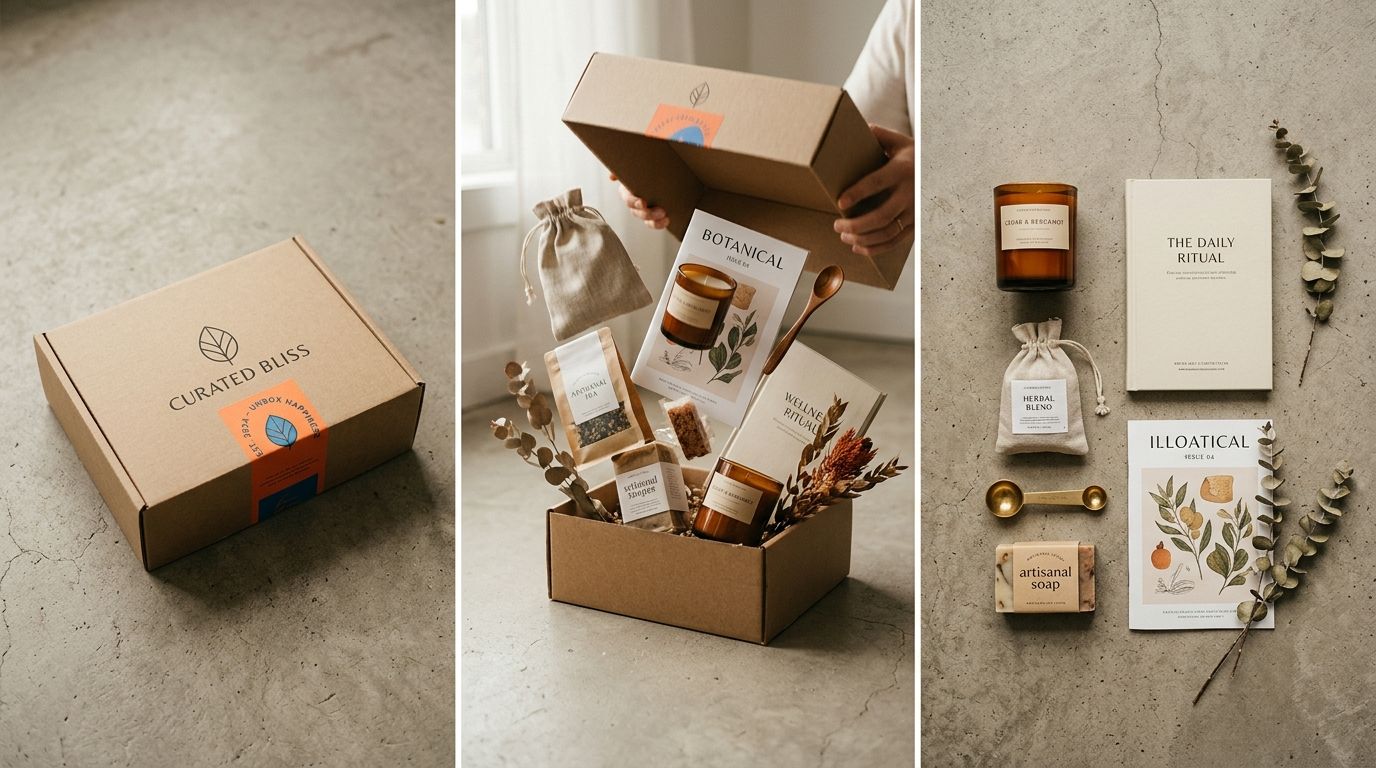
Products must be elevated to the top edge of the box to avoid deep shadows and communicate abundance.
Shot Three: The Value Proof
The final essential shot is the exploded flat lay. This is where you remove the items from the box entirely and arrange them beautifully on a clean surface. The box itself can sit slightly blurred in the background.
This flat lay is where logic takes over from emotion. The customer has already felt the unboxing excitement. Now they want to count the items and justify the price tag. They are doing mental math to ensure the subscription is worth the monthly fee. Figuring out the optimal number of images to showcase contents is crucial here. Too few photos and the box feels empty. Too many repetitive angles and the customer gets bored.
Handling the Mystery Box Dilemma
Many subscription boxes are inherently mysterious. You curate a new theme every month, which means a new customer signing up today will not receive the specific items shown in your hero photography.
How to photograph what you cannot show
If your box relies on surprise, you have to photograph past boxes as proof of concept. The trick is to label these images clearly as "past curations" while maintaining the exact same lighting and angle structure for every historical box you show.
When a potential subscriber sees four different past boxes photographed with the exact same high-quality flat lay style, they start to trust your curation process. They might not know what is coming next month, but they know it will be visually cohesive and packed with value. If your past boxes look like they were shot on different cell phones in different rooms, that trust shatters.
The Monthly Logistics Nightmare
The real problem with subscription box product photography is not the creative execution. The real problem is the calendar.
Why studio shoots kill subscription margins
Standard ecommerce brands launch a product once and use those photos for two years. Subscription brands launch a new product every thirty days. I have sat through studio shoots that ran four hours over schedule just trying to get the May box finalized while the June inventory was already arriving at the warehouse.
Booking a freelance photographer, renting a space, styling the props, and waiting weeks for retouched images simply does not fit a monthly recurring revenue model. The logistics eat your margins and delay your marketing campaigns. The traditional production model is fundamentally broken for subscription cycles. This relentless schedule is why the role of product images in boosting sales often gets compromised by brands rushing to hit a deadline.
| Production Method | Turnaround Time | Cost Per Theme | Flexibility |
|---|---|---|---|
| Traditional Studio | 2 to 4 weeks | $1,500+ | Zero once the shoot ends |
| DIY In-House | 3 to 5 days | Labor hours | Limited by available props |
| AI Generation | Minutes | Under $10 | Infinite background changes |
When you map out the actual per-image cost of a monthly recurring shoot, the math usually falls somewhere around $150 per finished image. That is completely unsustainable for a brand trying to test new creative angles for their acquisition ads.
This is exactly why AI product photography is taking over the subscription space. You snap a clean reference photo of the new monthly items on a table. You upload it to an AI platform. You select a lifestyle background that matches that specific month's theme, and you generate campaign-ready photos instantly. The cost drops from thousands of dollars to literal pennies.
Frequently Asked Questions
How do I photograph a subscription box?
Capture the complete unboxing sequence rather than relying on isolated item shots. This sequential approach builds customer anticipation by establishing the physical reality of the delivery before revealing the internal curation. Set up your camera to document the closed branded packaging, the immediate lid-lift reveal with items propped near the top edge, and a final flat lay showing every individual product clearly.
What shots do I need for subscription box photography?
Shoot a closed package exterior, an open container reveal, a complete flat lay of all contents, and contextual lifestyle images showing the products in use. Photographing this exact combination proves the monthly value proposition while maintaining the emotional excitement of receiving a physical delivery. Arrange your final flat lay so every label faces the lens perfectly to help potential subscribers calculate the monetary worth.
How do I show the inside of a subscription box in photos?
Elevate every item using hidden foam blocks or crushed tissue paper so the products sit flush with the top rim. Deep cardboard walls cast heavy shadows that make your monthly curation look empty and cheap to potential subscribers. Place a draped ribbon or loose crinkle paper directly into the negative space between the elevated products to create an immediate visual impression of overflowing abundance.
What creates the best subscription box product photos?
High-converting subscription images balance organized product visibility with calculated visual messiness. Perfectly symmetrical internal layouts feel sterile, whereas intentional organic scatter mimics the authentic feeling of tearing into a fresh delivery. Place your branded welcome card at a slight angle and scatter exactly five or six pieces of crinkle paper over the main items to make the setup feel like a real gift.
Can AI help with subscription box photography?
Artificial intelligence platforms eliminate the logistical nightmare of scheduling monthly studio shoots for every new theme. These systems take a single reference photo of your new inventory and place it into thousands of realistic lifestyle environments instantly. Upload a basic flat lay of your upcoming month's curation into an AI generator to produce final campaign assets at a fraction of the cost.
A subscription box is a recurring promise. Every piece of creative you publish needs to convince the buyer that this promise is worth keeping on their credit card statement. By perfecting your unboxing sequence and taking control of your production costs with tools like CherryShot AI, you can finally stop stressing about shoot logistics and start focusing on your subscriber growth.
Audit your unboxing sequence imagery
Compare your current product page photos against the three-shot framework outlined above. If you are missing an open box reveal or a clear flat lay, you are likely losing potential subscribers. Use CherryShot AI to generate those missing lifestyle angles from your existing inventory photos in seconds.
Try CherryShot AI