TikTok Shop Product Photos: The Visual Standards That Convert TikTok Browsers Into Buyers
TikTok Shop product photos require an entirely different visual language than Amazon. You cannot simply sync your standard Shopify catalog over to a new sales channel and expect the existing imagery to perform. The platform demands imagery that feels native. Browsers on TikTok are not actively searching for a specific SKU. They are scrolling for entertainment. Your primary listing photo has to stop them dead in an ecosystem built exclusively on movement and personality. In this environment, sterile white backgrounds are actively working against your conversion rate.
Definition
TikTok Shop product photography is the strategic creation of contextual, natively styled images designed to generate impulse purchases. These visuals deliberately mimic organic user content to blend commercial products into an entertainment feed. The approach discards traditional isolated catalog shots in favor of authentic environments, dynamic lighting, and human interaction.
Treating TikTok Shop like an extension of your Amazon storefront is the fastest way to burn your ad spend. The visual standards for social commerce product photography reject the perfection that traditional marketplaces demand.
We see brands struggle with this transition constantly. They spend thousands of dollars on highly polished studio shoots, only to watch those technically perfect images get completely ignored by the TikTok algorithm. The reason is simple. Perfection screams "advertisement" to a generation of shoppers who have developed a permanent blindness to traditional marketing. If you want to sell on TikTok, your product images need to look like they belong there.
Why the Amazon playbook fails entirely on TikTok
Amazon rewards uniformity. TikTok rewards disruption. When a buyer opens Amazon and types a search query, they have incredibly high buying intent. They know exactly what they want. They just need a clear, well lit, pure white background photo to confirm the product matches their search. Amazon designed its entire visual ecosystem around removing distraction.
Nobody opens TikTok to search for a garlic press. They open the app to be entertained, to learn something, or to kill time. When your product appears in their feed or on your shop tab, it is an interruption. The only way to make that interruption welcome is to make the product look like an organic piece of content.
This is why the visual standards for TikTok ecommerce photos are built entirely on context. The product needs to look like it belongs in the physical space of the person viewing it. It needs texture, shadow, and environment. A white background isolates the product from reality, which is exactly the opposite of what social commerce tries to achieve.
| Attribute | Amazon Photography | TikTok Shop Photography |
|---|---|---|
| Core Purpose | Intent-based search fulfillment | Entertainment-based discovery |
| Background Style | Strictly isolated pure white | Contextual lifestyle environments |
| Lighting Approach | Flat and even studio strobes | Directional, natural, or harsh flash |
| Success Metric | Clarity and detail isolation | Scroll disruption and organic vibe |
The psychology of the scroll
Understanding how to photograph products for TikTok Shop starts with understanding the user. As they flick their thumb upward, their brain is making split second decisions about what to look at. A traditional listing photo registers as a banner ad. The user automatically scrolls past it without processing the product.
However, an image of a skincare bottle sitting on a messy bathroom sink with natural sunlight hitting it registers as a story. The brain pauses. This is why mastering scroll-stopping product images for social is fundamentally different than optimizing a standard ecommerce store. You are selling a vibe first and a product second.
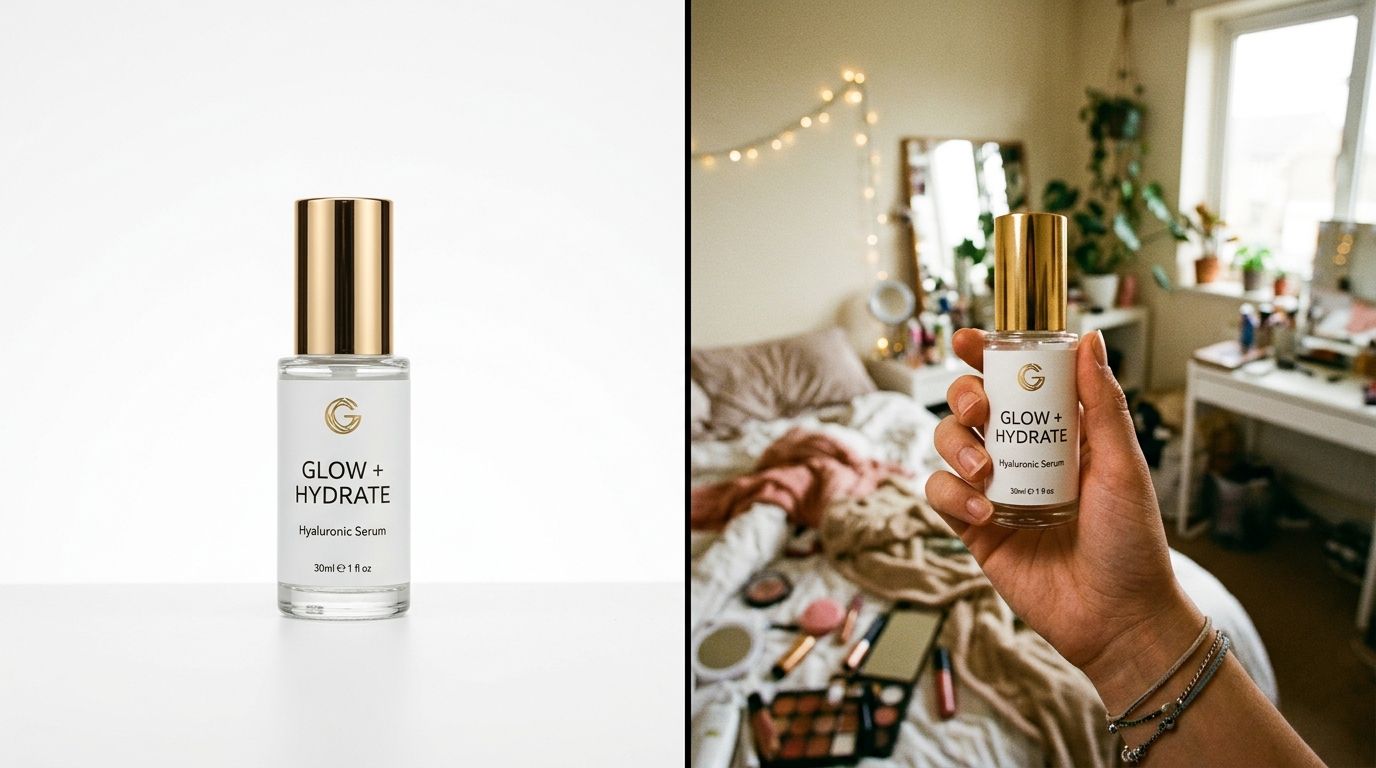
Contextual lifestyle images dramatically outperform stark studio shots in the TikTok Shop ecosystem.
The anatomy of high-converting TikTok Shop product images
So what actually works? A high converting image on this platform typically relies on a distinct user generated aesthetic. It feels casual. It feels accessible.
You want to prioritize lifestyle settings over pure product photography. If you sell a handbag, do not shoot it empty on a pedestal. Shoot it slung over the shoulder of someone walking down a city street, or sitting on a cafe table next to a spilled latte. This context creates desire. It shows the customer not just what the item is, but who they become by owning it.
A true lifestyle shoot requires location scouting, multiple models, and days of setup. That is a massive operational lift for a fast moving brand. Every time you launch a new colorway, organizing a new location shoot destroys your margin and delays your launch.
This is exactly where our tool, CherryShot AI, completely changes the math for modern brands. You no longer have to choose between sterile catalog shots and expensive location photography. You can simply upload a basic flat lay or iPhone photo of your product, select the Influencer or Lifestyle mode, and generate dozens of platform native TikTok shop listing photos in minutes. The AI handles the lighting, the shadows, and the environment. Your product gets the organic, contextual look it needs to convert without the logistical nightmare of a real world shoot.
Lighting that feels real
Avoid flat, even studio strobes. The best TikTok product photography utilizes directional light. Hard shadows from a window, golden hour sunlight, or even the harsh flash of a disposable camera aesthetic perform incredibly well. These lighting styles mimic the way actual users capture their lives on the platform.
TikTok Shop image requirements and technical specs
While the aesthetic rules are loose, the technical rules are strict. TikTok Shop image requirements dictate exactly how your files need to be formatted to upload successfully. If your images do not meet these specs, the platform will crop them aggressively or reject them entirely.
First, your primary listing photo must be a 1:1 aspect ratio. The absolute minimum resolution is 800 by 800 pixels. However, uploading at the bare minimum is a mistake. Smartphone screens are incredibly sharp. If your image is compressed, it looks cheap. You should aim for 1200 by 1200 pixels to maintain crisp detail.
The platform allows you to upload up to nine images per product listing. You should use all of these slots. Understanding how many product images convert is crucial here. Your primary photo hooks the scroller, but your secondary photos close the deal. Use the additional slots to show different angles, highlight specific details, and provide scale.
- Format: JPEG, PNG, or WebP.
- File size: Maximum 5MB per image.
- Ratio: Strictly 1:1 square.
- Resolution: 1200 x 1200 pixels recommended.
Why "ugly" sometimes out-converts "perfect"
There is a running joke among performance marketers that the uglier an ad is, the better it converts. On TikTok Shop, this is often mathematically true. When an image looks too perfect, a user's ad blocker reflex kicks in. When an image looks slightly chaotic, their curiosity takes over.
(Worth noting: there is a strict difference between platform native authenticity and objective poor quality. An out of focus image will not sell anything, no matter how authentic it feels. You still need sharp focus and accurate color representation.)
A photo taken on a slightly wrinkled bedsheet with a smartphone flash might significantly outperform a photo taken in a multi million dollar studio. The bedsheet implies that a real person owns this product, loves it, and wanted to show it to their friends. The studio implies that a corporation wants to extract money from your wallet.
This is the fundamental shift in ecommerce right now. You have to stop thinking like a catalog manager and start thinking like a creator. If you want to execute effective lifestyle product photography for social commerce, you have to embrace the messiness of real life. Put the product in a hand. Put it on a cluttered desk. Give it a shadow.
The power of user generated aesthetics
Even if you are generating these images internally, they need to emulate user generated content. The lighting should feel like ambient room light mixed with a window. The styling should feel accidental rather than perfectly arranged by an art director. CherryShot AI is specifically tuned to generate these types of environments because we know that this is what actually drives revenue for modern brands. You get the authentic creator aesthetic without having to mail free product to fifty different influencers and hoping one of them takes a good photo.
Key Takeaways
- TikTok Shop rewards contextual lifestyle photography over pure white background studio shots.
- Highly polished images trigger ad blindness and cause users to scroll past your listing immediately.
- Your primary listing photo must be a 1:1 square format with a recommended resolution of 1200 by 1200 pixels.
- Using AI tools to place products in authentic, platform native environments drastically reduces the cost of launching new SKUs.
Frequently Asked Questions
What product photos work best on TikTok Shop?
The highest converting TikTok Shop product photos mimic organic content created by everyday users. This format succeeds because hyper-polished studio shots trigger instant ad blindness in scrollers who expect raw, authentic entertainment on their feeds. To achieve this aesthetic, capture your item directly in a human hand or against a naturally lit, lived-in room background rather than shooting on an isolated white drop.
Does TikTok Shop require a white background?
TikTok Shop does not require a pure white background for your primary listing image. Sterile catalog imagery actively works against you on this specific channel because it interrupts the entertainment experience with an obvious commercial aesthetic. You should upload highly contextual lifestyle shots showing the physical scale and real-world application of your items to capture attention in the feed.
How do I photograph products for TikTok Shop?
Photograph your products in bright natural daylight against familiar, visually interesting backgrounds. Presenting the item in a relatable environment helps potential buyers quickly visualize ownership while blending naturally into the social media interface. You can capture a basic flat lay with your smartphone and process it through CherryShot AI to apply authentic room shadows and dynamic lighting without hiring a professional photographer.
What image size does TikTok Shop require?
Product listing images on TikTok Shop must follow a strict 1:1 square ratio format. Uploading your files at 1200 by 1200 pixels prevents compression artifacts and ensures crisp product details on modern high-resolution smartphone displays. Export your final image assets as JPEG or PNG files under 5MB to guarantee the platform accepts your upload without applying aggressive auto-cropping or causing severe quality degradation.
How is TikTok Shop photography different from Amazon photography?
Amazon relies on sterile white backgrounds to serve high-intent buyers conducting specific product searches. TikTok functions entirely as a discovery engine where users scroll for casual entertainment rather than actively seeking out items to buy. You must design your storefront visuals to interrupt that passive scroll by featuring authentic styling, natural room shadows, and dynamic human interaction that sparks immediate impulse purchases.
Building a visual presence on a new platform is always an adjustment. The brands that win on TikTok Shop are the ones willing to discard old habits and embrace the way modern consumers actually want to shop. If you are ready to stop fighting scheduling logistics and start generating platform native visuals in minutes, CherryShot AI gives you the exact output you need to scale your catalog without scaling your costs.
Audit your product page images against the social scroll
Take out your phone right now and view your primary listing photo next to organic posts in your feed. If it looks like an obvious advertisement, you are actively losing impulse buyers. Test a few lifestyle variations using CherryShot AI to see how native styling impacts your click-through rates.
Try CherryShot AI