Why Customers Return Online Purchases
When you ask why customers return online purchases, the answer rarely has anything to do with product quality. The leading cause of ecommerce returns is a gap between what the customer thought they were buying and what actually showed up in the mail. That gap is almost entirely created by your product page. Buyers purchase the lighting, the styling, and the implied scale shown on their screens. When the physical item fails to match that visual promise, they immediately pack it back up and ask for a refund.
Definition
An ecommerce return occurs when a customer sends a purchased item back to the retailer for a refund or exchange, incurring additional shipping and processing costs. The majority of these returns happen because the physical product fails to match the visual expectations set by the product page photography.
Most ecommerce operators spend thousands of dollars optimizing their checkout flow and virtually nothing optimizing the accuracy of their visuals. They book a quick studio shoot, grab three angles on a white background, and assume that is enough information for a buyer to make an informed decision. It is not. If your product does not look exactly like the photos when it comes out of the shipping box, you are going to lose the sale. More importantly, you are going to lose the margin on the reverse logistics.
The brands that successfully minimize their return request data understand that a product page is an exercise in expectation management. You are not just trying to make the item look attractive. You are trying to make it look honest. Every time a customer is surprised by a product, you pay for it.
The expectation gap destroys your profit margins
Founders rarely track the true, comprehensive cost of a return. They look at the refunded revenue and stop the math there. But the real financial bleed happens in the operational shadows behind the scenes. You paid marketing dollars to acquire that customer. You paid a fulfillment center to pick, pack, and ship the item. When the customer decides they do not want it, the financial damage multiplies.
Shipping and processing eat your profit
When the return request comes in, you are likely covering the return shipping label. You then pay a warehouse worker to receive the box, inspect the item, re-fold the garment, re-bag the product, and place it back into active inventory. If the packaging is damaged during transit, you pay to replace it. By the time that item is ready to be sold again to a different customer, you have often lost the entire profit margin on the next sale as well.
Understanding the actual reasons customers return online orders is not a customer service initiative. It is a fundamental survival requirement for your business model. Every preventable return is a direct tax on your profitability. If your images are failing to set the right expectations, you are actively subsidizing customer disappointment.
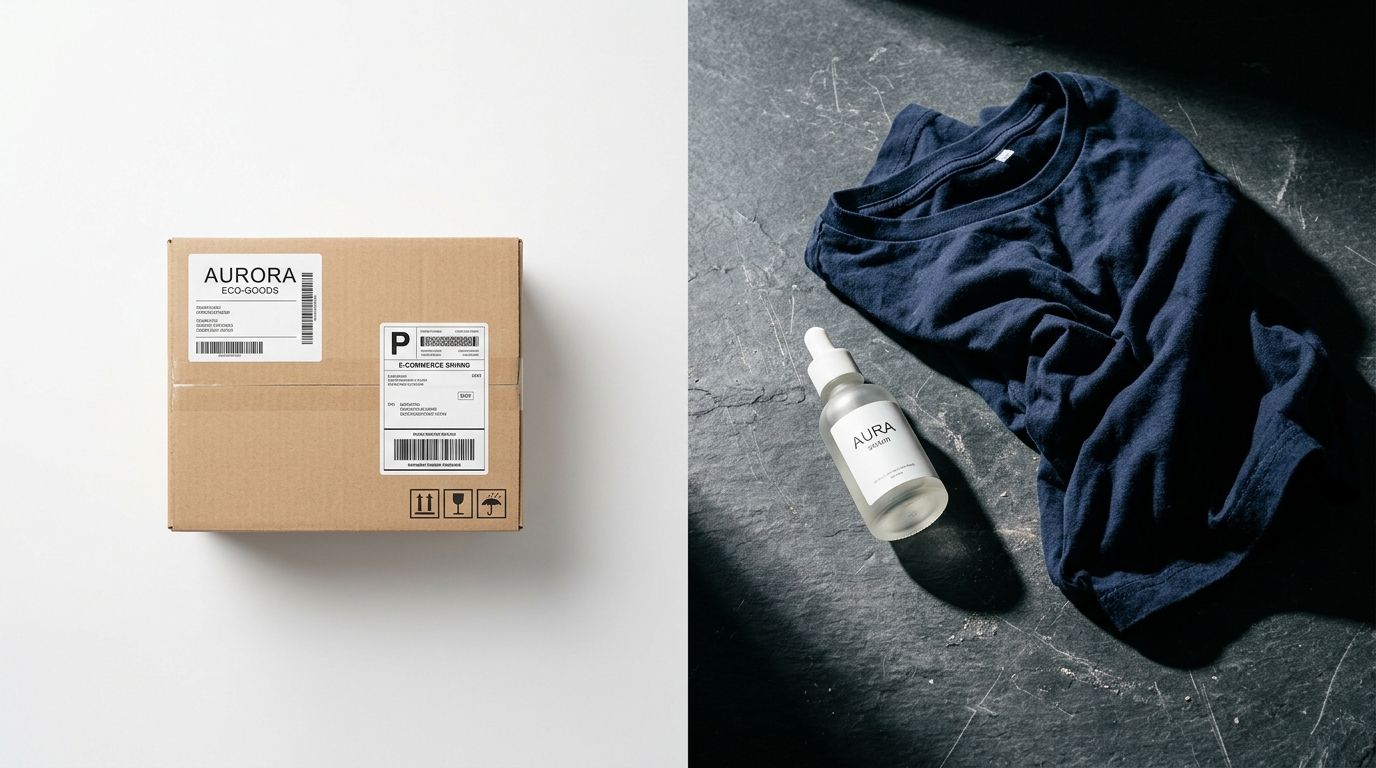
Returns are not a shipping problem. They are an expectation management problem created before checkout.
The true causes of ecommerce returns
If you look closely at your analytics, you will start to see patterns. Customers do not usually type out long essays about why they hate your brand. They select a reason from a dropdown menu. The options they choose reveal exactly where your product presentation is failing them.
The product doesn't match description or photos
This is the most frustrating reason to see on a return slip because it is entirely within your control. A customer claims the product doesn't match description. What they usually mean is that the product photography accuracy was poor. Color is the biggest offender here. Traditional studio lighting is notoriously difficult to control perfectly. High key strobes blow out highlights and alter the appearance of fabrics. A muted olive green sweater suddenly looks like a bright forest green on a mobile screen.
When the customer opens the box and sees a "wrong colour received" situation, they feel tricked. The item itself might be perfectly manufactured, but it is not the item they thought they purchased. This visual betrayal immediately shatters their trust in your brand.
The size issue and hidden scale
The "size issue" is massive across all categories, not just apparel. Customers frequently complain that a product is smaller than expected. This happens constantly in homewares, accessories, and furniture. When you shoot a ceramic vase on a seamless white background with absolutely nothing else in the frame, you remove all visual context.
A customer cannot tell if that vase is six inches tall or sixteen inches tall. They do not read your meticulously formatted dimension charts buried at the bottom of the page. They look at the photo, make a subconscious assumption about the scale, and click buy. When a tiny box arrives three days later, they feel cheated. The product smaller than expected complaint is a direct result of missing visual anchors.
Providing robust visual context is critical. How product photos impact your return rate shows exactly how adding lifestyle context anchors expectations and protects your bottom line.
How bad visuals drive the wrong expectations
Your product images are doing heavy lifting for customer expectations. Every shadow, every angle, and every reflection tells a story about the quality of the item. When brands try to cut corners on their visual assets, they inevitably pay the price on the backend through elevated return rates.
(Worth noting: some return volume is inevitable because bracketing, the practice of buying three sizes just to keep the one that fits best, is a consumer habit that no amount of site optimization will completely eliminate. Your goal is fixing the preventable returns, not achieving absolute zero.)
Scale and context matter
If you want to stop answering questions about why do online shoppers return products, start looking at how you photograph them. Traditional studio shoots have a massive bottleneck. Generating fifty lifestyle images for every SKU takes massive resources if you run a traditional studio, which forces brands to compromise and rely on a single white-background shot.
| Photography Approach | Customer Expectation | Return Risk |
|---|---|---|
| Single White Background | Forces buyer to guess physical scale and real-world color | High probability of scale mismatches |
| Multi-Angle Studio | Clarifies specific product details but lacks environmental anchors | Moderate risk from lighting distortion |
| Contextual Lifestyle | Anchors true dimensions and color against recognizable objects | Lowest preventable return rate |
That compromise is what kills your conversion rate and spikes your returns. Customers need to see the product in the real world. They need to see a handbag worn over a shoulder to understand the drop length. They need to see a coffee mug held in a hand to understand its true capacity. When you strip away that context, you force the customer to guess. Customers are terrible at guessing.
Transparency in your imagery is the best filter for bad buyers. Building visual trust to prevent returns explains how showing the honest details of a product ensures that only highly qualified buyers complete the checkout process.
Fixing the root cause before checkout
You need more images. You need lifestyle context. You need macro shots of the texture. Traditionally, generating this volume of imagery for every single product variation was financially impossible for emerging brands. Booking a freelance photographer to shoot fifty variations of a single product in different environments is a logistical nightmare that takes weeks to coordinate.
More angles mean fewer surprises
This is exactly where CherryShot AI changes the entire workflow for ecommerce operators. You upload a basic product image, select a visual mode like Lifestyle or Minimalist, and generate dozens of campaign-ready photos in minutes. The per-image cost drops to a fraction of a studio day. Turnaround time shifts from three weeks to a Tuesday afternoon.
When the cost of asset creation drops, you can finally afford to show the product from every conceivable angle. How to build trust on product pages breaks down exactly which angles consumers look for before deciding a brand is legitimate. You can afford to show the product on a coffee table, on a bookshelf, and in a bright living room. You give the customer the exact visual context they require to make an accurate purchasing decision.
When customers know exactly what they are getting before they click the buy button, they stop sending items back. They stop complaining about mismatched colors. They stop leaving reviews about confusing dimensions. You stop paying for reverse logistics, and you start keeping the revenue you earned.
Frequently Asked Questions
What is the most common reason customers return online purchases?
The most frequent cause is a massive gap between customer expectations and physical reality. Buyers initiate a return when the item they receive fails to match the visual promises made on your product page. A shopper who expects a deep navy sweater based on washed-out studio lighting will immediately demand a refund when a bright blue garment arrives in the mail.
How much of ecommerce returns are caused by product photos?
Misleading or inadequate imagery directly causes nearly a quarter of all ecommerce returns. This percentage drastically increases when you factor in sizing complaints stemming from product pages that lack clear visual scale. You can prevent these specific return requests by providing contextual lifestyle images that anchor the physical product against common household objects to demonstrate true dimensions before checkout.
What product page changes reduce the most returns?
Adding lifestyle context and providing exact color representation solves the majority of expectation mismatches. Shoppers require visual reference points to understand physical scale and true tone before they confidently click the buy button. You must show the product worn on a model or placed in a real room to eliminate the scale confusion created by isolated white background shots.
How do product images create false expectations that lead to returns?
Traditional studio lighting frequently washes out true colors and flattens intricate fabric textures. Shooting items entirely alone on a seamless white background removes all sense of scale and forces the buyer to guess the physical dimensions. A customer expecting a heavy ceramic vase based on an isolated image will return the item if a small fragile cup actually arrives.
Key Takeaways
- The leading cause of preventable returns is a failure to manage visual expectations.
- Reverse logistics destroy margins far beyond the initial lost revenue of the sale.
- Products shot strictly on white backgrounds cause massive confusion regarding actual physical scale.
- Generating lifestyle context imagery is the most effective way to anchor customer expectations before checkout.
Returns will always be a reality of doing business online. Your objective is simply to eliminate the returns caused by your own communication failures. Stop making your customers guess what your product actually looks like. Show them the scale, show them the true color, and show them the context. If you need to scale up your image gallery to achieve this, visit CherryShot AI to start generating campaign-ready photography without the studio bottlenecks.
Audit your product page images before your next campaign
Review your highest-returned items and identify where the existing photography fails to show true physical scale or accurate color. Generating clear lifestyle context for these specific products will directly protect your profit margins. You can create these assets instantly without booking another studio shoot.
Try CherryShot AI