Why Customers Return Online Purchases
If you want to know why customers return online purchases, you need to stop trusting the drop-down menu in your returns portal. Customers lie on return forms because clicking "changed my mind" is the fastest path to a prepaid shipping label. The truth is much more expensive. The vast majority of non-apparel returns happen because the product your customer imagined does not match the physical item that arrived in the mail.
Definition
Expectation mismatch occurs when the physical product a customer receives differs significantly from the mental image they formed while browsing your store. It is driven almost entirely by misleading photography, such as missing scale indicators, eliminated shadows, or inaccurate color grading. This visual discrepancy results in immediate refund requests and permanently eroded buyer trust.
This is a visual mismatch problem. Your product photography sets an expectation. When the physical item fails to meet that expectation, the customer feels tricked. They immediately request a refund, and your margin absorbs the blow.
The Dropdown Menu is Lying to You
If you look at any standard return reasons survey, the data tells the same story. Founders look at these return codes in Shopify, shrug, and write it off as an unavoidable cost of doing business.
Human behavior does not work like that. People do not excitedly hand over their credit card, wait four days for a package, rip open the box, and suddenly decide they no longer like coffee mugs. That is a myth. What actually happens is they open the box and realize the matte black finish they expected looks like cheap, shiny plastic under their kitchen lighting. They realize the heavy stoneware bowl they ordered is actually paper thin.
They look at the item, feel a wave of disappointment, and click the easiest option on your portal. The industry calls these expectation mismatch returns. You thought you sold one thing, but the postman delivered something the customer perceives completely differently. This visual product mismatch is the silent margin killer of modern ecommerce, and it is entirely preventable if you fix how you present your products visually.
The True Cost of a Returned Purchase
When a customer returns a product, you do not just lose the initial sale. You lose the outbound shipping cost. You pay for the return label. You pay your warehouse staff to receive, inspect, and restock the physical item. If the item is damaged or out of season, you mark it down or send it to liquidation.
Most founders I have talked to estimate their true cost of a single return is somewhere between fifteen and thirty dollars. When you apply that to a twenty percent return rate on a high volume catalog, the financial bleed is staggering. That number does not even account for customer churn. A buyer who experiences a severe visual mismatch rarely gives your brand a second chance. They assume your entire catalog is misrepresented.
The Three Types of Visual Product Mismatch
There are three specific ways your photography is lying to your customers. Understanding how product photos influence returns begins with identifying exactly which visual cue you are getting wrong on your product pages.
Scale and the floating void
Standard ecommerce advice tells you to shoot every product on a pure white background. This is terrible advice. A pure white background removes all environmental context. When you float a desk lamp in a void of infinite white, the customer has no idea if that lamp belongs on a small bedside table or if it takes up half of an executive desk.
Take a ceramics brand selling a handmade mug. In a sterile white box, the mug looks massive. The customer imagines wrapping both hands around it on a winter morning. When it arrives, it holds exactly six ounces and the handle barely fits two fingers. They initiate a return immediately. The product description clearly stated the mug held six ounces, but buyers do not read text specifications. They look at the main image, build a narrative in their head, and click buy.
If you are looking for solutions for high return rates, you have to stop isolating your products. Customers need a visual anchor. They need to see the mug next to a standard keyboard or held in a human hand.
Texture and flat studio light
Studio lighting is designed to make things look completely clean. Photographers use massive softboxes to eliminate shadows entirely. The problem is that shadows are exactly what communicate texture to the human eye.
When you eliminate shadows, you eliminate physical depth. A thick knit sweater looks like a flat graphic tee. A hammered metal ring looks like smooth, cheap aluminum. The customer buys the texture they imagined based on your premium price tag. When they open the box under the harsh halogen light of their hallway, the magic is completely gone. The item just looks cheap.
This happens because the lighting environment was sterile. Real life is not sterile. Real life has directional sunlight, ambient room lighting, and heavy shadows. Your return rate is directly tied to your product image accuracy under realistic conditions.
The color calibration trap
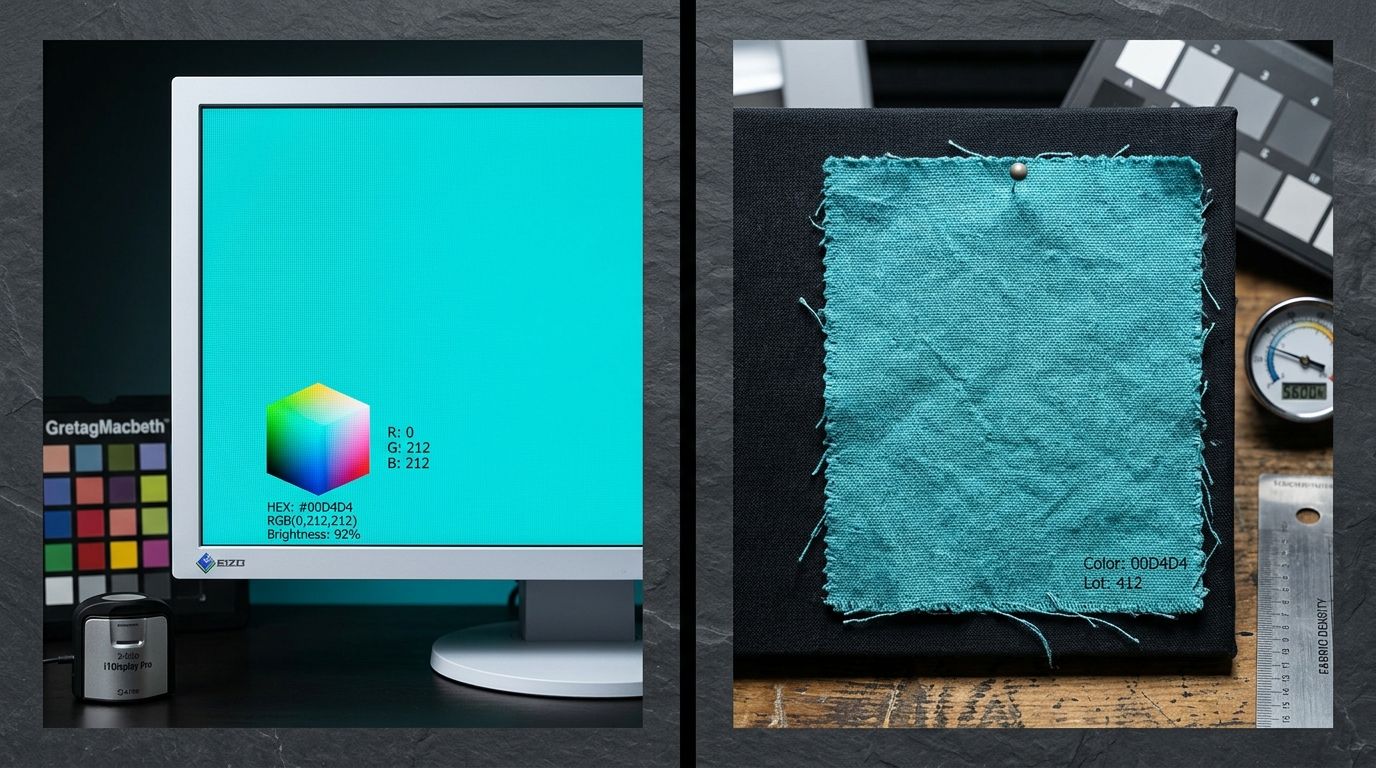
The third offender is color. Navy blue clothing is notoriously difficult to photograph accurately. In bright studio lighting, navy often looks royal blue or even black. The customer buys what they think is a vibrant blue jacket, and receives something that looks like standard corporate uniform attire.
When you track the root cause of inaccurate product photos returns, it almost always leads back to the studio fighting to make the product look perfect instead of making it look honest. The space between what they thought they bought and what arrived is the visual gap on product pages that actively destroys your margin.
The Unscalable Economics of Lifestyle Shoots
The obvious fix to this expectation mismatch is to shoot your products in real lifestyle settings. Show the lamp on a real desk. Show the sweater outdoors. Show the ring on a hand holding a real coffee cup.
Any founder who has tried to scale lifestyle photography knows exactly how fast the math breaks. You are no longer just paying a single photographer. You are renting a location. You are paying a stylist for a half-day. You are spending three hours arguing with an art director about whether the background blur matches the brand guidelines.
Two weeks later, you get an invoice for three thousand dollars and forty finished images. If you launch twenty new SKUs a month, you simply cannot afford to run a custom lifestyle shoot for every single colorway. The bottleneck shifts from product design directly to basic visual production. The invoice is not just the photographer. It is the friction of the entire creative process.
Fixing the Margin Leak Without the Studio Logistics
This logistics nightmare is exactly why AI product photography changes the math completely. You can upload a basic product image, pick a visual mode like Lifestyle or Minimalist, and CherryShot AI generates campaign-ready lifestyle photos in minutes.
The per-image cost drops from eighty dollars to under five dollars. You get the environmental context you need to prove scale and texture without booking an expensive location. More importantly, you stop sending naked, floating products to your website. You can show the navy jacket in afternoon sunlight, the ceramic mug on a wooden coffee table, and the metal ring catching natural light.
| Photography Method | Context Provided | Cost & Time Profile |
|---|---|---|
| White Background Studio | None (floating void) | $15 - $30 per image (Days) |
| Custom Lifestyle Shoot | Full environmental scale | $80 - $150+ per image (Weeks) |
| AI Product Generation | Full environmental scale | Under $5 per image (Minutes) |
(It is important to acknowledge a hard truth here. You cannot prevent every single return. Size and fit issues will always exist in the apparel industry, and some customers will always buy three sizes of a shirt with the explicit intention of returning two. Wardrobing is a permanent tax on the ecommerce model.)
For everything else, you can close the expectation gap entirely. When you give the customer an accurate visual representation of the product in a real environment, you strip away their ability to invent false expectations. You ground the physical product in reality long before they reach checkout. Stop hiding behind sterile studio lighting and start showing the product exactly as it exists in the real world.
Key Takeaways
- Return portal data is flawed because customers choose the fastest option for a refund.
- Isolated white backgrounds remove scale context and create massive visual expectation gaps.
- Flat studio lighting destroys physical texture and misrepresents real product quality.
- AI generation replaces the cost of lifestyle shoots and grounds your products in reality.
Frequently Asked Questions
What is the most common reason customers return online purchases?
Size and fit remain the leading causes for apparel returns, but visual mismatch dominates almost all other ecommerce categories. Buyers construct a specific mental expectation based strictly on the photography presented across your product pages. Placing items next to common household objects and shooting under natural daylight ensures customers receive exactly the physical item they envisioned, which protects your margins from expensive reverse logistics fees.
How do product images affect return rates?
Product photography establishes the absolute baseline expectation for every potential buyer browsing your online store. Heavily edited images with removed shadows, missing scale indicators, or blown-out lighting write visual checks that the physical product will fail to cash upon delivery. Displaying accurate media featuring true physical proportions, precise material texture, and honest color grading completely eliminates the costly gap between customer expectation and physical reality.
What photography mistakes cause returns?
Floating isolated products on pure white backgrounds without any physical size reference causes the highest volume of expectation returns. Flat studio lighting serves as another major offender because it completely washes out material texture and makes premium items look cheap. Failing to place the product inside a realistic environment prevents the buyer from verifying actual physical proportions before finalizing their checkout process.
How do I reduce returns by improving product images?
Merchants must stop treating photography as a static catalog requirement and start treating it as direct visual communication. The most effective approach involves showing the product next to universally known physical objects under completely natural lighting conditions. Using modern AI generation tools or traditional lifestyle shoots to place items inside real rooms guarantees the customer understands exactly what they are buying.
What information should product photos show to prevent returns?
An effective product gallery needs to visually answer every unasked question a buyer might have before completing their order. The imagery must explicitly demonstrate absolute scale, exact material texture, true color under standard daylight, and precise physical details from multiple viewing angles. Always including a dedicated lifestyle context shot grounds the item in a realistic physical space and immediately validates its real-world proportions.
The math on physical returns is brutal. By upgrading your imagery with tools like CherryShot AI, you fix the expectation gap before the order ever reaches the shipping dock.
Audit your product page images before your next campaign
Your product photography is either building trust or silently destroying your profit margins through expectation mismatch. Review your top returned items today and replace floating white-background shots with realistic environmental context. If booking another lifestyle shoot breaks your budget, use CherryShot AI to generate campaign-ready visuals instantly.
Try CherryShot AI