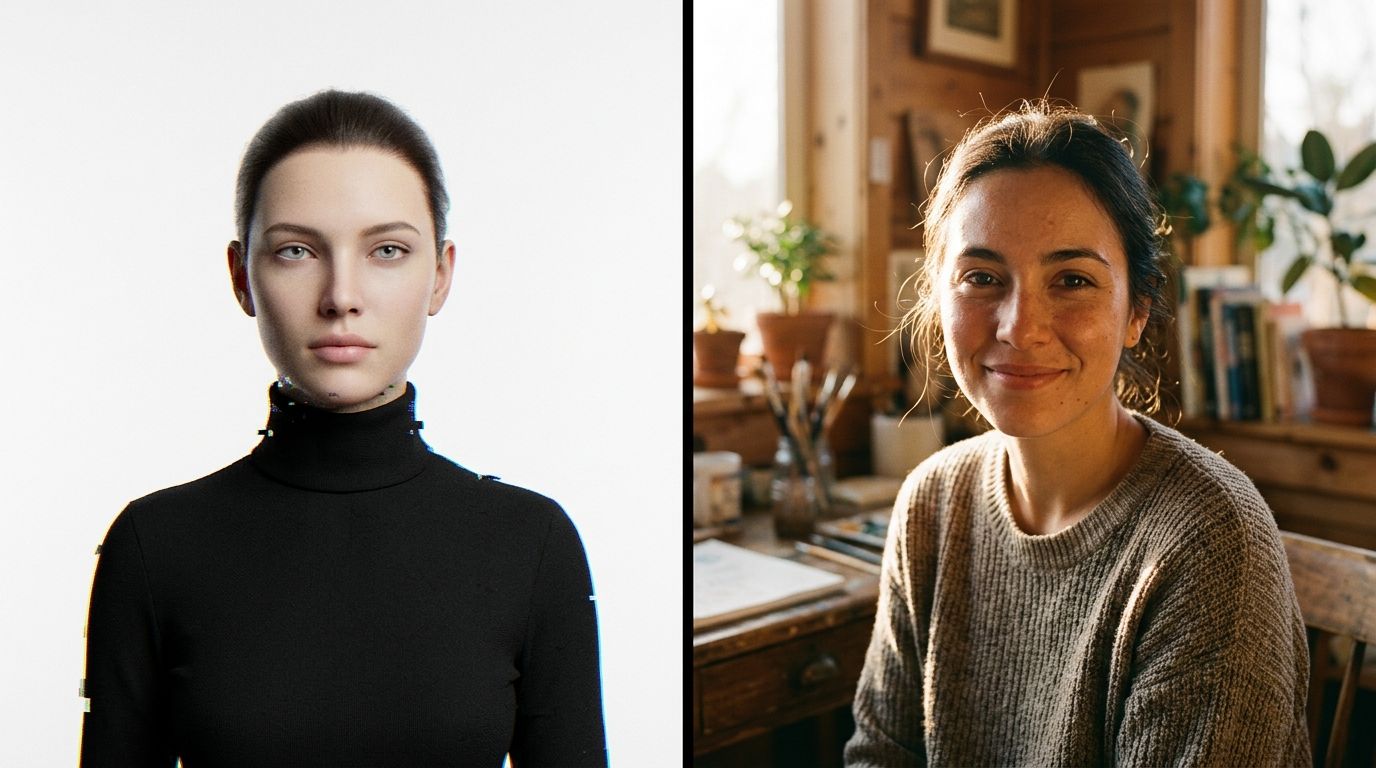
AI Model vs Real Model Photography: An Honest Comparison for 2026
Choosing between an AI model and a real person for your ecommerce photography is no longer about picking the cheaper option. It is about deciding where your production budget delivers the highest return. While the emotional resonance of a human model remains a distinct asset, the operational speed and consistency offered by AI have completely shifted the standard for catalog and lifestyle imagery.
Definition
AI model photography involves using synthetic digital representations to showcase garments, replacing the need for traditional casting, styling, and studio sessions. It allows brands to visualize clothing on various body types and environments without logistical overhead.
Why the Production Bottleneck Shifts with AI
Traditional model shoots are notorious for their reliance on complex logistics. You are paying for a team, travel, permits, and hours of downtime while lighting is adjusted or models change outfits. When you look at when AI product photography makes sense, you realize that most delays are tied to the physical nature of these assets, not the quality of the product itself.
The Cost and Speed Trade-off
In 2026, the AI photography cost comparison highlights a stark reality. A standard catalog shoot might require weeks of lead time and thousands of dollars in fees, yet you are limited to the exact looks captured on that single day. AI tools allow for rapid iteration. If a new colorway drops, you generate the imagery immediately, bypassing the entire casting process.
| Feature | Traditional Shoot | AI Model Approach |
|---|---|---|
| Turnaround Time | 2-4 Weeks | Minutes |
| Scaling Capacity | Expensive/Slow | Instant |
| Production Cost | High ($1000s) | Low ($10s) |
| Physical Logistics | Required | None |
When to Keep the Camera Crew
It is important to admit that AI is not a total replacement for every scenario. Highly specific hero imagery for a brand campaign often benefits from the unique chemistry between a professional model and a director. When you are hiring a product photographer for a high-concept fashion narrative, the human touch remains a valid choice.
Standardizing Your Workflow
However, for the vast majority of ecommerce pages, the goal is clarity. You want the customer to understand how the garment fits. Whether you use a model, a flat-lay, or ghost mannequin photography, the outcome must build trust. AI models consistently provide that utility without the bloated budget of a full-scale production team.
Frequently Asked Questions
Is AI model photography as realistic as using real models?
AI model imagery in 2026 has reached a level where typical product shots are virtually indistinguishable from human photography. The technology now maps fabric textures and lighting onto digital figures with high precision. Subtle details like skin pores and natural fabric draping are standard, though extreme close-ups on specialized textiles sometimes reveal minor inconsistencies that require a trained eye to spot.
How much does an AI model shoot cost vs a real model shoot?
Traditional model shoots often cost thousands once you factor in studio time, talent fees, hair, makeup, and post-production editing. AI alternatives frequently drop those costs to a tiny fraction, often costing less than ten dollars per high-quality image. This shift allows brands to test various looks and models without the massive financial risk associated with booking physical studio time.
Which clothing categories work best with AI models?
Standard apparel like t-shirts, hoodies, and athletic wear perform exceptionally well with digital models because the garment shapes are predictable. Structured pieces like tailored suits or intricate evening gowns remain slightly more challenging for AI to handle perfectly. Brands often use AI for their high-volume catalog needs while reserving specialized human shoots for flagship items.
Can customers tell the difference between AI and real model photos?
Most customers today prioritize clear visual information over the specific origin of the photograph. If the lighting, fit, and proportions accurately represent the product, shoppers generally do not stop to verify if the model exists. Authentic-looking images that focus on showing the product clearly are far more effective at conversion than even the most expensive professional human shoot.
Key Takeaways
- AI model imagery reduces production timelines from weeks to minutes.
- The cost of high-quality digital model shots is a fraction of physical studio costs.
- Standardized apparel is ideally suited for current AI generation capabilities.
- Prioritize human models for flagship hero campaigns and AI for catalog volume.
Evaluate your current photography spend before the next product drop
Stop sinking your margins into logistical delays. Test your existing product shots using CherryShot AI and see how quickly you can generate consistent imagery for your entire upcoming catalog.
Try CherryShot AIThe transition toward digital modeling is less about replacing photographers and more about moving the focus from logistics to creativity. If you want to see how your current product images translate into new visuals, you can start generating with CherryShot AI today.