CherryShot AI

    Candle Product Photography: How to Capture Flame, Texture, and Scent Visually
    March 29, 2026

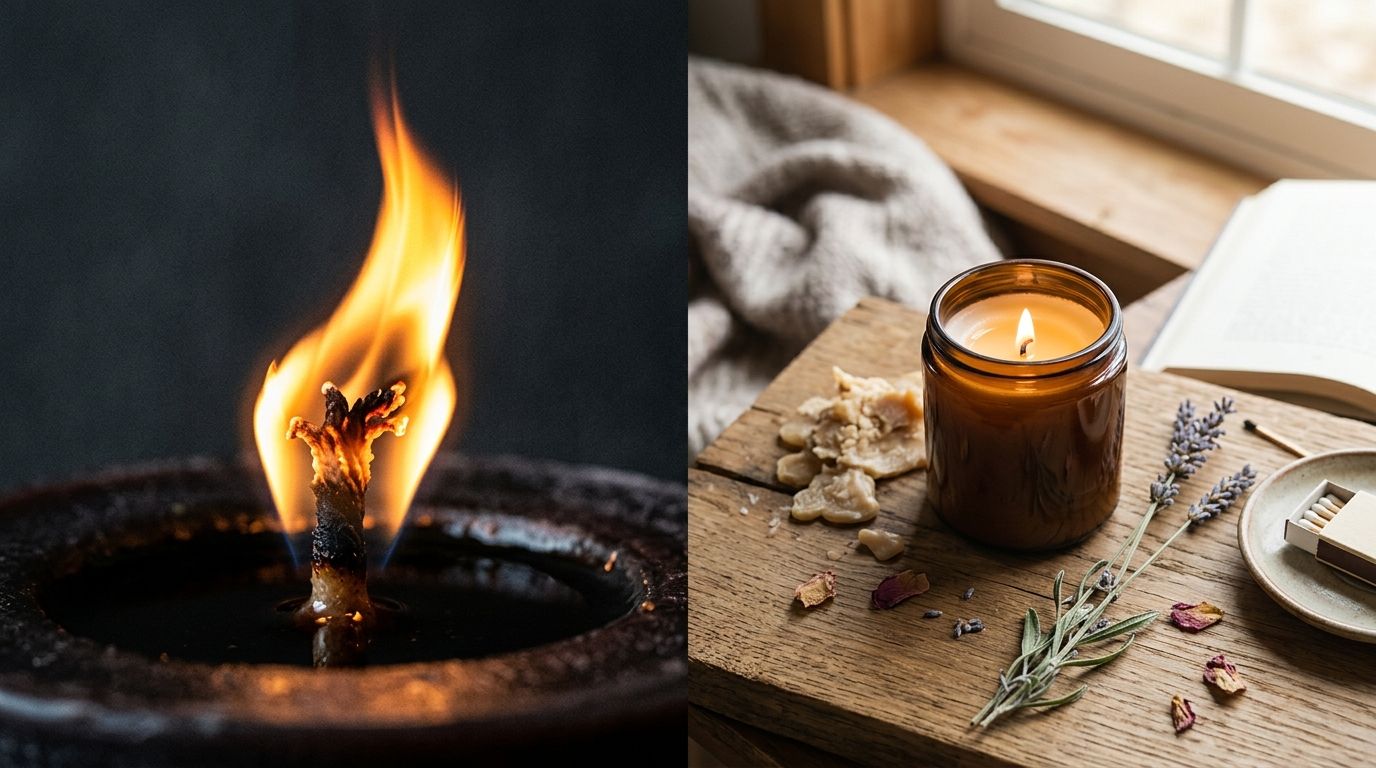
    Mastering candle product photography requires balancing three distinct elements simultaneously. You must capture the warm glow of the flame, the tactile texture of the wax, and the visual styling cues that communicate an invisible scent. E-commerce brands that orchestrate these elements perfectly elevate their perceived value and immediately drive higher conversion rates.

    To photograph candles effectively, you must light the vessel and the flame independently. Expose for the flame first using a shutter speed of at least 1/125th of a second to prevent motion blur from flickering. Then introduce diffused continuous lighting to illuminate the wax texture and the front label without blowing out the highlights of the fire.

    Key Takeaways

    • Shoot the flame and the vessel at different exposures to capture the glow without losing the label details.
    • Use hard directional light mixed with soft fill to highlight the texture of soy or beeswax surfaces.
    • Incorporate fresh props like citrus rinds or wood chips to visually communicate the fragrance notes to the shopper.
    • AI product photography platforms now generate realistic lifestyle candle settings in minutes instead of days.

    Any brand still shooting flat, unlit catalog photos of their candles in 2026 is leaving serious money on the table. The barrier to entry for starting a home fragrance business has dropped significantly over the past five years. Consequently, the market is saturated with options competing for the exact same customer. The only reliable differentiator left is visual presentation.

    Shoppers cannot smell a digital screen.

    Your product imagery must do the heavy lifting of selling an invisible fragrance by triggering memory and association. When a customer lands on your store, they are not buying wax and a cotton wick. They are buying the atmosphere that the candle promises to create in their home. Delivering that promise visually requires an intentional approach to lighting, styling, and technical camera settings.

    75%

    of online shoppers rely on product photos when deciding to purchase a home or lifestyle item. Shopify, 2024

    How to Photograph Candles for Online Store Conversion

    The fundamental challenge of photographing candles with a flame stems from the dynamic range of the scene. A lit wick is incredibly bright compared to the dark glass jars or matte ceramic vessels typically used in home fragrance packaging. If you expose the camera to capture the label on a dark jar, the flame will turn into a blown-out white blob. If you expose for the flame, the jar will sink into complete darkness. Solving this requires specific techniques.

    Lighting the Flame Without Losing the Vessel

    Professional studio photographers use a composite technique to solve the dynamic range problem. Mount your camera firmly on a heavy tripod and frame your shot. First, turn off your studio strobes and adjust your settings to capture the perfect flame. You will likely need an ISO of 100 and a shutter speed around 1/125th of a second. Take the photo.

    Without moving the camera or the product, blow out the candle. Turn on your studio lights and adjust your exposure settings to properly illuminate the vessel, the label, and the surrounding props. Take the second photo. You then blend these two images together using photo editing software. The resulting image features a perfectly exposed jar with a crisp, glowing flame.

    Photographing Candles With Flame Safely

    Studio safety is paramount when working with live fire. Professional photography sets are filled with paper seamless backdrops, large wooden styling props, and highly flammable diffusion materials. You must clear a defined radius around the active product.

    Capturing the perfect flame is entirely a matter of controlling the ambient airflow.

    Turn off the air conditioning and ensure the studio is completely draft-free before lighting the wick. A flickering flame will register as motion blur on the camera sensor, ruining the clean look of the final image. Always trim the wick to exactly one-quarter of an inch. A wick that is too long will produce a flame that is wildly disproportionate to the vessel and will likely emit black smoke that stains your white studio backdrops.

    A lit, double-wick soy candle in a matte black glass jar resting on a marble countertop beside fresh lavender sprigs and styling props
    Incorporating raw ingredient props next to your candle visually communicates the fragrance notes before the customer even reads the product description.

    Revealing Candle Wax Texture Photography Details

    Consumers associate smooth, creamy wax with premium quality. Cheap paraffin blends look entirely different under a macro lens than high-end coconut or beeswax blends. To justify a luxury price point, your candle photography tips for ecommerce must include strategies for highlighting that physical texture.

    The Role of Directional Shadows

    Flat, front-facing light is the enemy of texture. If you point a large softbox directly at the top of the candle, the light fills in every microscopic groove in the wax. The surface will look completely flat and synthetic. Instead, you must use directional light.

    Position a small, hard light source at a very low angle to the side of the candle. As the light rakes horizontally across the top of the wax, it casts tiny micro-shadows behind every imperfection and curve. This technique instantly reveals the organic nature of the pour. You can then use a small piece of white foam board on the opposite side to gently bounce some light back into those shadows, ensuring they do not become too dark.

    Managing Glass Vessel Reflections

    Most premium candles are poured into glossy glass jars. Glass is essentially a curved mirror that reflects the entire studio setup, including your camera, your light stands, and yourself. To capture clean candle product images that sell, you must manage these reflections aggressively. Use a circular polarizing filter on your lens to cut through the ambient glare. Rather than lighting the glass directly, point your lights at large white bounce cards positioned around the product to create smooth, elegant gradients across the surface of the jar.

    Translating Scent Into Scented Candle Product Images

    Because the customer cannot interact with the product physically, your imagery must rely heavily on visual scent marketing. You have a split second to convey whether a candle smells like a dark library or a bright citrus grove. The props and environment you choose do this heavy lifting.

    Styling Prop Cues for Fragrance Notes

    Deconstruct the scent profile of your candle into tangible physical items. If the top notes are bergamot and the base notes are cedar, those raw ingredients should be present in the frame. Scatter fresh cedar wood chips across the staging surface and place a split citrus rind softly out of focus in the foreground.

    (Worth noting: staging a bathroom with a running bath and a lit candle takes an entire day to get right on location, which is exactly why most independent brands avoid complex lifestyle shoots.)

    Keep the props secondary to the product itself. The styling should frame the candle, not overwhelm it. Use a shallow depth of field by setting your camera aperture to f/2.8 or f/4 to blur the background props. This keeps the viewer focused firmly on the sharp label and the glowing flame while still registering the environmental cues.

    Candle Lifestyle Photography Locations

    The setting communicates the intended use case of the product. A fresh linen and lavender candle belongs in a bright, airy bathroom surrounded by folded towels and white marble. A tobacco and amber candle requires a dark, moody environment featuring rich wood textures and warm shadows. Matching the environmental context to the fragrance profile is a non-negotiable step in producing successful candle brand photography tips.

    Scaling Candle Product Images That Sell

    Executing complex composite shoots and staging physical lifestyle environments demands a massive budget and a sprawling timeline. For growing e-commerce stores, spending weeks in a studio to shoot a new seasonal collection is a massive logistical bottleneck.

    The average DTC fragrance brand launches new seasonal scents four times a year.

    Using AI for High-Volume Campaigns

    Brands are increasingly moving away from traditional photography software workflows and replacing manual studio days with automated generation. With tools like CherryShot AI, you can bypass the studio entirely. You upload a flat image of your candle vessel and the platform automatically places it into realistic scenes.

    You simply select a visual mode like Minimalist, Luxury, or Lifestyle. The AI handles the complex physics of glass reflections, renders the accurate glow of a lit wick, and generates the surrounding environmental props in minutes. This allows founders to test multiple visual aesthetics for the same scent profile without paying for new physical sets or hiring set designers. The cost and speed advantages fundamentally change the launch timeline for a new collection.

    Frequently Asked Questions

    How do I photograph a lit candle safely for product shots?

    Studio environments are packed with highly flammable materials like paper backdrops, wooden props, and diffusion fabrics. You must clear a strict three-foot radius around the lit candle and ensure the room is completely free of drafts to prevent the flame from jumping. Always trim the wick to exactly one-quarter of an inch before lighting to keep the flame contained and prevent black soot from ruining the top layer of the wax. Keep a small fire extinguisher within arm's reach and never leave the active set unattended while the wick is burning.

    How do I show candle texture and wax quality in photos?

    Texture requires shadows to become visible to the camera sensor. Position your primary light source to the side of the candle at a low angle to rake light across the surface of the wax. This creates micro-shadows that highlight the creamy finish of soy blends or the rustic imperfections of beeswax.

    What lighting works best for candle product photography?

    Diffused back-lighting paired with a subtle white bounce card at the front provides the most flattering illumination for glass candle vessels and wax surfaces.

    Can AI tools handle candle photography realistically?

    Yes, purpose-built tools handle the complex reflections of glass jars and the accurate physics of a glowing flame without requiring a traditional studio setup. Brands use AI photography platforms to place their base product images into high-end lifestyle environments. You upload a simple reference photo of the unlit candle and the system generates campaign-ready scenes complete with proper lighting, shadows, and complementary styling props.

    If you want to see what this looks like for your specific product category, CherryShot AI starts at $10 for 50 images at cherryshot.ai.