Ecommerce Image SEO: Ranking Product Photos in Search
Most brands treat product photos strictly as conversion tools. They upload a massive JPEG to their storefront, hit publish, and wonder why their competitor steals every visual search click. Ecommerce image SEO is not just about making a site load fast. It is about claiming highly profitable real estate in Google Images and the Shopping tab, where buyers actually start their discovery process. If your images are invisible to search engine crawlers, you are leaving free revenue on the table.
Definition
Ecommerce image SEO is the technical practice of optimizing product photography to rank in visual search engines like Google Images and the Shopping tab. It involves reducing file sizes for faster page loads and adding structured metadata so algorithms understand the content. This allows high-intent shoppers to discover your products through visual matching rather than just text queries.
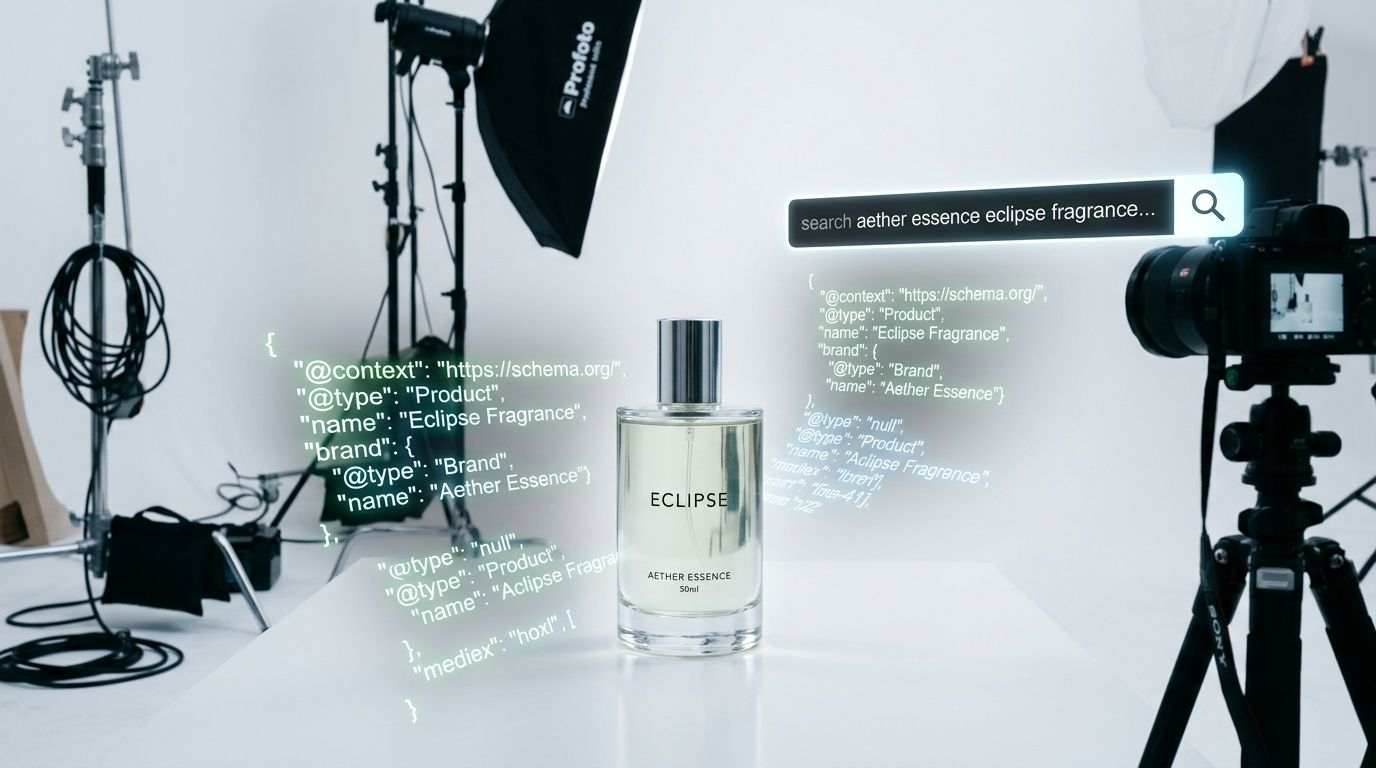
Optimizing your product photography ensures it surfaces when high-intent buyers use visual search.
Why ecommerce image SEO drives high-intent traffic
Visual search behavior has fundamentally changed how consumers shop. When someone wants a specific style of mid-century modern accent chair, they rarely click through ten different blue text links. They switch over to Google Images or the Google Shopping tab to visually parse hundreds of options in seconds. They are looking for a visual match first and a price point second.
The shift to visual discovery
Google understands this shift. That is why they have integrated Google Lens into the main search bar and aggressively surface visual packs in standard organic results. When a search query carries high commercial intent, Google relies on product image SEO to match visual traits with user desires. If your catalog is not optimized to feed data into this system, your brand simply does not exist in the visual discovery phase.
Ranking highly in visual search bypasses traditional text-heavy SEO battles. You might struggle to rank on page one for a highly competitive head term, but a perfectly optimized, high-resolution product shot can easily dominate the image carousel for that exact same keyword.
Technical foundations for product image SEO
Search engines crawl code, not pixels. Until image recognition AI becomes flawless, you have to spoon-feed Google the context of your photos through technical optimization. This starts with how the file is saved and served to the browser.
File size and format choices
Page speed is a direct ranking factor for mobile search. Massive image files are the primary culprit behind sluggish ecommerce sites. Choosing the best image formats for SEO determines your baseline speed before a user even begins scrolling. Modern storefronts should default to serving WebP or AVIF formats, which provide identical visual quality to JPEGs at a fraction of the file size.
There is a real trade-off here. Aggressive image compression will secure top scores in Google PageSpeed Insights, but it often causes visible color banding on high-resolution mobile displays. Finding the balance between technical speed and visual fidelity requires testing your compression ratios. Aim to keep hero images under 200KB and standard gallery thumbnails under 50KB.
| Format Type | Primary Use Case | SEO Impact |
|---|---|---|
| WebP | Standard product galleries | Excellent compression for fast mobile loads |
| AVIF | Modern storefronts | Highest visual retention at minimal file size |
| JPEG | Fallback compatibility | Heavy file sizes that hurt core web vitals |
Filenames and alt text structure
Your camera names files sequentially. Google cannot extract meaning from a file named DSC_8942.jpg. Before uploading any asset to your store, rename the file to describe the product using lowercase letters and hyphens. A file named womens-black-leather-ankle-boots.jpg gives search spiders an immediate clue about the content.
Alt text takes this a step further. When you focus on optimizing image alt text for SEO, you are translating visual details into explicit text data. Good alt text serves visually impaired users first and search engines second. Do not stuff keywords. Describe exactly what is in the photo. "Black leather ankle boot with silver side zipper and block heel" provides rich, long-tail context that Google uses to match specific user queries.
Structured data and Google Merchant Center
Getting your image to appear in search is step one. Getting it to appear with a price tag, star rating, and "In Stock" badge is what actually drives clicks. This requires structured data.
Product image schema markup
Product schema is a snippet of JSON-LD code that lives in the header of your page. It explicitly tells Google that the image on the page belongs to a product available for purchase. Within this schema, the image property is mandatory.
By tying the image URL to the product price, SKU, and availability through structured data, you unlock rich results. This is what transforms a standard Google Images result into a highly clickable shopping link with a bold "Product" badge layered over the thumbnail.
Image sitemaps for ecommerce
Ecommerce sites use dynamic galleries and JavaScript-heavy product pages that can obscure images from crawlers. To guarantee indexing, you need to submit a dedicated image sitemap. This XML file explicitly lists every product image URL on your domain alongside its corresponding product page. Most major ecommerce platforms generate this automatically, but verifying its submission in Google Search Console is non-negotiable for serious image SEO.
Context and quality as ranking signals
Google does not evaluate an image in a vacuum. The algorithm aggressively analyzes the text surrounding the photo. If your product image is embedded next to a detailed description, bullet points about materials, and customer reviews, Google gains confidence in the image's relevance.
The intersection of ranking and conversion
(Worth noting: Google Merchant Center handles image requirements slightly differently than traditional organic search, enforcing strict rules against watermarks, promotional text, or distracting backgrounds on primary listing photos.)
Even the fastest-loading page will not save you if the visuals fail to build trust once they surface in search. User engagement is a feedback loop. If your photo ranks well but users bounce immediately after clicking because the lighting is harsh or the angle is awkward, Google will demote the image. Understanding the core product photo conversion factors ensures the traffic you capture actually buys.
This is where modern tools bridge the gap between volume and quality. CherryShot AI allows brands to upload a basic product shot and generate campaign-ready imagery with perfect lighting and context in minutes. You get the flawless white-background shots required for Google Shopping compliance, alongside the rich lifestyle imagery that dominates Pinterest and Google Images discovery feeds.
Key Takeaways
- Visual search bypasses traditional text ranking battles entirely.
- Descriptive filenames and robust alt text give search engines essential context.
- Product schema markup is required to earn the clickable product badge in search results.
- Serving WebP or AVIF formats balances vital load speeds with visual clarity.
Frequently Asked Questions
How do I optimize product images for SEO?
Compress your image files to reduce page load times while maintaining visual fidelity for mobile shoppers. Search engines heavily penalize slow storefronts, making strict file size management a mandatory ranking factor across all ecommerce categories. Rename every raw image file with descriptive hyphens, apply accurate alt text, and submit a dedicated image sitemap through Google Search Console to guarantee accurate indexing.
Does product image quality affect SEO?
Visual fidelity indirectly impacts your search rankings through measurable user engagement metrics and bounce rates. Search algorithms monitor behavior closely, actively dropping your organic position if shoppers click a visual result and immediately leave your site due to a blurry or poorly lit photo. Maintain strict studio lighting standards and ensure primary gallery images remain perfectly sharp on high-resolution displays to keep buyers engaged longer.
How do I get product images to rank in Google Images?
Earning top placements requires precise technical configuration combined with strong contextual relevance across the entire product page. Search crawlers cannot see pictures, so they rely heavily on the text immediately surrounding your photos to determine what the asset actually depicts. Embed your primary image gallery directly next to detailed material specifications, verified customer reviews, and structured data code to feed the algorithm essential context.
What is the best image SEO strategy for ecommerce?
Establishing an automated, systematic processing pipeline for every new SKU creates the most effective foundation for organic growth. Consistency across a massive catalog drives significantly higher organic traffic than occasionally fixing the metadata on a single promotional hero image. Enforce strict naming conventions for raw camera files, integrate a content delivery network for format conversion, and configure your platform to inject schema markup automatically.
Does image alt text affect ecommerce SEO?
Descriptive alt text serves as a primary relevance signal for search algorithms parsing your visual assets. Crawlers require explicit text data to understand the contents of a photograph and match it accurately against specific buyer queries in the shopping tab. Write specific tags that detail the exact materials, colors, and physical design features of the item instead of stuffing generic category keywords into the code.
Optimizing your product catalog for visual search requires discipline, but the compounding returns are massive. Every correctly named file and compressed image acts as a permanent hook in Google's ecosystem.
If you want to stop losing high-intent traffic to competitors with better visuals, start by fixing the foundational files you feed to the algorithm.
Audit your product page images before your next campaign
Run a quick spot-check on your highest-trafficked product pages to see if heavy file sizes are dragging down your mobile speed. If you need perfectly formatted, fast-loading lifestyle shots that meet strict Google Shopping requirements, CherryShot AI can generate them instantly from a basic reference photo.
Try CherryShot AI