Ecommerce Photography Agency: Selection & AI Alternatives
Hiring an ecommerce photography agency solves a quality problem but introduces a logistics problem. You get beautiful images, but you pay for them in weeks of waiting, complex licensing agreements, and day rates that devour your marketing budget. If you are reading this, you are likely trying to figure out if the headache of an agency is actually worth the final output.
Definition
An ecommerce photography agency is an outsourced production team that manages the physical execution of capturing product imagery for retailers. They coordinate logistics like studio rental, professional lighting, and post-production retouching in exchange for fixed day rates and licensing agreements.
The reality of the modern ecommerce landscape is brutal. Any brand still running a full studio shoot for standard catalog images in 2026 is paying for logistics instead of visual value. The traditional agency model is bloated. You are covering the overhead of a physical space and a large staff for images that live briefly on an Instagram grid or a product page.
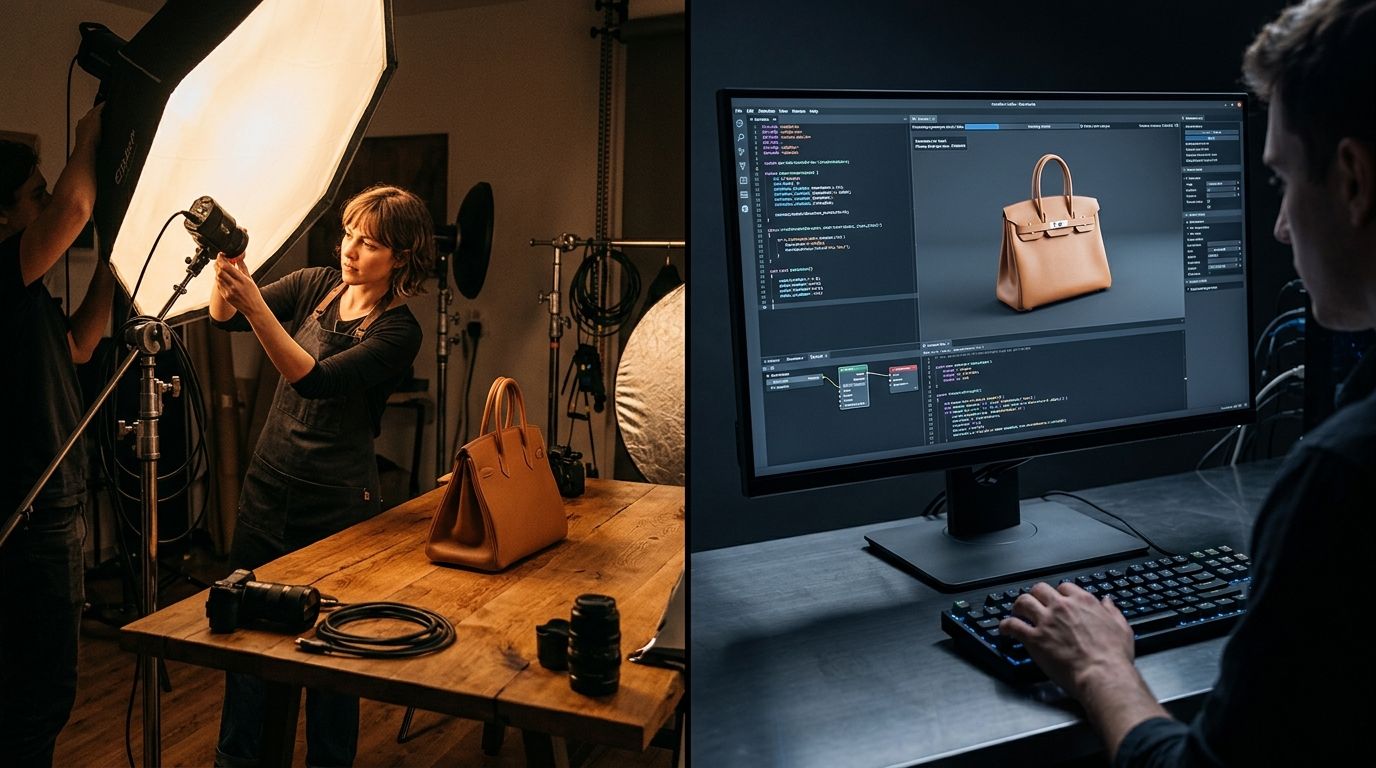
Choosing the right production partner dictates both your visual quality and your time to market.
This guide strips away the marketing fluff. We will look at exactly what you need to demand from an ecommerce photography service provider, the specific questions that reveal their true costs, and the precise moment when shifting to AI product photography becomes a mathematical necessity for your brand.
The reality of hiring an ecommerce photography agency
Founders usually start looking for an agency when they realize their in-house iPhone setup is hurting their conversion rate. They want a professional polish. They want consistency across their catalog. An agency promises to handle everything from styling to final retouching.
What are you actually paying for?
When you receive an agency quote, the bottom line number is rarely just the cost of pushing the shutter button. The invoice wraps several distinct fees into one heavy package. You are paying for the lead photographer, the lighting assistant, the stylist, the studio rental time, equipment insurance, and post-production editing.
(Worth noting: a good art director is worth their weight in gold for a major rebrand, but paying for their oversight on routine white background catalog shots is a massive waste of capital.)
Agencies inherently have high minimums. They cannot profitably spin up their entire machine for four new SKUs. This forces brands into a corner. You either delay launching new products until you have enough inventory to justify a full shoot day, or you pay a massive premium to get those few items photographed quickly. This bottleneck directly impacts your revenue.
What to look for in a product photography vendor
If you decide that your campaign requires physical production, you need to vet your agency rigorously. Do not just look at the mood board they present in the pitch meeting. You are entering a logistical partnership, not just an artistic one.
Portfolio relevance over portfolio flash
A beautiful portfolio of high-fashion editorial work means absolutely nothing if you sell stainless steel cookware. Lighting highly reflective surfaces is a technical skill that many lifestyle photographers do not possess. When reviewing an agency, demand to see entire galleries of past work in your specific category. You want to see the shots that did not make it to their Instagram feed. This gives you a true sense of their baseline quality.
The goal is securing assets that drive revenue. Focusing on aesthetics over function is a common trap. Reading up on creating product photos that actually convert will help you evaluate a portfolio based on sales metrics rather than just visual appeal.
Clear rights and licensing
Many brands learn about image licensing the hard way. They pay ten thousand dollars for a shoot, only to discover a year later that they only bought digital rights for twelve months. When they try to print those images on packaging or use them in a physical catalog, the agency demands more money. Always look for an agency that offers a complete commercial buyout as standard. If they push for usage rights based on time or medium, push back or walk away.
Questions you must ask before signing the contract
The sales call with a photography agency is designed to sell you on a vision. Your job is to pull the conversation down to operational reality. Vague answers at this stage will always cost you money during production.
"Who exactly is shooting my products?"
The bait and switch is a legendary agency tactic. The founder or lead creative director pitches the account. They show their personal portfolio. You sign the contract. Then, your actual products are handed off to a junior assistant photographer who joined the team three months ago. Ask directly for the name of the person operating the camera on your shoot days. If you are comparing an agency against the idea of evaluating a freelance product photographer, this transparency is critical. With a freelancer, what you see is always what you get.
"What is your reshoot policy?"
Things go wrong. A shadow falls strangely across your logo. The prop styling looks dated. You need to know exactly what happens next. A good agency will build one round of reasonable revisions into their contract. A difficult agency will point to the brief and claim that any deviation requires a new billable day rate. Clarify the exact line between a creative revision and a new request before you send them a deposit.
When should you use an agency vs AI for product photography?
Two years ago, this was not a conversation. Today, it is the most important operational decision an ecommerce brand can make. AI product photography completely changes the math of visual content creation.
Where the agency still wins
AI product photography struggles if you need a hyper-specific physical interaction, like a hand squeezing exactly two drops of serum from a dropper onto a very specific spot on a model's cheek. If your campaign relies on capturing complex human emotion interacting with a highly reflective, complex physical product in real time, you still need a human crew. Hero shots for Times Square billboards usually warrant the agency premium.
Where AI is the better value
For everything else, the agency model is failing brands. If you are launching a new supplement flavor, testing a fresh apparel colorway, or needing twenty new lifestyle images for your Instagram ads this week, an agency is too slow and too expensive.
This is exactly where CherryShot AI steps in. You simply upload a flat product image, select a visual mode like Minimalist or Lifestyle, and generate campaign-ready photos in minutes. The per-image cost drops to under $5. CherryShot AI pricing starts at just $10 for 50 images. You completely eliminate the scheduling dependency that historically added three weeks to every product launch.
The brands moving fastest right now are auditing their visual pipelines. For a deep dive into the financial reality, understanding the AI vs. studio photography cost difference reveals just how much margin is lost to traditional production methods.
| Feature | Traditional Agency | CherryShot AI |
|---|---|---|
| Cost per image | $80 to $200+ | Under $5 (Plans from $10) |
| Turnaround time | 2 to 4 weeks | Under 5 minutes |
| Minimum commitment | Half-day or full-day rates | No minimums, scale as needed |
| Best use case | Complex hero shots, physical modeling | Catalog scale, social assets, fast testing |
Building your photography agency brief
Whether you use an agency for a massive holiday push or stick with AI for daily operations, you need to know how to articulate visual requirements. A bad brief guarantees a bad outcome. "Make it look premium and modern" is not a brief. It is a wish.
Specificity saves margin
A professional brief leaves no room for interpretation. You must specify the lighting direction. You must define the harshness of the shadows. Do you want soft, diffuse morning light or harsh, high-contrast flash? Detail the specific camera angles required for every single SKU. Front straight on, 45-degree angle, detail macro shot. If you fail to list these, the agency will shoot what they think looks best, and you will pay for the reshoots when their vision does not match your website template.
Always include a "Do Not Do" list. Show examples of competitor photography that you despise. Tell the agency exactly what props, colors, and lighting styles they are forbidden from using. Guardrails are often more helpful than inspiration boards.
Key Takeaways
- Traditional agencies excel at complex, high-budget hero campaigns but drain margins on standard catalog work.
- Always demand full commercial buyout rights in your agency contract to avoid future licensing fees.
- Never accept a quote without asking exactly who will be operating the camera on shoot day.
- AI generation replaces the logistical nightmare of scheduling shoots for routine product launches.
Frequently Asked Questions
How do I choose an ecommerce photography agency?
Select an ecommerce photography agency by rigorously evaluating their specific experience with your product category, comprehensive licensing terms, and detailed pricing structures. Securing a complete gallery from a recent client rather than a curated highlight reel reveals their true baseline quality and consistency. Guarantee your standard contract includes full commercial buyout rights so you avoid paying royalties every time you upload the image to a new platform.
What questions should I ask a photography agency?
Demand to know exactly which photographer will be operating the camera during your shoot since agencies frequently use senior talent to pitch and junior staff to execute. Clarifying the reshoot policy prevents unexpected charges by defining the exact difference between a creative revision and a new billable request. Request a detailed breakdown of all costs beyond the baseline day rate, including equipment rentals, studio fees, product handling, and post-production retouching.
How much does an ecommerce photography agency cost?
Standard catalog work from an ecommerce photography agency costs between $80 and $200 per finished image, while complex lifestyle or hero campaigns exceed $500 per shot. These vendors base their pricing on day rates ranging from $1,500 to $5,000, plus hidden fees for styling, studio space, and post-production retouching. Attempting to shoot a handful of new SKUs triggers high minimum engagement fees that drastically inflate your actual per-image expense.
When should I use an agency vs AI for product photography?
Hire an agency for highly specific physical interactions, like a hand demonstrating a precise application technique or capturing complex multi-product compositions for large billboard displays. Transition to AI product photography for daily operational requirements, such as launching new SKUs, testing fresh colorways, or generating lifestyle content for social media at high volume. Replacing traditional shoots with generation software drops your per-image cost to a few dollars and produces campaign-ready assets in under five minutes.
What should I include in a photography agency brief?
A professional photography agency brief dictates exact lighting preferences, shadow hardness, specific camera angles, and forbidden styling props. Supplying visual references of both required aesthetics and rejected competitor styles prevents the vendor from interpreting the creative direction incorrectly. Detailing exact crop ratios, required file formats, and the precise number of images needed per SKU eliminates ambiguity in the final invoice.
The era of tolerating bloated agency schedules just to get a clean lifestyle image is ending. Brands that hold onto that old model will bleed margin while their competitors iterate faster. If you are tired of negotiating over revisions and waiting weeks for assets, explore what your catalog looks like through CherryShot AI. Upload a product, select a mode, and get the images you actually need today at cherryshot.ai.
Test an AI generation before paying your next studio deposit
Take one of your current flat product photos and run it through a digital lifestyle generation right now. Compare the speed and visual output directly against your last agency shoot before committing your budget to another physical day rate.
Try CherryShot AI