How to Improve Ecommerce Conversion Rate: The 8 Product Page Changes Ranked by Speed of Revenue Impact
Every time a founder asks me how to improve ecommerce conversion rate, they are usually looking at the wrong numbers. They want to test button colors or change the font on their price tags. That is optimization theater. The fastest way to boost ecommerce conversion is to look at the exact moment a user decides your product is not worth the risk. Usually, that happens within three seconds of landing on your site.
Definition
Ecommerce conversion rate is the percentage of website visitors who complete a desired action, typically purchasing a product. Improving this metric involves systematically removing navigational friction, clarifying product details, and building trust to convince more existing traffic to buy.
If you are sitting at a 1.2% conversion rate and trying to reach 2.5%, moving your cart button five pixels to the left will not get you there. Massive leaps in ecommerce conversion rate improvement come from eliminating massive points of friction. You have to rank your changes by the speed of revenue impact. Some updates take three weeks of careful observation to prove a fractional lift. Other changes double your daily metrics by tomorrow afternoon.
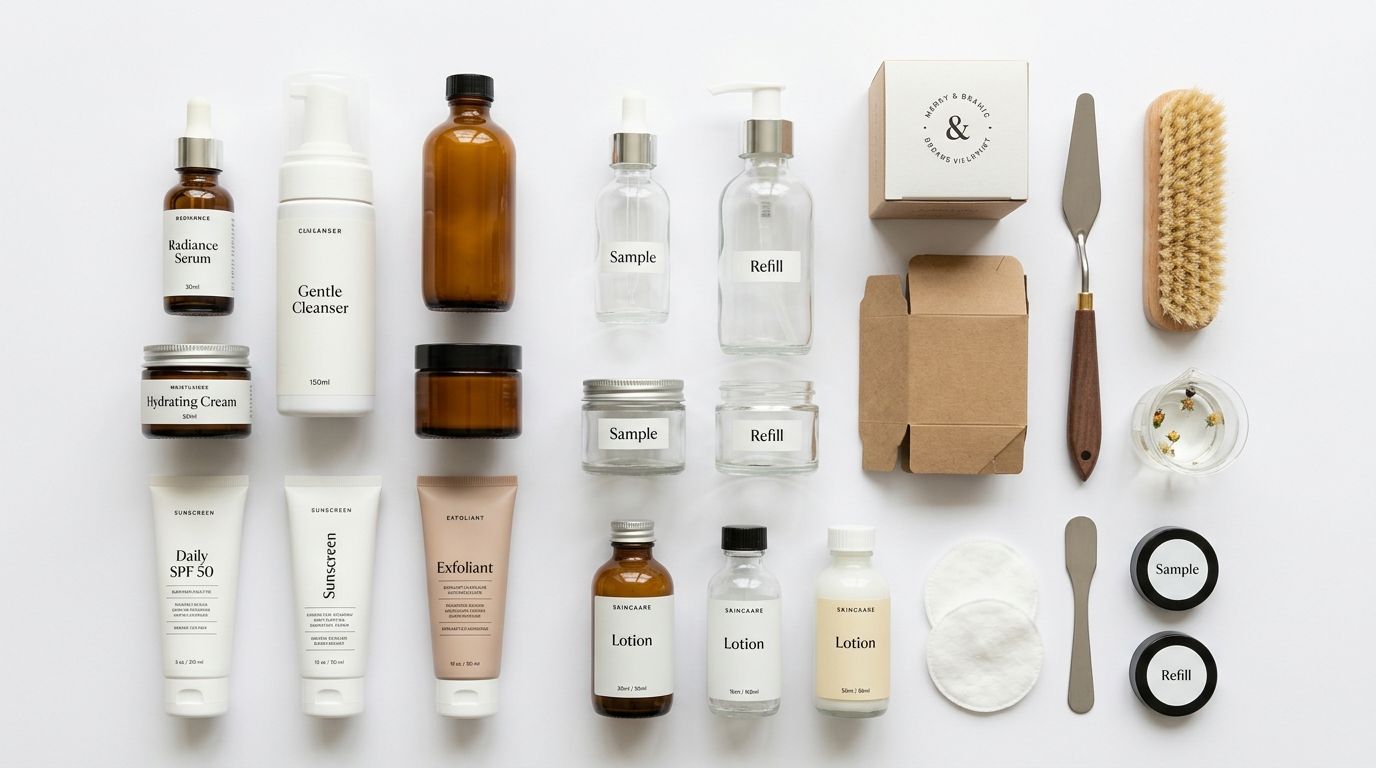
You cannot fix everything at once. You need a hierarchy of operations. Here are the eight product page changes that actually move the needle, ranked strictly by how fast you will see the revenue hit your dashboard.
| Optimization Category | Common Adjustments | Time to Revenue Impact |
|---|---|---|
| Visual & Trust | Upgrading product images, matching ad creative, localizing policies | 24 to 48 Hours |
| UX & Layout | Implementing sticky add-to-cart, structuring bulleted copy | 2 to 5 Days |
| Structural Code | Page speed optimization, complete checkout flow redesigns | 2 to 4 Weeks |
1. Align Your Ad Creative With Your Landing Page (Impact: Immediate)
Why the visual gap kills sales
The single fastest way to destroy your conversion rate is to promise one aesthetic in your ad and deliver a completely different aesthetic on your product page. When a customer clicks a gritty, user-generated TikTok ad and lands on a clinical, sterile product page, the cognitive dissonance kicks in instantly. They assume they clicked the wrong link or ended up on a scam site. Closing the visual gap costing sales is a mandatory first step.
If your top-performing ad features the product in a lifestyle setting, your primary product image needs to mirror that exact setting. This simple continuity check prevents the immediate bounce that plagues so many high-traffic Shopify stores.
2. Upgrade Primary Product Images (Impact: Immediate)
Friction starts with bad pixels
Product images are the only proxy your customer has for the physical item. They cannot touch the fabric or hold the weight of the object. If your images are poorly lit, lack multiple angles, or fail to show scale, the customer will not buy. It is that simple.
Founders used to accept mediocre imagery because fixing it meant organizing a massive logistical nightmare. If you had to schedule a studio, hire a photographer, and wait three weeks for edits, you lived with the bad photos. That excuse is entirely dead in 2026. Tools like CherryShot AI let you upload a simple flat image and generate high-end, campaign-ready lifestyle shots in minutes. Better visuals translate immediately to higher perceived value.
We see this constantly when brands finally commit to optimizing Shopify product page images for conversion. The moment they swap out dull, isolated studio shots for rich, contextual imagery, their add-to-cart metrics spike.
3. Localize Your Trust Signals (Impact: 24 Hours)
Generic badges do not work anymore
Slapping a generic secure checkout lock icon next to your buy button worked a decade ago. Today, consumers are blind to them. If you want trust signals to actually improve ecommerce cvr, they need to address specific logistical fears.
The modern trust signals that work are hyper-specific. Showing a dynamic cutoff time for next-day shipping based on the user location builds real urgency. Displaying a localized return policy directly under the price removes purchase hesitation. If a buyer knows exactly when the item will arrive and exactly how easy it is to return, their likelihood of completing the checkout flow increases dramatically.
4. Restructure Product Descriptions for Scanning (Impact: 24 Hours)
Stop writing walls of text
Nobody reads a three-paragraph product description. They scan it to confirm technical details and dimensions. If your product descriptions require serious mental effort to digest, you are losing sales on mobile devices.
Break your copy down into scannable bullet points. The first bullet should address the primary problem the product solves. The second should detail the material or build quality. The third should state the dimensions or fit. Hide the poetic brand story below the fold. Prioritize the data the buyer needs to justify the purchase to themselves right now.
5. Streamline the Checkout Flow Entry (Impact: 48 Hours)
Do not make them hunt for the button
On mobile, the add-to-cart button often gets pushed below the fold by massive image carousels or lengthy promotional banners. This is a fatal layout error. Implementing a sticky add-to-cart button that remains at the bottom of the screen as the user scrolls guarantees that the moment of intent is always one tap away.
Furthermore, removing the requirement to create an account before purchase is non-negotiable. Guest checkout paired with express payment options like Apple Pay or Shop Pay removes typing from the equation. The less typing required on a glass screen, the more money you make.
6. Optimize Page Speed and LCP (Impact: Days)
Speed is a feature
A slow site bleeds revenue. Every second your Largest Contentful Paint takes to load, your drop-off rate increases exponentially. Compressing your images, utilizing modern formats like WebP, and lazy loading assets below the fold are fundamental steps in ecommerce conversion rate improvement.
There is a genuine trade-off here that must be acknowledged. Achieving a perfect mobile speed score often requires stripping away rich video media or heavy interactive elements that actually help sell the product, forcing founders to make a difficult choice between raw performance and persuasive design. The goal is balance. Keep the page light enough to load instantly on cellular networks, but retain enough visual density to convince the buyer the product is premium.
7. Deploy Heat Maps for Friction Identification (Impact: 1 to 2 Weeks)
Look at what they actually do
You cannot fix a leak if you do not know where the pipe is broken. Tools like Microsoft Clarity or Hotjar let you watch recorded sessions of your visitors. This is how you find the silent killers of your conversion rate.
When you review heat maps, look for rage clicks. A rage click happens when a user rapidly taps an element that they believe should be a link, but is not. Look at how far the average user scrolls. If ninety percent of your mobile traffic never scrolls past the hero image, all the persuasive copywriting at the bottom of your page is completely useless.
Poor visual flow often leads directly to returns as well. We have documented exactly how product photos affect e-commerce return rate when critical product details are buried in sections that heat maps prove nobody ever reads.
8. Run Meaningful A/B Testing on Structure (Impact: Weeks to Months)
Test layouts, not just colors
A/B testing is incredibly powerful, but it ranks last for speed of impact because it requires time and volume to reach statistical significance. (If you have two hundred visitors a day, an A/B test will take six months to yield reliable data, making it functionally useless for rapid decision making).
If you have the traffic, stop testing minor copy changes. Test entirely different structural concepts. Test a long-form landing page versus a traditional collection page. Test hiding the price until the user selects a variant versus showing the price immediately. Broad structural changes provide the kind of decisive data you need to formulate your strategy for the rest of the quarter.
Key Takeaways
- Align your landing page visuals perfectly with your ad creative to prevent instant bounce rates.
- Upgrade blurry catalog imagery to high-quality lifestyle context to build immediate subconscious trust.
- Replace generic security badges with localized, hyper-specific shipping and return data.
- Implement sticky add-to-cart buttons on mobile to capture intent at any scroll depth.
Frequently Asked Questions
What is the fastest way to improve ecommerce conversion rate?
The fastest way to improve your conversion rate is to upgrade primary product visuals to match your ad creative perfectly. When the imagery on the landing page mirrors the exact aesthetic the customer clicked on, immediate drop-offs fall drastically. Swapping out misaligned or generic studio photos for contextual lifestyle assets impacts daily revenue the moment you push the changes live.
How do product images affect ecommerce conversion rate?
Product images act as the primary mechanism for transferring trust from the digital screen to the cautious buyer. Shoppers cannot physically touch the item, making them rely entirely on visual cues to assess material quality, realistic scale, and texture. Replacing blurry or poorly lit catalog photos with high-resolution contextual shots eliminates subconscious friction before the customer even reads the price.
What is the single most impactful ecommerce CRO change?
Eliminating navigation friction between the add-to-cart button and the final payment confirmation generates the highest impact on conversions. Sending highly qualified traffic to a landing page wastes money if the checkout flow creates unnecessary hurdles at the moment of intent. Removing mandatory account creation requirements and defaulting to express payment options like Apple Pay captures sales that would otherwise bounce.
How long does it take to see improvement in ecommerce conversion rate?
Visual and trust-based design updates show clear and measurable revenue impact within twenty-four to forty-eight hours of deployment. Modifying the layout hierarchy or replacing generic product photography directly influences buyer behavior during the very next recorded visitor session. Deep structural changes involving checkout flow recoding or fundamental database migrations require a minimum of two weeks of steady traffic volume to verify statistical significance.
Improving your ecommerce conversion rate is not a mystical process of guessing what the customer wants. It is a systematic teardown of the barriers preventing them from buying. Fix your primary imagery, align your ad flow, and get your checkout out of their way. The revenue will follow.
Audit your product page images before your next campaign
Review your top three traffic-generating landing pages right now and compare the hero images to the ad creative driving the clicks. If the visual aesthetic breaks, you are losing sales to immediate cognitive friction. Generate contextual lifestyle assets with CherryShot AI to bridge that gap and capture lost intent.
Try CherryShot AI