How to Increase Average Order Value in Ecommerce: The Visual Merchandising Strategies That Move the Number
The most profitable way to increase average order value in ecommerce is visual merchandising. Instead of bribing customers with discount thresholds, you show them exactly why they need the complementary product. You do this by integrating cross-sell items directly into your primary product photography. When shoppers see the matching belt styled with the trousers in the main image carousel, the add-to-cart friction drops. You shift the conversation from a forced upsell to a natural aesthetic choice.
Definition
Average order value (AOV) is an ecommerce metric that tracks the average dollar amount spent each time a customer places an order. It is calculated by dividing total store revenue by the number of orders over a specific time period. Monitoring this number helps merchants understand purchasing behavior and measure the effectiveness of their cross-selling strategies.
The fastest way to destroy your profit margin is using a basic discount banner as your only AOV strategy. Bribing a customer to spend ten more dollars by giving them fifteen percent off the entire cart makes your top line look great and your bottom line look terrible. It trains your most loyal buyers to hold their orders until a promotion hits.
Real average order value optimization relies on desire, not math. You have to visually convince the user that the primary item they came to buy is simply better when paired with the secondary item. That requires getting your product page AOV tactics out of the text descriptions and into the image stack.
Why discount-based average order value optimization hurts your brand
When you run an ecommerce brand, the pressure to hit monthly revenue targets is relentless. The easiest lever to pull is the promotional lever. You set up a rule in your cart software that triggers a popup: Add $15 to unlock free shipping, or spend $100 to get $20 off.
I admit freely that this tactic works incredibly well in the short term. The conversion rate spikes. The order value creeps up. But there is a massive trade-off happening behind the scenes.
You are slowly eroding your brand equity. When you rely exclusively on financial incentives to boost AOV online store metrics, your products become commodities in the eyes of the consumer. They are no longer buying a premium leather bag. They are buying a deal. If they come back next month and the deal is gone, they bounce.
(Worth noting: free shipping thresholds are the one exception here. Consumers have been conditioned by massive marketplaces to view shipping costs as a penalty. A free shipping threshold remains a mathematically sound way to bump cart sizes without damaging your brand identity.)
To protect your margin, you need to implement ecommerce AOV strategies that focus on product utility and aesthetic value. You need to master the visual upsell.
How visual merchandising changes the AOV equation
Visual merchandising is how brick and mortar stores have driven massive average order values for decades. When you walk into a high-end retail shop, they do not just hang a shirt on a rack. They put the shirt on a mannequin, layer a jacket over it, add a necklace, and place matching shoes at the base. They sell the complete look.
Online, we often forget this. We isolate the product on a stark white background and expect the customer to use their imagination to build the outfit or the routine.
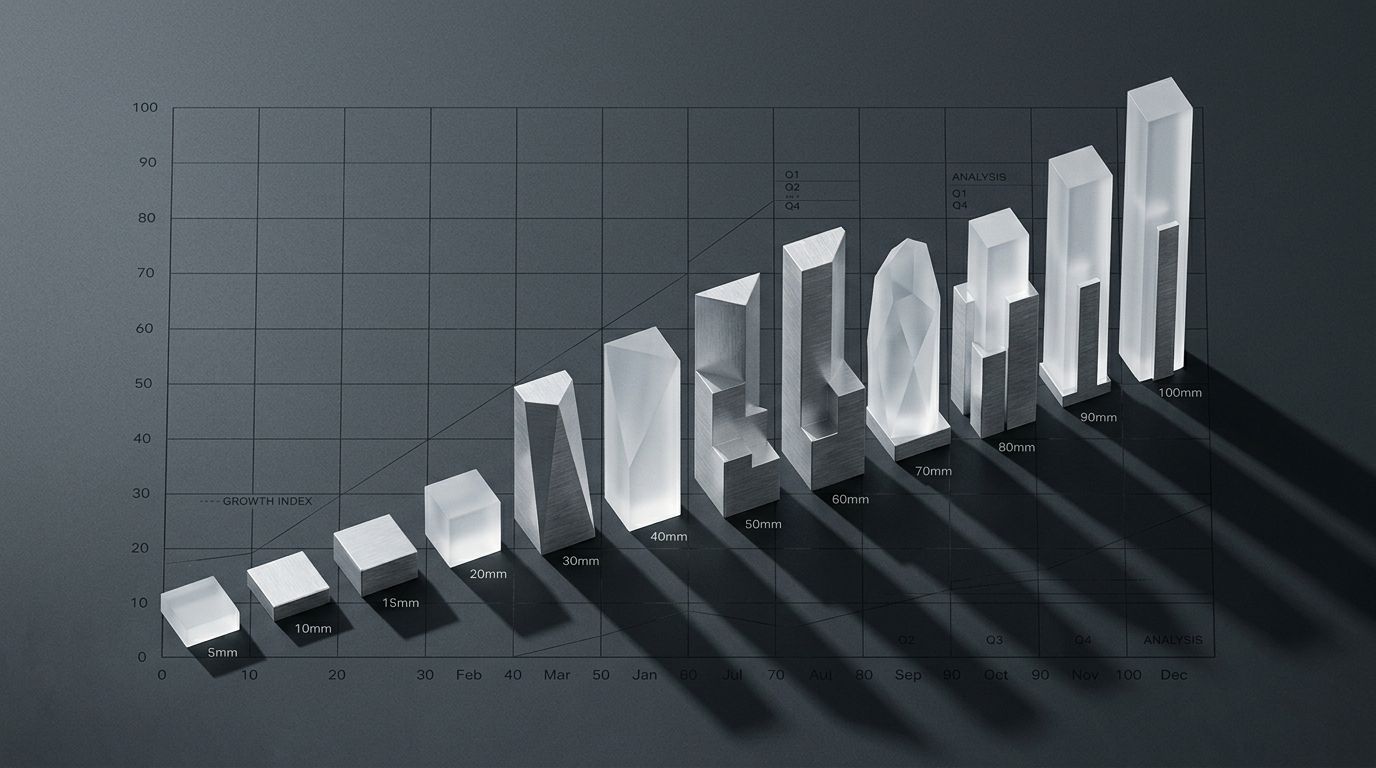
Showing products styled together reduces the cognitive load required to make a bundle purchase.
The psychology of the visual upsell
A visual upsell works because it bypasses the logical, mathematical part of the brain that calculates discounts and taps directly into the aspirational part of the brain. When a customer sees a beautifully styled photograph of a three-step skincare routine sitting perfectly on a marble bathroom vanity, they do not want just the cleanser anymore. They want the entire aesthetic.
This is exactly where understanding the elements of converting product photos becomes your strongest competitive advantage. A strong product photo does not just document what the item looks like. It documents how the item improves the buyer's life.
Specific product page AOV tactics you can deploy this week
Knowing that visual context works is only the first step. You have to actually implement these concepts into your Shopify or WooCommerce store. Here are the specific visual tactics that increase average order value for modern brands.
Bundle photography that makes sense
If you want people to buy a bundle, you must show them the bundle. This sounds painfully obvious, but look at your competitors. Most brands sell product bundles by displaying a grid of individual thumbnail images next to each other.
You need dedicated bundle photography. If you sell a camera, a strap, and a carrying case as a starter kit, your main product image needs to be a beautifully composed flat lay of all three items together. The customer needs to see the physical mass of what they are buying. Seeing three items grouped in one cohesive shot feels like significantly more value than seeing three disjointed images.
The cross-sell visual in the main carousel
Stop relying on the "You May Also Like" widget at the very bottom of your product page. Most users never scroll down that far. The battle for AOV is won or lost in the primary image carousel.
If you are selling a dining room table, image number four in your carousel should be a lifestyle shot of that table surrounded by the matching chairs you also sell. You add a simple text overlay to the image: "Complete the room with the Oak Dining Chairs." When you link the product photography and AOV directly in the user's primary line of sight, the conversion rate on the secondary item skyrockets.
Showing scale and utility together
Sometimes the best way to boost AOV is to show the customer that they need more than one of the exact same item. This is crucial for brands selling organizational tools, storage containers, or modular furniture.
Do not just show one storage bin on a shelf. Show a pantry lined with twelve of them. When the customer sees the visual impact of the fully organized space, the decision changes from buying two bins to buying eight. The visual merchandising AOV impact here is staggering because you are anchoring their expectation to a larger quantity.
Comparing AOV Strategies
| Metric | Discount-Led Strategy | Visual Merchandising |
|---|---|---|
| Profit Margin Impact | Negative. You sacrifice margin to gain volume. | Positive. You sell more items at full retail price. |
| Brand Perception | Often cheapens the brand if overused. | Elevates the brand through premium aesthetics. |
| Implementation Speed | Instant. Can be turned on in five minutes. | Requires new image generation and gallery updates. |
Building an AOV strategy around your product catalog
You cannot force a cross-sell that does not make sense. If a customer is buying a heavy winter coat, showing them a visual of a swimsuit will not increase your order value. You have to map out natural pairings across your catalog.
Identifying natural pairings
Look at your past purchase data. What items do people organically buy together when no discount is offered? Those are your priority visual targets. If thirty percent of people who buy your espresso machine also buy the knock box, you need a lifestyle image showing both products sitting together on a kitchen counter.
This approach ties directly into how lifestyle photography elevates brand perception. You are no longer just a store selling individual widgets. You are an authority showing the customer how to build a better life, a better outfit, or a better home.
How to boost AOV online store metrics without endless studio shoots
The biggest roadblock to implementing visual merchandising online has always been the production cost. Reshooting your entire catalog to show different bundle combinations used to mean renting a studio, hiring an art director, and spending weeks in post-production. It is simply too slow and too expensive for a brand launching new SKUs every quarter.
This is exactly the bottleneck CherryShot AI removes. You do not need to physically place your matching belt and trousers together in a studio to get a campaign-ready shot. You upload the individual product images, select a visual mode that matches your brand aesthetic, and generate lifestyle combinations in minutes.
You can test different visual cross-sells on your product pages by Tuesday afternoon. If the coffee cup and saucer bundle image does not lift the average order value, you generate a new shot pairing the cup with the coffee beans instead. When the cost per image drops from hundreds of dollars to under five dollars, you can actually afford to optimize your visual merchandising the same way you optimize your ad copy.
Increasing average order value without relying on discounts is entirely possible. It just requires changing how your customers see your products. Give them the visual context they need to justify the larger purchase, and the math will take care of itself.
Frequently Asked Questions
What is average order value in ecommerce?
Average order value is your total store revenue divided by the total number of orders placed within a specific timeframe. This core financial metric represents the exact dollar amount a single buyer spends during one checkout session on your site. Increasing this baseline number allows you to grow your overall profitability without needing to pay for new customer acquisition traffic.
How do I increase average order value without discounting?
You increase average order value without discounts by implementing visual merchandising and strategic product pairings across your site. Instead of offering a percentage off for higher spending, you show the customer complementary goods integrated directly into the lifestyle imagery of the primary item. Presenting items together naturally removes purchasing friction and proves the aesthetic value of buying the complete set.
Does product photography affect average order value?
Product photography directly impacts your average order value by shaping the visual context of the entire purchase. A shopper viewing an isolated item against a stark white background naturally considers buying only that single product. Placing that primary item alongside matching accessories in a high-quality lifestyle shot actively prompts the buyer to add the complete styled system to their cart.
What visual tactics increase average order value?
Effective visual tactics include in-carousel bundle photography, lifestyle scale shots featuring complementary accessories, and styled flat lays demonstrating multi-step routines. Moving your cross-sell offers out of text-based recommendation widgets and into the primary image gallery drives immediate visual upsell conversion. Adding a dedicated flat lay image of all bundled items ensures the customer grasps the total physical mass of their purchase.
What is the average AOV for ecommerce?
The average order value across global ecommerce typically hovers between eighty and one hundred twenty dollars depending on the market sector. Apparel and cosmetics frequently sit on the lower end of that spectrum unless you package them into logical sets. Your priority must always be exceeding your own historical sales data rather than trying to match a generic industry benchmark.
Key Takeaways
- Visual merchandising drives AOV without sacrificing your profit margin or cheapening your brand identity.
- Move your cross-sell strategies out of text widgets and directly into the primary product image carousel.
- Dedicated bundle photography reduces cognitive load and helps shoppers visualize the combined value of multiple items.
- AI generation allows you to create high-converting lifestyle bundle shots without booking expensive traditional studio time.
Stop relying on margin-crushing discounts to force your cart sizes up. Give your customers the visual context they need to make the confident, higher-value purchase. If you are ready to generate those bundle shots without the studio overhead, CherryShot AI is ready to build them for you.
Generate lifestyle bundle shots for your next campaign
Audit your highest-traffic product pages and identify one complementary item that serves as a logical cross-sell. You can instantly create high-quality lifestyle images featuring both products styled together, without booking a traditional studio. Upload your isolated product shots into CherryShot AI to build and test a visual bundle on your store today.
Try CherryShot AI