How to Reduce Clothing Returns Online: The Photography Changes That Work Before the Return Policy Does
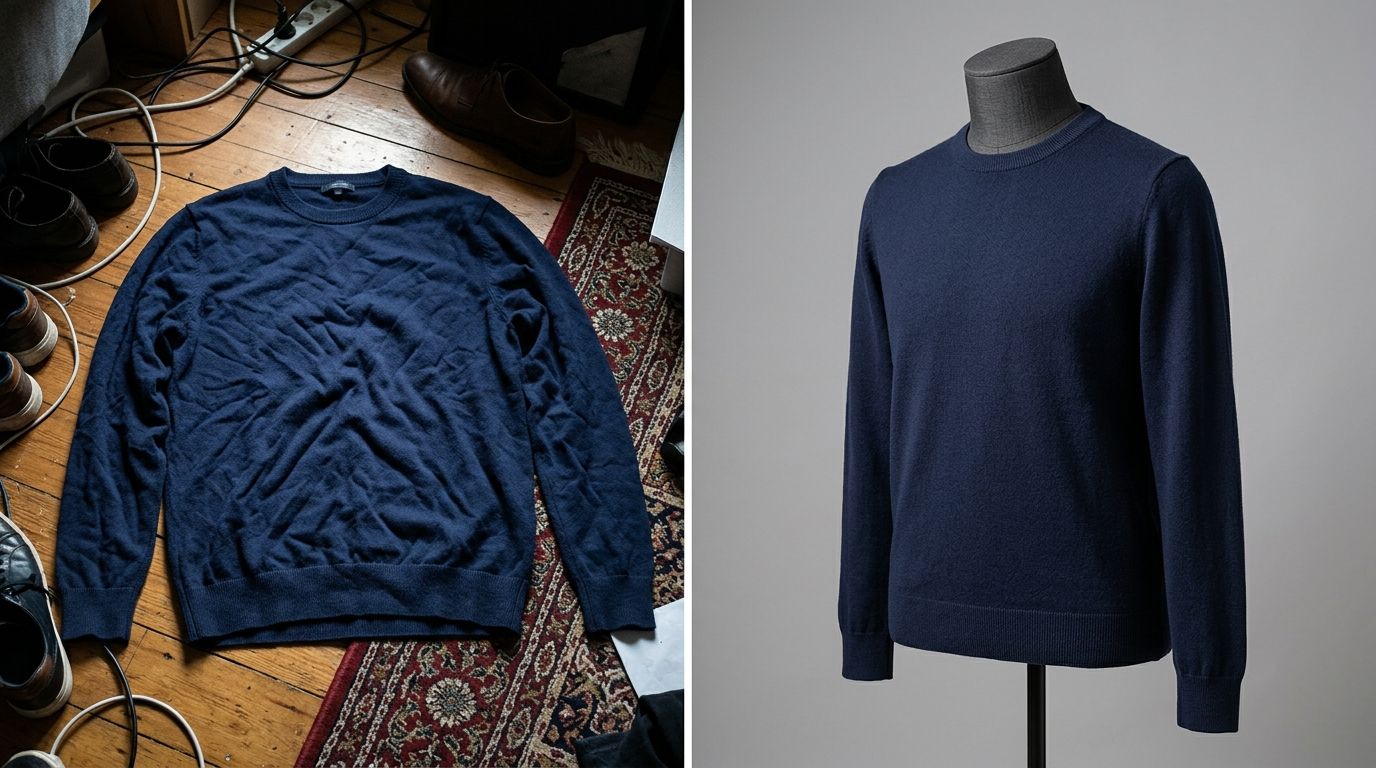
How do you reduce online clothing returns? Stop selling an idealized version of the garment. The moment a customer opens a package and the dress is thinner, brighter, or shorter than your product page promised, you have already lost the margin on that sale. Tinkering with your return window will not save you. Fixing your fashion photography is the only preventative measure that actually protects your bottom line.
Definition
Online clothing returns represent the reversal of an ecommerce transaction where a customer sends an apparel item back to the retailer, usually due to poor fit or visual misrepresentation. This process drains profit margins by introducing reverse shipping costs, warehouse restocking labor, and potential inventory depreciation.
Most founders look at their return rate and immediately blame the customer. They assume buyers are ordering three sizes just to treat their bedroom like a personal fitting room. That behavior does happen. (It is a genuine reality of modern retail that some shoppers will always bracket their purchases.) But serial bracketing is not the main driver of your refund volume. The visual gap on your website is the real culprit. Every time a customer returns an item because it looked different online, they are telling you that your product page lied to them.
The damage is done the exact second they click the Add to Cart button under false pretenses. The best return software in the world only manages the bleeding. Better photography stops the cut from happening in the first place.
Key Takeaways
- Return policies manage refunds, but honest photography prevents them entirely.
- Flat lay photography creates unrealistic fit expectations that drive up return rates.
- Directional lighting is required to show fabric weight and material texture accurately.
- Pinning garments on models artificially changes the silhouette and guarantees poor fit upon delivery.
Why most clothing return prevention strategies fail
I have sat through dozens of post-mortem meetings where the marketing team blames the product team for a high return rate, and the product team blames the warehouse. No one wants to look at the actual images on the site. Instead, the operations team tries to fix the problem by changing the return policy. They shorten the return window from thirty days to fourteen. They start charging a six-dollar restocking fee.
These tactics do successfully discourage a small percentage of returns. But they also drastically lower your conversion rate. When you make returning an item feel like a punishment, new customers simply refuse to buy from you. You have traded a logistics problem for a revenue problem.
The disconnect between marketing and reality
Your marketing imagery is designed to sell a lifestyle. Your product imagery must be designed to sell the physical truth of the garment. If your ads feature a highly stylized, color-graded editorial shot, but your product page fails to show the boring realities of the seams and the fit, the customer fills in the blanks with their imagination. The visual gap on product pages is where your profit margin goes to die. Customers buy the fantasy. They return the reality.
How to fix colour accuracy in fashion photography
Colour inaccuracy is the most frustrating reason for a return because it is entirely preventable. When a photographer shoots a navy blue dress with four massive strobes, that dress looks brilliant in the studio. The camera sensor captures a vibrant, perfectly saturated blue. The retoucher bumps the contrast to make it pop on Instagram. The image goes live on your Shopify store.
A customer buys it. Three days later, they open the poly mailer in their kitchen. Under normal residential LED bulbs, that brilliant navy looks dull, dark, and almost black. They pack it right back up. They print the label. You lose money on the shipping, the handling, and the lost sale.
The lighting and grading trap
Certain fabrics shift color depending on the light source. Navy blue, forest green, and neon shades are notoriously difficult to capture accurately. Neon colors often clip on digital sensors and look radioactive online. You have to rein these colors back in during post-production.
To achieve clothing return prevention, your ecommerce team must standardize their color grading. You need a physical color checker passport in the first frame of every new setup. You must calibrate your monitors. You have to match the digital image to the physical garment under daylight-balanced bulbs before exporting. Do not let the art director make the photo look prettier. Make the photo look accurate.
Fabric texture photography that sets realistic expectations
Online shoppers cannot touch your clothes. They cannot run their hands over a sweater to feel if it is scratchy wool or soft cashmere. They cannot tug on a waistband to test the elasticity. Your photos have to do all the heavy lifting.
Flat, even lighting destroys texture. It blasts away the micro-shadows that give fabric its character, making everything from silk to cheap polyester look exactly the same on a screen.
Capturing weight and drape
To show the weave of a heavy knit sweater, you need directional lighting. You bring the main light to the side of the garment. This casts tiny, hard shadows across the yarn. Suddenly, the image has depth. The customer can practically feel the weight of the garment through their phone.
You also need to show the opacity. If you are selling a white summer t-shirt, put a hand behind the fabric in one of the detail shots. Let the buyer see exactly how sheer the material is before they buy it. Leaving these specific material questions unanswered leads directly to a spike in your fashion ecommerce return rate.
Showing fit through honest model sizing
Using only a size two model for a brand that sells up to a size twenty is a critical mistake. Buyers cannot mentally map a size two body onto their own frame. They try to guess their correct size based on a chart. They guess wrong. They return the item.
A size guide is ultimately just a spreadsheet, and most consumers do not know their exact chest or inseam measurements. They need a visual anchor. Fit photography solves this by putting the height and wearing size of the model directly in the image caption.
The gap between the size guide and reality
Stylists love binder clips. On a traditional set, they will pinch the back of a loose shirt with clips to give it a tailored waist. They tape hems so they fall perfectly straight. This is a total disaster for clothing return prevention. You are selling a silhouette that the physical garment does not actually possess. When the customer puts it on at home, it looks boxy. They assume the item is defective. Shoot the garment exactly as it naturally falls.
If you want to understand how product photos affect return rate across your catalog, look at the difference in refund volume between items shot on flat lays versus items shot on diverse models.
| Photography Style | Production Cost | Impact on Returns | Best Used For |
|---|---|---|---|
| Flat Lay | Low | High risk of poor fit expectations | Basic accessories, folded t-shirts |
| Ghost Mannequin | Medium | Moderate risk, shows no body context | Technical outerwear, rigid jackets |
| On-Model | High | Lowest risk, provides exact fit context | Dresses, tailored pants, activewear |
Booking three different physical models for every single SKU is financially impossible for most emerging brands. That is a very real limitation of traditional studio photography. However, you can now use virtual models for clothing to display the same dress on multiple body types. With CherryShot AI, you can take a standard product image and generate it across different model sizes instantly, giving your customers the visual context they need to pick the right size the first time.
Required product detail shots for returns reduction
You cannot just upload four full-body shots and consider the product page complete. You need macro photography. Show the zipper pull. Show the specific stitching on the collar. Show the inside lining of the jacket.
The seams, the hardware, and the hem
Premium pricing requires premium proof. If you charge two hundred dollars for a jacket, the customer expects flawless hardware. If they cannot see the hardware clearly online, they will doubt the quality. If they buy it anyway and the zipper feels cheap when it arrives, they return it out of spite.
Always show the hemline in relation to the body. Tell the customer exactly where the garment ends. A cropped shirt looks entirely different on a person with a long torso compared to someone with a short torso. Honest, detailed photography forces the customer to make an informed decision rather than an optimistic guess.
Frequently Asked Questions
Why do online clothing purchases get returned so often?
Poor fit and inaccurate product representation drive the vast majority of online clothing returns. Customers make styling decisions based on images that heavily feature bright studio strobes, hidden back pins, and aggressive color grading which completely alter the garment. You must eliminate artificial styling techniques during photoshoots and shoot under daylight-balanced bulbs to show the exact drape, texture, and true color the buyer will receive.
What photography changes reduce clothing returns the most?
Displaying garments on diverse human models under realistic lighting reduces refund volumes faster than any other visual adjustment. Flat lays and ghost mannequins completely fail to communicate how a specific fabric stretches across different body types or where a hemline actually falls in motion. Add close-up macro shots of the material weave and hardware alongside unpinned, naturally draped model images to set accurate physical expectations prior to checkout.
How do I show fabric texture accurately in product photos?
Shooting with hard, directional side lighting instead of flat front flashes reveals the exact physical weave of your apparel. This specific off-axis lighting technique creates tiny micro-shadows across the material surface that instantly communicate whether the underlying thread is thick, sheer, stiff, or comfortably soft. Always include at least one extreme macro photograph featuring a hand physically stretching or draping the textile to prove its true weight and elasticity.
Does showing clothes on models reduce returns compared to flat lay photography?
Replacing flat lay photography with accurate on-model imagery drastically decreases your monthly return rate by providing crucial sizing context. A folded shirt resting on a white table forces shoppers to guess how the fabric will actually drape, stretch, or cling across their unique bodily proportions. Photographing your inventory on real humans clearly demonstrates exactly where hems hit the ankle and how shoulder seams sit, preventing the sizing errors that trigger immediate refunds.
Reducing online clothing returns is not about tricking the customer into keeping a product they hate. It is about ensuring they never buy the wrong product in the first place. When you upgrade your photography to prioritize honesty over pure aesthetics, your return rate drops naturally. Give your customers the truth, and your margins will protect themselves.
Generate on-model images for your highest-returned SKUs
Identify the products in your catalog that generate the most sizing complaints and check if they rely on flat lay photography. You can use CherryShot AI to instantly generate realistic model imagery for those exact items without booking a new casting call. Provide the necessary fit context your buyers need to confidently select the correct size.
Try CherryShot AI