Jewelry Photography for Ecommerce: The Lighting, Macro, and AI Techniques That Make Jewelry Sell
Jewelry is the most unforgiving category in ecommerce photography. You are dealing with tiny, highly reflective objects that magnify every speck of dust and bounce every stray light source right back into the lens. Most founders I know have spent thousands on inventory only to launch with product photos that make their pieces look flat and cheap. If your physical product is beautiful but your online catalog looks dull, you have a production problem. You fix it by controlling your light sources, mastering specific macro techniques, and utilizing AI to generate lifestyle context at scale.
Definition
Jewelry photography for ecommerce is the specialized practice of capturing highly detailed, accurate images of rings, necklaces, and watches for online stores. It requires strict control over lighting and reflections to properly render small metallic surfaces and gemstones without harsh glare. The goal is to provide buyers with clear visual proof of the item's quality, scale, and exact color.
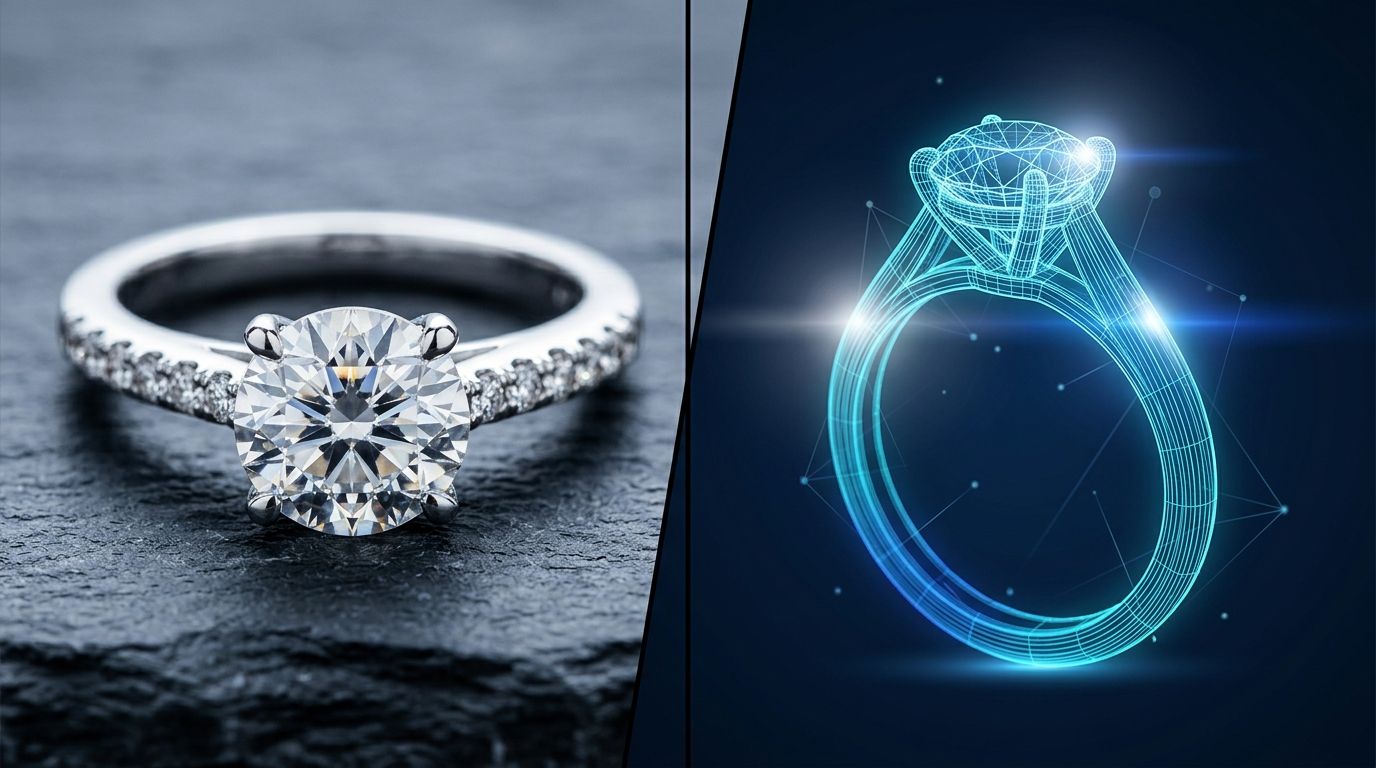
The Reality of Jewelry Photography Ecommerce Operations
A standard camera kit simply cannot shoot fine jewelry. If you try to crop in on a ring with a standard lens, you lose all resolution and the image falls apart on retina displays. You need a dedicated 1:1 macro lens. The 100mm macro is the industry standard because it allows you to fill the frame with the product while keeping the camera far enough back to position your lighting.
But macro lenses introduce a severe physics problem regarding depth of field. If you shoot a diamond ring at an aperture of f/2.8, the front prong might be razor sharp while the back of the band blurs into a messy gray gradient. To get the entire piece of jewelry in focus, you have to stop your aperture down to f/11 or even f/16. Narrow apertures restrict light entering the camera. Because of this, you require massive amounts of continuous light or powerful studio strobes.
The obvious trade-off here is focus stacking. You can shoot ten separate frames at different focus points and merge them in post-production for front-to-back sharpness, but this multiplies your editing time by a factor of ten. If you want to achieve fine detail in jewelry photos without that level of tedious daily editing, you must invest heavily in your lighting architecture.
The lighting trap for gold and silver
Direct light destroys jewelry photography. If you point a bare flash or a bright LED directly at a polished surface, you get a blown-out white highlight and aggressive black shadows. Jewelry photography lighting relies entirely on diffusion. You must push light through heavy diffusion paper, softboxes, or a dedicated light tent.
When you master lighting setups for product photography, you realize you are not actually lighting the object itself. You are lighting the environment that reflects off the object. Gold jewelry photography requires a slightly warm, neutral bounce to prevent the metal from looking like cheap brass. Silver jewelry photography is much harder because silver acts as a perfect mirror for its surroundings. If your studio walls are yellow, your silver will look tarnished. You must shoot silver inside a pure white environment to keep the metal tones cool and clean.
How to Avoid Unwanted Reflections in Macro Shots
The most frustrating part of ring photography ecommerce workflows is trying to hide the camera. When you look at an amateur photo of a polished silver ring, you will often notice a dark, square spot right in the center of the band. That black spot is the reflection of the camera lens and body. Highly polished jewelry acts exactly like a convex mirror and reflects the entire room back at you.
The simplest practical solution is utilizing white foam core boards. Take a standard piece of white foam board and cut a small circular hole right in the center. The hole should be just large enough for your macro lens to poke through. Place this board directly between your camera and the jewelry piece. The ring will now reflect the clean white surface of the board instead of the dark, distracting camera body.
You also have to manage how the jewelry stands up. You cannot use tape. Professional jewelry photographers rely on tiny amounts of dental wax or clear museum putty to stand rings perfectly upright on the shooting surface. You place a microscopic bead of wax under the bottom of the band, press it down, and shoot. In post-production, you quickly clone stamp out the wax to create a seamless floating effect.
Showing Scale in Necklace Photography and Beyond
A brilliant macro shot on a pure white background tells the customer exactly what the product looks like. It completely fails to tell them how big it is. Necklace photography suffers from this limitation the most. A delicate 1mm chain looks mathematically identical to a heavy 4mm pendant chain when isolated on a blank canvas without a reference point. You have to provide visual scale.
The traditional method requires booking a model, scheduling hair and makeup, renting a lifestyle studio, and running a full-day editorial shoot. This gets incredibly expensive. For a high-end hero campaign that runs all year, the expense makes sense. For standard catalog volume where you are dropping ten new variants a month, the traditional math completely falls apart.
The Shift to AI Jewelry Photography
Any brand still running a full lifestyle studio shoot for standard catalog context in 2026 is paying for logistics instead of output. The invoice is not just the photographer. It is the stylist, the model agency fees, the retouching delays, and the three weeks of waiting between the brief and the final delivery. When you rely entirely on practical shoots to launch new SKUs, your production bottleneck severely limits your revenue potential.
| Production Method | Average Turnaround | Best Use Case |
|---|---|---|
| Traditional Lifestyle Shoot | 2 to 3 weeks | Flagship hero campaigns |
| AI Context Generation | Under 10 minutes | High-volume catalog variants |
AI product photography changes this dynamic entirely. Instead of booking a model to show scale, you can take your clean, well-lit macro shot on a white background and leverage software to build the environment.
With CherryShot AI, you simply upload your basic product image and select a visual mode. You can choose Minimalist for clean marble pedestals, Luxury for high-contrast shadows, or Magazine for editorial styling. The tool generates campaign-ready lifestyle photos in minutes.
(Worth noting: true hero shots for a massive billboard campaign might still justify a practical macro specialist. But for churning out fifty catalog variants and lifestyle context shots every month, the traditional studio approach is unnecessary overhead.)
When you need to understand AI product photography as an operational lever, look at your SKU count. If you release new pieces weekly, you cannot wait on a traditional workflow. CherryShot AI drops your per-image cost to under $5 and turns a three-week delay into a quick afternoon task. The tool handles the environmental styling, the realistic shadows, and the lighting integration automatically. This frees your team to focus entirely on product design and marketing rather than stressing over studio rentals.
Key Takeaways
- Direct light ruins highly reflective pieces, so heavy diffusion is a non-negotiable requirement.
- You must surround silver and gold pieces with white foam boards to hide the dark reflection of your camera lens.
- True 1:1 macro lenses demand narrow apertures and immense light to keep the entire product sharp.
- AI generation replaces expensive lifestyle shoots by instantly providing the contextual scale that isolated catalog shots lack.
Frequently Asked Questions
How do I photograph jewelry for ecommerce?
Photograph jewelry using a dedicated macro lens paired with heavily diffused continuous lighting. This specific hardware combination controls the harsh reflections that otherwise ruin polished surfaces like gold and silver. Place the ring or necklace inside a light tent, lock your camera on a sturdy tripod, and shoot at a narrow aperture of f/11 to ensure the entire piece remains sharp.
What lighting is best for jewelry photography?
Rely on continuous LED panels covered with heavy diffusion material or professional studio strobes equipped with large softboxes. Direct light sources immediately create blown-out white highlights and dense black shadows on reflective metallic surfaces. Position your diffused lights at 45-degree angles to the product to wrap soft illumination around the entire piece, which preserves the physical dimension and accurate color of the metal.
How do I avoid reflections in jewelry photography?
Eliminate stray reflections by fully enclosing the product within a controlled white environment like a photography light tent. Polished metal acts as a convex mirror, meaning it bounces the entire room and your dark camera body back into the lens. Cut a small circular hole in a piece of white foam board, place it between the camera and the jewelry, and shoot directly through the opening.
Can AI photograph jewelry for ecommerce?
AI platforms process clean, flatly lit macro shots of jewelry and digitally construct realistic lifestyle environments around them. This workflow bypasses the steep operational costs of booking models, renting editorial studios, and hiring dedicated stylists for high-volume catalogs. Upload an isolated image of a necklace on a white background to CherryShot AI to instantly generate contextual variations like a marble display or editorial shadow settings.
How do I show the scale of jewelry in product photos?
Position the piece on a human model or next to universally recognized props to communicate accurate dimensions to online buyers. An isolated macro shot on a white background makes a tiny one-millimeter chain look mathematically identical to a thick four-millimeter pendant chain. Apply AI product photography software to place your rings on a realistic hand or neck model if practical lifestyle shoots exceed your current production budget.
Great jewelry photography builds immediate trust with your customer. You can spend weeks fighting reflections in a homemade studio, or you can simplify your workflow entirely. Focus on getting a clean macro shot on a plain background, and let CherryShot AI handle the lifestyle environments and campaign imagery instantly.
Test your jewelry images in AI environments today
Stop delaying your catalog expansion because of traditional studio costs. You can test your existing isolated jewelry photos in realistic lifestyle settings right now. Upload a ring or necklace image to see how quickly you can produce campaign-ready assets.
Try CherryShot AI