Pet Product Photography for Ecommerce: Selling the Lifestyle Without the Pet
Selling pet supplies is fundamentally different from selling human apparel. When a customer buys a winter jacket for themselves, they evaluate the fit and the technical fabric. When they buy a orthopedic bed for their aging golden retriever, they are buying an emotion. They want to visualize their dog resting comfortably in a sunlit corner of their home. A standard white-background photo of a dog bed simply does not convert traffic into sales.
Definition
Pet product photography for ecommerce is the visual merchandising process of capturing and styling pet supplies to communicate scale, quality, and context to online shoppers. It increasingly relies on environmental staging to build emotional connection without the logistical constraints of live animal models.
You need context. You need a pet lifestyle photography aesthetic that tells a story. But booking animal models for every new SKU is a logistical trap that destroys your margin and delays your product launches by weeks. Any brand still trying to shoot every color variant of a collar on a live dog is burning cash on production chaos.
You do not need to wrangle real animals to get campaign-ready lifestyle shots anymore. By using intelligent styling and AI generation, you can build the exact same emotional appeal without the studio fees.
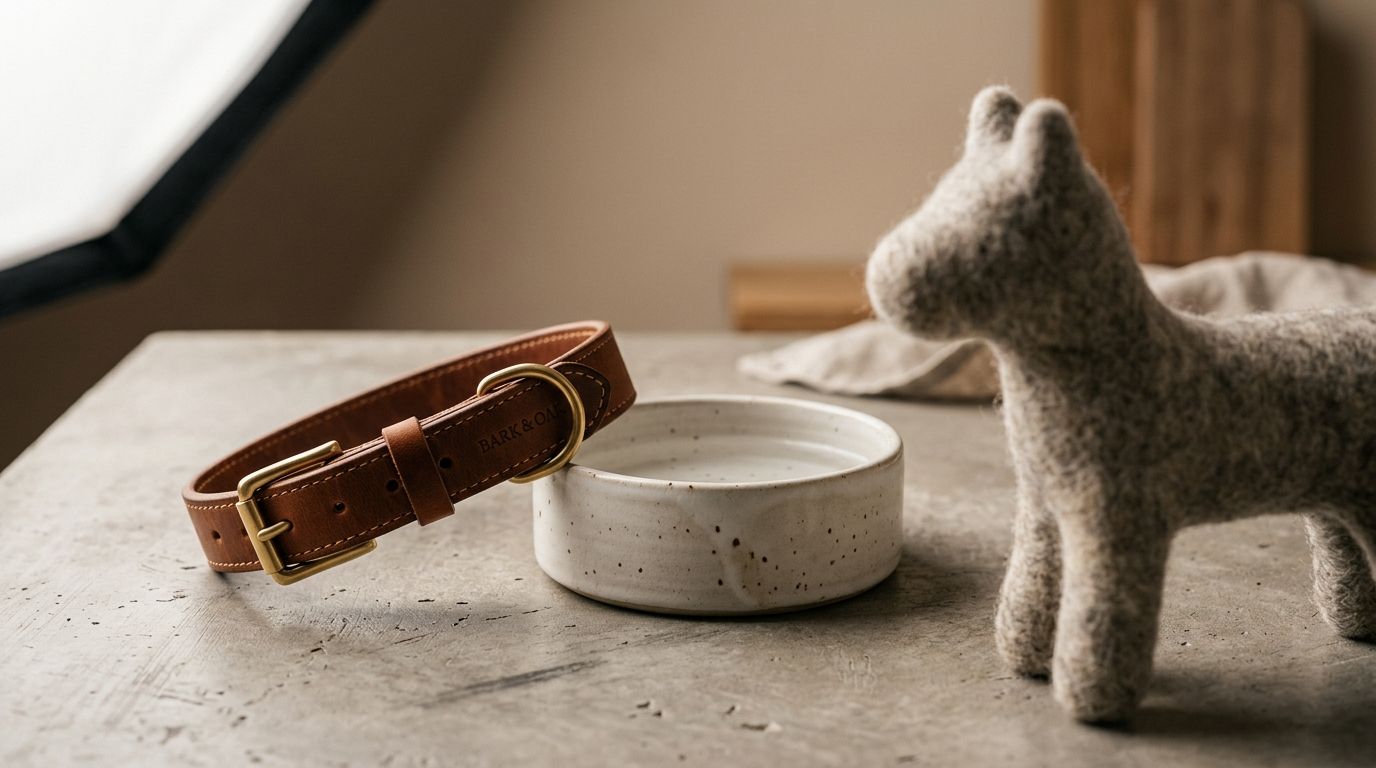
The logistical trap of traditional animal shoots
The invoice for a pet product photography ecommerce shoot is never just the photographer. It is the studio rental. It is the animal handler. It is the specialized insurance. It is the raw unpredictability of working with talent that cannot understand directions.
The cost of unpredictability
If you have ever sat through a commercial shoot involving cats, you already know the pain. You book a beautiful mid-century modern home location. You set up the lighting. The handler brings out a perfectly groomed Maine Coon. And then the cat hides under the sofa for three hours because the flash strobes are frightening. The meter keeps running. Your photographer ends up capturing exactly two usable photos from an eight-hour session. When you divide the total day rate by those two images, your per-image cost climbs into the hundreds of dollars.
Dogs are slightly more cooperative but introduce a different set of problems. They drool on the merchandise. They shed on the dark velvet blankets you spent an hour steaming. They refuse to sit on three of the six beds you need to photograph. This bottleneck forces brands to limit their visual output. Instead of launching a new harness with twenty rich context shots, they launch with three generic photos because that is all they could afford to capture.
| Production Method | Primary Cost Drivers | Expected Turnaround |
|---|---|---|
| Live Animal Photoshoot | Studio rental, professional handlers, insurance, and talent day rates | Multiple weeks for booking, shooting, and complex retouching |
| Implied Presence & AI | Base flat-lay photography and software subscriptions | A few hours for rapid digital staging and background generation |
How to photograph pet products without the pet
The secret to high-converting pet product context shots is realizing that the animal is not the focal point. The lifestyle is the focal point. Shoppers are projecting their own pet onto the product. When you show a specific breed, you sometimes inadvertently alienate a shopper who owns a completely different type of dog. Removing the animal entirely often increases the broad appeal of the image.
Building emotional context through implied presence
Implied presence is a powerful merchandising tool. It tells a story by showing the aftermath or the anticipation of an activity. A leather dog leash does not need to be wrapped around a golden retriever to look expensive. You can hang it from an antique brass hook in a mudroom, next to a pair of worn rain boots and a dropped tennis ball. The buyer instantly understands the narrative. They picture their own morning walks.
A ceramic cat bowl placed perfectly in a shaft of morning sunlight on a tiled kitchen floor does the same job. When you focus on creating lifestyle product photography that feels lived-in, you bypass the need for live models entirely. The environment does the heavy lifting. You construct the scene around the product, ensuring the lighting highlights the texture of the material rather than trying to properly expose a black dog against a white wall.
Replacing the studio with AI generation
Building practical sets for implied presence still requires a studio, props, and time. This is where AI product photography completely changes the math for pet brands. Instead of renting a house to shoot a dog bed in a living room, you generate the living room.
Generating the environment
With tools like CherryShot AI, you start with a simple, flatly lit photo of your product. You upload it, select the Lifestyle mode, and type a prompt describing the exact environment you want. You can place a scratching post in a minimal, sun-drenched apartment overlooking a city skyline. Ten minutes later, you have generated a different environment for the same scratching post, this time in a cozy, rustic cabin setting.
This allows you to match the visual context to the specific customer segment you are targeting. You do not have to compromise on the background just because you only had access to one shooting location.
Adding the animal in product photography via AI
If you absolutely must have an animal in the shot, AI is rapidly making that possible without the handler fees. You can prompt an AI tool to generate a sleeping golden retriever next to your dog bed, or a tabby cat swiping at your toy.
(Worth noting: AI is not flawless at generating highly specific or rare dog breeds on the first try. You might need a few rerolls to get the exact ear shape of a purebred show dog right. If your brand relies heavily on a very specific breed standard, a traditional photographer might still be required for hero shots. But for a mixed-breed lifestyle vibe, it is nearly instant.)
For catalog volume, the speed is unbeatable. The reality is that showing products without live models completely changes your production timeline. You move from a three-week turnaround to a single afternoon.
Tackling specific categories
Every subcategory of pet supplies photography requires a slightly different approach to implied presence and context.
Pet collar photography and hard goods
Collars, harnesses, and leashes are tactile. Buyers want to see the quality of the stitching, the thickness of the leather, and the sturdiness of the metal hardware. Flat lays work beautifully here. Arrange the collar alongside premium treats, a stylish poop bag dispenser, and a set of keys. Use CherryShot AI to place these items on a textured concrete surface or a warm wooden table. The goal is to make the hardware look premium.
Pet food photography ecommerce
Kibble is inherently difficult to photograph because it looks like brown pebbles. A sterile shot of a dog bowl full of dry food is incredibly unappealing. You have to sell the ingredients and the freshness. This is where AI generation excels.
Upload an image of your branded food bag. Generate a background that features fresh salmon fillets, vibrant sweet potatoes, and crisp carrots arrayed on a rustic kitchen counter. Product photos that convert rely on specific visual cues to trigger trust. For food, those cues are fresh, recognizable, human-grade ingredients placed contextually around the packaging.
Frequently Asked Questions
How do I photograph pet products for ecommerce?
Shoot your products on a neutral background with flat, even lighting to capture accurate material textures. Establishing this clean base image allows you to digitally place the item into various realistic lifestyle environments without logistical friction. Style the final scene using implied presence, positioning a dog bed next to a human couch with a tossed blanket to build emotional appeal entirely without animal models.
Do I need a real animal in pet product photography?
You do not need a live animal to sell pet supplies effectively. Implied presence and environmental context often do a better job of helping buyers visualize the item inside their own homes. Arrange a well-styled room or an AI-generated scene without a dog or cat to encourage shoppers to project their own pets onto the product, which ultimately increases the broad appeal of your catalog.
How do I create pet product context photos?
Build context photos by surrounding your primary product with specific household props that establish a clear visual narrative. Grounding the item in reality gives the prospective shopper an immediate, intuitive sense of scale and daily utility. Hang a leather leash from a brass mudroom hook alongside muddy boots, or set a ceramic cat bowl on a tiled kitchen island next to a morning coffee mug.
Can AI create pet product photography with animals?
Upload a flat image of your product into an AI generation tool to digitally place an animal model next to it or interacting with it. This approach works exceptionally well for beds, blankets, and large toys that require an understanding of proportion. Generate specific breeds and environments to match your target demographic, eliminating the logistical headache and expense of booking physical animal talent for every campaign.
What is the best way to show pet products in use?
Blend practical photography for the physical product itself with digitally generated or physically styled environments to show accurate usage. Displaying the item next to familiar household objects instantly communicates the correct scale to the buyer. Fasten collars around an aesthetic studio prop or apply AI to generate a realistic canine neck and chest, ensuring the hardware and material textures remain the visual focal point.
Key Takeaways
- Live animal photoshoots destroy margins and delay product launches.
- Implied presence lets you sell the lifestyle without needing a pet in the frame.
- AI generation replaces the need to rent physical locations for context shots.
- Food and hard goods require distinct styling techniques to show texture and freshness.
Stop paying for the chaos of live animal shoots when you just need a clean catalog update. With CherryShot AI, you can upload your base product images and generate flawless, lifestyle-rich environments in minutes.
Test implied presence on your existing catalog
Audit your current pet supply listings to see which items are stuck on sterile white backgrounds. You can drop those existing flat photos into a digital staging tool right now to generate rich, lived-in environments that communicate scale without booking a studio.
Try CherryShot AI