Photography Backdrops for Product Photography: The Complete 2026 Guide
You do not choose photography backdrops for product photography based on a mood board. You choose them based on platform constraints. Amazon demands a sterile white void. Your Shopify storefront requires brand context. Pinterest algorithms reward heavy texture and warm tones.
Definition
A photography backdrop is the surface or environment positioned behind a product during a shoot to frame the subject. In ecommerce, these range from physical materials like paper and fabric to digital environments created via software.
Choosing a backdrop based on what looks pretty in the studio is the fastest way to kill your conversion rate when the image actually goes live. Product photography backgrounds are a math problem masked as a creative decision. Every hour spent swapping heavy paper rolls or adjusting light stands to fix a glare is margin walking right out your door.
Let us break down exactly what physical materials actually perform in a modern studio environment, why the industry standard is shifting away from physical backgrounds entirely, and how to match your visual output to the platform where your customer is actually swiping.
The Platform Decision Matrix
Your creative brief should always begin with the final destination of the file. Photo backdrops ecommerce requirements vary wildly depending on the checkout environment. If you upload a heavily styled, moody image to an Amazon main listing, their automated system will suppress it within forty-eight hours.
Amazon requires pure white backgrounds for all main product images. The product must fill eighty-five percent of the frame, and the background must measure exactly RGB 255,255,255. There is no negotiation here.
Shopify is the opposite environment. When a customer lands on your owned domain, they already know what the product is. Now they need to know how it feels. This is where colored background product photography and lifestyle context do the heavy lifting. You use brand colors to reinforce identity and environmental elements to communicate scale.
Social media platforms like Pinterest and Instagram operate on a third set of rules. Clean white catalog shots look like ads on these platforms. Users scroll past them instantly. To win attention in a feed, you need organic texture. This is when integrating specific lifestyle photography scenes becomes a hard requirement for driving traffic.
| Marketplace | Background Type | Best Goal |
|---|---|---|
| Amazon | Pure White | Conversion |
| Shopify | Brand/Lifestyle | Identity |
| Textured/Organic | Engagement |
Physical Backdrop Materials Reviewed
If you are building a physical set, the material you choose dictates how you light the room. Each option presents a specific logistical headache. Understanding choosing backdrop types is about knowing which headaches you are willing to tolerate.
Seamless Paper Photography
Seamless paper photography is the absolute backbone of the traditional commercial studio. You buy it in rolls that range from fifty-three inches to one hundred and seven inches wide. You mount the roll on a stand, pull it down to the floor, and sweep it forward toward the camera. This creates a gentle curve with no visible horizon line behind the product.
The benefit is uniformity. A seamless white backdrop gives you a clean slate. The downside is durability. Paper rips. It absorbs moisture. The moment a model steps on it or you slide a heavy piece of furniture across it, you leave a scuff mark. In a high-volume studio, you end up cutting off and throwing away four feet of paper every single day.
Vinyl Backdrop Product Photography
Vinyl solves the durability problem. You can spill coffee on a vinyl backdrop, wipe it down with a damp cloth, and shoot your next product five minutes later. For liquid cosmetics or food photography, vinyl is essentially mandatory.
Vinyl backdrop product photography comes with a massive trade-off. Vinyl is inherently reflective. If you position your key light slightly off-axis, the backdrop will catch the glare and blast a harsh white reflection straight into your lens. Controlling light on vinyl requires massive diffusion panels and precise flag placement, which slows down the shoot entirely.
Muslin and Kraft Paper Options
When you need texture, you move away from flat surfaces. A muslin backdrop is a heavy cotton fabric. You can drape it, scrunch it, or hang it loosely to create deep, moody shadows. It is excellent for jewelry and apparel because the organic folds contrast nicely with rigid products.
A kraft paper backdrop provides a raw, earthy aesthetic. It is cheap, heavily textured, and instantly communicates a rugged or eco-friendly brand identity. However, kraft paper absorbs light aggressively, meaning you will need stronger strobes to properly expose your scene compared to shooting on a bright white surface.
The Infinite Studio Workflow
I have managed studios where we had forty different colored paper rolls stacked in a storage closet. Finding the right color, mounting it, lighting it, and breaking it down took longer than actually pressing the shutter button.
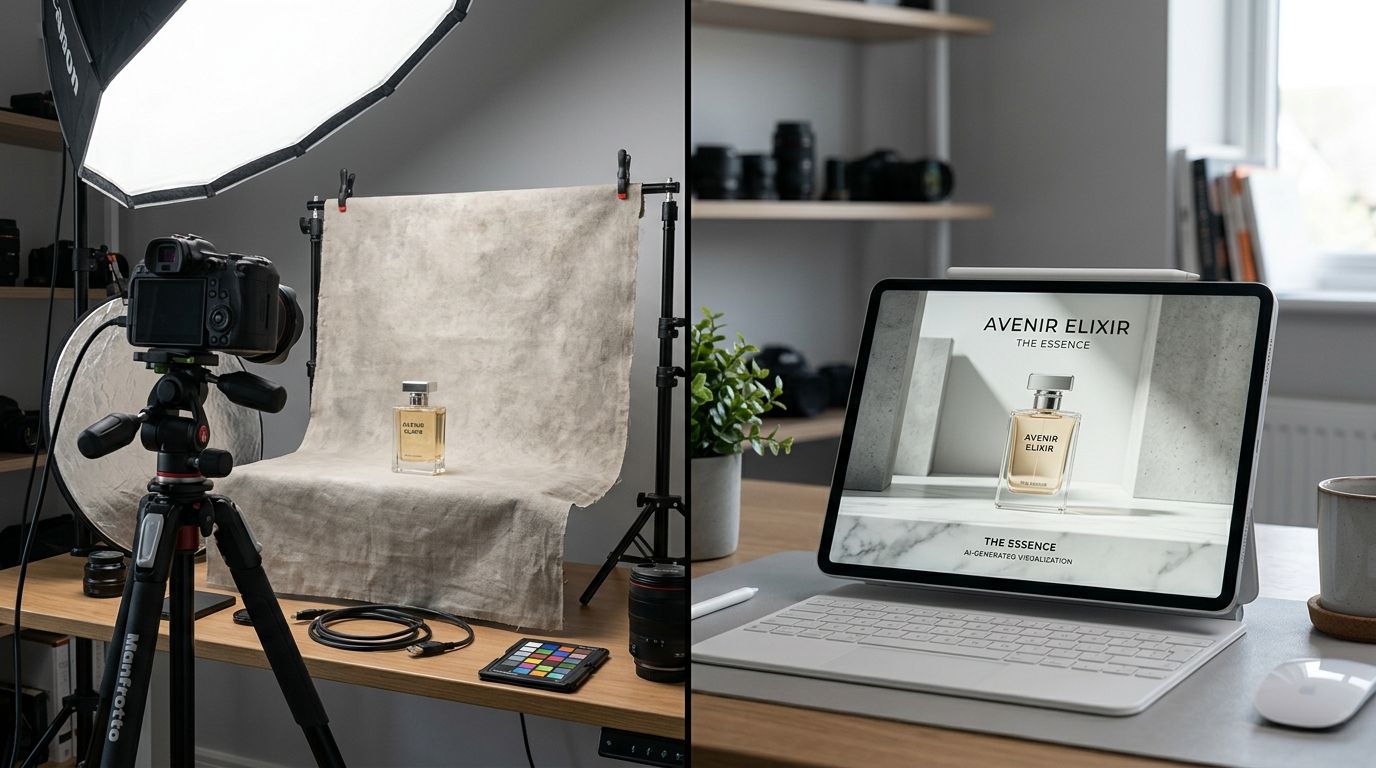
Today, the concept of physically changing a background to match a new SKU is completely obsolete. White background product photography is no longer a physical setup. It is a software output. With CherryShot AI, you upload a basic, well-lit photo of your product. If you need Amazon compliance, you select the Classic mode, and the system instantly generates a perfect RGB 255,255,255 background with natural drop shadows.
When that same product needs to go on your Shopify homepage, you do not book another shoot. You select the Lifestyle or Influencer mode in CherryShot AI. The software places your product onto a marble countertop, a sunlit wooden table, or a textured plaster pedestal. You get the organic aesthetic of a muslin or kraft paper backdrop without ever adjusting a light stand.
The Myth of In-Camera White Backgrounds
Every new brand founder assumes you just buy a white piece of paper, point a camera at it, and get a perfect ecommerce shot. That is not how physics works.
If you expose your camera for the product, a white background will render as muddy gray. To get pure white in-camera, you have to build an infinity curve photography setup. This involves lighting the background separately from the product. You point two bright strobe lights directly at the paper behind your subject to blow out the exposure until it clips to pure white.
(Most freelance photographers simply refuse to do this because it requires too much space. They shoot your product on a light gray background and pay a clipping service to cut out the product with the pen tool in Photoshop later. This adds two days to your turnaround time and inflates your per-image cost.)
If you are determined to build this setup yourself, mastering the lighting ratios for white background photos will take weeks of trial and error. The margin for error is razor-thin. If your background lights are too bright, the light wraps around the edges of your product and washes out the contrast.
This is exactly why high-volume brands have abandoned the infinity curve. Relying on CherryShot AI to generate the background digitally eliminates the space requirements, the equipment overhead, and the post-production delay. You shoot the product once, accurately, and let the software handle the environment.
Key Takeaways
- Platform rules dictate backdrop choices. Amazon requires pure white, while Shopify and social media demand texture and context.
- Seamless paper is versatile but fragile. Vinyl is durable but highly reflective. Both require significant lighting expertise to manage.
- Shooting pure white in-camera requires massive space and dedicated background lighting to prevent muddy gray results.
- AI tools like CherryShot AI eliminate physical backdrop logistics by allowing you to generate perfectly compliant or highly stylized environments from a single base image.
Frequently Asked Questions
What is the best background color for product photography?
The best background color is determined by the specific requirements of the platform hosting your images. Amazon mandates pure white backgrounds for all primary listings to ensure consistency across their search results. Shopify retailers often see better engagement using brand-specific colors or lifestyle imagery that mirrors their store design. Social media platforms like Instagram prioritize high-contrast or textured backgrounds that naturally capture user attention as they scroll through busy feeds.
How do I get a pure white background in product photos?
Producing a pure white background requires you to light the backdrop independently from your product. You need to position strobe lights to illuminate the paper surface until it clips to RGB 255,255,255 without spilling light onto the product edges. Many photographers find it faster to shoot on a neutral background and remove the environment in post-production. Digital background replacement software provides a much cleaner, more consistent white result than physical lighting setups.
Should product photos have white or colored backgrounds?
Successful brands maintain a mix of both white and colored backgrounds to satisfy different sales channels. White backgrounds are necessary for marketplace compliance on platforms like Amazon where clarity is the main priority. Colored or lifestyle backgrounds are essential for email marketing, paid social ads, and hero banners on your website. Relying on only one style often forces you to choose between building a strong visual identity and maintaining critical marketplace listing standards.
What backdrops do professional product photographers use?
Pros typically rely on seamless paper rolls for solid color backgrounds because they are inexpensive and easy to swap between shoots. They also keep vinyl for waterproof surfaces and hand-painted canvas for adding organic depth to luxury product photography. Increasing numbers of commercial studios now generate their environments digitally instead of managing physical stock. This shift saves significant floor space and reduces the need for expensive, high-maintenance storage systems for paper or fabric.
Can AI create any background I want?
Advanced AI tools allow you to place your product into virtually any environment by modifying the original background of your shot. You can use standard presets for clean white catalog images or request specific settings like natural wooden tables or architectural surfaces via text prompts. This approach replaces the need for custom physical sets. You can adjust your visual branding for different marketing campaigns instantly without needing a physical studio or additional photography sessions.
Audit your product images before your next campaign
Ensure your current backdrops meet the specific requirements of the platforms where you are driving traffic. If your images feel dated or inconsistent, use CherryShot AI to instantly refresh your product presentation for your web store and social channels.
Try CherryShot AIChoosing the right backdrop is ultimately about matching your operational capacity to your output needs. If you enjoy managing light ratios and buying seamless paper in bulk, build out your physical studio.
If you just want your product images ready to launch by tomorrow morning, bypass the physical setup altogether. Head over to CherryShot AI, upload a flat product shot, and let the software generate exactly the background your platform requires in minutes.