Product Image Quality and Trust: Communicating Brand Credibility
Human brains process visual information thousands of times faster than text. Before your prospective customer reads a single word of your carefully crafted value proposition, they have already decided if your brand is legitimate. The relationship between product image quality and trust is immediate, ruthless, and entirely subconscious. If your photos look amateur, visitors assume your manufacturing, shipping logistics, and customer service are amateur too. You have roughly two seconds to clear the visual trust threshold before a new visitor clicks the back button.
Definition
A visual brand standard is a strict set of rules governing how products are photographed and presented online. It defines exact parameters for lighting, background color, scale, and resolution to ensure complete consistency across a catalog. Maintaining this standard removes friction from the buying process by signaling operational professionalism to skeptical shoppers.
Shoppers do not look at product photography to admire your art direction. They look at your images to hunt for risk.
(Worth noting: clearing this threshold does not mean every single image requires a highly produced editorial set. A simple, perfectly lit item on a clean white background builds significantly more trust than a messy, chaotic lifestyle shot that obscures the product details.)
The cognitive mechanism behind product photo quality and brand trust
Why the brain searches for visual red flags
A pixelated edge, a harsh artificial shadow, or a poorly cropped background triggers a very specific mental alarm. It is the exact same alarm that goes off when someone receives an email with suspicious spelling errors. The visual quality of ecommerce credibility is rarely about delighting the user. It is almost entirely about disarming their skepticism.
If you run a high-ticket store, this friction is magnified. I spent years running ecommerce operations and watching conversion rates tank simply because a single variant image was slightly out of focus compared to the rest of the carousel. The customer immediately thinks, "If they do not care enough to upload a sharp photo, what happens if this breaks and I need a refund?" Photography quality signals trust by proving you have the resources and the attention to detail of a legitimate, functioning business.
When you fail to provide that visual proof, your entire operation looks like a weekend project. You end up getting plenty of traffic but bleeding sales at the product page. If this scenario sounds familiar, diagnosing exactly why you are getting clicks but no sales almost always leads straight back to the foundational quality of your images. The friction is not your price. The friction is your presentation.
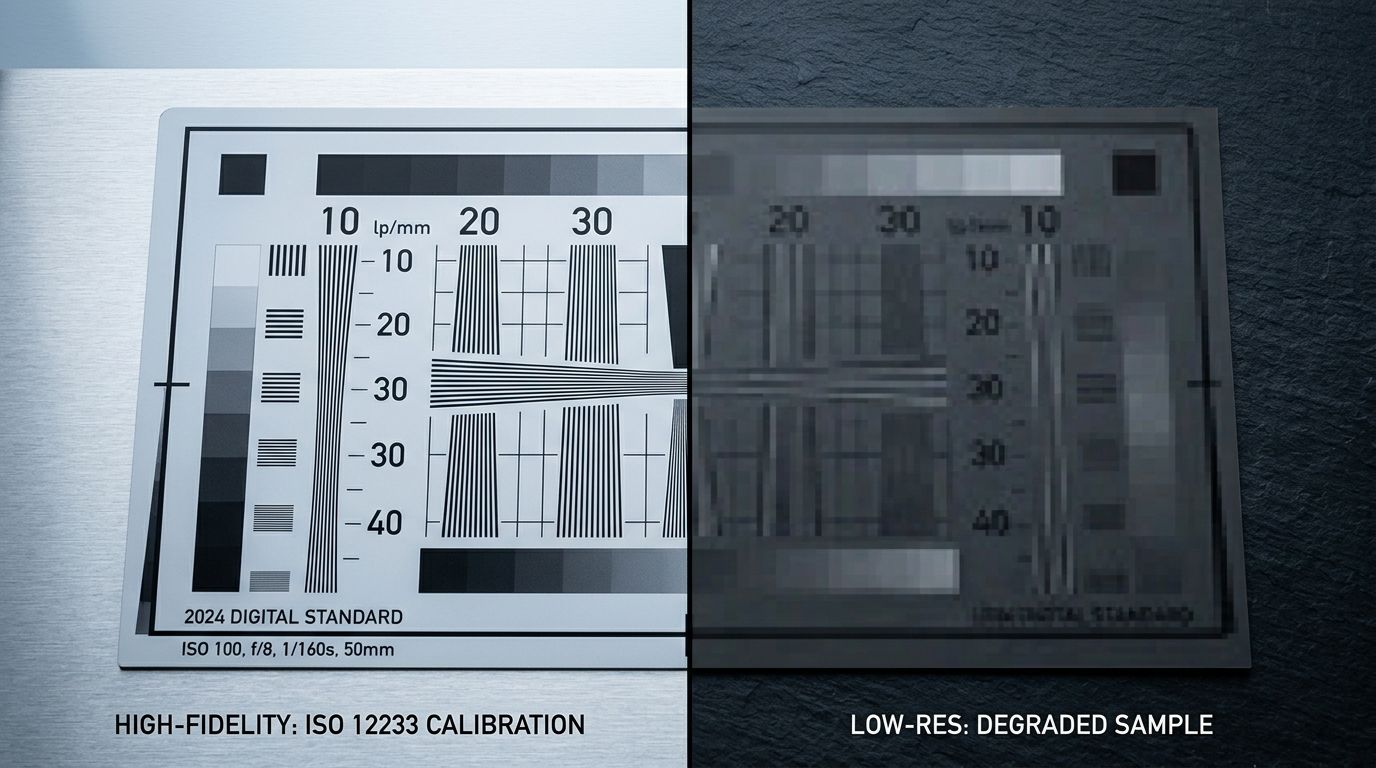
High quality product images lower the perceived risk of an online transaction before the user reads the product description.
Defining the minimum image quality in ecommerce
The baseline visual brand standard
Brand trust is not built by a single, expensive hero image sitting at the top of your homepage. It is built by the boring, repetitive catalog images. The minimum image quality standard for an online store is absolute consistency across the grid. Every product must be lit the same way, scaled to the same relative proportion, and isolated against the exact same background hex code.
A common mistake founders make is mixing and matching assets to save a few dollars. They pull three low-resolution photos directly from a supplier, shoot two variants on an iPhone in their kitchen, and hire a local freelancer for the last one. The resulting collection looks chaotic. A chaotic visual brand standard communicates deep operational instability.
When a visitor scrolls your category page and sees varying lighting conditions and mismatched background tones, their trust drops to zero. They immediately categorize your store as a fly-by-night drop-shipping operation. If your store currently suffers from this mismatched aesthetic, you need to understand how to fix a cheap-looking brand without committing to a massive agency overhaul. The fix is almost always standardizing your existing photography so the grid looks intentional.
The operational nightmare of the visual brand standard
Why traditional studios fail fast-moving brands
Maintaining this standard across hundreds of SKUs is the defining challenge for growing stores. Getting this level of consistency used to cost thousands of dollars and take weeks of planning. I have personally sat through studio shoots that ran four hours over schedule while the crew tried to get the glare off a simple glass bottle. I have paid invoices that arrived two weeks after the campaign was supposed to launch. I have argued with photographers over email about whether a product angle was "close enough" because booking a reshoot would cost another two thousand dollars.
The traditional studio model punishes brands that need to launch frequently. You wait weeks for a photographer to deliver images that might still require heavy post-production retouching. When you finally get the files, you realize the new batch of photos is slightly darker than last month's batch. Now your category page looks broken again.
You have to figure out how to keep product photos consistent across your entire catalog if you want the perceived value of your items to stick. This operational bottleneck is exactly where AI product photography alters the entire production timeline. With a platform like CherryShot AI, you can take a flat, uninspiring product photo, select a visual mode like Minimalist or Loud Luxury, and generate perfectly lit, highly textured campaign images in minutes.
The turnaround goes from three weeks to a Tuesday afternoon. The per-image cost drops to under five dollars. You get the premium look required to establish brand credibility, completely bypassing the logistical nightmare of a full studio production.
How visual standards impact your pricing power
The direct correlation between lighting and perceived value
You cannot sell a premium product using budget visuals. If you want to charge a hundred dollars for a simple t-shirt or a daily moisturizer, the imagery must look like it belongs to a hundred-dollar brand. High quality product images validate the price tag. When the visual standard is high, price resistance drops automatically.
I have seen plenty of brands try to raise their prices by updating their website copy, completely ignoring the fact that their photos still looked like they were shot in a dark garage. It never works. Consumers anchor value to what they see. A beautifully lit, contextual lifestyle photo communicates that the product is desirable, established, and worth the premium.
Visual Quality Signals: Trust vs. Distrust
Shoppers evaluate specific elements of your imagery whether they realize it or not. Here is exactly what the modern consumer is looking for when they evaluate your store.
| Visual Element | The Trust Signal | The Scam Signal |
|---|---|---|
| Lighting | Soft, directional shadows that show texture. | Harsh camera flashes or completely flat, lifeless lighting. |
| Backgrounds | Consistent brand colors across the entire grid. | Mixed shades of gray or poorly masked, jagged edges. |
| Resolution | Crisp details that hold up when the user zooms in. | Blurry, compressed images that hide the material quality. |
| Context | Lifestyle shots showing realistic scale and setting. | Images that look like obvious, unrelated stock photos. |
Frequently Asked Questions
How does product image quality affect trust?
Blurry, poorly lit, or visually inconsistent images automatically trigger the human brain to flag an online store as unprofessional and untrustworthy. High quality product photography proves a business invests real capital into its presentation, signaling overall operational maturity. Providing crisp, uniform imagery reassures hesitant buyers that the company maintains strict standards for physical product quality, secure shipping logistics, and responsive customer service.
What is the minimum quality standard for ecommerce product photos?
The absolute baseline for ecommerce photography is strict visual consistency across the entire product catalog. Every single item must feature matching background hex codes, uniform lighting direction, and exact proportional scaling relative to the frame. Provide a resolution high enough to allow shoppers to zoom in on mobile devices and examine fine material textures without the image degrading into visible pixels.
Can low quality product images hurt my brand?
Low quality product imagery actively damages brand equity and kills conversion rates by artificially lowering the perceived value of the item. Shoppers naturally associate bad photography with unreliable drop-shipping operations or fly-by-night scam websites. Audit your mobile site regularly to identify and replace pixelated assets, as these specific visual failures prompt high-intent visitors to abandon their carts and never return.
What makes a product image look trustworthy?
Trustworthy product photography relies on crisp details, accurate color representation, and realistic soft shadows. Providing multiple distinct angles gives the customer complete spatial understanding of the item before they enter their credit card information. Include contextual lifestyle shots that show the product existing in a real physical environment, as this proves the item is genuine, properly scaled, and completely functional.
How do I tell if my product photos are good enough?
Open your main category page on a mobile device and scroll rapidly to spot shifting background colors or mismatched product scaling. Inconsistent aesthetic standards immediately fail the basic trust threshold required to convert skeptical visitors into buyers. Track your refund metrics specifically for items marked as not matching the description, as this directly indicates your imagery fails to accurately communicate reality.
Key Takeaways
- Shoppers judge the credibility of your business based on image quality before they read your copy.
- The absolute baseline for ecommerce trust is strict visual consistency across your entire product grid.
- Poor lighting and mismatched backgrounds trigger the same cognitive alarm as a phishing email.
- AI generation allows brands to maintain high visual standards without the cost and delays of traditional studio shoots.
You cannot scale an ecommerce brand if your primary visual assets constantly trigger the scam alarm. When you standardize your photography, you remove the biggest obstacle standing between a new visitor and a completed checkout. If you are tired of losing sales to poor visuals, it is time to upgrade your baseline. Upload a product photo to CherryShot AI and generate campaign-ready, trustworthy imagery today.
Audit your product page imagery against competitors
Pull up your top-selling product on your phone and place it next to a premium competitor's listing. If your lighting looks flat or your backgrounds are mismatched, you are actively losing sales to trust issues. Use CherryShot AI to instantly standardize your existing catalog without booking a reshoot.
Try CherryShot AI