CherryShot AI

    Product Launch Checklist: Every Visual Asset You Need Before Going Live
    March 29, 2026

    A successful product launch checklist requires specific visual assets to convert initial traffic into buyers. You must secure a pure white background hero image, three alternate product angles, a clear scale reference, and at least two lifestyle contexts before pushing your new product page live. Launching a product without a complete visual suite is practically begging for a high return rate. Missing visuals destroy consumer trust and throttle your conversion metrics right out of the gate.

    The absolute minimum visual content required for an ecommerce product launch includes one main studio shot, two detailed close-ups, and one lifestyle image showing the product in use. Launching with fewer than four distinct visual assets significantly reduces initial sales velocity and increases customer acquisition costs.

    Key Takeaways

    • A baseline product launch requires four to seven specific images to build buyer trust.
    • Every product detail page needs a mix of clean studio shots and contextual lifestyle visuals.
    • Waiting on traditional photography studios is the number one cause of delayed product launches.
    • AI photography tools eliminate the visual content bottleneck and keep go-to-market timelines intact.
    22%

    of ecommerce returns occur because the product looks different in person than it did in the photos. Invespcro, 2024

    The Essential Product Launch Visual Checklist Ecommerce Brands Need

    Visual content is the product until the physical item arrives at the customer doorstep. Online shoppers cannot touch the fabric, test the weight, or examine the craftsmanship of a new release. They rely entirely on your product launch photography checklist to answer their unasked questions. Missing a key angle or context shot introduces doubt, and a doubtful shopper will always abandon their cart rather than risk a frustrating return process.

    Foundation Images for the Product Detail Page

    Your product detail page requires a strict hierarchy of visuals. The hero image does the heavy lifting. This must be a well-lit shot on a pure white background that cleanly displays the entire item without any distracting props or shadows. This image frequently serves a dual purpose as your Google Shopping feed asset, which strictly mandates clean white backgrounds for compliance.

    Next come the alternate angles and detail shots. A shopper needs to see the side profile, the back, and close-up crops of any significant features. If you sell apparel, you need detail shots of the stitching and hardware. If you sell consumer electronics, you must show the input ports and control interfaces.

    (Most founders obsess over the hero image, but the boring sizing reference shot is what actually converts a hesitant buyer.)

    Contextual and Lifestyle Imagery

    Clean studio shots explain what a product is. Lifestyle imagery explains why a customer should care. A complete product launch image requirements list must include visual assets that place the item into a believable environment. Contextual photos allow the shopper to visualize ownership.

    A ceramic coffee mug looks nice on a white background but looks essential when sitting next to an open laptop on a wooden desk with morning light streaming through a window. These environmental cues dictate the perceived value of your product. High-end brands do not sell items. They sell access to a specific aesthetic universe.

    Grid display of cosmetic product photography variations organized for an upcoming ecommerce launch campaign
    A complete launch suite requires both clean studio isolation and aspirational lifestyle contexts.

    Mapping Visual Assets for Launch Marketing Channels

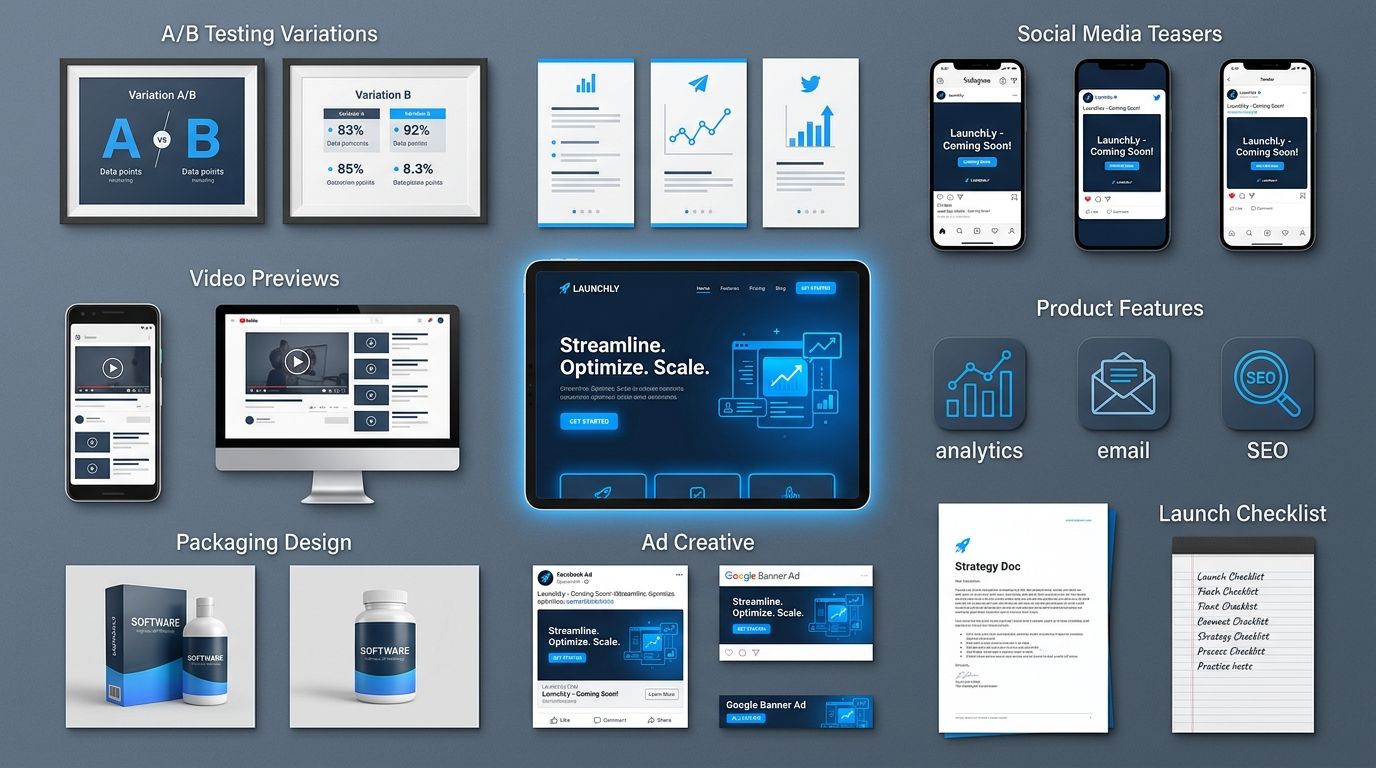
    The launch day assets required for your website represent only a fraction of your total content needs. A successful ecommerce launch content checklist accounts for every touchpoint a potential buyer encounters before they ever click through to your store. The context of the channel dictates the format of the visual.

    Social Media Teasers and Paid Ads

    Social media platforms demand aggressive visual variation. You cannot rely on a single polished hero image to run an effective paid acquisition campaign. Modern ad fatigue sets in quickly, meaning your media buying team needs a deep folder of diverse creative to test against different audience segments.

    This channel demands vertical aspect ratios. It requires bold styling that halts a doom scroll. Depending on your brand voice, you might need a mix of polished editorial shots and gritty user-generated style aesthetics.

    Brands scaling their ad spend often generate distinct visual clusters using specialized tools. You might test a Loud Luxury visual against a Minimalist visual for the exact same product to see which aesthetic yields a lower cost per click.

    Email Campaign Graphics

    Your email subscriber list is your warmest audience. These customers already know your brand and trust your quality. The visual assets for your email launch sequence should focus heavily on the specific details of the new release rather than broad brand-building imagery.

    You need wide banner images for email headers and tight square crops for feature grids. Planning these aspect ratios ahead of time prevents your design team from awkwardly cropping essential product details out of a vertical photo.

    Overcoming the Launch Speed Bottleneck

    The average ecommerce brand updates its core product line three to four times a year. Managing the visual asset pipeline for these releases is notoriously stressful. If the physical manufacturing sample arrives late from the factory, the entire marketing timeline compresses into an unmanageable sprint.

    Why Photography Holds Up Go-to-Market

    Traditional product photography operates on a rigid, inflexible schedule. You have to book a studio weeks in advance. You have to hire a photographer, rent lighting equipment, source props, and physically transport your only prototype to the location.

    If the shoot happens on a Tuesday, you might wait until Friday to receive the proofs. Revisions take another week. This logistical chain frequently forces brand founders to delay their targeted launch dates. Delaying a launch directly hurts your quarterly revenue projections and frustrates customers who were promised a specific release window.

    Scaling Production with AI Tools

    AI product photography tools completely bypass the physical limitations of a traditional photo shoot.

    When you remove the need for a physical studio, you unlock unprecedented launch speed. You can snap a basic photo of your prototype with a smartphone the moment it arrives at your desk. By uploading that single reference image to an AI platform, you can generate an entire campaign worth of visual assets in minutes rather than weeks.

    Platforms like CherryShot AI allow brands to upload a raw product photo, select a precise visual mode, and instantly export campaign-ready images. If your new collection targets an upscale demographic, you select the Magazine or Avant Garde mode. If you are releasing an everyday essential, you choose the Classic or Minimalist setting.

    You get the exact visuals required for your product launch photography checklist without managing a single physical prop. You bypass the editing delays. You skip the location scouting. You maintain total control over your launch timeline while producing photography that rivals top-tier creative agencies.

    Frequently Asked Questions

    What visual assets do I need before launching a product?

    Before launching a product, you need a mix of clean studio photography and contextual lifestyle images. The baseline requirement includes a pure white background hero image, two detailed close-ups highlighting texture or hardware, a scale reference shot, and two lifestyle images showing the product in a real-world setting. You also need appropriately cropped versions of these assets for your email announcements and paid social media campaigns. Launching without this complete mix forces buyers to guess what the product actually looks like.

    How many images should each new product listing have?

    An optimized new product listing should feature between five and seven high-resolution images to maximize conversion rates.

    Should I have video before launching a product?

    Video is highly beneficial but not strictly necessary for a credible day-one launch. High-quality photography combined with detailed written specifications will convert initial traffic effectively. You can add video assets during the second phase of your launch campaign once you have secured the foundational image requirements.

    What is the minimum photography needed for a credible product launch?

    The absolute minimum photography needed for a credible launch is four distinct images. You must have one primary studio shot showing the entire product clearly, two alternate angles or detail shots, and one lifestyle image demonstrating scale or use case. Anything less than four images typically triggers hesitation in potential buyers.

    If you are tired of pushing back your release dates due to missing visual assets, CherryShot AI generates complete campaign photography starting at $10 for 50 images at cherryshot.ai.