Product Page Trust for Paid Traffic
If you buy traffic, you already know the pain. You spend ten dollars to get a click from an Instagram ad. The user lands on your product page. They bounce three seconds later. You check your analytics dashboard and realize your organic traffic converts at three percent, while your paid traffic is barely holding on at point eight percent. The answer to this discrepancy is not better targeting. The answer is product page trust. A paid visitor is fundamentally cold. They do not care about your brand story yet. They care whether the product is real, whether it looks like the ad, and whether you will steal their credit card.
Definition
Product page trust refers to the immediate visual and informational signals that convince a cold visitor your ecommerce site is legitimate. It bridges the gap between an impulsive ad click and a confident purchase by proving the product matches the marketing.
The most expensive mistake founders make is sending a thirty dollar cold click to a product page designed entirely for a loyal customer.
A loyal customer will forgive a slow page. A loyal customer will overlook a poorly lit catalog image because they already know your fabric quality is excellent. A loyal customer will navigate a clunky sizing chart. A cold visitor arriving from a paid ad will do none of these things. The moment they experience friction, they hit the back button and go right back to their feed. You paid for their attention, but you did not earn their trust.
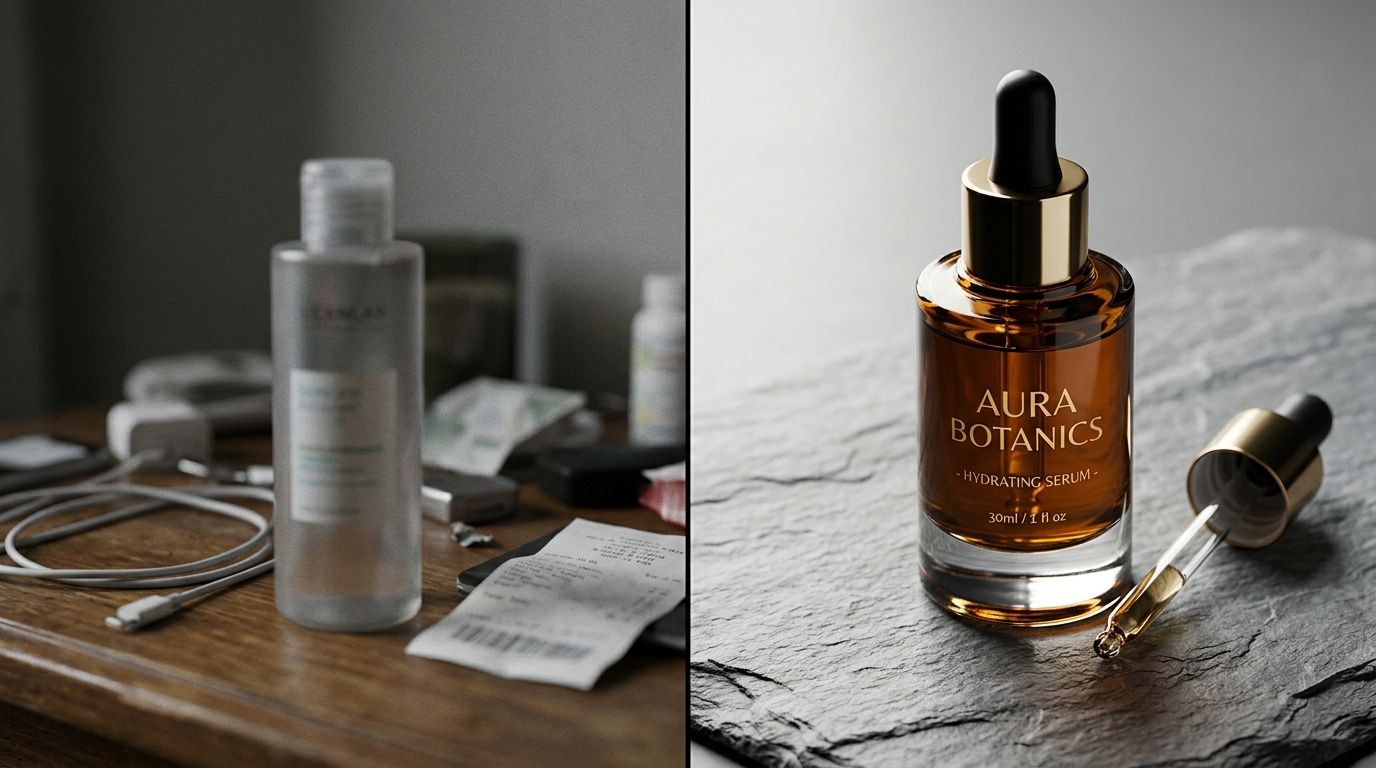
A visually inconsistent landing experience is the fastest way to turn a paid click into a bounce.
The expectation gap of the cold click
We need to talk about the psychology of the paid visitor. They did not wake up planning to buy your product. They were watching a video or reading an article. Your ad interrupted them. It was compelling enough to earn a tap, but that tap was an impulse. They arrive on your site in a state of active skepticism. Their default assumption is that the product will not look as good as the ad promised.
(Worth noting: this dynamic changes slightly if you are running heavy retargeting campaigns where the user has seen your brand four times already. That warm click carries residual trust. But for most scaling brands, top of funnel cold traffic is where the real money is spent and lost.)
This skepticism creates an expectation gap. The ad was likely a highly polished lifestyle image or a fast paced video shot by a creator. It had energy. It had context. When the user clicks through and lands on a product page with a single, boring, low resolution photo on a plain gray background, the energy dies. The user feels a disconnect. They wonder if the ad was a bait and switch.
The visual gap destroys your ROAS
This drop in aesthetic quality between the ad and the landing page is where most brands bleed margin. You cannot run an Avant Garde ad campaign and then send people to a sterile, uninspired product page. The continuity is broken. The user assumes the company that made the beautiful ad is not the same company fulfilling the product.
This is exactly why the visual gap between ads and product pages is the leading driver of top of funnel bounce rates. The visitor needs immediate visual confirmation that they are in the right place and that the product matches the promise.
Historically, solving this meant organizing massive studio shoots to capture hundreds of variations of a product so the website could match the marketing campaigns. It was expensive, slow, and a logistical nightmare. Today, you do not need a studio to fix this gap. Upload a simple product image to CherryShot AI, select a visual mode that matches your ad creative, and generate campaign ready photos in minutes. If your ad features a luxury aesthetic, your product page images should radiate that exact same luxury feel. The continuity builds the trust.
Rebuilding your product page for a skeptical audience
If you want to convert paid traffic, you have to design the page for someone who is actively looking for a reason to leave. You have to remove their excuses. You have to answer their unasked questions before they have to scroll to find them.
| Paid Traffic Behavior | Organic Traffic Behavior | Required Page Element |
|---|---|---|
| High skepticism and low intent | High intent and brand awareness | High-resolution contextual image gallery |
| Requires immediate risk reversal | Willing to search for store policies | Frictionless return policy near CTA |
| Wants worst-case scenario proof | Trusts overall brand average rating | Authentic customer review photos |
Over communicate the product reality
A cold visitor cannot touch your product. They cannot feel the weight of the fabric or the texture of the material. Your photography has to do the heavy lifting. You need close up shots of the texture. You need contextual shots showing scale. You need to show the product from multiple angles. If a visitor has to guess what the back of the item looks like, they will not buy it.
Understanding what makes a product photo convert is largely an exercise in empathy. What is the buyer worried about? Are they worried the bag is too small to fit their laptop? Show a photo with a laptop sliding into it. Are they worried the ceramic glaze looks cheap in real life? Show a macro shot catching the light.
I know founders who stress over writing the perfect product description. The reality is that cold traffic rarely reads the description unless the photos convince them to care first. The image gallery is the real sales copy. It is the primary vehicle for trust.
Frictionless policies visible immediately
Once the visuals convince them the product is good, the logical brain kicks in. The cold visitor will ask themselves what happens if they hate it. If your return policy is hidden in a footer link, you lose the sale. Your paid traffic product page needs a clear, bold statement near the add to cart button. "Free returns for thirty days." "Ships tomorrow." "No questions asked guarantee."
These are not just operational policies. They are conversion tools. A paid visitor is taking a risk on a brand they do not know. You have to absorb that risk for them. You have to make the decision feel incredibly safe. If you do not explicitly state that returns are easy, they will assume returns are a nightmare.
The specific trust signals that shift the math
Let us talk about the specific elements that turn a cold click into a customer. These are the details that separate amateur operations from brands scaling profitably.
Unambiguous photography that leaves no doubts
High quality photography does not just mean high resolution. It means the lighting is professional. It means the colors are accurate. It means the background does not look like it was cut out by an intern using free software in 2014. If you are struggling to build trust on your product page, your visuals are the very first place you should look.
A massive budget studio shoot still has a place for high end editorial work and brand building. I will gladly admit that AI tools will not replace your creative director for massive out of home campaigns. But for the core catalog shots that actually sell the product to a skeptical online buyer, speed and visual consistency matter more. CherryShot AI allows you to maintain world class visual standards across your entire catalog for a fraction of the cost. When every single product image looks expensive, the brand feels expensive. When the brand feels expensive, the cold visitor feels safe handing over their money.
Authentic social proof
Paid visitors look for reviews, but they do not blindly trust them. A widget showing five hundred five star reviews with no text and no photos looks manufactured. It actually hurts trust. Cold traffic wants to read the three star reviews. They want to know what the worst case scenario is. They want to see photos taken by real customers on dirty bedroom floors to verify the product actually exists.
Do not hide your less than perfect reviews. A product with a four point eight rating and detailed customer photos will convert cold traffic significantly better than a product with a perfect five point zero rating and zero text. Authenticity scales. Perfection looks like a scam.
Frequently Asked Questions
Why is paid traffic conversion rate lower than organic for ecommerce?
Paid traffic conversion rates trail organic benchmarks due to high skepticism and low purchase intent. These cold visitors arrive after an interruption on their social media feed, carrying zero built-in trust for your brand or operational promises. You must provide immediate visual confirmation that your product matches the ad by placing high-resolution, contextual images and clear return policies above the fold on mobile.
What trust signals matter most for paid traffic visitors?
Visual consistency between your ad creative and product page serves as the strongest trust signal for cold visitors. Maintaining this aesthetic continuity reassures hesitant buyers that they clicked a legitimate offer rather than a deceptive bait-and-switch scheme. Display your exact shipping timelines and a frictionless thirty-day return guarantee directly below the add-to-cart button to eliminate operational friction and absorb the buyer's risk.
How should my product page be different for paid vs organic traffic?
Paid landing pages must optimize for immediate time to value by stripping away lengthy brand narratives and meandering copy. Cold traffic demands rapid visual proof before they will read a single word of your product description. Remove email capture popups that block the primary image gallery, and ensure your add-to-cart button remains visible above the fold on all mobile devices.
Does product photography quality affect paid traffic conversion more than organic?
Product photography quality disproportionately dictates paid traffic performance across all ecommerce categories. Organic visitors often forgive mediocre catalog shots because they already recognize your brand reputation, whereas cold clicks judge your entire operation based solely on the active image gallery. Replace poorly lit flat lays with high-resolution contextual shots that verify scale, texture, and material quality before the skeptical visitor hits the back button.
Key Takeaways
- Cold visitors assume you are trying to trick them until your product page proves otherwise.
- The visual gap between a high quality ad and a low quality product page is a primary driver of paid bounce rates.
- Paid visitors do not read descriptions before looking at photos. Your image gallery is your actual sales pitch.
- Frictionless return policies must be placed directly next to the add to cart button to absorb visitor risk.
Converting paid traffic is not a dark art. It is an exercise in removing doubt. Stop expecting cold visitors to behave like loyal fans. Give them the visual proof they need, make the policies incredibly clear, and watch your ROAS stabilize. If you are ready to upgrade the visual quality of your entire catalog without booking another exhausting studio day, try CherryShot AI and generate campaign ready photos in minutes.
Audit your product page visuals before your next campaign
Do not spend another dollar on ads until your landing page matches the quality of your creative. Review your image gallery on a mobile device right now to ensure there is no aesthetic drop-off. If your catalog shots look uninspired, use CherryShot AI to generate campaign-ready photos that build immediate trust.
Try CherryShot AI