Product Photography Background: The Complete Guide to Choosing the Right Environment
Every ecommerce operator eventually hits the same wall with their product photography background choices. You either shoot pure white to satisfy strict marketplace compliance and look incredibly boring, or you shoot intricate lifestyle environments and watch your production budget evaporate. The right background for a product photo is simply the one that removes friction from the buying decision without blowing up your unit economics.
Definition
A product photography background is the specific physical or digital surface placed directly behind an item during a shoot. It serves to isolate the subject for strict marketplace compliance or provide contextual clues about scale and brand identity. Commercial studios typically alternate between pure white seamless paper for catalogs and stylized textures for marketing campaigns.
White seamless paper is a commodity requirement, not a conversion driver. It exists because Amazon demands it, not because customers love it. Setting up the perfect environment for your catalog requires a deliberate strategy that balances technical utility with brand identity.
(Worth noting: standardizing a pure white background across hundreds of SKUs shot months apart is incredibly difficult. You almost always end up paying a retoucher to mask the item and drop in a digital white background anyway just to avoid inconsistent gray gradients between seasonal batches.)
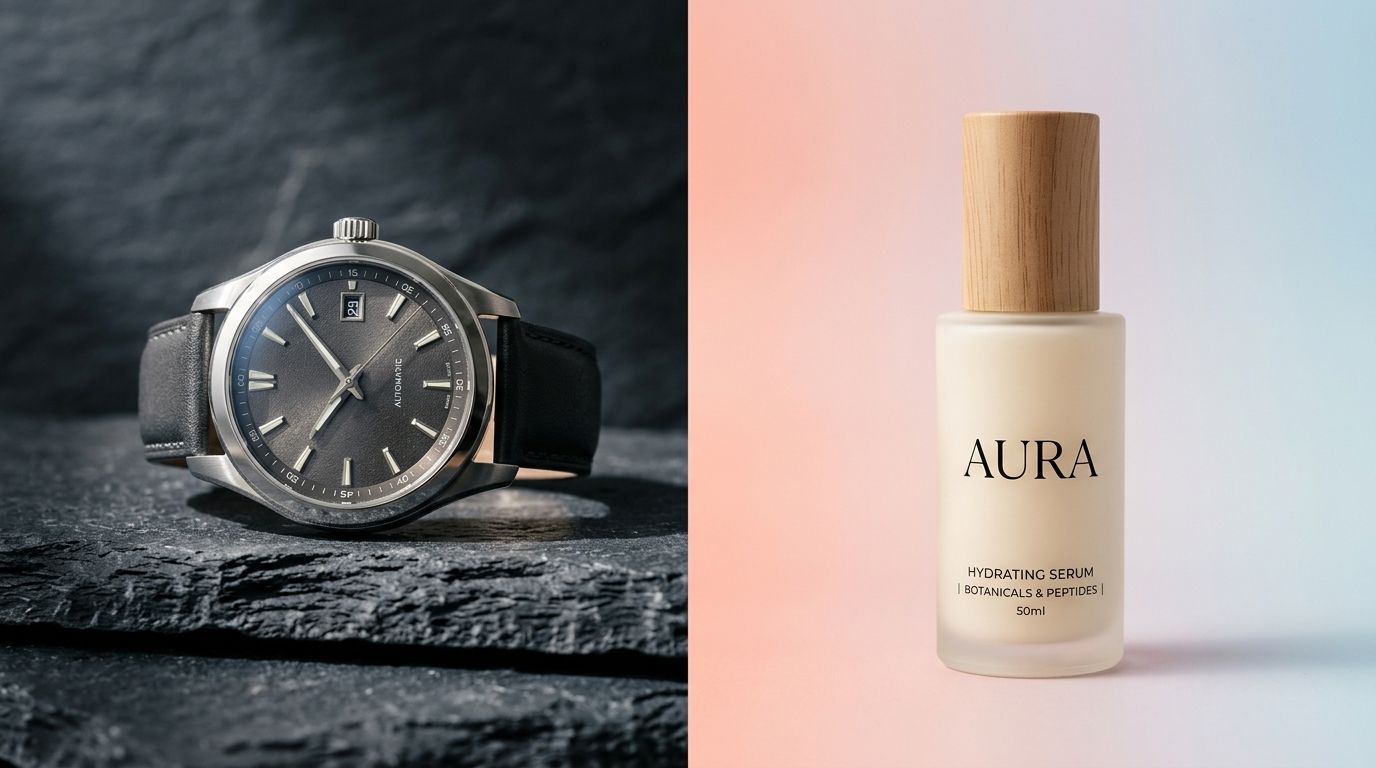
An organic textured background works well for cosmetics but requires highly specific lighting to prevent harsh shadows from obscuring the product details.
The pure white background mandate
The default ecommerce product photography background is pure white. Every brand starts here because major marketplaces demand it. If you want your main image listing to survive an algorithm sweep on Amazon or Google Shopping, you need a background that registers as exactly RGB 255-255-255. Getting that perfect hex code white in a physical studio is vastly harder than it looks on a mood board.
You do not just unroll some Savage Universal seamless paper and point a camera at your product. If you do not light the background independently from the subject, the paper registers as a muddy, inconsistent gray. You end up with heavy, distracting shadows clinging to the base of your product. Correcting this technical failure in post-production means relying heavily on background removal product photos, which adds manual editing time to every single SKU you produce.
This introduces a massive operational challenge. If you shoot a new batch of products three months later, matching the exact shadow density and lighting ratio of the original batch is notoriously difficult. Maintaining image consistency across a massive catalog shot in different sessions requires intense precision. Most teams eventually realize that shooting on pure white in a physical space is a highly technical discipline masquerading as a basic task.
The physical limitations of seamless paper
Paper tears. Paper smudges. If you shoot footwear or heavy hardware, your pristine white seamless paper background will be destroyed within twenty minutes. Photographers end up cutting away yards of ruined paper during a shoot, constantly adjusting the set, and resetting the lights. Every time the set moves, your lighting consistency degrades.
Context, texture, and lifestyle backgrounds
A pure white background photography strategy secures your marketplace listings but does absolutely nothing to build brand desire. This is where lifestyle background product imagery becomes fundamentally necessary. Context provides immediate visual scale. Texture implies manufacturing quality. If you sell a premium leather weekender bag, showing it on a stark white background flattens the perceived value. Placing that exact same bag against a muted plaster surface or a warm wooden tabletop immediately shifts the product photo background options into high-end editorial territory.
But executing these contextual shots in the real world introduces staggering logistical nightmares. You are no longer just lighting a product. You are styling a complex set. You need to source props that do not distract from the hero item. You need an art director to fuss over the exact placement of a shadow cast by a palm frond. Incorporating lifestyle backgrounds can easily drag a basic four-hour studio booking into a ten-hour overtime disaster. You have to rent the physical surface materials, hire the stylist, and hope the photographer understands the delicate difference between a harsh, amateur shadow and an intentional, moody atmosphere.
Moving to contextual environments absolutely increases engagement, but it strictly limits where that asset can be deployed. A cozy, snow-covered winter cabin background makes a heavy wool sweater look incredibly premium, but it renders the photograph completely useless for a July restock campaign. The more specific your background becomes, the shorter the lifespan of the resulting image.
| Environment Type | Primary Use Case | Production Reality |
|---|---|---|
| Pure White Seamless | Amazon listings and technical catalog grids | Requires distinct lighting zones to avoid gray gradients |
| Contextual Lifestyle | Social media and premium brand campaigns | High cost for prop rentals, styling, and set builds |
| AI Generated Setting | Rapid multi-channel A/B testing | Low cost and instantaneous environmental changes |
AI background product photography as the default scaler
The math of traditional physical set builds is completely breaking down. For massive hero campaigns shot once a quarter, paying a full production crew to build out physical environments still makes sense. For standard volume catalog work, endless social media testing assets, and highly specific regional campaigns, the invoice simply does not justify the output anymore.
This is why AI background product photography is rapidly replacing the physical set for ecommerce brands. With CherryShot AI, you upload a standard product image and select a specific visual mode. The platform generates campaign-ready photos in minutes. You can run a batch of SKUs through the Minimalist mode for clean website layouts, then run the exact same batch through the Loud Luxury mode for an aggressive Instagram advertising campaign.
The turnaround time goes from three weeks to a Tuesday afternoon. The per-image cost drops to under $5. This entirely eliminates the bottleneck of scheduling studio time and waiting for an outsourced retouching team to finalize basic background removal tasks.
A decision framework for product types
Not every background works for every material. Slapping a busy texture behind a complex product creates visual chaos. You must match the environment to the physical properties of the item you are trying to sell.
Apparel and soft goods
Soft goods require strict edge separation. If you shoot a dark navy cashmere sweater on a dark charcoal seamless paper background, the edges bleed together entirely. You need contrasting background colors to define the silhouette of the garment. Lighter, neutral environments like soft plaster walls or muted studio gray tones provide the necessary contrast without overwhelming the texture of the fabric.
Glass and reflective items
Transparent glass products require incredibly specific background handling because the environment actually dictates the visible color of the glass itself. If you shoot a clear skincare serum bottle against a busy lifestyle background, the typography on the bottle becomes instantly illegible. Finding the right backgrounds for transparent products usually means leaning heavily into solid, muted colors or subtle gradients that allow the glass to refract light cleanly without absorbing chaotic background shapes.
Cosmetics and beauty
Beauty products thrive on texture. A flat, clinical white background makes high-end cosmetics look like cheap drugstore inventory. A textured background product approach using elements like marble, textured stone, or soft rippling water implies premium ingredients and sophisticated formulations. The background must align with the promised result of the product itself.
Common background mistakes that hurt conversion
Choosing the wrong product photo background options actively hurts your conversion rate. The most common mistake brands make is ignoring physical scale. Dropping a small jewelry piece onto a background featuring massive, oversized props makes the jewelry look insignificant and confusing to the buyer. The background elements must provide realistic context for how large the item actually is.
Another major failure point is inconsistent horizons. If you use background removal product photos to place your item onto a digital environment, but the camera angle of the product does not match the horizon line of the new background, the image looks incredibly fake. The human eye detects mismatched perspective instantly. If you shoot the product straight on, you cannot place it on a tabletop background shot from a forty-five-degree angle.
By shifting your production pipeline to CherryShot AI, you remove these physical constraints and perspective errors entirely. You no longer have to compromise on your visual strategy because of budget constraints or rushed studio timelines. You can test a brutalist concrete background against a soft linen background on the exact same day, and let your live conversion data decide which environment actually drives revenue.
Frequently Asked Questions
What is the best background for product photography?
The optimal background for product photography directly aligns with the specific platform hosting the image. Pure white environments secure necessary compliance on major marketplaces while ensuring technical details remain completely distraction-free for buyers. To execute a successful multi-channel strategy, maintain clean isolated assets for your primary catalog grids and reserve textured, contextual sets specifically for your social media and editorial placements.
Should I use a white background for all product photos?
You must restrict pure white backgrounds to your primary marketplace listings and technical catalog grids. Applying a sterile environment across all marketing channels aggressively strips the intended brand identity away from your merchandise. Place high-ticket items on contextual surfaces like dark wood or slate to communicate scale, elevate perceived value, and drive higher conversion rates in your advertising funnels.
What backgrounds work best for ecommerce listings?
Pure white or subtle off-white gray gradients consistently perform best as the primary image for ecommerce listings. These highly minimal environments eliminate visual clutter and allow shoppers to inspect intricate item details without fighting background distractions. Transition your secondary carousel slides into lifestyle options by placing the item against natural stone props or soft shadow backdrops to effectively demonstrate real-world scale and usage.
How do I set up a white background for product photos?
You must use dedicated background strobes to light a physical roll of seamless paper completely independently from your subject. Failing to create two distinct lighting zones causes the paper to register on camera as a muddy gray covered in harsh, distracting shadows. Overexpose the backdrop lights by at least one stop compared to your main key light to achieve a perfect hex code white.
Can AI generate backgrounds for product photos?
Artificial intelligence generation successfully replaces costly physical set builds for high-volume ecommerce brand photography pipelines. Modern software maps the original lighting and perspective of your isolated item before blending it naturally into an entirely new, photorealistic digital environment. Process your upcoming seasonal inventory through a dedicated AI generation platform to test luxury and minimalist layouts simultaneously without booking expensive studio time or renting props.
Key Takeaways
- Pure white backgrounds are required for marketplace compliance but do nothing to build brand desire or communicate product scale.
- Lighting a physical white seamless paper background requires isolated zones to prevent muddy gray gradients and harsh shadows.
- Textured and lifestyle environments increase engagement but severely limit the lifespan of the resulting image assets.
- AI product photography allows brands to test infinite background contexts without the crushing expense of physical studio rentals and prop styling.
The right background makes your product undeniable. Whether you are generating crisp studio shots for a massive catalog migration or crafting editorial scenes for a major product launch, AI generation removes the friction between a great idea and a finished asset. You can stop arguing with freelance photographers about shadow density and start launching products faster. Try CherryShot AI and get campaign-ready images in minutes.
Audit your product image backgrounds before your next campaign
Review your top-selling SKUs to ensure primary images use strict white backgrounds while secondary carousel slides feature contextual lifestyle environments. If your catalog feels visually inconsistent, you can standardize your look digitally. Upload a current product photo to test it against different premium textures instantly.
Try CherryShot AI