Product Photography Cost in 2026: What Traditional vs AI Charges per Image
Traditional product photography in 2026 costs between $80 and $400 per final image when you factor in studio time, styling, and revisions. AI product photography costs under $5 per image. The math is not complicated. If you are launching ten new SKUs this quarter, the difference is thousands of dollars and weeks of waiting. Any brand still running a full studio shoot for standard catalog images is paying for logistics, not quality. You are paying for a location rental and the caterer, not the pixels.
Definition
Product photography cost is the total financial investment required to produce a final, usable commercial image for an ecommerce catalog or advertising campaign. This metric divides the total invoice including studio rental, styling, equipment, and photographer day rates by the actual number of approved assets delivered.
(Worth noting: this is less about replacing photographers entirely and more about eliminating the scheduling dependency that adds three weeks to every product launch. A good photographer still makes sense for complex hero imagery.)
AI cannot tell a live model how to shift their weight to sell the mood of a specific garment. That level of human direction remains the domain of a skilled art director. For high-volume product catalogs and standard ecommerce staging, however, the old system is simply broken. When founders actually sit down to calculate their real product photography budget, they realize how much capital evaporates into minor logistical hurdles.
The Real Cost of Product Photography in 2026
Most ecommerce founders look at a photographer's portfolio and focus strictly on their stated rate sheet. They see a flat rate of $45 per image and assume their product photography budget will be highly predictable. They are almost always wrong. A stated baseline rate is almost never the actual cost of product photography once a project concludes.
Per-Image Photography Cost Breakdown
You have to look at the final paid invoice divided by the exact number of usable photos you actually uploaded to your store. That is your real per image photography cost. When you add the two-way overnight shipping for your product samples, the inevitable damage to those samples, the non-negotiable studio rental fee, and the eventual reshoots because an assistant forgot to steam a backdrop, that $45 image becomes a $140 image.
Figuring out the true cost of a shoot requires a deep dive into your operational ledger. Calculating the Real Cost Per SKU reveals that physical logistics eat up more than half of a traditional visual budget. You are paying a premium to move physical atoms around a room rather than creating compelling imagery.
Photography Pricing Models Explained
There are two standard ways a commercial studio will bill you. The first is a strict per-image rate. This sounds safe, but photographers protect their margins on these shoots by strictly limiting the complexity of the setup. If you want a clean white background, the per-image rate works. If you want lifestyle staging with dynamic props and varied lighting, photographers will rarely agree to a per-image model. The setup takes too long.
The second model is a day rate. You book the photographer for eight hours. You pay them whether they capture fifty great images or five. You carry all the risk of a slow shooting day. If the stylist gets stuck in traffic or the lighting equipment malfunctions, you still owe the full invoice.
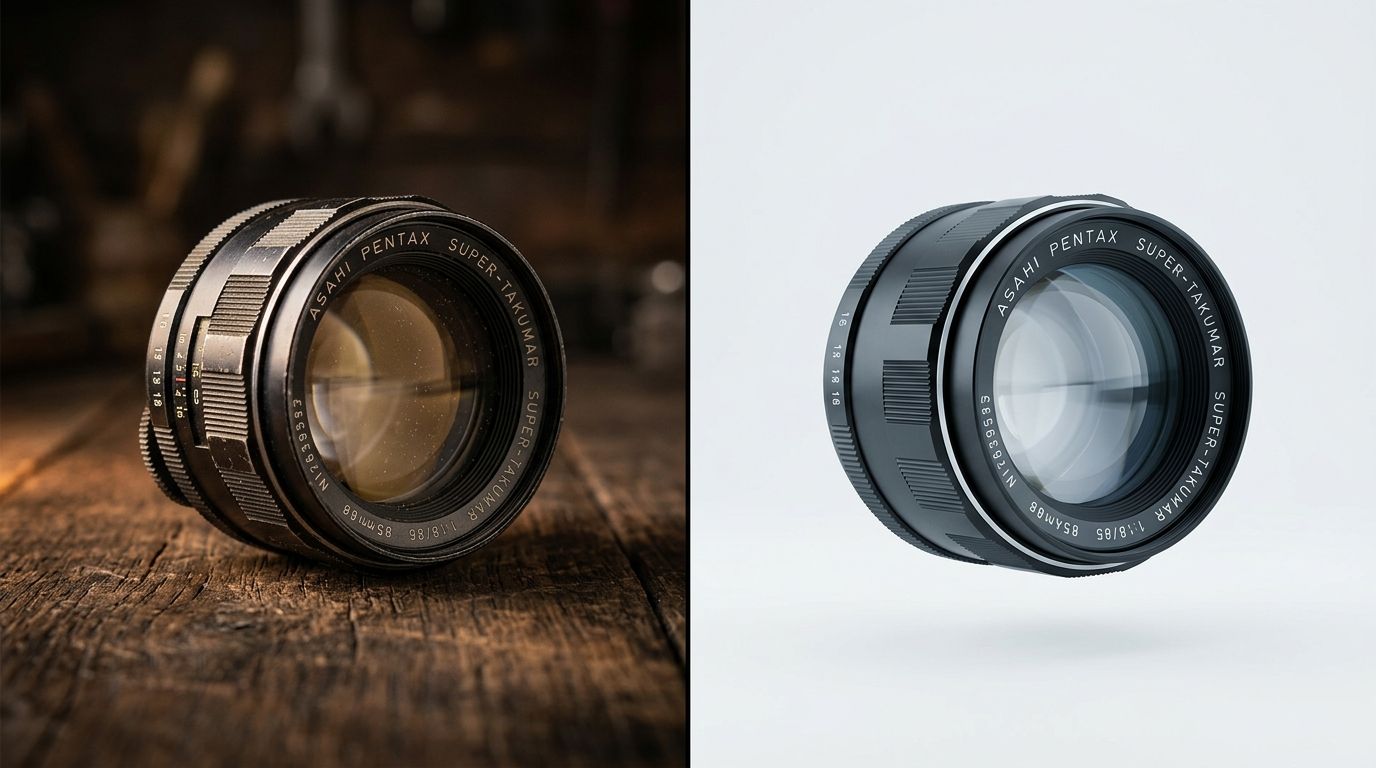
Comparing the output and financial cost of a traditional studio setup against AI staging.
How Traditional Studios Structure Product Photography Rates
We need to break down how much does a product photography studio charge per day in concrete numbers. A standard commercial photographer day rate in 2026 is $1,200 to $3,500. This is just the creative fee for the person pressing the shutter button.
Day Rates vs Per-Image Rates
The studio rental is another $500 to $1,500 depending on your city. A competent product stylist is $600 a day. A lighting assistant is $350. You are spending thousands of dollars before the camera is even turned on. If you get 30 perfect shots, your studio photography cost is roughly $100 per image. If you only get 15 because a specific reflective product took two hours to light correctly, your cost doubles instantly.
This variability makes it impossible to lock down a strict product photography pricing model internally. Your finance team hates it because the final bill is always a surprise.
The Hidden Logistics Premium
If you have ever sat on a faded velvet couch in a rented studio watching a photographer micro-adjust a softbox for forty-five minutes while the clock ticks, you understand the hidden premium of traditional shoots. You are paying for dead air. You are paying for the time it takes to sweep the floor between shots.
When you hire a professional product photographer, you must understand whether you are paying for their distinct creative vision or just their access to a white cyclorama wall. If it is the latter, you are burning cash.
The AI Photography Cost Comparison
The conversation about how much does product photography cost completely fractured when AI entered the commercial space. The traditional pricing floor evaporated. With an AI tool like CherryShot AI, you upload a flat or basic phone photo of your product. You select a mode like Minimalist or Loud Luxury. You get campaign-ready images back in seconds.
How AI Changes the Margin Math
CherryShot AI starts at $10 for 50 images. That brings your product photography cost down to pennies per variation. But let us look at a more realistic campaign structure rather than just looking at the absolute lowest theoretical cost. You want ten final, flawless images for a new product detail page.
With a general-purpose AI image tool, you might spend hours typing prompts and trying to stop the software from mutating your brand logo. With a specialized tool like CherryShot AI, you might generate forty variations across different modes to find the absolute perfect lighting and angle. You spent less than ten dollars and twenty minutes of your own time. The AI photography cost comparison against a $3,000 studio day is so severe it almost looks like a typo on a balance sheet.
Where the Product Photography Budget Actually Goes Now
When you remove the massive studio overhead from your operations, the creative bottleneck shifts. You are no longer agonizing over product photography rates 2026. You are wondering how many visual variations you can test in your ad accounts this week. You can test a bright Lifestyle mode image against a moody Avant Garde mode image and let the conversion rate decide the winner.
| Process | Traditional Studio Shoot | CherryShot AI |
|---|---|---|
| Base Cost Per Image | $80 to $400 | Under $5 |
| Turnaround Time | 2 to 4 weeks | Minutes |
| Reshoot Difficulty | Requires new booking and day rate | Click regenerate instantly |
| Best Application | Complex model direction | High-volume catalogs and lifestyle staging |
Understanding when to use AI photography is the key to protecting your budget. You deploy your human photographers where they add the most value (capturing raw human emotion and complex brand storytelling) and you automate the relentless volume of catalog staging.
Reclaiming Your Product Launch Timeline
The cost of product photography is not just the invoice. It is the momentum you lose waiting for the invoice to arrive. When an inventory shipment lands early, you should be able to launch it that same week. A traditional studio shoot forces you to wait until the photographer has an opening, the studio is free, and the retouching is completed.
This delay has a tangible financial penalty. Every week your inventory sits in a warehouse waiting for photos is a week it is not generating revenue. CherryShot AI eliminates this holding pattern entirely. By compressing the production timeline from weeks down to a single afternoon, the cost savings cascade through your entire operation.
The brands scaling the fastest right now are not doing it by negotiating cheaper day rates with freelance photographers. They are bypassing the traditional studio bottleneck altogether. They understand that perfect product imagery is no longer an expensive luxury reserved for enterprise budgets. It is an instant utility.
Frequently Asked Questions
How much does product photography cost per image?
Answer The standard cost for traditional studio product photography ranges from $80 to $400 per final image. This calculation divides your total invoice covering day rates, styling, and location fees by the exact number of usable assets delivered. Moving standard catalog volume to an AI generator drops this expense to under five dollars per variation while completely eliminating the need to ship physical samples to a photographer.
What is the average cost of product photography?
Answer Commercial ecommerce brands typically spend between $1,500 and $5,000 to execute a standard traditional product photography campaign. This financial baseline secures a half-day or full-day studio booking, basic physical styling, and post-production retouching for a restricted batch of digital files. Demanding complex lifestyle environments requiring live models and custom prop sourcing pushes this average expenditure closer to $12,000 for a single day of production.
How much does a product photography studio charge per day?
Answer Commercial photographers operating on a day rate structure charge between $1,200 and $3,500 strictly for their creative labor. Securing the physical studio space adds another $500 to $1,500 to the daily overhead before a single light flashes. Adding mandatory line items like lighting assistants, professional equipment rentals, and specialized wardrobe stylists ensures a full day of traditional shooting rarely invoices for under $3,000.
Is AI product photography cheaper than traditional photography?
Answer AI generation reduces the financial cost of producing commercial product imagery by more than ninety percent. The technology entirely bypasses physical overhead expenses by generating digital scenes around flat product photos instead of requiring rented studios and lighting equipment. Brands generating artificial lifestyle variations pay pennies per image, allowing them to test hundreds of creative assets for the price of one traditional studio setup.
What is included in product photography pricing?
Answer A traditional product photography quote covers the creative labor of the photographer, standard lighting gear, and a strictly capped number of final retouched files. External expenses like specialized styling professionals, custom prop acquisition, model agency fees, and unlimited image revisions almost always require separate billing line items. Merchants must meticulously review vendor contracts to isolate which logistical components fall under the primary day rate and which trigger unexpected supplemental invoice charges.
Key Takeaways
- Traditional commercial photography costs between $80 and $400 per final image once logistics are fully factored in.
- Day rates force the brand to absorb the financial risk of a slow or inefficient studio session.
- AI product photography tools drop the per-image cost to under five dollars while generating results instantly.
- Brands launching frequent product variations save thousands of dollars per quarter by shifting catalog volume to AI.
The decision to hold onto traditional photography for standard catalog images is a decision to burn margin. Every dollar you spend renting a white room is a dollar you cannot spend acquiring a customer. Visit CherryShot AI to start generating campaign-ready product photos today.
Calculate your true cost per image
Pull your last three studio invoices and divide the total amount paid by the number of photos currently live on your product pages. If that number is over ten dollars, you can immediately reduce your visual production budget by shifting your catalog volume to AI.
Try CherryShot AI