Product Photography ROI: How to Calculate the Return on Every Dollar
Most ecommerce teams treat product photography as an unavoidable tax on doing business. You pay the invoice, cross your fingers, and hope the images look good enough to sell the inventory. To calculate the actual return on investment for product photography, you must track three specific metrics. These are conversion rate lift on the product page, the decrease in return rate for that specific SKU, and the time it takes to get the product live. If you cannot measure these three things, you are not investing. You are just spending money.
Definition
Product photography ROI measures the exact financial return a brand receives relative to the costs of producing its visual assets. It is calculated by dividing the net profit increase generated by new images by the total expenses incurred during their production.
Any brand relying on intuition to justify a five-figure studio budget is actively mismanaging its capital. The days of approving a massive creative invoice just because the resulting images look beautiful are entirely over.
(I realize some creative directors will argue that brand equity is impossible to measure on a balance sheet. They are right about top-of-funnel brand campaigns, but standard catalog product imagery is a conversion tool with a highly measurable job to do.)
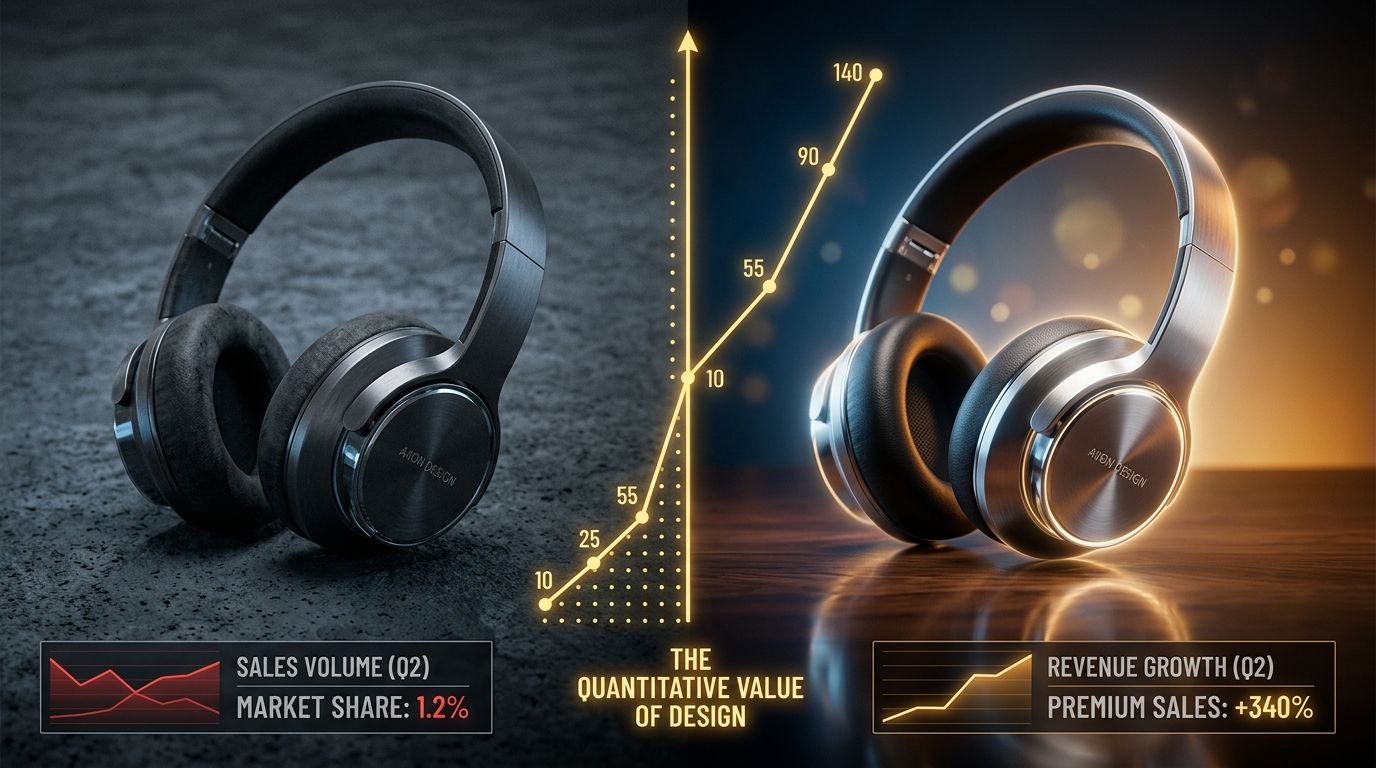
Financial modeling for ecommerce visual assets requires tracking direct revenue lift against total production costs.
The Financial Mechanics of Visual Assets
Moving from Sunk Cost to Revenue Lever
When I sit down with founders to review their profit and loss statements, photography is almost always buried under generic marketing expenses. It sits right next to software subscriptions and ad spend. This placement is a fundamental mistake. Product images are not a fixed operational cost. They are direct drivers of your product page revenue.
To change how you evaluate this spend, you must shift your perspective entirely. Every photograph you upload to your website is an employee. Its absolute only job is to convince a visitor to click the add to cart button. If you spend five hundred dollars creating that single image, you need to know exactly how many additional sales it takes to pay for itself. Before you can even begin to calculate your true return, you need to lock down the real cost per SKU. This aggregate number must include the photographer fees, studio rental, shipping, and the hours your team spent managing the logistics.
The Core ROI Formula
The math for calculating your product photography investment is incredibly straightforward. You take the net profit generated directly by the new images, subtract the total cost of creating those images, and divide that number by the total cost. You then multiply by one hundred to get your percentage.
Let us look at a practical, real-world example. Imagine a core product line that currently generates ten thousand dollars a month in profit with a two percent conversion rate. You decide to overhaul the imagery entirely. You spend two thousand dollars to reshoot the collection. The new images go live and your conversion rate climbs to two and a half percent. That half-percent lift increases your monthly profit to twelve thousand five hundred dollars. The new visual assets paid for themselves in less than a month. Every month after that initial period delivers pure profit straight to your bottom line.
Factoring in the Hidden Margin Killers
How Returns Destroy Your Investment
We talk endlessly in ecommerce about conversion rates. We rarely talk about what happens after the sale is finalized. If your photography convinces someone to buy but fails to accurately represent the actual product, that item is coming right back to your warehouse.
Returns are the silent killers of ecommerce profit margins. You lose the original outbound shipping cost. You pay for the return shipping. Your warehouse team spends paid hourly wages processing the item. In many cases, the product cannot legally be sold as new again, forcing you to liquidate it at a severe discount.
When you upgrade your imagery to show accurate details, textures, and realistic scale, you actively reduce return rates across the board. This specific mitigation is a massive component of your total return on investment. If an upgraded gallery prevents just ten returns a month on a fifty-dollar item, that is five hundred dollars in saved revenue. Over a single year, that one visual asset has preserved six thousand dollars in top-line sales that would have otherwise vanished.
The Cost of Waiting on Content
Time is the single most expensive variable in your entire photography workflow. Most financial models completely ignore it.
If your physical inventory arrives at the warehouse on the first of the month, but your traditional studio shoot is not scheduled until the fifteenth, you have a massive cash flow problem. The edited images might not arrive until the end of the month. That means your inventory sits in a dark warehouse for thirty days generating absolutely zero revenue. You are paying storage fees for products you cannot sell yet simply because you do not have photos.
This is exactly where AI product photography changes the math from the ground up. Upload a product image, pick a visual mode like Lifestyle or Minimalist, and CherryShot AI generates campaign-ready photos in minutes. The per-image cost drops to under five dollars. The turnaround time goes from weeks to a single afternoon. When you eliminate the wait time entirely, you recover weeks of prime selling days. That recovered revenue must be factored directly into your positive ROI calculation.
Lowering the Denominator
Changing the Cost Structure Entirely
In the traditional ROI formula, a high upfront cost makes it very difficult to see a positive return quickly. If your studio invoice is fifteen thousand dollars, you need a massive surge in total sales just to break even on the initiative.
By utilizing an AI-powered product photography tool like CherryShot AI (where pricing starts at just $10 for 50 images), you shrink the denominator in your ROI equation down to almost nothing. Instead of needing a twenty percent lift in sales to justify a massive lifestyle shoot, you only need a fraction of a percent lift to justify a low-cost AI generation. The brands getting the absolute most out of this are not the ones with the biggest marketing budgets. They are the ones launching the most SKUs per quarter and iterating constantly.
Optimizing Without the Financial Penalty
Understanding exactly what makes product photos convert allows you to strip away expensive creative fluff and focus solely on angles that drive revenue. In a traditional workflow, testing a new angle requires booking another half-day at the studio. The financial penalty for simple experimentation is incredibly high.
With CherryShot AI, you can generate an item in a Minimalist setting, a vibrant Lifestyle environment, and an editorial Magazine layout all within an hour. You run a basic split test on your product page. The data tells you exactly which visual style drives the highest conversion rate. You are no longer guessing what your customers want to see. You are reacting instantly to real-time financial data.
Of course, AI image generation is not going to replace a highly conceptual, celebrity-fronted billboard campaign anytime soon. That level of bespoke brand storytelling still requires a massive human crew on location. But for the hundreds of standard catalog images you need to fuel your daily ecommerce machine, traditional studio shoots simply do not make financial sense anymore.
Customer Acquisition Cost and Visuals
How Photography Lowers Your Ad Spend
Your return on ad spend is intrinsically linked to your product photography. When you run paid social campaigns on platforms like Facebook and Instagram, the image is the only thing stopping the user from scrolling immediately past your advertisement.
If your ad click-through rate jumps from one percent to two percent simply because you swapped a dull product shot for a compelling, well-lit generation, your cost per click drops significantly. This means you are driving twice as much high-intent traffic to your site for the exact same marketing budget. When that traffic finally lands on a product page backed by clear, high-resolution imagery, they convert at a significantly higher rate. This compound effect across your entire funnel is where the real return on investment hides in plain sight.
Comparing Traditional and AI Photography ROI
Let us look at a direct financial comparison for an expanding brand launching twenty new product variations. The numbers speak for themselves when you map out the total lifecycle of an image asset.
| Financial Metric | Traditional Studio Shoot | CherryShot AI Generation |
|---|---|---|
| Upfront Capital Required | $4,000 to $8,000 | Under $20 |
| Time to Market Delay | 3 to 4 weeks | 15 minutes |
| Cost to A/B Test | Full reshoot required | Pennies per variant |
| ROI Break-Even Point | Months of sustained sales | First sale generated |
Frequently Asked Questions
How do I calculate the ROI of product photography?
Calculate the return on investment by dividing the direct revenue lift generated by new images by the total cost of asset production. This requires establishing your baseline conversion rate and monthly revenue before measuring the exact increase over a thirty-day period. Complete the formula by subtracting photographer fees, studio time, and internal logistics from your new revenue, then dividing the resulting net profit by the original costs.
Is professional product photography worth the investment?
High-quality visual assets are fundamentally necessary for scaling any serious ecommerce brand. Poor product photos actively deter potential buyers and immediately erode consumer trust in the overall quality of your inventory. Replacing expensive physical studio spaces with modern AI generation tools allows you to secure the exact same high-end, campaign-ready imagery at a fraction of the traditional production cost.
How much should I invest in product photography?
Your visual asset budget must tie directly to the projected revenue of the specific product line being shot. A standard financial benchmark dictates allocating between three and five percent of targeted top-line revenue for image creation. If a product targets one hundred thousand dollars in annual sales, spending three thousand dollars on exceptional photography represents a mathematically sound financial decision.
What is the return on product photography investment?
Actual returns fluctuate wildly depending on your existing baseline sales metrics and the total upfront production costs. Brands transitioning from unoptimized imagery to clear, high-resolution lifestyle photos routinely experience conversion rate lifts of fifteen to thirty percent. Combining this sudden revenue surge with a streamlined digital production process frequently pushes the final return on investment past two hundred percent within the first quarter.
How does product photography affect revenue?
Clear product images directly increase your conversion rate by answering customer questions visually and building immediate brand trust. High-quality assets also improve paid advertising performance by driving higher click-through rates and lowering customer acquisition costs. Accurate photography sets realistic buyer expectations regarding scale and texture, which dramatically reduces your return rate and protects profit margins from reverse logistics fees.
Key Takeaways
- Calculate ROI using direct revenue lift, not vague brand awareness metrics.
- Preventing returns through accurate visuals is a massive driver of profitability.
- Time spent waiting for a physical studio shoot is actively costing you unrecoverable sales.
- Shrinking your production costs with AI tools makes achieving a positive ROI nearly instantaneous.
Stop paying for logistics and start paying for actual conversions. By running your visual strategy through a strict financial lens, you will quickly realize that speed and flexibility are just as valuable as image quality. If you want to dramatically improve your metrics today, upload a raw product shot to CherryShot AI and watch how quickly a lowered denominator transforms your entire balance sheet.
Audit your product image costs today
Review your last studio invoice and compare it against the direct revenue generated by those specific products. If the numbers do not align, it is time to find a more efficient production method. Run your current product images through CherryShot AI to see how quickly you can generate new variations without the traditional overhead.
Try CherryShot AI