Product Photography vs Product Video Ecommerce
Every week a founder asks me if they should pivot their entire production budget into video. They read a marketing newsletter claiming video boosts conversions by eighty percent. They panic. They look at their static image gallery and assume it is killing their brand. Here is the reality of product photography vs product video ecommerce conversion rates. Video does not automatically convert better than photos. It converts better exclusively when the product requires demonstration, scale, or motion to be understood. If you sell basic ceramic mugs, a video will not save your conversion rate. If you sell a multi-way convertible dress, skipping video leaves money on the table.
Definition
Product photography uses static, high-resolution images to display the visual details, color, and texture of an item. Product video uses motion to demonstrate an item's scale, function, and fit in real-world scenarios. Both formats serve distinct roles in answering buyer questions and driving ecommerce conversions.
The decision to invest in photography or video ecommerce production is not a coin toss. It is a mathematical calculation based on your product category, your margin, and your page speed constraints.
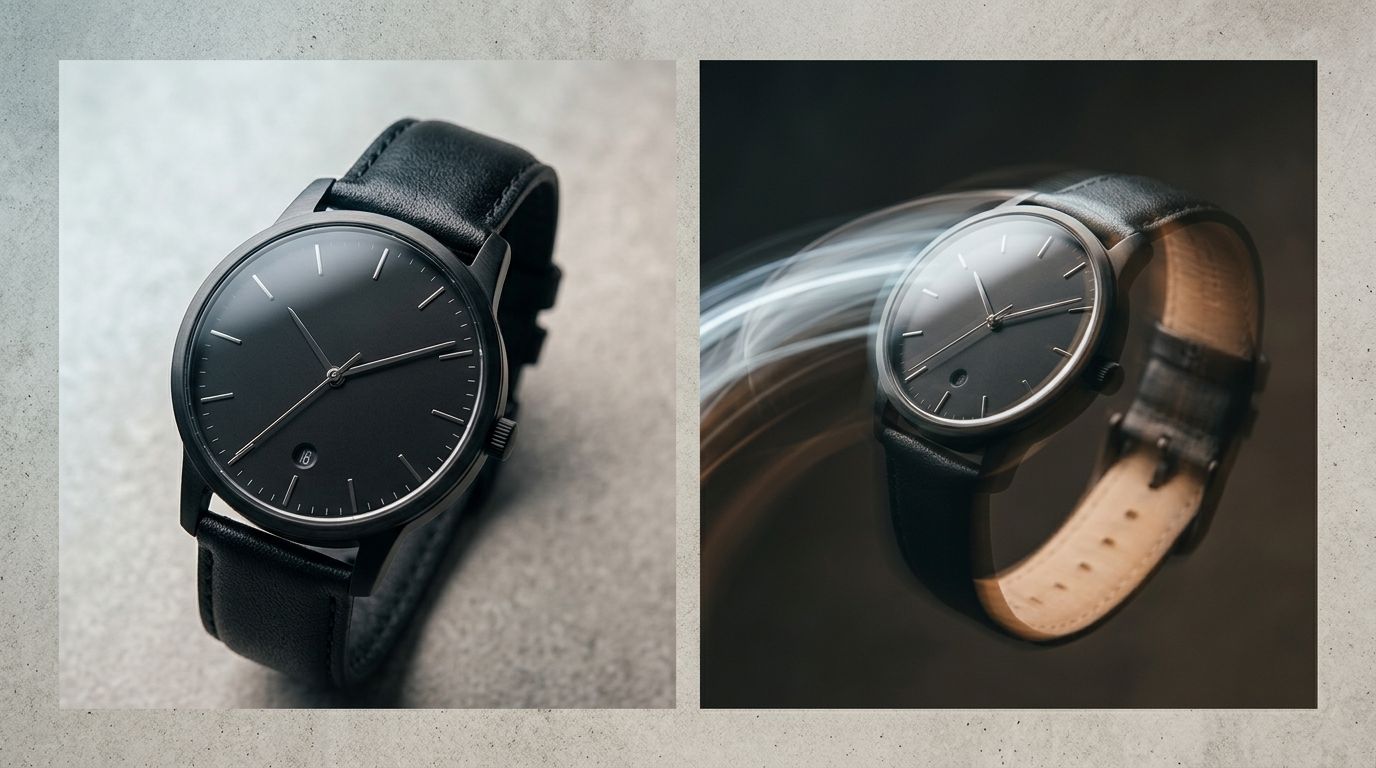
Choosing between media types requires analyzing your specific product category.
The conversion math of photo vs video product ecommerce
Before allocating budget, you have to understand the specific job each media format performs on your product page. Buyers do not consume images and video the same way. They scan photos to qualify the product. They watch videos to confirm the product.
If your store falls below standard ecommerce conversion rate benchmarks by category, jumping straight to video production is usually a mistake. A poorly converting page is almost always suffering from a lack of clarity, not a lack of motion. Photography fixes clarity. Video fixes context.
When photos do the heavy lifting
Photography is about control and precision. When a buyer lands on a product page, their first action is to swipe through the image carousel. They want to see the front, the back, the details, and the texture. Static images allow the user to dictate the pace of information gathering. They can pause, pinch to zoom, and compare specific elements without waiting for a playhead to reach the right timestamp.
Photos convert better when the product is stationary and visual appeal is driven by color accuracy or material finish. Think of a leather wallet. A video of someone turning a wallet over in their hands offers very little new information. A macro photograph showing the precise stitching and the grain of the leather provides exactly what the buyer needs to click add to cart.
When video changes the baseline
Video handles the questions that photos leave unanswered. A video proves that a zipper slides smoothly. It shows how a fabric drapes across a moving body. It demonstrates the exact size of a backpack by showing it worn by a human.
(Worth noting: adding video introduces severe technical debt. High quality video files are massive. If you implement video poorly, the resulting page lag will destroy your mobile conversion rate long before the customer ever sees your beautiful footage.)
You should only ask the question of whether to use photos or video for products once your static imagery is flawless. Video is the secondary step. It is the closer, not the introduction.
| Media Format | Primary Function | Best Suited For |
|---|---|---|
| Photography | Detailed inspection and pacing control | Stationary goods, electronics, fine details |
| Video | Demonstrating motion, scale, and sound | Apparel, complex tools, reflective items |
| Hybrid Gallery | Complete context and buyer assurance | High-margin items and flagship products |
Category matrix: Where to put your production budget
The media type product conversion debate changes drastically depending on what you actually sell. Some categories demand motion. Others demand clinical clarity.
Apparel and footwear
Motion wins here. Static flat lays and stiff mannequin shots are no longer enough to sell premium clothing. Buyers have been burned too many times by items that look great in a studio photo but fit terribly in real life. Video shows drape, stretch, and movement. If you sell dresses, activewear, or technical footwear, an investment in short lifestyle video clips directly correlates to higher sales and lower return rates.
Electronics and hard goods
Clarity wins. When someone buys a mechanical keyboard or a coffee grinder, they are looking for specifications, build quality, and exact dimensions. High resolution photography is paramount. A video might be useful to demonstrate the sound of the keyboard switches or the grind speed, but the core buying decision is made by examining crisp, well lit photos of the ports, the buttons, and the overall finish.
Beauty and skincare
Texture wins. This category demands a hybrid approach. Buyers need high fidelity photos to read the label ingredients and verify the exact shade of the cosmetic. But they also need video to see the viscosity of the serum or the spreadability of the foundation. If you are noticing high traffic but low sales, you likely have product images losing conversion because they look overly rendered. In beauty, video provides the authentic proof that heavily edited photos lack.
The real cost of media type product conversion
Any brand making this choice must confront the reality of production costs. A traditional studio shoot for product photography is expensive, but a proper product video shoot is entirely different math. Video requires storyboards, lighting transitions, audio mixing, and heavy post production editing. You can easily spend ten thousand dollars on a single hero video campaign.
There is a massive trade off to acknowledge here. Video is rigid. If your manufacturer changes the color of a strap or updates a logo placement, your expensive video is instantly obsolete. You cannot easily photoshop a moving object. You have to reshoot it.
Photography is vastly more flexible, especially now. You do not need to book a massive studio to get incredible static assets anymore. Upload a simple product image, select a visual mode like Lifestyle or Influencer, and CherryShot AI generates campaign-ready photos in minutes. The per-image cost drops to under $5. You get absolute visual perfection without the logistical nightmare of a full shoot. By automating your photography at scale, you actually free up the budget needed to create product videos without a studio for your absolute highest priority flagship items.
Should I use photos or video for products if I can only afford one?
If your budget forces you to choose between excellent photography and mediocre video, choose excellent photography every single time. A blurry, poorly lit video shot on a phone in a messy warehouse will actively damage your brand trust. A clean, crisp photo gallery builds immediate credibility.
The baseline requirement
Your absolute minimum requirement for any product page is four high quality photographs. You need a hero image on a clean background, an alternate angle, a macro detail shot, and a scale reference or lifestyle image. Until you have that complete set for every SKU in your catalog, do not spend a minute worrying about video production.
Once your foundation is solid, you can test video on your top three selling products. Track the add to cart rate over thirty days. If the video moves the needle enough to justify the production cost, roll it out to the rest of the collection. If it does not, keep your money and invest it back into product development.
Key Takeaways
- Video excels at demonstrating scale, motion, and complex functionality.
- Photography converts better when buyers need to examine specific details at their own pace.
- Apparel heavily relies on video for drape, while hard goods rely on crisp photos for build quality.
- Never invest in video production until your static photo gallery is entirely complete and highly optimized.
Frequently Asked Questions
Do product videos always convert better than photos?
Product videos do not automatically convert better than photos. They improve conversion rates only when an item requires a demonstration of motion, scale, or functionality that a static image cannot provide. Replacing photos with videos for basic commodities can actively hurt your conversion rate by slowing down page load times and forcing buyers to wait for simple visual data.
When should I use video vs photography for products?
Use video strictly to solve buying hesitations regarding how an item moves, sounds, or fits into a physical space. High-resolution photography serves as the mandatory baseline medium for inspecting fine details, reading packaging labels, and verifying exact color matches. Apparel, mechanical tools, and reflective jewelry require motion to sell effectively, while stationary hard goods rely entirely on clear static galleries.
Which converts better: product photography or video?
High-quality product photography consistently drives the baseline conversion rate across all ecommerce categories. A crisp photo gallery allows buyers to consume information at their own pace, swiping and zooming to verify details instantly. When comparing a mediocre video to a high-end photograph, the photograph will convert better every time because it avoids forcing the shopper onto a rigid viewing timeline.
How do I decide whether to invest in photography or video?
Base your media investment decisions directly on your return data and customer service tickets. Allocate budget toward video production if buyers frequently ask how an item fits, how to assemble it, or how loud it operates. Invest entirely in upgrading your static photography if customers return items because the color looked different or the material texture felt unexpected upon delivery.
Can I use both photography and video on my product page?
A hybrid approach mixing both media types serves as the most effective setup for ecommerce product pages. The ideal arrangement features three to five high-resolution photographs covering all angles, followed by one short clip demonstrating the item in use. Keep the motion asset under fifteen seconds, ensure it auto-plays silently on mobile devices, and place it second in the carousel.
Stop treating visual media as an either or debate. The most profitable brands use photography to carry the volume of their catalog and deploy video selectively where it has the highest impact. If you need to upgrade your baseline imagery without burning your margin, let AI do the heavy lifting. Generate your core visual assets with CherryShot AI and save your expensive production hours for the stories only motion can tell.
Audit your product page media before your next shoot
Review your top three selling items to see if they lack clarity or context. If your conversion rate is suffering due to poor static imagery, generate high-resolution lifestyle photos instantly without booking a studio. Upload your current flatlays and let AI build campaign-ready assets in minutes.
Try CherryShot AI