What Is the ROI of Product Photography?
The ROI of product photography is the combined financial value of your conversion rate lift and your return rate reduction minus the total cost to produce the images. For a brand with a $60 average order value launching 50 new SKUs a year, moving from basic supplier photos to premium contextual imagery typically yields a return on investment between 300 and 700 percent over a twelve-month lifecycle.
Definition
Product Photography ROI measures the financial impact of visual assets by tracking how much revenue is gained through higher conversion rates against the total production costs. It quantifies whether the investment in high-quality imagery pays for itself through increased sales and lower return volumes.
The problem is that most founders and finance teams calculate the cost with pinpoint accuracy but entirely guess at the return. You know exactly what the photographer charged. You know the cost of the studio rental. You have no idea how much money that invoice actually generated for your business.
Any brand trying to scale needs to stop treating visual content as an arbitrary marketing expense. Product photography is a measurable financial lever. When you put specific numbers to your conversion baseline, your refund rate, and your production pipeline, you can calculate the exact value of better product photos in ecommerce.
The Two Sides of the Product Photo Investment Business Case
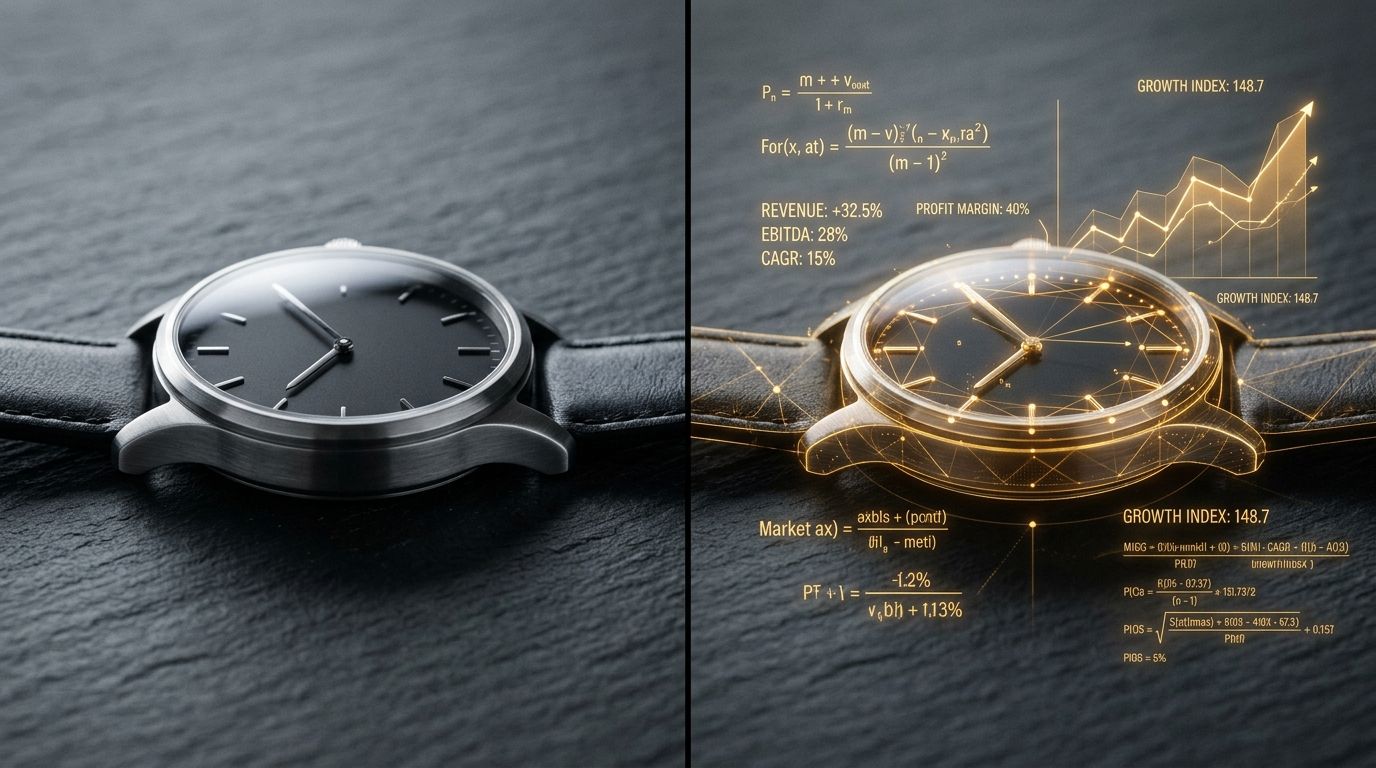
Building a business case for product imagery requires looking at two distinct ledgers. The first is the expense side. The second is the revenue and margin side. Most conversations about whether product photography is worth it get stuck entirely on the expense side because those numbers are the easiest to see on a balance sheet.
The True Cost of Traditional Production
If you are running a traditional studio shoot, the invoice from the photographer is only one piece of the puzzle. The true cost of product photography involves logistics, shipping physical samples, paying a stylist, feeding the crew, and tying up your own internal team for days.
When I sit down with brand operators to map their actual cost per finished image, the number almost always lands somewhere between $80 and $200. If you need five angles and two lifestyle settings for a single SKU, you are spending $600 to $1,400 just to get that product ready to list on Shopify. You have to sell a significant volume of inventory just to break even on the photos.
The Hidden Cost of Delay
There is another cost that rarely makes it into the financial model. Time. The lag between receiving your physical inventory and actually launching it online is pure dead weight. If you have $50,000 worth of inventory sitting in a warehouse while you wait three weeks for a photographer to edit and deliver your catalog shots, you are bleeding potential cash flow.
A delayed launch means delayed revenue. This is a massive hidden drain on your operations. A detailed look at the impact on profit margins reveals that speed to market is just as critical to your ROI as the actual conversion rate of the images themselves.
How to Calculate Your Product Photography Return on Investment
To calculate the return on a product photography investment, you need a baseline. Let us build a hypothetical product photography ROI calculation for an apparel brand launching a new jacket. You ordered 1,000 units. Your retail price is $120. Your gross margin is 60 percent. Your current storefront conversion rate is 1.8 percent. Your current return rate is 15 percent.
| Metric | Baseline | Optimized |
|---|---|---|
| Conversion Rate | 1.8% | 2.4% |
| Sales (10k Visitors) | 180 | 240 |
| Return Rate | 15% | 10% |
Step One: Modeling the Conversion Lift
Better imagery directly influences trust. When a customer can clearly see the texture of the fabric, the drape of the fit, and the details of the hardware, their purchasing hesitation drops. Suppose investing in high-quality lifestyle imagery lifts your conversion rate from 1.8 percent to 2.4 percent.
If you drive 10,000 visitors to that product page, the baseline math yields 180 sales for $21,600 in revenue. The improved math yields 240 sales for $28,800 in revenue. That is an immediate top-line increase of $7,200 from the exact same amount of traffic.
Step Two: Modeling the Return Rate Drop
Revenue means nothing if you have to give it back. Poor imagery is the leading driver of preventable refunds. When customers open a box and feel surprised by the color or the scale of an item, they ship it back. Every time they do, you lose the shipping cost, the fulfillment labor, and the packaging.
If accurate, highly detailed imagery drops your return rate from 15 percent to 10 percent, you are saving hundreds of dollars in lost margin on those 240 orders. Fixing the visual expectation gap is the fastest way to reduce return rates across your entire catalog.
Step Three: Deducting the Expense
The final step of the product photography ROI calculation is subtracting your production cost. If you paid a traditional studio $1,200 to shoot the new jacket, you subtract that from the gross margin of your newly acquired sales and saved returns. In this scenario, the investment still pays off. But the margin for error is thin. If the jacket is a slow seller, that $1,200 studio invoice will eat the entire profit margin of the SKU.
This is exactly why high-volume brands are completely changing how they source imagery. The math simply breaks when you apply traditional studio fees to hundreds of individual SKUs.
How AI Changes the Financial Model Completely
Any brand still running a full studio shoot for standard catalog images in 2026 is paying for logistics, not quality.
This is less about replacing photographers entirely and more about eliminating the scheduling dependency that adds three weeks to every product launch. A good photographer still makes sense for major hero campaigns. For catalog volume, the math simply does not work anymore.
AI product photography breaks the old financial constraints. Upload a simple product image, select a visual mode like Minimalist, Luxury, or Influencer, and CherryShot AI generates campaign-ready photos in minutes. The per-image cost drops from $150 to under $5. The turnaround time goes from three weeks to a single afternoon.
When you run an AI photography cost comparison against your last studio invoice, the difference is jarring. You get the exact same conversion lift and return rate reduction without the massive upfront capital expenditure. Your total ROI percentage skyrockets because the denominator in your equation shrinks down to practically zero.
The Limit of Photography ROI
There is a hard reality to acknowledge here. Photography cannot fix a genuinely bad product.
If your sizing is inconsistent, your materials feel cheap, or your manufacturing is flawed, pretty pictures will only accelerate your refund requests. Great imagery creates a promise. The physical product still has to fulfill it. If your foundational product quality is poor, investing in better photos will actually hurt your business by driving up returns and destroying your customer lifetime value.
But if your product is solid, visual presentation is the final hurdle. High-quality imagery can elevate your perceived brand value and allow you to command premium pricing. When your store looks like a luxury destination, customers are far more likely to buy multiple items at once. This is the surest way to increase average order value without discounting your inventory.
Audit your product page images before your next campaign
Review your top five performing SKUs and identify where low-quality imagery is hurting your conversion rate. You can replace these assets quickly using CherryShot AI to see an immediate boost in your sales metrics.
Try CherryShot AIFrequently Asked Questions
What is the ROI of better product photography?
The ROI of better product photography is calculated by measuring the financial lift from increased conversion rates and reduced return rates minus the total cost of producing the images. For ecommerce brands moving from average to high-quality visual assets, this return typically ranges between 300 and 700 percent over a single product lifecycle, assuming the underlying product is fundamentally sound.
How do I calculate the return on product photography investment?
You calculate the return by establishing a baseline conversion and return rate. Next, multiply the projected increase in sales volume by your gross margin. Then calculate the savings from fewer refunded orders. Subtract your total production costs, which include studio fees, editing, and delays. Divide the net profit by the total investment to find your final ROI percentage.
Is professional product photography worth the cost?
Professional photography provides value when the expense aligns with your current margin structure. Standard catalog updates or low-margin SKUs often fail to justify thousands in traditional studio fees. High-quality imagery remains vital for building customer trust and driving final sales. Finding a production method that delivers professional visual standards without a massive studio invoice allows your brand to maintain healthy margins while scaling your content volume.
How quickly does product photography investment pay off?
Your photography investment pays off as soon as the updated assets go live on your storefront or ad accounts. Most brands observe an immediate shift in daily conversion metrics within the first 48 hours of replacing weak imagery. Replacing standard supplier photos with high-quality, contextual lifestyle shots provides the data needed to confirm your performance gains.
What is the ROI difference between traditional and AI product photography?
Traditional photography relies on high upfront capital and introduces weeks of delay, which lowers the total return on your investment. AI photography removes studio fees, shipping costs, and scheduling bottlenecks. Because the production cost drops from hundreds of dollars per image to just a few, your ROI multiplier becomes significantly higher. This shift allows you to reinvest those savings into your broader growth strategies.
Key Takeaways
- The ROI calculation must include both conversion rate lift and return rate reduction.
- Time delay is a hidden cost of traditional photography that damages cash flow.
- Great imagery builds trust, but it cannot fix a fundamentally flawed physical product.
- Replacing studio shoots with AI generation massively inflates your total ROI by shrinking production costs.
You do not need to guess at the value of your visual content anymore. When you understand the math behind conversion lifts and return rates, you can start treating imagery like a measurable asset instead of a sunk cost. If you are ready to drop your production expenses while keeping your visual quality incredibly high, try CherryShot AI to generate campaign-ready assets in minutes.