caspa.ai Alternative: How CherryShot Compares on Quality & Price
If you are actively searching for a caspa.ai alternative, you are likely hitting a workflow ceiling. You have experienced the magic of generating product images instantly, but you are also experiencing the friction of prompt fatigue. The back-and-forth required to get lighting, shadows, and surfaces perfectly commercial often eats up the time you thought you were saving. Caspa.ai built a strong, general-purpose tool for AI visual creation. CherryShot AI built a specialized engine specifically for ecommerce product photography. This post breaks down exactly how the two approaches compare on output quality, pricing logic, and daily operational efficiency.
Definition
A caspa.ai alternative in the context of ecommerce is a specialized image generation platform optimized specifically for product photography. Rather than creating general concept art through open-ended text commands, these dedicated tools map physical inventory into highly realistic, commercial-grade studio environments. The core goal is replacing the slow trial-and-error prompting process with predefined styles that guarantee accurate lighting and physical realism at scale.
General-purpose AI image tools give you a blank canvas. In the art world, a blank canvas is a gift. In ecommerce operations, a blank canvas is a massive liability. You do not want infinite possibilities when you need to launch a new product catalog. You want your new skincare line to look like it was shot by a high-end editorial team, and you want those assets delivered in three minutes.
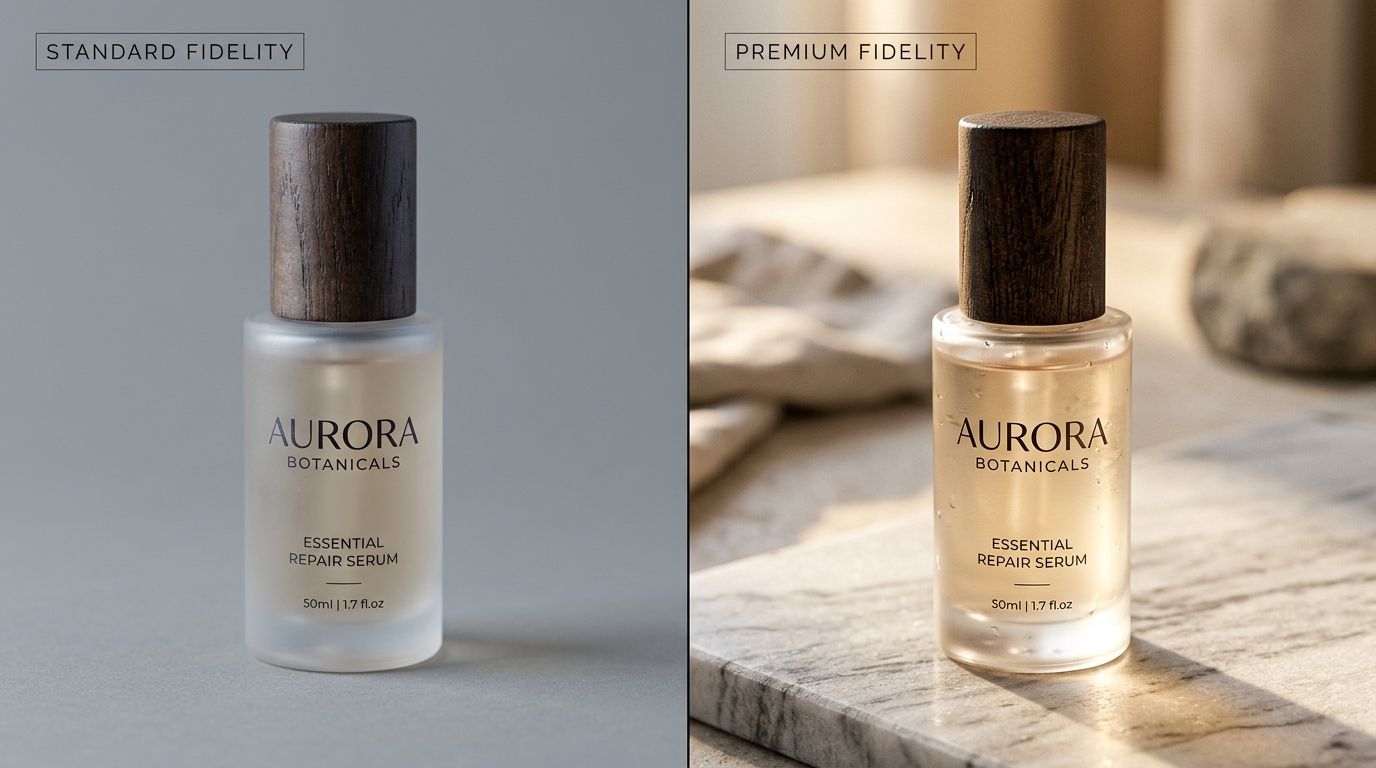
General-purpose AI versus ecommerce-specific pipelines
Evaluating any caspa.ai alternative requires understanding what these platforms were actually built to do. When an engineering team builds an AI platform, they have to choose their constraints. If they want the tool to generate everything from watercolor illustrations to realistic cityscapes, the underlying engine must remain extremely flexible.
This flexibility is where caspa.ai shines. It is a capable platform for marketers who need to generate a wide variety of visual content across different mediums. If your social media manager needs a picture of a futuristic car one day and a simple product flat lay the next, a general-purpose tool makes sense.
CherryShot AI takes a fundamentally different path. We constrained the engine entirely. We do not generate abstract art. We do not generate cartoon illustrations. We focus exclusively on taking a standard product photo and embedding it seamlessly into hyper-realistic, commercial-grade environments. By narrowing the focus, the output quality within that specific use case becomes significantly more reliable.
The prompt fatigue problem
The hidden tax of general-purpose AI is prompt engineering. Most founders and art directors do not have the time to learn the technical difference between "8k resolution cinematic side lighting" and "soft ambient studio box diffusion". They just know when an image looks cheap.
When you use a blank-canvas AI tool, you are forced to become a translator. You have to translate your visual taste into a highly specific string of adjectives. If you miss one crucial word about shadow direction, the image falls apart. This trial and error is what drives teams to seek out an alternative to caspa ai. You end up generating forty variations just to get one usable hero image.
This is exactly why understanding the nuances of achieving professional results with AI is crucial. The effort required to tune a text-based system often offsets the initial speed advantages of using AI in the first place.
Visual modes replace text prompts
CherryShot AI bypasses the prompt fatigue problem entirely. Instead of typing paragraphs of instructions, you upload your product image and select a predefined visual mode.
If you are selling luxury watches, you select the Loud Luxury or Classic mode. If you are selling organic supplements, you select the Minimalist or Lifestyle mode. If you need editorial content, you select the Magazine or Avant Garde mode. The engine already knows the exact lighting ratios, shadow depths, and texture resolutions required to make those specific styles look expensive.
(Worth noting: this rigid structure means CherryShot AI is terrible at generating random concept art. If you need a picture of an astronaut riding a horse to use in a blog header, CherryShot is the wrong tool. It is built strictly for placing your real product into campaign-ready settings.)
Image quality and generation control
Any AI product photography caspa alternative must be judged on how it handles physical realism. Consumers spot fake lighting instantly. When the light source on the background environment does not match the highlights on the physical product, the image looks like a poor collage.
General platforms often struggle with edge detection on complex items. Translucent materials like glass perfume bottles or items with intricate negative space require an engine trained specifically on product geometry. CherryShot AI focuses its processing power on edge preservation and matching the environmental lighting to the original physical contours of your uploaded image.
Generating a pretty picture is easy. Generating an accurate picture that properly represents the texture of a leather handbag or the tint of a sunglass lens is difficult. We built features like Upload Ref and Create Custom specifically to handle these strict brand guidelines without forcing operators back into the text prompt guessing game.
Pricing structure and actual per-image costs
The financial math behind your tech stack matters. When evaluating an AI product photography platform comparison, you have to look past the monthly subscription fee and calculate the true cost per usable asset.
If you pay a low monthly fee for a tool but have to generate fifty images to get one usable result, your actual cost in human hours is massive. The person sitting at the desk retyping prompts costs money. When looking at an AI product photography cost comparison, you must factor in the time spent wrangling the software.
CherryShot AI pricing logic is built for volume. Pricing starts at $10 for 50 images. Because you are using structured visual modes rather than open-ended text prompts, your hit rate on usable images is drastically higher. You do not burn through your allocation testing different adjectives. You upload, select Minimalist, and get assets you can immediately upload to your Shopify store.
Calculating true margin impact
Every dollar saved on logistics can be reallocated to customer acquisition. Brands that switch to a specialized product photography AI tool see an immediate impact on their operational speed. You can shoot a single hero image on a white background with an iPhone, upload it, and have a full suite of seasonal lifestyle imagery ready for an afternoon ad launch.
This velocity is what actually moves the needle on revenue. You stop waiting on freelance photographers and studio schedules, focusing instead on what actually makes an ecommerce product photo convert across your marketing funnel.
Platform comparison breakdown
To make the evaluation process simpler, here is a direct look at where each operational model excels.
| Operational Focus | General AI (e.g. caspa.ai) | CherryShot AI |
|---|---|---|
| Primary Interface | Heavy reliance on complex text prompts. | Selection of predefined visual modes. |
| Output Consistency | Highly variable based on user prompting skills. | Highly consistent within selected commercial styles. |
| Learning Curve | Steep. Requires learning vocabulary for lighting and camera angles. | Minimal. Built for operators without photography backgrounds. |
| Best Suited For | Agencies needing diverse, cross-industry visual assets. | Ecommerce brands needing high-volume product catalogs. |
Which platform makes sense for your brand?
Your choice of software should reflect your daily operational reality. If your marketing team routinely needs to generate assets that have nothing to do with physical products, sticking with a broad tool makes sense. The flexibility of prompt-based generation is valuable when your creative needs change every single day.
However, if your core bottleneck is getting your physical inventory photographed, edited, and pushed live to your storefront, you need a specialized tool. CherryShot AI exists to solve one specific problem with overwhelming efficiency. We eliminate the studio scheduling dependency and the endless prompt tweaking cycle so you can launch more products faster.
Key Takeaways
- General AI tools offer flexibility but require heavy prompt engineering.
- Specialized tools like CherryShot AI use visual modes to guarantee commercial output.
- Your true cost per image includes the time spent rewriting prompts to fix lighting errors.
- Ecommerce brands launching high SKU volumes benefit most from rigid, specialized generation workflows.
Frequently Asked Questions
What is caspa.ai?
Caspa.ai is a general-purpose artificial intelligence platform built to generate and edit a wide variety of visual content. The system relies heavily on text prompts, requiring users to manually define the exact environment, lighting conditions, and aesthetic style for every generation. Content creators and marketing agencies often use it to produce diverse assets ranging from abstract concept art to basic marketing graphics across multiple distinct industries.
How does CherryShot compare to caspa.ai?
Caspa.ai functions as a broad visual generator, whereas CherryShot focuses exclusively on rendering commercial-grade ecommerce product photography. Instead of forcing operators to write complex text prompts with highly variable outcomes, CherryShot constrains creative inputs to predefined photographic styles like Minimalist and Loud Luxury. This structural difference eliminates trial and error, allowing merchants to produce campaign-ready catalog assets significantly faster than they could on a generic platform.
Is CherryShot better than caspa.ai for ecommerce?
CherryShot provides a far more efficient daily workflow for brands processing high catalog volumes and strict product merchandising requirements. Constraining creative inputs to proven commercial photography styles prevents the operational bottleneck of tweaking text prompts for every single item in a large collection. Operators can rapidly process a new twenty-piece inventory line with complete visual consistency without ever needing to learn advanced prompt engineering techniques.
What is a good alternative to caspa.ai?
CherryShot serves as a highly effective alternative for businesses prioritizing realistic product photography over general graphic design. Teams requiring broad concept art or diverse marketing visuals across multiple mediums should stick with a generalized generation tool. Brand managers who need their physical inventory placed accurately into commercial-grade environments at high volumes will operate much faster using a dedicated ecommerce engine.
How do AI product photography platforms compare?
The market divides neatly into prompt-heavy generalist generators and specialized platforms constrained for specific commercial outputs. General blank-canvas tools provide maximum flexibility but demand a steep technical learning curve to produce realistic product shadows and accurate studio lighting. Dedicated ecommerce systems restrict user inputs specifically to guarantee speed and output consistency, completely avoiding the infinite creative freedom that slows down high-volume catalog production.
Building a scalable content pipeline means choosing tools that remove friction rather than adding a new learning curve. If you are tired of typing paragraphs just to get a clean shadow on a product image, it is time to upgrade your workflow. Check out CherryShot AI to see how fast catalog production can actually move.
Test your product images against ecommerce visual modes
Upload one of your current flat lays into CherryShot to see the difference between text prompting and structured commercial modes. You can generate a campaign-ready asset in seconds without writing a single line of instruction. This gives you an immediate, practical benchmark for your next catalog launch.
Try CherryShot AI