Pack Shot Photography: The Complete Guide to Packaging Product Photos
Pack shot photography is the visual foundation of your ecommerce business. It is a clean, accurate photograph of your product in its final retail packaging, designed specifically to communicate exactly what the customer is buying. Any brand relying entirely on a physical studio to shoot 100 different SKUs across five angles is wasting margin on logistics instead of investing in growth.
Definition
Pack shot photography refers to the standardized visual representation of a product inside its commercial retail container. These images emphasize brand clarity, label legibility, and realistic proportion to inform the consumer.
The invoice for a traditional pack shot project is rarely just the camera time. You are paying the stylist to stuff pouches so they look full. You are paying the lighting assistant to flag reflections off your metallic labels. You are paying for the two-week delay while the studio retouches dust spots out of thirty different images. When founders finally divide the total project invoice by the number of usable assets delivered, they usually realize they are spending well over $120 per image just to show customers what a box looks like.
AI generation has completely inverted this math. You can now upload a flat packaging dieline or a basic phone snapshot and generate flawless ecommerce packaging photos in minutes. The per-image cost drops to under $5. The bottleneck shifts entirely from production schedules to your own creative decisions.
The 5 Essential Pack Shot Angles
A single photo of your product is not enough. Customers cannot pick up your box, read the back label, or feel the texture of the cardboard. Your image gallery must replicate that physical retail experience. These are the five angles every product needs before it goes live.
| Angle | Primary Purpose | Key Benefit |
|---|---|---|
| Straight-On | Identity/Compliance | Essential for marketplaces |
| 3/4 Angle | Volume/Depth | Shows product scale |
| Top-Down | Mechanisms | Reveals caps and seals |
The Straight-On Primary Image
This is your workhorse. The straight-on pack shot is the image that appears on category pages, in shopping ads, and as the hero image of your product detail page. The camera sits perfectly level with the exact center of the product. The label text must be incredibly sharp and perfectly legible. If you sell on third-party marketplaces, strict compliance is required. Getting this angle wrong is the fastest way to trigger Amazon main image requirements and have your listing suppressed. The background must be pure white (RGB 255,255,255), and the product must fill at least 85% of the frame.
The 3/4 Angle Packaging Photography
A straight-on photo tells the customer what the product is. A 3/4 angle tells them how big it is. By rotating the packaging slightly, you reveal a side panel alongside the front panel. This creates a sense of depth and volume. For boxes, this angle shows the thickness of the carton. For bottles, it highlights the curvature of the glass or plastic.
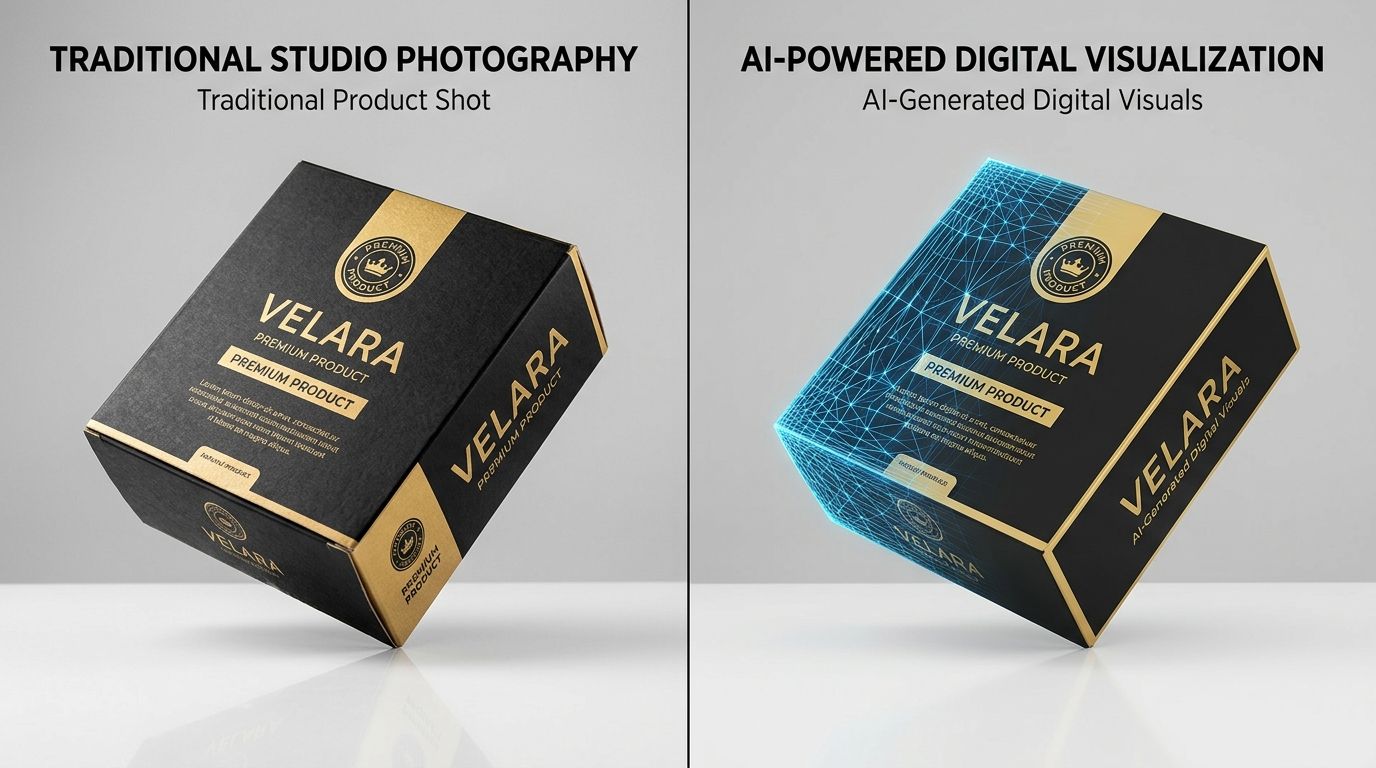
A properly executed 3/4 angle pack shot provides depth and volume, communicating the physical weight of the product to the customer.
The Above Angle Pack Shots
Shooting slightly downward at the product provides a view of the lid or the top seal. This is heavily utilized in cosmetics and food products where the cap features embossed branding or safety seals. It gives the customer a comprehensive view of the opening mechanism, which subtly builds trust before they click add to cart.
The Texture Detail Packaging Photo
You spent thousands of dollars upgrading to a soft-touch matte finish with UV spot gloss on your logo. A standard pack shot will completely flatten that investment. A texture detail shot zooms in on those specific material choices. It catches the light reflecting off the foil stamping. It highlights the grain of recycled kraft paper. This shot elevates the perceived value of the product instantly.
The Hero Shot Photography Context
After showing the clean, isolated views, the product needs to exist in the real world. A hero shot places the packaging in a stylized environment. A luxury face cream sits on a marble slab. A bag of coffee beans rests on a rustic wooden counter. This angle dictates the emotional resonance of the brand.
Pack Shot Technique: Lighting and Problem Solving
Photographing packaging is essentially an exercise in controlling reflections. Most products are wrapped in highly reflective materials. Glossy cardboard, metallic ink, and plastic shrink wrap all act like mirrors when a studio strobe hits them. The pack shot technique relies heavily on modifying the light before it ever touches the product.
Managing Glossy Reflections
If you point a bare flash at a glossy box, you will get a massive white hotspot that obscures your label text entirely. Photographers solve this using large softboxes and secondary diffusion panels. By placing a sheet of frosted acrylic between the light source and the product, the light spreads evenly across the surface. This creates a soft, pleasing gradient rather than a harsh glare. For edge definition, black foam core boards are placed just out of frame. These flags subtract light from the edges of the box, creating a crisp dark line that separates white packaging from a white background. This specific challenge is exactly why mastering white background pack shots takes years of practice.
Wrangling Flexible Pouches
Stand-up pouches are the nightmare scenario for product photographers. Flexible bags crinkle, slump, and catch light in unpredictable ways. A flat bag looks cheap and unappealing. Stylists spend hours stuffing these pouches with tissue paper, cotton batting, or customized foam blocks to make them look full and taut. They tape the back flaps down. They use heat guns to smooth out wrinkles. It is tedious manual labor that inflates the cost of packaged food photography significantly.
Replacing the Studio with AI
When you understand the physical labor required to shoot a single glossy pouch or reflective box, the appeal of AI product photography becomes obvious. Brands are no longer forced to accept three-week turnaround times just to get updated imagery for a minor packaging redesign.
CherryShot AI handles this entire workflow digitally. You upload a flat image of your product or a quick reference photo. You select the visual mode. The platform generates the precise lighting, handles the reflections appropriately, and delivers campaign-ready assets in minutes. You skip the stylist fees, the studio rental, and the endless email threads arguing over which photo needs more retouching.
Worth noting, if you are shooting a massive global television campaign, you still want a practical shoot with a dedicated director of photography. For standard ecommerce volume, the traditional studio approach is just burning cash.
I will gladly admit that AI image generation still struggles with heavily transparent packaging where nested inner layers overlap in complex ways, meaning a traditional studio setup remains the safest bet for those highly specific edge cases. But for standard boxes, bottles, jars, and pouches, the machine simply works faster and cheaper than the studio.
Brands scaling their catalog past 50 SKUs hit a breaking point where managing product photography logistics becomes a full-time job. AI eliminates that friction entirely.
Frequently Asked Questions
What is a pack shot in product photography?
A pack shot is a precise, clear image showing a product inside its retail packaging. These photos demonstrate exactly what a customer receives when they order from your online store. Clarity and color accuracy take precedence over artistic mood lighting to ensure the shopper sees every detail of the brand labels and package construction.
How many pack shot angles do I need for ecommerce?
Most successful ecommerce listings require at least three distinct angles to drive conversions, with five being the professional standard. You should capture a front-facing primary shot, a 3/4 depth angle, a top-down view, a texture-focused close-up, and a lifestyle hero image. Each perspective provides different information about the product scale, packaging quality, and actual size.
What lighting is best for pack shot photography?
Large softboxes placed at 45-degree angles create the most effective baseline light for standard product packaging. This lighting pattern eliminates harsh shadows while clearly defining the edges of bottles or boxes. Using diffusion panels helps prevent studio strobes from washing out label text or creating blown-out highlights on glossy surfaces.
Can AI generate pack shots from packaging images?
Yes, AI tools can create high-quality pack shots using only a simple flat image or basic phone photo of your product. These platforms generate accurate angles and lighting environments that mimic professional studio results. Reducing the reliance on physical studio rentals allows your team to get new products live on your store much faster.
How do I photograph packaging without wrinkles or reflections?
Fill flexible materials like mylar pouches with cotton or tissue paper to ensure they remain smooth and taut during the shoot. Managing reflections on glossy packaging requires placing black foam core boards just outside the frame to absorb stray light. This technique creates dark, clean edges around your product instead of unsightly white glare.
Key Takeaways
- A high-converting product page requires five distinct pack shot angles to replicate the physical retail experience.
- Shooting glossy boxes and flexible pouches requires specialized lighting modifiers to control harsh reflections.
- Traditional studio workflows bury brands in hidden costs tied to styling, rentals, and manual retouching.
- AI image generation drops the per-image cost of professional pack shots from over $100 down to less than $5.
Audit your product page images before your next campaign
Review your current product listing gallery to see if you have all five essential angles represented. You can quickly fill any gaps in your visual assets by generating them with CherryShot AI to ensure your brand remains competitive and professional.
Try CherryShot AI