Lifestyle Product Photography: What It Is, Why It Converts, and How AI Makes It Accessible
Lifestyle product photography places your item in a realistic context instead of isolating it on a sterile white backdrop. It shows the customer not just what the product is, but what their life could look like if they owned it. Brands invest in lifestyle product images because aspiration drives conversions. However, the crushing logistics of renting locations and booking stylists mean most catalogs stay stuck in a pure utility format.
Definition
Lifestyle product photography is the practice of capturing items in styled, real-world environments to show how they look in daily use. It provides visual context for size, fit, and function while establishing a specific aesthetic identity. Ecommerce brands use these contextual images to help buyers visualize owning the item.
(There is an exception for massive luxury houses, where spending fifty thousand dollars on a location shoot remains standard practice). The trade-off is that lifestyle imagery takes the visual focus slightly off the pure utility of the item, risking distraction if the prop styling is heavy or clashing. Yet the upside for brand perception is undeniable.
Understanding exactly what makes an ecommerce product photo convert requires looking at how human beings shop. They buy feelings. They buy aesthetics. White background shots confirm the details. Contextual product photography sells the dream.
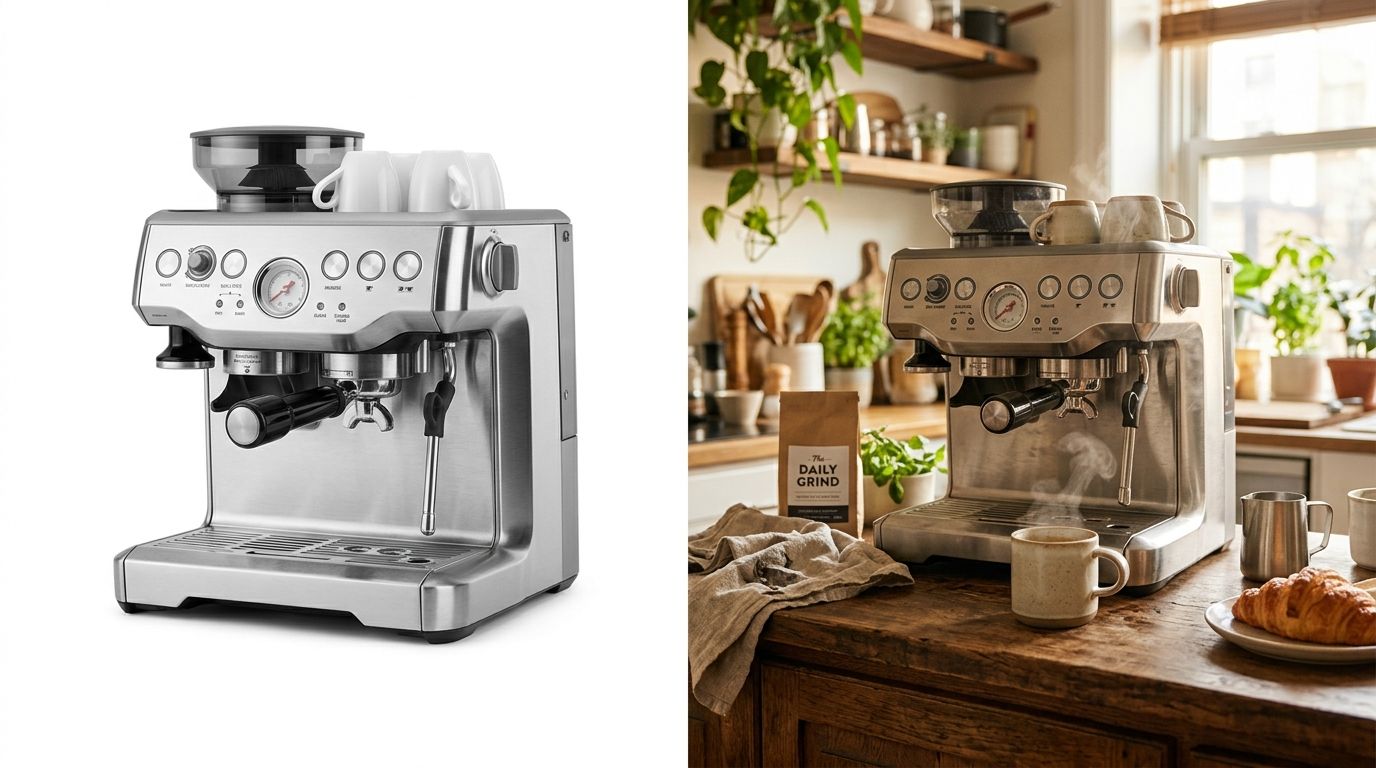
Lifestyle product photography generated instantly using CherryShot AI.
What is lifestyle product photography?
A catalog image documents the existence of a product. A lifestyle image tells a story about it. When you shoot a coffee maker on a seamless paper backdrop, you are showing a machine. When you shoot that same coffee maker on a marble countertop with morning sunlight streaming through a window next to a half-read newspaper, you are selling a morning ritual.
The distinction matters because ecommerce inherently lacks physical touch. Customers cannot pick up the item to gauge its weight. They cannot stand next to the furniture piece to understand its scale. Contextual product photography fills that sensory gap by introducing familiar reference points.
The psychology of contextual product photography
Visual context provides instant cognitive shortcuts for the buyer. If you place a skincare serum next to river stones and fresh bamboo, the brain immediately registers "natural, calming, organic." If you place that identical bottle on a mirrored vanity next to heavy gold jewelry, the brain registers "premium, exclusive, night-out."
You do not need to write a paragraph explaining your brand values if your background environment communicates them instantly. This is why getting the aesthetic right for scroll-stopping social ad images demands environments that look authentically lived in. Social media users scroll past clinical studio shots. They stop for spaces they want to inhabit.
Lifestyle vs white background photography
Founders often view this as an either-or scenario. It is not. High-converting product pages require both formats working together. The lifestyle image grabs attention and builds desire. The white background image answers logical questions and prevents returns.
| Format | Primary Purpose | Customer Psychology | Best Placement |
|---|---|---|---|
| Lifestyle Photography | Context, scale, brand vibe | Aspiration and emotional connection | Hero headers, Instagram, paid ads |
| White Background | Clarity, detail, true color | Verification and feature checking | Product galleries, Google Shopping |
When to use each format
Use a white background image as the second or third slide in your product carousel. Use it for the zoom feature. Use it when you are submitting feeds to Google Merchant Center, which actively penalizes cluttered backgrounds.
Use lifestyle product images everywhere else. Your homepage banner must be lifestyle. Your Facebook ads must be lifestyle. Your email marketing headers must be lifestyle. You cannot build a brand identity on pure white pixels.
The old math of lifestyle product images
If contextual product photography is so powerful, why do so many independent brands rely entirely on plain studio shots? The answer is pure logistical friction. Setting up a real-world shoot is an exhausting exercise in project management.
You cannot simply place a product on a desk and snap a photo with an iPhone. A professional location shoot requires renting an aesthetically pleasing space, often costing a thousand dollars a day on Peerspace or Airbnb. You have to hire a photographer. You have to hire a stylist to source props. You have to haul your entire physical inventory to the location. If the natural light is poor that day, your bright and airy concept turns gloomy and dull.
Why brands settle for basic catalog shots
Comparing the true cost of AI models vs. real models exposes how much margin gets eaten by pure logistics. A brand might spend three thousand dollars to produce twenty usable lifestyle images. When you launch three new colors the following month, you have to do the entire process again. This financial reality forces founders to compromise. They shoot the main hero item in a lifestyle setting and relegate the rest of the catalog to boring studio shots.
How AI makes contextual product photography accessible at scale
The bottleneck in ecommerce visuals is no longer creative talent. It is production overhead. AI product photography changes the mechanics of image generation completely. You no longer need to move atoms around a room to get a photo.
With CherryShot AI, you upload a standard, boring product image. You select a visual mode like Lifestyle, Minimalist, or Influencer. The engine analyzes the perspective and lighting of your product, then generates a complete, photorealistic environment around it in minutes. A brand can create a sunny kitchen scene for a blender, and ten minutes later, place that same blender in a moody, dark-wood cafe setting. The cost drops to roughly $10 for 50 images.
This fundamentally alters how marketing teams operate. When you do not have to wait three weeks for a photographer to deliver a gallery, you can run rapid A/B tests on your ad creatives. You can match the background of your product to the specific season or upcoming holiday without planning a dedicated physical shoot.
Removing the logistics bottleneck
The brands winning the current ecommerce landscape are those that can iterate their visuals quickly. If a specific TikTok aesthetic trends on Tuesday, you want to launch ads matching that vibe by Thursday. Traditional production cycles cannot accommodate that speed. AI lifestyle product images allow a single founder or marketing manager to act as a full creative agency from their laptop.
Frequently Asked Questions
What is lifestyle product photography?
Lifestyle product photography places your physical item into a realistic, styled environment rather than isolating it on a blank studio background. This visual format instantly communicates the physical scale, practical function, and specific brand aesthetic to the buyer before they read the product description. Showing a coffee machine on a marble countertop next to a newspaper sells a desired morning ritual instead of merely documenting a kitchen appliance.
Does lifestyle photography convert better than white background?
Contextual product photography consistently drives higher conversion rates for top-of-funnel marketing channels like social media advertisements and email campaigns. Buyers require these environmental images to understand the emotional appeal and accurate physical scale of an item before they feel comfortable adding it to their cart. While clean studio shots handle basic catalog verification, styled environments create the necessary desire that prompts a customer to actually click the buy button.
How do I create lifestyle product photos without expensive shoots?
Artificial intelligence tools now generate highly realistic product environments directly from a standard studio photograph without requiring physical sets. By uploading a flat lay image and selecting a desired aesthetic mode, the software builds a complete lifestyle scene with accurate lighting and shadows in minutes. This automated process entirely removes the traditional production costs associated with location scouting, photographer day rates, and physical prop styling for growing brands.
What products benefit most from lifestyle photography?
Any item carrying an aspirational element or requiring scale verification benefits significantly from contextual product photography. Apparel relies heavily on lifestyle shots to demonstrate fabric drape, while furniture requires room context to prove it fits correctly in a living space. If a potential customer needs to imagine physically interacting with your cosmetic or homeware item, they must see a realistic lifestyle photo first.
Can AI create lifestyle product photography?
Purpose-built artificial intelligence tools successfully generate highly realistic lifestyle scenes by analyzing the lighting and perspective of your base image. The software takes a standard catalog shot and algorithmically renders a full contextual environment around the physical item. This specific capability allows ecommerce brands to produce varied aesthetics ranging from minimal lofts to sunny kitchens without ever booking a location shoot.
Key Takeaways
- Lifestyle photography builds emotional connection by showing the product in realistic contexts.
- Consumers require lifestyle images to gauge physical scale and brand aesthetic.
- Traditional location shoots are too expensive and slow for modern, high-volume ecommerce catalogs.
- AI generation allows brands to create endless contextual scenes from a single basic product photo.
Visual context is the strongest lever you have to increase your store's conversion rate. Stop letting logistics dictate your creative output. Upload your basic catalog shots to CherryShot AI and generate campaign-ready lifestyle imagery before lunch.
Audit your product pages for missing context
Review your top-selling items to see if they rely solely on white background images. You can generate new lifestyle scenes from those existing photos to quickly run a conversion test. CherryShot AI lets you render these contextual environments directly from your current catalog files.
Try CherryShot AI